
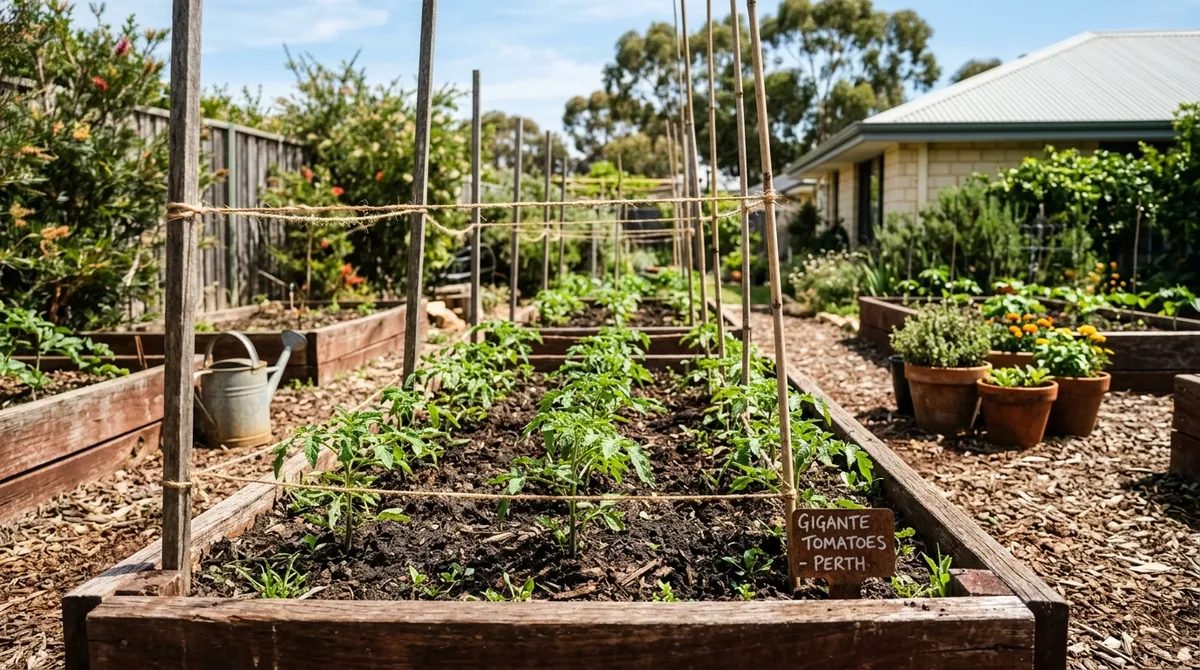
When to Plant Tomatoes in Perth
Timing, sandy soil prep, heat-tolerant varieties, and fruit fly control for WA gardeners
Perth's Mediterranean climate is excellent for tomatoes. Long, hot summers and mild winters give you a reliable growing window from September through to April. The challenge is Perth's sandy soil and the ever-present Mediterranean fruit fly. Get those two things sorted and you will harvest kilos of fruit every season.
The quick summary: sow seeds indoors from late July, transplant seedlings from mid-September to November, and harvest from December through to April. Coastal suburbs start earlier; inland areas wait a few weeks longer.
Perth's Tomato Timeline
Start Seeds Indoors: Late July to August
Tomato seeds germinate best at 20-25 degrees. Perth's August days sit around 18-20 degrees, so a sunny north-facing windowsill works well. Sow into seed-raising mix in small pots or cell trays. Keep the mix moist and expect seedlings in 7-10 days.
If you prefer to skip seed raising, Bunnings and independent nurseries like Dawson's Garden World in Forrestfield and Zanthorrea in Maida Vale stock advanced seedlings from August onwards.
Transplant Outdoors: September to November
Coastal suburbs (Fremantle, Cottesloe, Scarborough) rarely see frost and can transplant from early to mid-September. The Swan Valley, Midland, and foothills suburbs (Kalamunda, Mundaring) experience occasional late frosts into September, so wait until late September or early October. The Darling Scarp gets colder still; early October is safest there.
Harden off seedlings for 5-7 days before transplanting. Move them outside into a sheltered spot for a few hours daily, building up to full sun. Plant when seedlings have 4-6 true leaves and soil temperature is above 16 degrees.
Space plants 50-60 centimetres apart in rows, with 80 centimetres between rows. Install stakes or cages at planting time.
Late Sowing: January
A January sowing gives you an autumn crop through March to April. Perth's autumn is warm and dry, so these late plants often produce cleaner fruit with fewer pest issues than the peak-summer crop. Sow directly into the garden bed; the soil is warm enough by January for direct seeding.
Preparing Perth's Sandy Soil for Tomatoes
Most Perth gardens sit on Bassendean or Spearwood sand. This drains fast, holds almost no nutrients, and becomes hydrophobic (water-repellent) in summer. Tomatoes are heavy feeders and need consistent moisture, so soil preparation is critical.
- Add organic matter: Dig in 5-10 centimetres of compost and well-rotted cow or chicken manure before planting. This is the single most important step. Repeat each season.
- Bentonite clay: Mix bentonite clay through the planting area at 1-2 kilograms per square metre. It binds with sand to hold water and nutrients. Available at most WA garden centres.
- Wetting agents: Apply a soil wetter like Saturaid or Hydrawise before planting and again in December. Perth's sand turns hydrophobic by mid-summer, causing water to run straight through without wetting the root zone.
- Mulch heavily: Apply 8-10 centimetres of pea straw or sugar cane mulch around plants. This slows evaporation and keeps roots cool during 40-degree days.
Raised beds filled with a vegetable mix from a local soil supplier (try Soils Ain't Soils or Perth Soil Mixes) are a practical alternative if your native sand is very poor.
Best Tomato Varieties for Perth
Perth's heat rules out some varieties that perform well in cooler climates. Choose heat-tolerant types that continue setting fruit above 35 degrees.
- Grosse Lisse: The reliable all-rounder. Sets fruit consistently through Perth's summer heat and handles sandy soil well with adequate feeding.
- Roma: Produces heavily in January and February. Meaty flesh with few seeds; perfect for passata and sauce making. Determinate habit means it fruits heavily over a concentrated period.
- Tommy Toe: Cherry tomato with masses of sweet, tangy fruit. Very forgiving of imperfect conditions and crops over a long season.
- Apollo: Bred for hot Australian conditions. Medium-sized fruit, reliable fruit set in extreme heat, and good disease resistance.
- Sweet Bite: Produces long trusses of cherry tomatoes. Heat tolerant and productive from December through to April.
- Scorpio: Another heat-bred variety suited to Perth's climate. Medium slicer with consistent performance above 35 degrees.
Avoid large beefsteak heirlooms like Brandywine and Black Krim unless you can provide afternoon shade. These varieties struggle when temperatures stay above 38 degrees for consecutive days, dropping flowers without setting fruit.
Managing Mediterranean Fruit Fly
Mediterranean fruit fly (Ceratitis capitata) is Perth's biggest tomato pest. Unlike Queensland fruit fly found on the east coast, Medfly is established year-round in Perth's suburbs. Activity peaks from November to March.
- Exclusion netting: Cover plants with fine mesh netting (1 millimetre or smaller) from November onwards. This is the most reliable control method. Veggie net from Perth garden suppliers fits over stakes or frames.
- Protein bait traps: Hang traps in nearby fruit trees and around the garden perimeter. Cera Trap and Naturalure are available at Bunnings and rural suppliers across WA.
- Pick early: Harvest fruit as soon as it shows colour. Ripen on a sunny windowsill or in a paper bag with a banana. Fruit left to ripen fully on the vine is the primary target for Medfly.
- Clean up fallen fruit: Remove and bin (do not compost) all fallen or damaged fruit immediately. Each infested fruit on the ground produces dozens of new flies.
The WA Department of Primary Industries runs a Medfly sterile insect release program across Perth. Check their website for current activity maps and area-specific advice.
Watering and Feeding
Perth's combination of sandy soil, hot summers, and water restrictions makes irrigation planning essential. Most Perth households are on a two-day-per-week sprinkler roster, but drip irrigation and hand watering are unrestricted.
Install drip irrigation on a timer, running for 20-30 minutes every second day during summer. Deep, less frequent watering encourages roots to grow downward rather than staying at the surface. Hand watering with a wand at the base of plants works well for small gardens.
Feed every 2-3 weeks with a balanced organic fertiliser once flowering begins. Sandy soil leaches nutrients rapidly, so more frequent feeding at lower rates works better than heavy monthly applications. Liquid seaweed applied fortnightly supports root growth and stress tolerance during heatwaves.
Summary: Your Perth Tomato Calendar
Late July to August: Start seeds indoors on a warm windowsill.
September (coastal) to October (foothills): Transplant hardened-off seedlings. Prepare sandy soil with compost, bentonite, and wetting agents.
November onwards: Apply fruit fly netting. Begin regular feeding schedule.
December to April: Harvest. Pick fruit at first colour during Medfly season.
January: Second sowing for an autumn harvest through March to April.
Track Your Tomato Season
Get month-by-month reminders for sowing, transplanting, and harvesting in your Perth suburb.
Open the Planting Season AppFrequently Asked Questions
When should I plant tomatoes in Perth?
Sow tomato seeds indoors from late July to August. Transplant seedlings outdoors from mid-September (coastal areas like Fremantle) to early October (foothills suburbs like Kalamunda). The main planting window is September to November for a summer harvest.
What are the best tomato varieties for Perth?
Grosse Lisse, Roma, and Tommy Toe are reliable in Perth's heat. Apollo and Scorpio are bred for hot conditions. For cherry types, Sweet Bite handles the dry summers well. Avoid large beefsteak heirlooms unless you can provide afternoon shade.
How do I prepare Perth's sandy soil for tomatoes?
Dig in compost, aged manure, and bentonite clay to improve water retention. Apply a wetting agent before planting. Mulch heavily with pea straw. Sandy soil drains too fast for tomatoes, so drip irrigation is strongly recommended.
How do I protect tomatoes from fruit fly in Perth?
Mediterranean fruit fly is widespread in Perth. Use exclusion netting from November onwards. Hang protein-bait traps nearby. Pick fruit as it starts to colour and ripen indoors. Clean up all fallen fruit immediately to break the breeding cycle.
Free Monthly Planting Calendar
Get a personalised email each month with what to plant, seasonal tips, and harvest reminders for your region.
We send one email per month. Unsubscribe any time.