
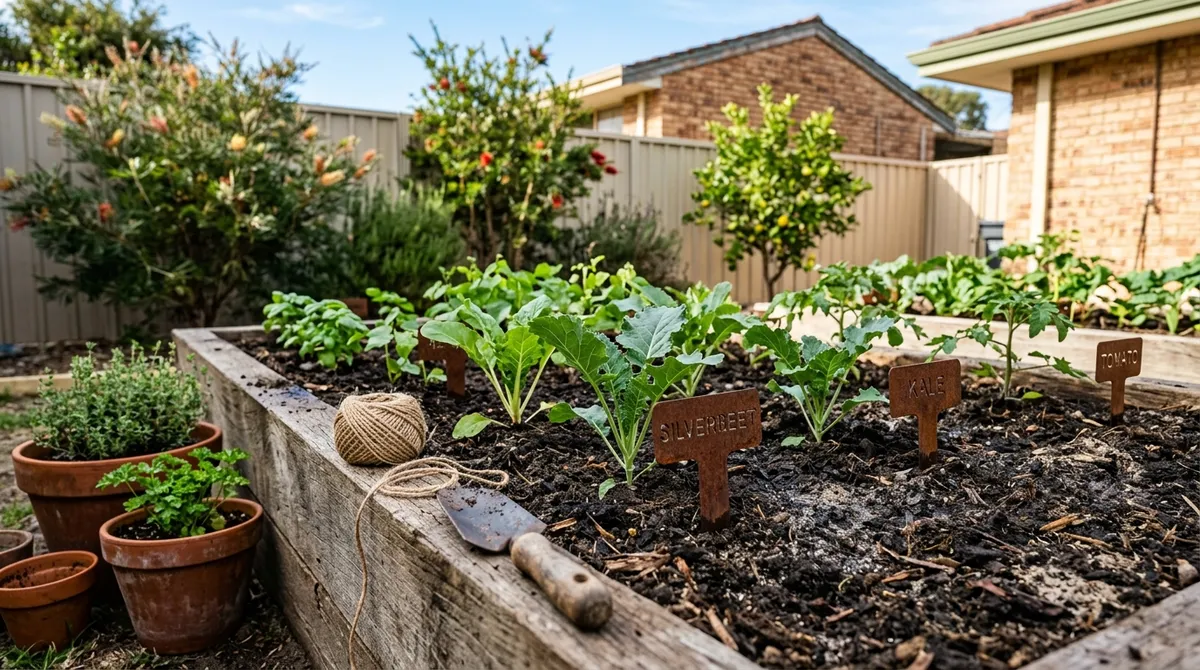
How to Start a Vegetable Garden in Perth
A water-wise, sandy-soil-friendly approach for new WA gardeners
Perth is one of Australia's best cities for growing food. Long sunny days, mild winters, and a climate that suits hundreds of edible plants. The two things every new Perth gardener needs to understand: your soil is probably sand, and water is precious. Sort those out and everything else falls into place.
This guide walks you through setting up your first vegetable garden in Perth, from choosing a spot to harvesting your first crops.
Step 1: Choose Your Spot
Most vegetables need at least 6 hours of direct sun per day. In Perth, a north-facing position is ideal. East-facing works well too, catching the cooler morning sun. West-facing beds get intense afternoon heat in summer, which can stress plants during January and February when temperatures regularly exceed 38 degrees.
Look for a spot near a tap or water source. You will be watering frequently in summer, and dragging hoses across the yard gets old fast. Proximity to your kitchen also matters. Gardens you can see and access easily get more attention.
If your yard is mostly paved or shaded, containers on a sunny balcony or patio work well. Large pots (40 centimetres or wider) can grow tomatoes, herbs, lettuce, and silverbeet.
Step 2: Deal with the Sand
Perth's soil is almost always sand. Dig a handful and squeeze it. If it runs through your fingers and does not hold together, you have typical Perth sand. Two approaches work:
Option A: Amend the Sand
Dig out an area at least 1.5 metres by 1.5 metres and 30 centimetres deep. Mix in 5-10 centimetres of compost, 1-2 kilograms of bentonite clay per square metre, and aged cow or chicken manure. Apply a wetting agent. This builds a workable soil over time. You will need to add more compost every season because sand breaks down organic matter quickly.
Option B: Raised Beds
Build or buy a raised bed at least 30 centimetres deep. Fill it with vegetable garden mix from a Perth soil supplier (Soils Ain't Soils, Baileys, or Nuway all deliver across the metro area). This is the faster option. You can plant the same day the beds are filled.
For a first garden, a single raised bed 1.2 metres wide by 2.4 metres long gives you enough space for 8-10 different crops. Standard corrugated steel beds in this size cost around $100-$150 from Bunnings or hardware stores.
Step 3: Set Up Watering
Hand watering with a hose and wand is fine for a small garden. For anything larger than a couple of square metres, drip irrigation saves time and water. A basic drip kit from Bunnings (Pope or Holman brands) costs under $50 and connects to a standard garden tap.
Run drip lines along each row of plants. Add a battery-powered tap timer to automate watering. Set it for 20-30 minutes every second day during summer, reducing to every 3-4 days in winter (or skipping entirely during heavy rain weeks).
Perth's sprinkler roster limits reticulation to two days per week, but drip irrigation and hand watering are unrestricted. Mulch every bed with 8-10 centimetres of pea straw or sugar cane mulch to slow evaporation.
Step 4: Start with Easy Crops
Autumn (March to May) is the ideal time to start a new Perth garden. The weather cools, rain returns, and the range of easy crops is enormous.
Best Beginner Crops for Perth Autumn and Winter
- Silverbeet: Nearly indestructible. Plant seedlings in March and harvest leaves for 6 months or more. Fordhook Giant is the standard variety.
- Lettuce: Buy a punnet of mixed lettuce seedlings and transplant them 20 centimetres apart. Pick outer leaves for continuous salads. Succession plant every 3 weeks.
- Radishes: Sow seeds directly. Ready in 4-6 weeks. Great for building confidence because they grow so fast.
- Herbs (parsley, coriander, chives): Buy established pots from the nursery and plant them in the garden or in separate containers. These provide months of harvests.
- Peas: Sow seeds directly in April or May. Give them a trellis or some sticks to climb. Snow peas and sugar snap peas are the most rewarding for beginners because you eat the whole pod.
Best Beginner Crops for Perth Spring and Summer
- Tomatoes: Plant seedlings from September to November. Grosse Lisse and Tommy Toe are the most reliable for first-time growers. Stake at planting time.
- Zucchini: One plant produces more than most families can eat. Plant from September. Space 80 centimetres apart because the plants get large.
- Basil: Loves Perth's summer heat. Plant from October onwards in full sun. Pick regularly to prevent flowering.
- Cucumbers: Plant from October. Lebanese cucumbers are compact and productive. Give them a trellis for vertical growing in small spaces.
Step 5: Manage WA-Specific Pests
Perth has some pests that eastern-state gardeners may not encounter, plus the usual suspects.
- Mediterranean fruit fly: Present in most Perth suburbs. Affects tomatoes, capsicums, stone fruit, and citrus. Use exclusion netting on fruiting crops from November onwards. Pick fruit early and ripen indoors.
- Twenty-eight parrot (Australian ringneck): These native parrots are beautiful and destructive. They strip fruit trees, eat brassica seedlings, and damage corn. Bird netting is the only reliable protection.
- White cabbage moth: Caterpillars chew holes in brassicas. Cover plants with fine insect netting or spray with Dipel (Bacillus thuringiensis) weekly.
- Snails and slugs: Active during Perth's wet winter months. Iron-based snail pellets (Multiguard) are safe around pets and edible plants. Scatter around seedlings after rain.
Step 6: Feed Regularly
Perth's sandy soil holds nutrients poorly. A "set and forget" approach to fertilising does not work here. Feed little and often.
Apply a complete organic fertiliser (pelletised chicken manure or an all-purpose blend) every 3-4 weeks during the growing season. Supplement with liquid seaweed every 2 weeks for root health and stress tolerance. Side-dress heavy feeders like tomatoes and zucchini with blood and bone or compost every month.
Your Perth Planting Calendar
Get personalised reminders for what to plant each month in your Perth suburb.
Open the Planting Season AppFrequently Asked Questions
What is the best time to start a vegetable garden in Perth?
Autumn (March to May) is the best time to start. Perth's wet season begins, temperatures cool, and a huge range of winter crops can be planted immediately. You get early wins with fast crops like radishes and lettuce.
What should I plant first in a Perth vegetable garden?
Start with silverbeet, lettuce, radishes, and herbs like parsley and coriander. These are forgiving, grow quickly in Perth's mild winters, and build your confidence. Add tomatoes and zucchini for your first summer season.
Do I need raised beds to grow vegetables in Perth?
Raised beds are the fastest route to productive gardening in Perth's sandy soil. They let you fill with quality soil mix and start growing immediately. You can also garden directly in amended sand, but it takes more preparation.
How do I manage water restrictions when growing vegetables in Perth?
Perth's sprinkler roster limits lawn watering to two days per week, but hand watering and drip irrigation are unrestricted. Install drip lines on a timer for vegetable beds. Mulch heavily to reduce evaporation.
Free Monthly Planting Calendar
Get a personalised email each month with what to plant, seasonal tips, and harvest reminders for your region.
We send one email per month. Unsubscribe any time.