
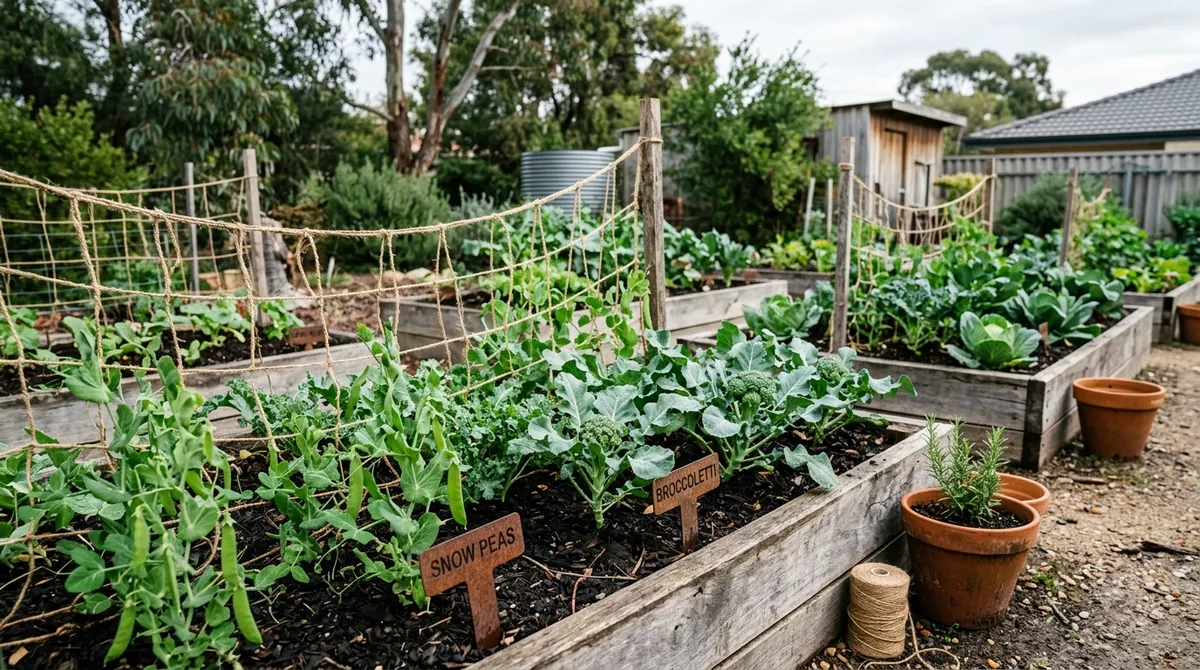
What to Plant in Winter in Perth
Perth's mild, wet winters are the best growing season for cool-season crops
Perth's winter is a gift for vegetable gardeners. While summer means battling heat, sandy soil, and water restrictions, winter brings reliable rainfall, mild temperatures, and a huge range of crops that thrive in these conditions. Perth's winter days average 17 to 19 degrees with overnight lows around 8 to 10 degrees. That is close to ideal for brassicas, root vegetables, leafy greens, and legumes.
The wet season runs from May to September, delivering 450 to 500 millimetres of Perth's annual rainfall. Your garden essentially waters itself for five months. That is a welcome break from the drip-irrigation routine of summer. Pest pressure drops too. Aphids slow down, fruit fly goes dormant, and the caterpillar populations that plague summer gardens are far less active.
Perth rarely experiences frost. Coastal suburbs from Fremantle to Joondalup almost never see temperatures below zero. Inland suburbs like Mundaring, Kalamunda, and Armadale get occasional light frosts, but nothing compared to Melbourne or Canberra. This means you can grow a wider range of winter crops without the frost-protection hassle that southern gardeners deal with.
15 Best Winter Crops for Perth
1. Broccoli
Transplant seedlings from March to May. Green Magic and Di Cicco are reliable varieties available at most Perth nurseries. Expect heads in 10 to 12 weeks. After cutting the main head, side shoots continue producing for weeks. Space plants 40 centimetres apart in enriched soil. Broccoli is a heavy feeder, so side-dress with blood and bone or pelletised chicken manure every 3 to 4 weeks.
2. Cauliflower
Needs consistent conditions and rich soil. Plant seedlings in April for a July to August harvest. Snowball is the standard variety. Space 50 centimetres apart. Cauliflower is more temperamental than broccoli and dislikes fluctuating temperatures. Perth's steady winter conditions actually suit it well. Mulch around plants to keep the root zone stable.
3. Cabbage
Sugarloaf and Golden Acre mature quickly in Perth's mild winter. Transplant from March to May. Ready in 10 to 14 weeks. Red cabbage (Red Drumhead) adds colour and stores well after harvest. Protect all brassicas from cabbage white butterfly caterpillars with fine insect netting or regular applications of Dipel (Bacillus thuringiensis).
4. Kale
Tuscan kale (cavolo nero) thrives through Perth's entire winter. Plant in March or April and harvest leaves continuously from May onwards. Curly kale and Red Russian are also productive. Kale is one of the toughest winter vegetables and handles the occasional cool night in Perth's hills suburbs without fuss. Harvest outer leaves and leave the growing centre to keep producing.
5. Peas
Sow from April to July. Greenfeast and Telephone are tall climbing varieties that need a trellis. Sugar Snap peas produce edible pods that are excellent raw. Oregon Sugar Pod is the classic snow pea. Direct sow into the garden, as peas dislike transplanting. Provide climbing support with stakes, wire netting, or a trellis. Perth's mild winter means peas keep producing well into September, giving a longer harvest than colder regions.
6. Broad Beans
The toughest legume for cool conditions. Sow from April to June. Aquadulce Claudia and Coles Dwarf are proven in Perth. Space 15 to 20 centimetres apart in double rows. Pinch out the growing tips once the first pods form to deter aphids and redirect energy to pod filling. Broad beans also fix nitrogen in Perth's nutrient-poor sand, improving the soil for whatever follows.
7. Carrots
Perth's sandy soil, usually a disadvantage, is actually ideal for carrots. They grow straight and clean in sand without the forking common in clay soils. Sow seed directly from March to July. Nantes and Chantenay types perform well. Thin seedlings to 3 to 4 centimetres apart. Keep the soil surface moist until germination (7 to 14 days). Harvest in 10 to 14 weeks. Add compost to the planting area to improve moisture retention in pure sand.
8. Beetroot
Sow from March to July. Detroit Dark Red and Bull's Blood are reliable. Soak seeds for 12 to 24 hours before sowing to speed germination. Thin to 10 centimetres apart. Beetroot grows well in Perth's sandy soil with added compost. The leaves are edible and nutritious, so harvest a few outer leaves while the root develops. Chioggia produces stunning concentric red and white rings when sliced.
9. Spinach
True spinach (Bloomsdale, English spinach) grows best in Perth's winter. Sow from April to July. In summer, spinach bolts to seed within days. Winter is the only reliable season for it. Pick outer leaves regularly to keep plants productive. Spinach prefers a slightly richer soil than most crops, so dig in extra compost before sowing. It also benefits from a light lime application if your sand is acidic (common in Bassendean and Spearwood sands).
10. Lettuce
Sow or transplant from March to August. Cos (romaine), butter, and oakleaf varieties all perform well. Succession sow every 3 weeks for continuous salad greens through winter and into spring. Perth's mild winter means lettuce grows steadily without the frost damage that southern gardeners contend with. Loose-leaf varieties produce for longer than hearting types.
11. Garlic
Plant cloves in April or May, pointy end up, 5 centimetres deep and 15 centimetres apart. Australian White and Italian Late suit Perth's climate. Perth does not get as cold as Melbourne, so choose softneck varieties bred for mild winters. Harvest in October or November when the bottom leaves turn brown. Buy seed garlic from garden centres, as supermarket garlic is often treated to prevent sprouting.
12. Onions
Transplant seedlings from April to June. Brown onions and red onions both grow well. Choose short-day varieties suited to Perth's latitude (around 32 degrees south). Early Texas Grano and Cream Gold are reliable. Harvest from October to November. Onions need consistent watering during the bulbing phase in late winter and early spring.
13. Silverbeet
Perth's most forgiving leafy green. Plant from March onwards and harvest for 6 months or more. Fordhook Giant is the standard. Rainbow chard adds colour to the garden. Silverbeet tolerates a wide range of conditions, from sandy soil to clay pockets, and produces through winter and well into the following summer. Pick outer leaves and the plant keeps going.
14. Asian Greens
Bok choy, pak choy, tatsoi, and mizuna all thrive in Perth's mild winter. Sow from March to July. Fast growing and ready in 6 to 8 weeks. Asian greens bolt quickly in summer heat but hold well through winter without running to seed. Wombok (Chinese cabbage) takes 10 to 12 weeks and forms large, dense heads that store well.
15. Radish
The quickest winter crop. Sow every 2 to 3 weeks from March to August for continuous picking. Ready in 4 to 6 weeks. Cherry Belle and French Breakfast are dependable choices. Daikon (Japanese radish) takes longer (8 to 10 weeks) but produces large, mild roots. Radishes make good use of gaps between slower-growing crops.
Sandy Soil Challenges and Solutions
Perth sits on some of the most nutrient-poor, water-repellent sand in Australia. The Bassendean sand complex that covers much of the northern and central suburbs holds almost no water or nutrients. The Spearwood sand further south is slightly better. Gardening in this sand without improvement is an exercise in frustration.
Improving Sandy Soil for Winter Vegetables
- Compost: Add 5 to 10 centimetres of compost to beds before each planting season. Compost adds organic matter, improves water retention, and introduces beneficial microbes. Municipal compost is available cheaply from several Perth recycling centres.
- Bentonite clay: Apply 5 to 10 kilograms per square metre and fork through the top 20 centimetres. Bentonite is a natural clay that improves the sand's ability to hold water and nutrients. One application lasts several years. Available in bulk from landscape supply yards across Perth.
- Wetting agents: Perth's sand often becomes hydrophobic (water-repellent) during the dry summer. Apply a granular or liquid wetting agent at the start of autumn to help winter rain penetrate the soil rather than running off the surface.
- Manure: Aged cow, horse, or sheep manure adds organic matter and nutrients. Mix through beds at least 4 weeks before planting. Chicken manure is high in nitrogen and should be used sparingly or in pelletised form.
Raised Beds and Wicking Beds
Raised beds filled with a quality garden mix are the most reliable way to grow vegetables in Perth sand. A bed 30 centimetres deep gives roots access to better soil while the surrounding sand provides drainage. Wicking beds (raised beds with a water reservoir in the base) are increasingly popular in Perth. They self-water from below, reducing the water lost to drainage through sand. Several Perth garden supply companies sell wicking bed kits, or you can build your own from IBC containers.
Water-Wise Winter Gardening in Perth
Perth's winter rainfall does most of the work, but smart water management makes the most of every drop.
- Mulch everything: A 5 to 10 centimetre layer of sugar cane mulch, pea straw, or lupin mulch (a WA-specific product from lupins grown on Perth's sandy soils) slows evaporation and keeps roots cool. Keep mulch 5 centimetres from plant stems.
- Rain gauge: Place a rain gauge in the garden so you know exactly how much rain fell. If less than 10 millimetres fell in a week, supplement with hand-watering or drip irrigation.
- Drip irrigation: Keep your summer drip system in place but set it to a rain sensor or manual schedule during winter. Run it only during prolonged dry spells. Under Perth's water restrictions, drip systems can run at any time on your allocated watering days.
- Morning watering: When supplemental watering is needed, water in the morning so foliage dries before nightfall. Wet foliage overnight encourages fungal diseases, especially on brassicas.
Month-by-Month Winter Planting Calendar
April to May
The transition from summer to winter. Plant brassica seedlings (broccoli, cauliflower, cabbage, kale). Sow carrots, beetroot, lettuce, spinach, silverbeet, and Asian greens directly. Plant garlic cloves. First pea and broad bean sowings. The first autumn rains usually arrive in late April or May. Water newly planted seedlings until the rains settle in.
June
Perth's winter is properly underway. Average daily maximum of 18 degrees. Reliable rain. Sow more peas, lettuce, spinach, rocket, and radish. Transplant onion and leek seedlings. Continue harvesting early brassica plantings. June is the last good month for garlic planting.
July
The wettest month in Perth. Average of 170 millimetres. Garden growth is steady. Sow succession crops of lettuce, Asian greens, and radish. Harvest broccoli, cauliflower, and cabbage from autumn plantings. Start planning spring warm-season crops. Order tomato, capsicum, and chilli seeds for sowing in August.
August
Days lengthen and temperatures start rising. Average maximum climbs to 18 to 19 degrees. Last month for pea and spinach sowings. Start tomato and capsicum seeds indoors in trays. Sow basil seeds inside on a warm windowsill. Prepare beds for spring plantings by adding compost and fertiliser. Harvest continues from winter crops.
Plan Your Winter Garden
Get month-by-month planting reminders tailored to Perth's Mediterranean climate.
Open the Planting Season AppFrequently Asked Questions
What vegetables grow well in Perth in winter?
Broccoli, cauliflower, cabbage, kale, peas, broad beans, carrots, beetroot, spinach, lettuce, silverbeet, Asian greens, onions, garlic, radish, turnips, parsnips, coriander, and rocket all thrive in Perth's mild wet winter.
When should I start planting winter vegetables in Perth?
Start planting from late March through April for most winter crops. Brassica seedlings go in from March to May. Peas and broad beans are best sown in April or May. Garlic cloves go in during April or May.
Is Perth warm enough to grow vegetables all winter?
Perth's winter days average 17 to 19 degrees with overnight lows around 8 to 10 degrees. Light frosts are rare in coastal suburbs and uncommon even inland. Most cool-season crops thrive without any frost protection.
How do I improve Perth's sandy soil for winter vegetables?
Add compost, aged manure, and bentonite clay to sandy soil before planting. Apply 5 to 10 kilograms of bentonite clay per square metre and fork through the top 20 centimetres. Add a 5-centimetre layer of compost and mix well. Mulch after planting to slow moisture loss.
Do I need to water the garden in winter in Perth?
Perth receives most of its annual rainfall between May and September. In most years, natural rainfall is sufficient for established winter crops. Newly planted seedlings may need supplemental watering during dry spells in April or early May before the main rains arrive.
Free Monthly Planting Calendar
Get a personalised email each month with what to plant, seasonal tips, and harvest reminders for your region.
We send one email per month. Unsubscribe any time.