
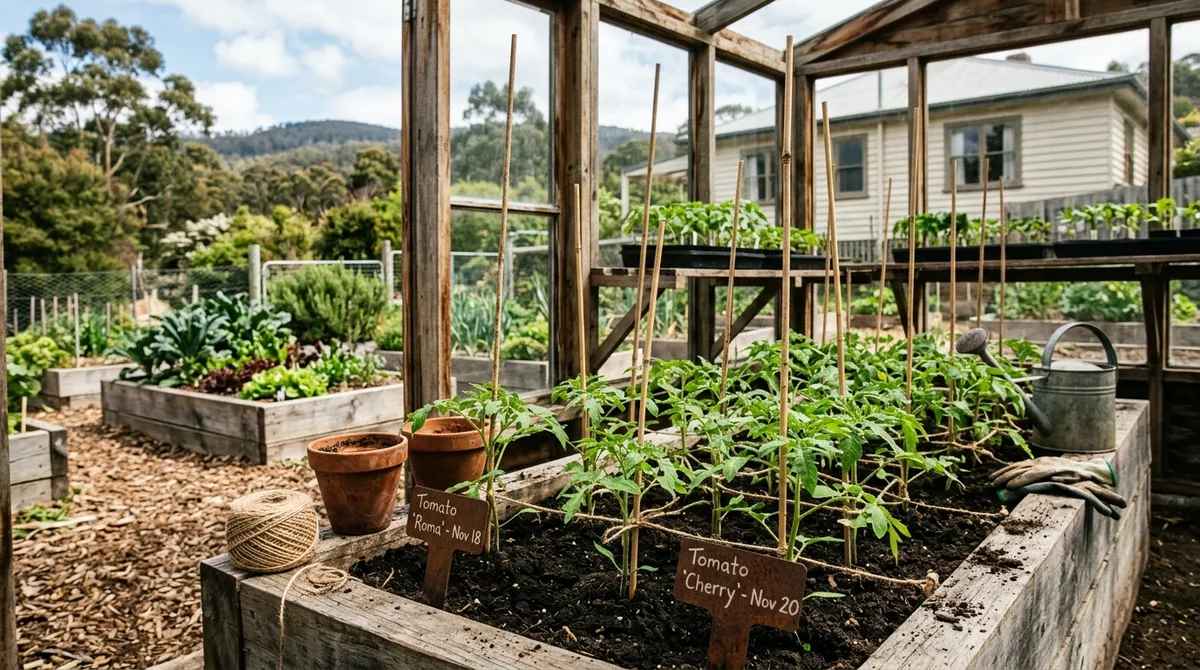
When to Plant Tomatoes in Tasmania
Short season strategies, early varieties, and greenhouse options for Tasmania's cool temperate climate
Growing tomatoes in Tasmania takes planning. The season is shorter than anywhere else in mainland Australia, typically November to March. Frost can arrive as late as November and return as early as April. The reward for careful timing is flavour: Tasmania's cool nights and long summer days produce tomatoes with outstanding taste, often better than anything from warmer climates.
The quick summary: start seeds indoors in September, transplant from mid-November to early December, and harvest from January to March. A greenhouse extends the season by 6-8 weeks at each end.
Tasmania's Tomato Timeline
Start Seeds Indoors: September
Tomato seeds need 20-25 degrees to germinate. September in Hobart averages 14-15 degrees during the day, so indoor warmth is essential. A sunny north-facing windowsill, a heat mat, or a spot on top of the fridge provides enough warmth. Sow into seed-raising mix in small pots or cell trays. Keep moist and expect germination in 7-14 days.
Start seeds by early September to give seedlings the longest possible growing time. Tasmania's season is short enough that every week matters. Seedlings should be 15-20 centimetres tall with 4-6 true leaves by transplanting time.
Transplant Outdoors: Mid-November to Early December
The safe transplant window depends on your location. Hobart's waterfront suburbs (Sandy Bay, Battery Point, Bellerive) are the mildest, with last frosts typically in late October. Transplant from mid-November in these areas.
Inland suburbs (Glenorchy, Claremont, Bridgewater) and the Derwent Valley (New Norfolk, Bushy Park) are colder, with frost possible into mid to late November. Wait until late November or early December. The Huon Valley (Huonville, Cygnet, Franklin) is similarly cold in frost hollows.
Launceston and the Tamar Valley have a slightly different pattern. The city centre is mild, but Tamar Valley frost hollows (Grindelwald, Legana) can frost into late November. Northern midlands towns (Campbell Town, Ross) are exposed and should wait until December.
Harden off seedlings for a week before transplanting. Move them outside for a few hours each day, increasing exposure gradually. Transplant in the late afternoon to reduce transplant shock.
No Second Sowing
Tasmania's season is too short for a reliable second crop. Focus all your effort on the main planting. Every fruit needs to set and ripen before night temperatures drop below 10 degrees in late March or April.
Best Tomato Varieties for Tasmania
Variety selection is critical in Tasmania. Choose early-maturing types that set and ripen fruit quickly. Long-season varieties that take 80 or more days to mature from transplant often fail to ripen before autumn.
- Tigerella: Matures in 55-60 days from transplant. Striped red and gold fruit with tangy flavour. Reliable in Tasmania's cool conditions and widely available.
- Early Girl: One of the fastest slicers at 50-55 days. Medium-sized red fruit. Sets fruit at lower temperatures than most varieties, making it ideal for Tasmanian conditions.
- Tommy Toe: Cherry tomato producing masses of small, sweet fruit. Very reliable in cool climates. Produces over a long period from January to March.
- Rouge de Marmande: French heirloom with ribbed, flavourful fruit. Matures in 65-70 days. Handles cooler conditions better than most large-fruited varieties.
- Black Cherry: Small, dark cherry tomato with complex, rich flavour. Productive and relatively early. Excellent for Tasmanian salads.
- Grosse Lisse: The Australian standard can work in sheltered Hobart gardens and greenhouses. Takes 75-80 days to mature, so only suits the warmest spots. Risky in inland and southern areas.
Avoid large beefsteak varieties (Brandywine, Mortgage Lifter) for outdoor growing in Tasmania. These need 85-100 days to mature and rarely ripen fully before the season ends. Grow them in a greenhouse instead.
Greenhouse Growing
A greenhouse is the most reliable way to grow tomatoes in Tasmania. It extends the season by 6-8 weeks, protecting plants from late spring frosts and early autumn cold. Many dedicated Tasmanian tomato growers use greenhouses exclusively.
- Timing: Transplant into the greenhouse from mid-October (a month earlier than outdoor planting). Harvest from December through to April or even May with heating.
- Varieties: A greenhouse lets you grow larger, slower varieties that struggle outdoors. Grosse Lisse, Brandywine, and Mortgage Lifter all perform well under cover.
- Ventilation: Open doors and vents on warm days (above 25 degrees). Greenhouses overheat quickly in Tasmanian summer, and temperatures above 35 degrees cause flower drop. Automatic vent openers are worth the investment.
- Watering: Greenhouse plants dry out faster than outdoor plants because rain does not reach them. Water at the base daily during summer.
Frost Protection for Outdoor Plants
Even after your last expected frost date, Tasmania can surprise you with an unseasonable cold snap. Have protection ready.
- Cloches: Cut the bottom off large plastic bottles and place over individual seedlings. Remove during the day.
- Frost cloth: Drape over plants on nights when frost is forecast. Available from Bunnings and garden centres. Remove in the morning to allow sunlight and airflow.
- Walls of Water: Plastic teepees filled with water that absorb daytime heat and release it at night. Effective protection down to about minus 3 degrees. Available from garden suppliers and online.
- Thermal mass: Place dark-coloured water containers or rocks near plants. They absorb heat during the day and radiate it at night, raising the local temperature by 1-2 degrees.
Soil Preparation
Tasmania's soils vary widely. Hobart gardens often sit on dolerite-derived clay (heavy, dark red-brown soil) that holds water well but can become waterlogged. Improve drainage by adding compost and planting in raised mounds or beds. Launceston and northern Tasmania tend toward lighter, silty loams that are easier to work.
Warm the soil before planting by covering beds with black plastic mulch for 2-3 weeks. This raises soil temperature by 3-5 degrees, which makes a real difference for heat-loving tomatoes. Keep the black plastic in place after planting, cutting holes for each seedling. It continues to warm the soil and suppresses weeds.
Tomatoes are heavy feeders. Dig in compost and well-rotted manure before planting. Side-dress with balanced organic fertiliser every 3 weeks once flowering begins. Liquid seaweed fortnightly supports stress tolerance during cool spells.
Summary: Your Tasmanian Tomato Calendar
September: Start seeds indoors. Use a heat mat or warm windowsill.
Mid-October: Transplant into greenhouse (if available).
Mid-November (coastal) to early December (inland): Transplant outdoors. Use black plastic mulch to warm soil.
January to March: Harvest. Pick fruit at first colour if cool weather threatens.
Late March: Pick all remaining fruit, including green tomatoes. Ripen indoors in a paper bag or make green tomato chutney.
Track Your Tomato Season
Get month-by-month reminders for sowing, transplanting, and harvesting in your Tasmanian location.
Open the Planting Season AppFrequently Asked Questions
When should I plant tomatoes in Tasmania?
Start tomato seeds indoors in September. Transplant seedlings outdoors from mid-November (sheltered Hobart gardens) to early December (inland and southern areas). Tasmania's last frost date varies by suburb and elevation.
What tomato varieties grow best in Tasmania?
Choose early-maturing varieties. Tigerella (55-60 days), Early Girl (50-55 days), Tommy Toe (cherry), and Rouge de Marmande mature before autumn cold shuts down fruit set. Avoid large beefsteak types unless you have a greenhouse.
Can I grow tomatoes in a greenhouse in Tasmania?
A greenhouse extends Tasmania's tomato season by 6-8 weeks. Start seedlings indoors in August, transplant into the greenhouse in October, and harvest from December through to April. Greenhouse growing is the most reliable method in Tasmania.
When is the last frost in Hobart?
Hobart's waterfront suburbs see their last frost in late October. Inland suburbs may frost into mid-November. The Huon Valley and highland areas can frost into late November. Always check conditions for your specific location.
Free Monthly Planting Calendar
Get a personalised email each month with what to plant, seasonal tips, and harvest reminders for your region.
We send one email per month. Unsubscribe any time.