
How to Start a Vegetable Garden in Tasmania
Short season strategies, soil warming, microclimate use, and beginner crop selection
Tasmania is a rewarding place to grow food. The clean air, reliable rainfall, and cool climate produce vegetables with outstanding flavour. The challenge is the short warm season and frequent frost. This guide helps new Tasmanian gardeners work with the climate rather than against it.
Step 1: Choose Your Spot
Most vegetables need at least 6 hours of direct sun per day. In Tasmania, a north-facing position is essential. The sun sits lower in the sky than in mainland Australia, especially from April to August, so fences, buildings, and trees cast longer shadows. Check your proposed garden spot at different times of day to confirm it gets enough light.
Shelter from wind matters in Tasmania. The Roaring Forties send cold westerly winds across the state, especially in winter and spring. A fence, hedge, or building on the western side of your garden reduces wind chill and protects young plants. Gardens in exposed locations (hilltops, open rural blocks) benefit significantly from windbreak planting or temporary wind barriers.
Avoid low-lying spots where cold air pools. Cold air is heavier than warm air and flows downhill, collecting in valleys and dips. These frost hollows can be 3-5 degrees colder than slightly higher ground just 20 metres away. If your garden is in a frost hollow, raised beds help lift plants above the coldest air layer.
Step 2: Know Your Soil
Tasmania's soils vary widely. Hobart gardens often sit on dolerite-derived clay: heavy, dark red-brown, and rich in nutrients but slow to drain. Northern Tasmania (Launceston, Tamar Valley) has lighter alluvial soils along river flats. The northwest coast has rich volcanic soils (some of Australia's best farming soil). The east coast has sandier, lighter soil.
Improving Hobart's Heavy Clay
Dig in generous amounts of compost to break up clay and improve drainage. Add coarse river sand to heavy clay at a ratio of about 1 part sand to 3 parts soil. Gypsum (1-2 kilograms per square metre) helps clay particles aggregate, improving structure over time. Avoid working heavy clay when it is waterlogged, as this compacts it further.
Raised Beds
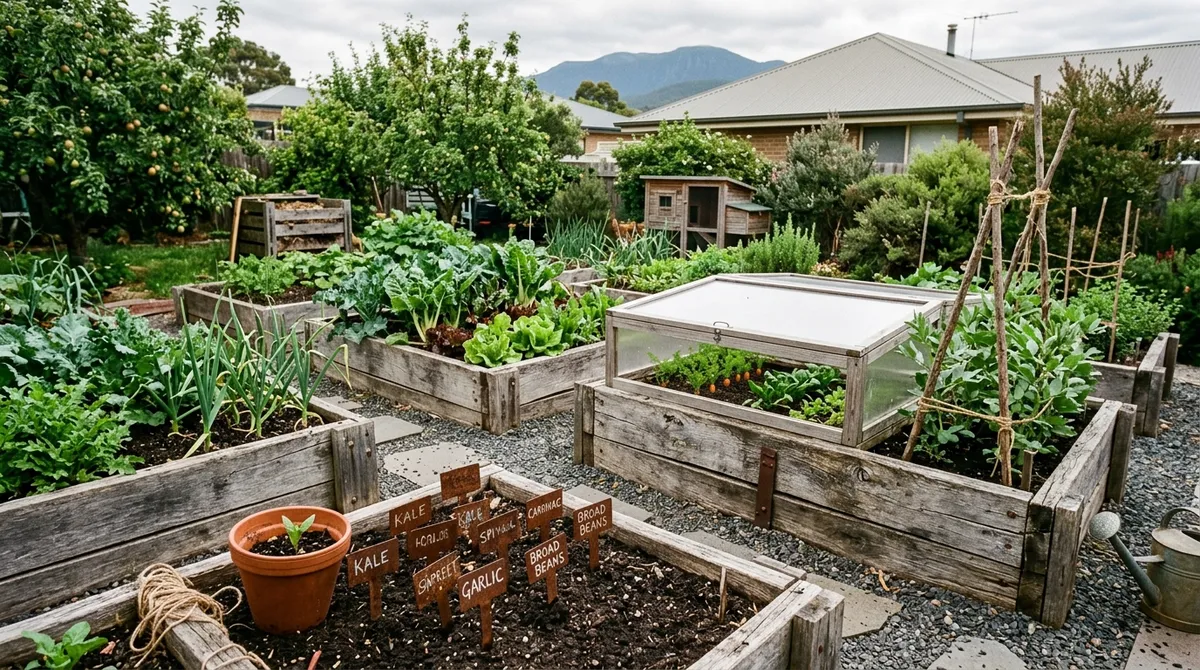
Raised beds are particularly useful in Tasmania. They warm faster in spring (critical for the short season), drain better than flat ground (important during wet winters), and lift plants above the coldest air during frost. Build beds 30-40 centimetres deep and fill with a mix of good soil, compost, and aged manure.
Raised beds made from Tasmanian hardwood (or macrocarpa, which is naturally rot-resistant) last many years in Tasmania's damp climate. Galvanised steel beds are another practical option.
Step 3: Warm the Soil
Tasmania's soil is cold in spring. Tomatoes, capsicums, and other summer crops need soil temperatures above 16 degrees to grow actively. Two techniques help:
- Black plastic mulch: Cover beds with black polyethylene 2-3 weeks before planting summer crops. The black surface absorbs heat and warms the soil by 3-5 degrees. Cut holes for each seedling at planting time and leave the plastic in place through the growing season.
- Raised beds: Soil in raised beds warms 2-3 weeks earlier than flat ground because air circulates around the sides. This gives you a meaningful head start in Tasmania's short season.
Step 4: Start with the Right Crops
Autumn Start (March to May)
Autumn is an excellent time to start a Tasmanian garden. You get immediate planting options and months of productive growing before summer crops become available.
- Kale: The toughest vegetable for Tasmania. Plant seedlings in March and harvest leaves for 6 months or more. Tuscan kale and curly kale both thrive.
- Silverbeet: Nearly as hardy as kale. Fordhook Giant handles heavy frost. Plant in March or April and pick outer leaves continuously.
- Broad beans: Sow seeds directly in April or May. They grow slowly through winter and produce heavily in spring. Aquadulce is the best variety for cold conditions.
- Garlic: Plant cloves in April or May. They need no attention through winter and produce large bulbs by November.
Spring and Summer Start (September to December)
- Peas: Sow from September. Greenfeast and Sugar Snap are reliable. Provide a trellis for climbing varieties.
- Lettuce: Transplant seedlings from September. Succession sow every 3 weeks for continuous salads through summer.
- Herbs (parsley, chives, mint): Buy established pots from the nursery and plant in the garden or in containers. Hardy and productive.
- Tomatoes: Start seeds indoors in September. Transplant outdoors from mid-November. Choose early varieties like Tigerella and Early Girl.
- Zucchini: Plant from November. One or two plants produce more than most families can eat. Space 80 centimetres apart.
Step 5: Use Microclimates
Tasmania's varied terrain creates microclimates you can exploit. Understanding your garden's specific conditions gives you a real advantage.
- North-facing walls: Brick or stone walls on the north side of your garden absorb heat during the day and radiate it at night. Plant heat-loving crops (tomatoes, capsicums, basil) within 1 metre of these walls. The microclimate can be 3-5 degrees warmer than open ground.
- Elevation matters: Gardens on gentle slopes drain cold air and frost away. Avoid planting frost-sensitive crops at the bottom of slopes where cold air collects.
- Water proximity: Gardens near the Derwent River or other large water bodies experience milder temperatures. Water moderates both summer heat and winter cold.
- Urban heat: Inner Hobart (Sandy Bay, Battery Point, North Hobart) is warmer than outer suburbs due to the urban heat island effect and proximity to the river. You can plant 1-2 weeks earlier than gardeners in Glenorchy or New Norfolk.
Step 6: Manage the Short Season
Tasmania's warm growing season (roughly November to March) is short by Australian standards. Maximise it with these strategies:
- Start seeds indoors: Begin tomatoes, capsicums, and cucumbers indoors in September, 8-10 weeks before transplanting outdoors. This gives seedlings a head start.
- Choose early varieties: Select vegetable varieties bred for short seasons. Look for "days to maturity" on seed packets and choose the shortest numbers.
- Use season extension: Cloches, frost cloth, cold frames, and greenhouses all extend the growing season at both ends. A basic cold frame over lettuce and spinach produces salad greens through winter.
- Succession plant: Sow quick crops (lettuce, radishes, Asian greens) every 2-3 weeks from September to February for continuous harvests rather than one big glut.
Your Tasmanian Planting Calendar
Get personalised reminders for what to plant each month in your Tasmanian suburb.
Open the Planting Season AppFrequently Asked Questions
What is the best time to start a vegetable garden in Tasmania?
Autumn (March to April) is excellent for cold-hardy crops like garlic, broad beans, kale, and silverbeet. Spring (September to October) is the other key window for starting seeds indoors. Both seasons give you immediate planting options.
What should I plant first in a Tasmanian vegetable garden?
Start with kale, silverbeet, and broad beans if beginning in autumn. For spring, start with lettuce, peas, and herbs. Add tomatoes from November once frost risk passes.
How do I warm the soil for planting in Tasmania?
Cover beds with black plastic mulch 2-3 weeks before planting. Raised beds warm faster than flat ground. Both techniques help overcome Tasmania's cool spring soil temperatures.
Can I grow vegetables year-round in Tasmania?
Yes, with planning. Winter suits garlic, broad beans, kale, silverbeet, root vegetables, and brassicas. Summer suits tomatoes, zucchini, beans, cucumbers, and herbs. A greenhouse extends the summer season significantly.
Free Monthly Planting Calendar
Get a personalised email each month with what to plant, seasonal tips, and harvest reminders for your region.
We send one email per month. Unsubscribe any time.