
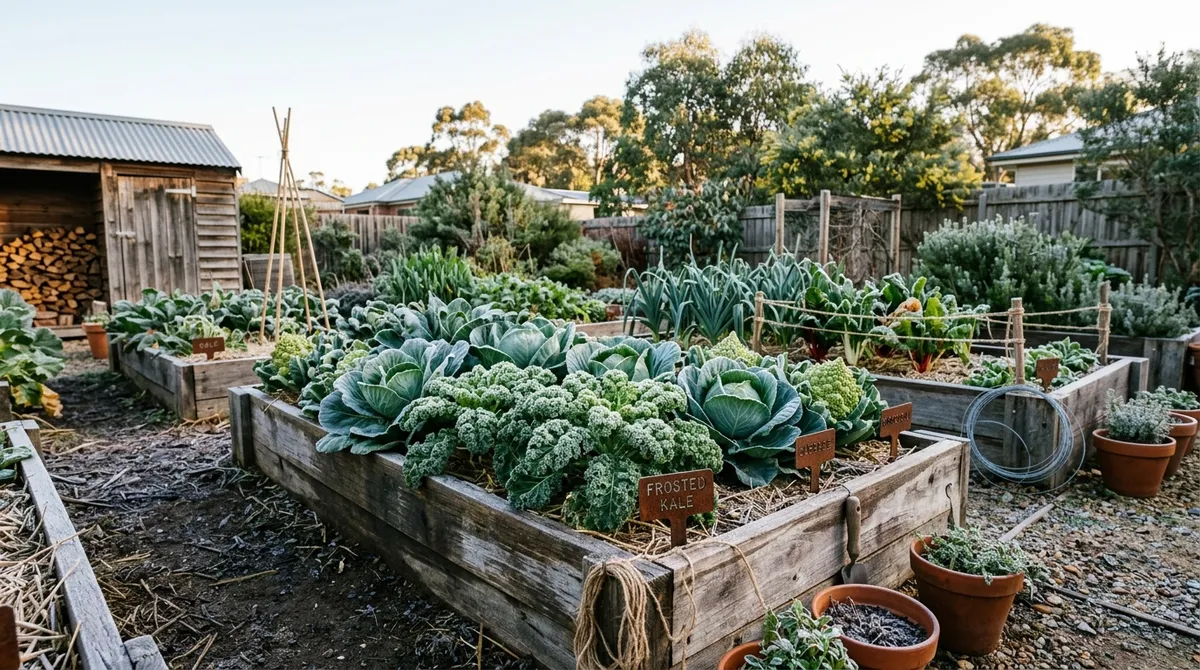
Frost-Tolerant Vegetables for Tasmania
Crops that handle minus 5 degrees, plus season extension with cloches and frost cloth
Frost is a fact of life in Tasmania. Hobart sees 40-60 frost days per year. Inland valleys see 80 or more. Rather than fighting the cold, the practical approach is to grow crops that handle it. Plenty of vegetables tolerate repeated hard frosts to minus 5 degrees, and several actually improve in flavour after frost exposure.
This guide covers the hardiest vegetables for Tasmanian conditions, ranked by frost tolerance, plus practical methods for protecting less hardy crops when you want to extend the season.
The Toughest Crops: Tolerant to Minus 5°C and Below
These vegetables survive the coldest nights Tasmania delivers. They can stay in the garden through winter without protection in most Tasmanian locations.
Kale
Kale is the single hardiest vegetable you can grow. Established plants tolerate frosts to minus 8 degrees or colder. Frost triggers the plant to produce sugars as a natural antifreeze, making the leaves sweeter and more tender. Tuscan kale (cavolo nero) and Winterbor curly kale are the top performers.
Plant seedlings in March or April. Harvest outer leaves from May onwards, leaving the growing tip to keep producing. A single kale plant can supply leaves for 6-8 months in Tasmania.
Garlic
Garlic cloves sit dormant underground through the coldest months, completely unfazed by hard frost. The cold is actually essential: garlic needs 6-8 weeks of temperatures below 10 degrees to form properly divided bulbs. Plant in April or May, harvest in November or December.
Leeks
Leeks tolerate frosts to minus 7 degrees. They grow slowly through winter and are ready for harvest from June through to September. Transplant seedlings in March or April, spacing 15 centimetres apart. Musselburgh and King Richard are reliable varieties. Hill soil around the stems as they grow to produce longer white shanks.
Parsnips
Parsnips are among the most frost-hardy root vegetables, tolerating minus 6 degrees or colder. They must be frosted to develop their full sweetness. Sow in autumn, leave in the ground all winter, and harvest as needed. Melbourne Market is the standard variety.
Brussels Sprouts
Brussels sprouts tolerate minus 5 degrees and produce their best flavour after several frosts. The individual sprouts mature from the bottom of the stalk upwards. Plant seedlings in March for a July to September harvest. They need a long growing season, so early planting is essential.
Hardy Crops: Tolerant to Minus 3°C
These vegetables handle typical Hobart frosts without problems. They may suffer leaf damage in severe frost hollows that drop below minus 5 degrees.
Silverbeet and Chard
Silverbeet tolerates frosts to minus 3 or minus 4 degrees. Outer leaves may burn in hard frost, but the plant recovers quickly. Fordhook Giant is the toughest variety. Rainbow chard is slightly less hardy but still reliable in most Hobart gardens.
Broad Beans
Broad beans handle frosts to minus 5 degrees once established. Young seedlings (under 15 centimetres tall) are slightly more vulnerable. Sow in April or May, and the plants will be tall enough to handle the coldest months by June. Aquadulce is the hardiest variety.
Cabbage
Mature cabbage heads tolerate minus 4 degrees. Sugarloaf, Drumhead, and red cabbage varieties are all suitable for Tasmanian winters. Young transplants need frost cloth protection during severe cold snaps until they establish.
Carrots and Beetroot
Root vegetables in the ground tolerate frost well because the soil insulates the edible root. Carrots handle minus 3 degrees above ground; the roots survive even colder temperatures. Beetroot is similar. Mulch heavily around the crowns to protect the exposed tops during severe frost.
Peas
Established pea plants tolerate frost to minus 3 degrees. Young seedlings are more vulnerable. Sow in autumn so plants are well established before the hardest frosts arrive. Snow peas and sugar snap peas are slightly more frost-sensitive than shelling peas.
Moderate Frost Tolerance: Minus 1 to Minus 2°C
These crops survive light frosts but need protection during harder freezes.
- Spinach: Handles light frost (minus 1 to minus 2 degrees) well. Heavy frost damages leaves but rarely kills the plant. Cover with frost cloth during severe cold.
- Lettuce: Tolerates light frost but heavy frost turns leaves to mush. Grow under cloches or in a cold frame for winter salads.
- Broccoli: Mature plants handle minus 2 degrees, but developing heads can be damaged by hard frost. Harvest heads before severe cold or cover with frost cloth.
- Asian greens: Bok choy and pak choy tolerate light frost but not hard freezes. Best grown under cover in winter.
Season Extension Methods
These techniques let you grow frost-sensitive crops for longer and protect moderate-hardy crops during severe cold events.
Cloches
A cloche is any transparent cover placed over a plant to trap warmth. Simple and effective options include:
- Bottle cloches: Cut the bottom off a 2-litre soft drink bottle and place over individual seedlings. Leave the cap off for ventilation during the day. Replace it at night for maximum frost protection. Effective down to about minus 3 degrees.
- Tunnel cloches: Bend flexible PVC pipe or fencing wire into hoops over a garden row. Cover with clear plastic sheeting, securing the edges with soil or rocks. Creates a mini greenhouse effect. Raises the temperature by 3-5 degrees overnight.
Frost Cloth
Woven polypropylene fabric (sold as frost cloth or horticultural fleece) draped over plants provides 2-3 degrees of frost protection. Drape it loosely over stakes or frames so it does not touch the leaves. Remove during the day to allow light and airflow. Reusable for many seasons.
Cold Frames
A cold frame is a bottomless box with a transparent lid (glass or polycarbonate). Place it over plants or use it as a mini-growing space. Cold frames raise the temperature by 5-8 degrees, enough to grow lettuce, spinach, and Asian greens through a Tasmanian winter. Prop the lid open on mild days to prevent overheating.
Microclimates
Use your garden's natural microclimates to your advantage. North-facing walls absorb heat during the day and radiate it at night. Planting near brick walls, stone foundations, or concrete paths gives plants a warmer microclimate. Low-lying areas collect cold air and frost first; plant frost-sensitive crops on slight slopes where cold air drains away.
In Hobart, gardens on the eastern shore (Bellerive, Howrah) are often milder than western suburbs at the same elevation. Gardens near the Derwent River benefit from the water's moderating effect on overnight temperatures.
Frost-Sweetened Flavour
Several vegetables taste better after frost. The cold triggers a survival response where plants convert starch to sugar, acting as a natural antifreeze. These crops are worth leaving in the garden through the coldest months specifically for this flavour improvement:
- Kale: Frost-sweetened kale is noticeably less bitter and more tender than kale harvested before frost.
- Parsnips: Parsnips that have been through multiple hard frosts develop a sweet, nutty flavour that unfrosted roots lack entirely.
- Brussels sprouts: Frost-kissed sprouts are sweeter and more complex than those picked in autumn.
- Carrots: Cold-stored carrots in the ground become sweeter as soil temperatures drop.
- Leeks: Winter-harvested leeks from Tasmania are among the most flavourful in Australia.
Know Your Frost Dates
The Planting Season app tracks frost risk for your Tasmanian suburb and sends planting reminders based on your local conditions.
Open the Planting Season AppFrequently Asked Questions
What vegetables survive heavy frost in Tasmania?
Kale, silverbeet, broad beans, garlic, leeks, parsnips, carrots, turnips, Brussels sprouts, and cabbage all tolerate frosts to minus 5 degrees or colder. Kale and parsnips actually taste better after frost exposure.
How cold does it get in Tasmania?
Hobart's winter overnight lows average 3-5 degrees, with frosts to minus 2 or minus 3 degrees common. Inland areas regularly reach minus 5 degrees. Highland areas and frost hollows can drop to minus 8 or minus 10 degrees on clear nights.
How do cloches protect vegetables from frost?
Cloches trap heat around plants, raising the temperature by 2-5 degrees. A simple bottle cloche over a seedling or a tunnel cloche over a row creates a protective microclimate through the coldest overnight hours.
Do vegetables grow at all in a Tasmanian winter?
Growth slows significantly in June and July. Hardy crops survive and hold their quality, but active growth is minimal. Growth resumes in August as days lengthen. The strategy is to establish plants in autumn so they are mature enough to harvest through winter.
Free Monthly Planting Calendar
Get a personalised email each month with what to plant, seasonal tips, and harvest reminders for your region.
We send one email per month. Unsubscribe any time.