
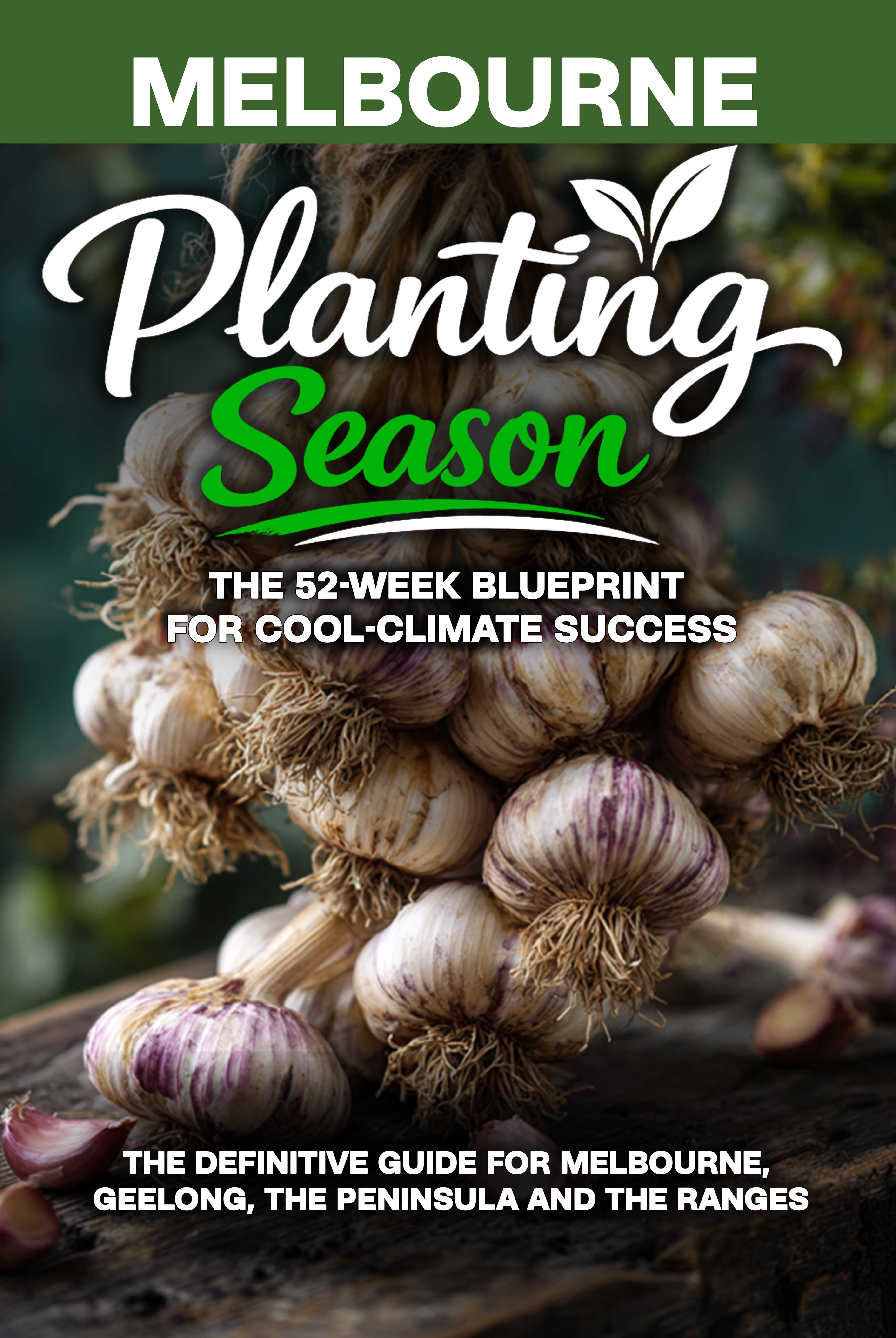
Why Melbourne Needs Its Own Gardening Book
Melbourne is the trap. The four-season English gardening books look like they should work here: a clear winter, a defined spring, the kind of autumn the rest of the country only reads about. Then you follow one, plant tomatoes "after the last frost" on a 24-degree September day, and a hard October morning wipes them out. Or you treat winter as the off-season, let the beds sit empty from June, and miss the easiest growing months Melbourne has.
The real Melbourne calendar runs on different rules. Growth nearly stops in the cold soil of June and July. The frost line moves street by street, from the virtually frost-free inner city to the regular frosts of the plains and the hills. Cup Day is the traditional tomato day for the suburbs, and the false spring punishes the impatient every single year. Summer is a heat-and-wind lottery, long mild stretches broken by 40-degree heatwaves on hot north winds. Even the rain splits the city in two, the wetter eastern hills against the dry basalt plains in their rain shadow.
Planting Season Melbourne fixes that. It gives you the calendar, the plant library, and the playbook calibrated to this exact climate, from the bay to the ranges.
What You Get Inside
The Full Chapter List
Seventeen main chapters plus a nine-part plant library. Every chapter is written for Melbourne and Victoria. Every chapter assumes you want to eat what you grow.
The Plant Library (parts 1 through 9)
- Part 1: Leafy greens and brassicas (brussels sprouts, proper cauliflower, kale all winter, cabbage, broccoli, lettuce, silverbeet and more)
- Part 2: Fruiting vegetables (tomato as the hero crop, plus capsicum, eggplant, zucchini, cucumber, beans, corn)
- Part 3: Root vegetables (carrots, beetroot, parsnip, swede, celeriac, onion, garlic)
- Part 4: Summer greens and heat-lovers (warrigal greens, amaranth, basil, heat-tough lettuce)
- Part 5: Legumes (broad beans get a full celebration, plus peas, bush and climbing beans)
- Part 6: Herbs (coriander that finally behaves, plus parsley, basil, tarragon, chervil and more)
- Part 7: Temperate fruits, berries and hardy citrus
- Part 8: Native and indigenous edibles (murnong, warrigal greens, mountain pepper, river mint, muntries, saltbush)
- Part 9: Companion plants and flowers
Each plant entry includes Melbourne sowing windows by season, spacing, sun, water needs, companions to plant with, common pests, common diseases, a kitchen use note, and a realistic Melbourne tip with varieties and local seed sources.
A Sample from the Book
Melbourne is not one climate. The inner city, warmed by the urban heat island, can be virtually frost-free while the open plains at Werribee and the hills above Kinglake are catching regular frosts on the same morning. A gardener in St Kilda plants tomatoes weeks before a gardener in the Dandenongs, even though they share a postcode range and a footy team.
Soil temperature, more than air temperature, decides when the warm season really starts. Tomatoes and cucurbits want soil at 16 to 20 degrees to establish, and on the suburban baseline that point arrives around late October to early November. That is the real reason behind the Cup Day rule. It is not superstition. It is the date the soil is finally warm enough and the frost risk has finally passed for most suburbs.
Who It's For
You've just moved in. The backyard is bare. You want food growing by next season and you don't know where to start. The book walks you through your first year.
You've lost tomatoes to an October frost and watched winter beds sit empty. This book tells you why, and exactly when to plant instead.
You gardened in Sydney or Brisbane. Everything is later and colder down here. The book recalibrates your timing to a cool temperate reality.
You rent, or you live in a unit. The small spaces chapter and container-friendly plant entries are built for you, possums included.
You want real food, lower bills, and a backyard that feeds the household year-round. The book is the 12-month plan for that.
You know your way around a garden already. The plant library, pest field guide, and Melbourne-tuned calendar are the book you keep open on the bench.
Pair the book with the free Planting Season app
While you wait for the book, the app already has Melbourne covered: month-by-month alerts, watering reminders tuned to your region, and a mobile plant library you can search from the garden.
Open the Planting Season app →Why This Book, Not Another
Planting Season Melbourne is written for Victoria's cool temperate climate and nothing else. A St Kilda reader and a Macedon Ranges reader get different advice for the same month, because their frost, their soil and their season are different in the same month. If a paragraph could apply unchanged to Brisbane, it does not belong in this book.
The voice is plain and direct, the neighbour over the fence, not a textbook. The book will tell you when to skip a crop, when to wait for Cup Day, and when a glossy catalogue is selling you something that will sulk in cold Melbourne soil. It celebrates what the south grows better than anywhere, the garlic, the brussels sprouts, the cherries and the berries, and it kills the tropical dreams cleanly so you do not waste a season on a mango that will never fruit here.
It is built to last. A genuine reference you come back to every season for years, paired with the free app for the day-to-day.
Frequently Asked Questions
Where can I buy the Melbourne book?
It is out now in paperback as Book 2 in the Planting Season series, available on Amazon. You can also sign up for the free monthly Melbourne planting calendar by email.
Is this book only for the city of Melbourne?
The footprint is greater Melbourne, Geelong and the Bellarine, the Mornington Peninsula, the Dandenongs and Yarra Valley, and the Macedon Ranges. Gardeners in Ballarat, Bendigo and Gippsland get nearby-region guidance, since the cool-climate timing carries across much of central and southern Victoria.
I'm a total beginner. Is this book for me?
Yes. The book starts with the Melbourne climate, the seven biggest mistakes new gardeners make here, soil basics, water, and planning. It builds from first garden bed through to seed saving and crop rotation. No prior experience needed.
What is the Cup Day rule?
The first Tuesday of November is the traditional frost-safe date for planting out tomatoes and the rest of the solanum family in most Melbourne suburbs. The inner city and bayside can jump a couple of weeks earlier, the hills wait until late November. The book gives the exact timing for your zone.
Does it include fruit trees and natives?
Yes. The plant library has a full section on temperate fruits, berries and hardy citrus, and a section on native and indigenous edibles including murnong, the local Victorian yam daisy, warrigal greens, mountain pepper and muntries.
Does it work with the Planting Season app?
Yes. The app already covers Melbourne, with month-by-month alerts, watering reminders and a mobile plant library. The book is the full reference, the app is the day-to-day companion. Visit plantingseason.com.au/app to try it.
Grow food every month of the year.
Planting Season Melbourne & Surrounds is out now in paperback. Grab your copy and start gardening to the real Melbourne calendar.
Prefer email? Get the free monthly Melbourne planting calendar. See your reader bonuses →
Already growing in another climate? Browse the whole series →