
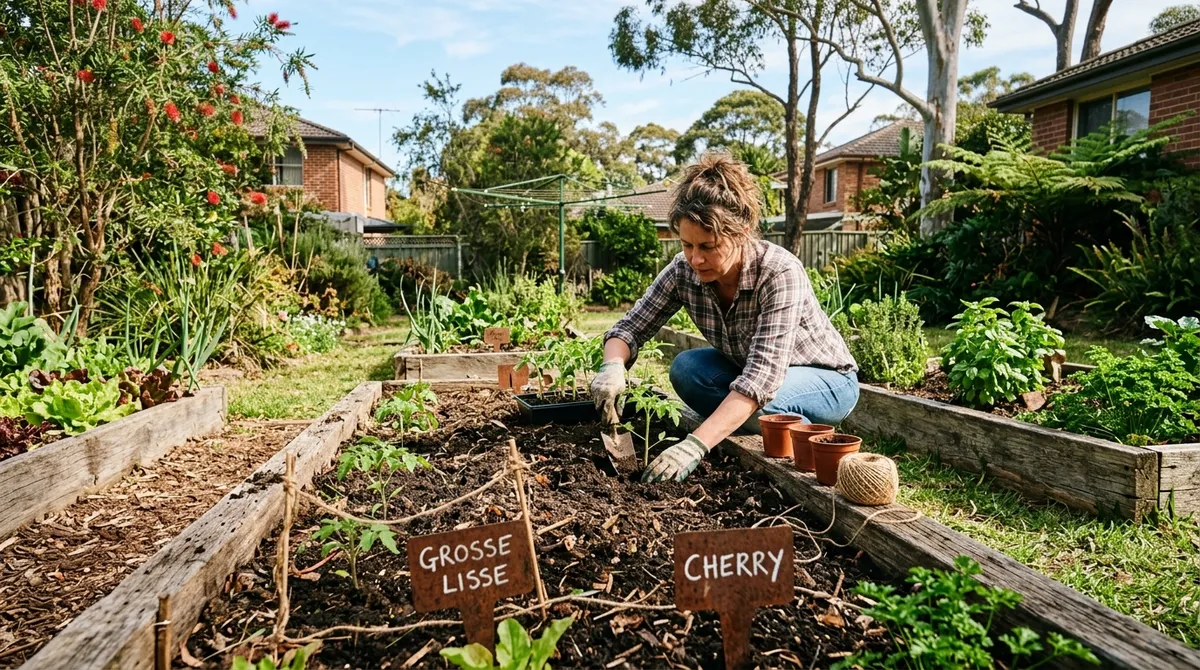
When to Plant Tomatoes in Sydney
The right timing, varieties, and pest strategies for Sydney's warm temperate climate
Sydney's warm temperate climate gives you a generous tomato season, longer than Melbourne's and more forgiving than Brisbane's. The key is getting the timing right for your specific part of the city. A gardener in Penrith has different frost risks to someone on the Northern Beaches, and that changes when you can safely plant out.
The short version: sow seeds indoors in July or August, transplant seedlings from mid-September to November, and harvest from December through to May. A second sowing in January extends your harvest into late autumn.
Sydney's Tomato Timeline
Start Seeds Indoors: July to August
Tomato seeds need warmth to germinate, around 20 to 25 degrees. Sydney's winter days often sit at 16 to 18 degrees, so a sunny windowsill or a heat mat helps. Sow seeds into small pots or seed trays filled with seed-raising mix. Keep them moist and warm, and expect germination in 7 to 14 days.
Start seeds in mid-July if you want the earliest possible transplant in September. For a less rushed timeline, sow in August and transplant in October.
Transplant Outdoors: September to November
The main planting window opens in mid-September for coastal areas (Bondi, Manly, Cronulla) where frost is rare. For Western Sydney (Penrith, Richmond, Camden) and the Hills District, wait until late September or early October when overnight temperatures stay above 10 degrees consistently.
Harden off seedlings for a week before planting out. Set them outside in a sheltered spot for a few hours each day, increasing exposure gradually. Transplant when they have 4 to 6 true leaves and the soil temperature is at least 16 degrees.
Spacing matters. Give each plant 50 to 60 centimetres in rows, with 80 centimetres between rows. Stake or cage plants at planting time, not later when you risk damaging roots.
Second Sowing: January
A January sowing produces an autumn crop that harvests through March to May. This works well in Sydney because autumn is warm and dry, with less disease pressure than the humid peak of summer. The late crop often produces cleaner fruit with fewer fungal problems.
Sow directly into pots or the garden bed. Soil is warm enough for direct sowing by January. These plants will be smaller than your main crop but productive until cold nights shut down fruit set in May.
Microclimate Differences Across Sydney
Sydney is not one climate. The temperature difference between a Penrith backyard and a Coogee courtyard can be 8 to 10 degrees on a summer afternoon.
- Coastal suburbs (Eastern Beaches, Northern Beaches, Sutherland Shire coast): Frost-free. You can transplant from mid-September. Sea breezes moderate summer heat, so plants stay productive longer. Salt wind is the main concern for exposed gardens.
- Inner West and North Shore: Mild winters with rare light frost. Transplant from late September. These areas get good warmth but also humidity, so airflow around plants matters.
- Western Sydney (Penrith, Blacktown, Liverpool, Camden): Hotter summers (regularly above 40 degrees) and colder winters with regular frost. Wait until early October for transplanting. Provide afternoon shade during heatwaves, as sustained temperatures above 38 degrees cause flower drop.
- Blue Mountains fringe (Springwood, Blaxland): The coolest part of Greater Sydney. Frost risk extends into October. Consider greenhouse growing or wait until late October. Choose early-maturing varieties.
Best Tomato Varieties for Sydney
These varieties are proven performers in Sydney gardens:
- Grosse Lisse: The classic Australian slicer. Reliable, productive, and handles Sydney's humidity well. Sets fruit consistently through summer.
- Tommy Toe: Small cherry tomato with intense sweetness. Very productive and tolerant of variable conditions. Excellent for continuous picking.
- Roma: The sauce tomato. Meaty, low-seed, and produces heavily in January and February. Perfect for batch cooking.
- Mortgage Lifter: Large heritage variety with outstanding flavour. Needs staking and regular feeding but rewards with enormous fruit from December.
- Brandywine: The heirloom standard. Pink, beefsteak-type fruit with complex flavour. Performs better in Sydney than in subtropical climates because the humidity is lower.
- Sweet Bite: Cherry tomato that produces trusses of small, very sweet fruit. Disease resistant and reliable.
For Western Sydney, favour heat-tolerant varieties. Grosse Lisse and Roma handle extreme heat better than most heirlooms. For cooler areas like the Blue Mountains fringe, choose early-maturing types like Tigerella or Early Girl.
Managing Pests and Disease
Fruit Fly
Queensland fruit fly has been established in Sydney for decades. Activity increases from November and peaks through January to March. Use exclusion netting over plants from November onwards. Pick fruit as it starts to colour and ripen indoors during December to March. Protein-based bait sprays applied to foliage weekly reduce adult populations.
Fungal Diseases
Early blight and septoria leaf spot are common in Sydney, especially during humid spells in January and February. Water at the base of plants, never overhead. Mulch with straw to prevent soil splashing onto leaves. Remove lower leaves that touch the ground. Space plants for airflow.
Heatwave Management
Western Sydney regularly hits 40 degrees or above in January and February. Tomato flowers drop when temperatures exceed 38 degrees for extended periods. Provide temporary shade cloth (50% shade) during extreme heat events. Keep soil evenly moist with deep watering every 2 to 3 days rather than light daily watering.
Feeding and Watering
Tomatoes are heavy feeders. Prepare the soil with compost and well-rotted manure before planting. Side-dress with a balanced organic fertiliser every 3 to 4 weeks once flowering begins. Liquid seaweed fortnightly supports root health and stress tolerance.
Water deeply 2 to 3 times per week rather than a light daily sprinkle. Consistent watering prevents blossom end rot (a calcium uptake problem triggered by irregular moisture). Mulch 5 to 8 centimetres deep around plants to retain moisture and regulate soil temperature.
Summary: Your Sydney Tomato Calendar
July to August: Start seeds indoors on a warm windowsill or heat mat.
September (coastal) to October (western): Transplant hardened-off seedlings outdoors.
December to May: Harvest main crop. Pick fruit as it colours during fruit fly season.
January: Second sowing for an autumn harvest through March to May.
Track Your Tomato Season
Get month-by-month reminders for sowing, transplanting, and harvesting in your Sydney suburb.
Open the Planting Season AppFrequently Asked Questions
When should I plant tomatoes in Sydney?
Sow tomato seeds indoors from July to August. Transplant seedlings outdoors from mid-September (coastal areas) to early October (Western Sydney). The main planting window is September to November for a summer harvest. A second sowing in January can produce an autumn crop through to May.
What are the best tomato varieties for Sydney?
Grosse Lisse is the classic Sydney slicer. Tommy Toe produces masses of sweet cherry tomatoes. Roma is ideal for sauce making. Mortgage Lifter and Brandywine perform well in Sydney's warm summers. For cherry types, Sweet Bite and Black Cherry are reliable producers.
Can I grow tomatoes in Sydney in winter?
Sydney winters are too cool for tomatoes to fruit reliably. Night temperatures regularly drop below 10 degrees in June and July, which stops fruit set. Start seeds indoors in July under cover, ready for transplanting in September when soil temperatures reach 16 degrees or above.
How do I protect tomatoes from fruit fly in Sydney?
Use fine exclusion netting over plants from November onwards when Queensland fruit fly becomes active. Protein-based bait sprays applied weekly to foliage help reduce populations. Pick fruit as soon as it colours and ripen indoors during peak fruit fly months (December to March).
Free Monthly Planting Calendar
Get a personalised email each month with what to plant, seasonal tips, and harvest reminders for your region.
We send one email per month. Unsubscribe any time.