
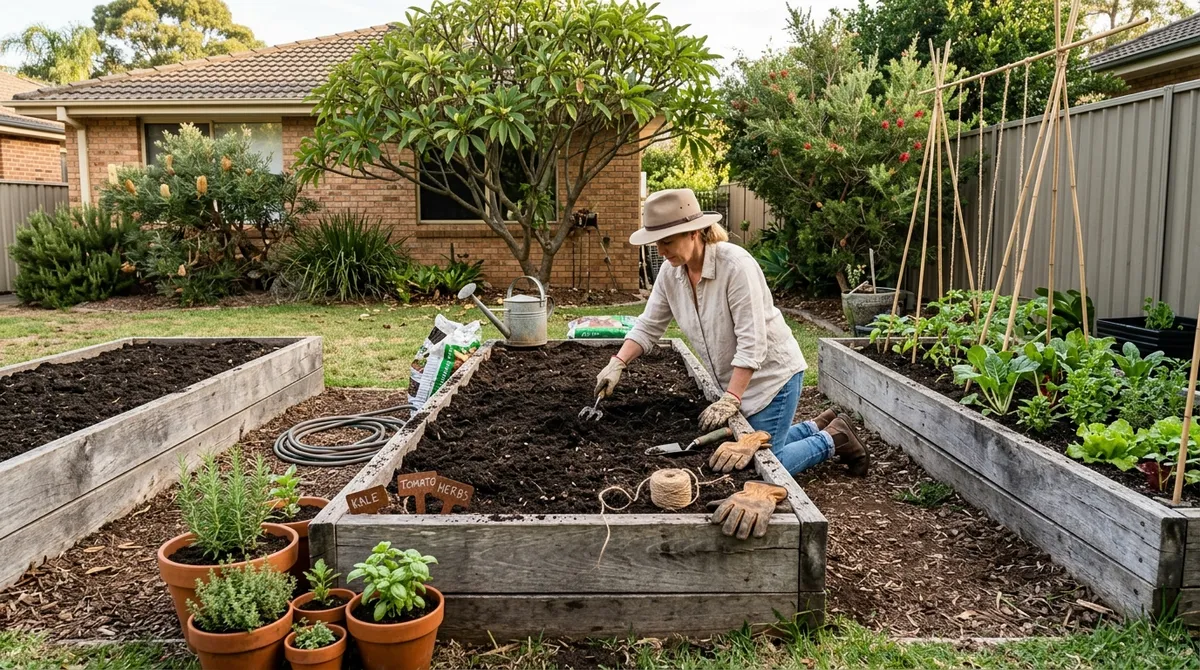
How to Start a Vegetable Garden in Sydney
A practical beginner guide for Sydney's warm temperate climate
Starting a vegetable garden in Sydney is easier than most people think. The climate is mild, frost is rare (except in Western Sydney), and you can grow food 12 months of the year. The mistake most beginners make is trying to grow everything at once. Start small, choose easy crops, and expand once you've had a few successes.
Step 1: Assess Your Space
Walk outside and look at your garden at different times of the day. Note where the sun falls in the morning, midday, and afternoon. Most vegetables need at least 4 to 6 hours of direct sun. Fruiting crops like tomatoes need 6 to 8 hours.
Common Sydney garden types:
- Inner West terrace courtyard: Often south-facing with limited sun. Best for leafy greens, herbs, and shade-tolerant vegetables. Container gardening works well.
- Suburban backyard (North Shore, Northern Beaches, Sutherland Shire): Usually has sunny and shaded sections. Use the sunniest spot for your vegetable bed. Watch for shade from large trees.
- Western Sydney backyard: Good sun exposure but extreme summer heat. Afternoon shade from a building or shade cloth is helpful for heat-sensitive crops.
- Apartment balcony: Herbs and compact crops in containers. See our balcony herb guide for details.
Step 2: Prepare Your Soil
Most Sydney backyards have clay soil. It holds water, compacts easily, and is hard for roots to push through. Improving it is the single most important thing you can do.
For an existing garden bed: dig in 5 to 10 centimetres of compost. If the soil is heavy clay, add gypsum at the rate recommended on the packet (typically 1 kilogram per square metre). Gypsum helps break up clay without changing the pH. Work it in with a garden fork. This is a process that takes seasons, so keep adding compost every time you replant.
For a new raised bed: fill it with a mix of 60% quality garden soil, 30% compost, and 10% aged manure. This gives you an immediately workable growing medium. A bed 1.2 metres wide by 2.4 metres long and 30 centimetres deep needs approximately 0.9 cubic metres of mix.
For containers: use a quality potting mix labelled "Premium" with the Australian Standard tick. Garden soil compacts in pots and drains poorly.
Step 3: Start With These Four Crops
These are the most forgiving, productive first crops for Sydney beginners:
1. Silverbeet
Plant seedlings any time of year. Silverbeet grows in sun or part shade, tolerates clay soil, and produces for 6 to 12 months from a single planting. Harvest outer leaves and let the centre keep growing. Fordhook Giant is the standard variety. One plant supplies enough greens for weekly cooking.
2. Lettuce
Plant seedlings from March to September (too hot in summer for beginners). Ready to harvest in 6 to 8 weeks. Loose-leaf varieties (oakleaf, coral) are easier than hearting types because you pick individual leaves rather than waiting for a full head. Sow or plant a few every 3 weeks for continuous supply.
3. Cherry Tomatoes
Plant seedlings from September to November. Cherry tomatoes are more forgiving than large varieties and produce more fruit per plant. Tommy Toe and Sweet Bite are reliable choices. Provide a stake or cage. Water at the base, not overhead. Your first harvest will be around 10 to 12 weeks after planting.
4. Herbs (Parsley and Mint)
Plant parsley seedlings any time. Plant mint in a separate pot (it spreads aggressively). Both tolerate part shade and produce for months. Having fresh herbs available for cooking is the quickest way to feel the benefit of your garden.
Step 4: Watering and Mulching
Water deeply 2 to 3 times per week rather than lightly every day. Deep watering encourages roots to grow down into the soil, making plants more drought-tolerant. Water in the morning when possible, and water at the base of plants rather than over the leaves.
Mulch around plants with straw, sugarcane mulch, or compost. Apply a layer 5 to 8 centimetres deep, keeping it away from plant stems. Mulch retains moisture, suppresses weeds, and moderates soil temperature. In Sydney's summer, mulch is essential for keeping roots cool and reducing watering frequency.
Step 5: Feeding
Start simple. Mix compost into the soil before planting. Apply a liquid seaweed fertiliser fortnightly during the growing season. Seaweed is gentle (it's hard to over-apply) and supports root health and stress tolerance. As you gain experience, you can move to specific fertilisers for different crops.
Common Beginner Mistakes in Sydney
- Planting at the wrong time: Southern Australian calendars are often wrong for Sydney. Tomatoes go in September to November, lettuce goes in March to September. Use a Sydney-specific planting calendar.
- Overwatering: Clay soil holds water. If the soil is still damp 3 centimetres below the surface, skip the watering. Soggy roots kill more plants than drought.
- Starting too big: A single 1.2 by 2.4 metre raised bed is enough to learn with. Expand once you've had a full season of success.
- Ignoring pests until it's too late: Check plants every 2 to 3 days. Look under leaves for caterpillars and aphids. Hand-pick caterpillars. Spray aphids off with a strong water jet. Early intervention prevents infestations.
- Planting in full shade: If your sunniest spot gets less than 4 hours of direct sun, stick to leafy greens and herbs. See our shade vegetables guide.
When to Start (Any Month Works)
Autumn (March to May): The best starting point. Mild weather, low pest pressure, and a huge range of crops to plant. Leafy greens, brassicas, peas, broad beans, root vegetables, and herbs.
Winter (June to August): Still good. Sow peas, broad beans, onions, and leafy greens. Start tomato seeds indoors in July for spring transplanting.
Spring (September to November): Warm-season crops go in. Tomatoes, capsicum, beans, zucchini, cucumber, basil, and corn.
Summer (December to February): The hardest time to start because heat and pests are at their peak. If you must start now, begin with herbs in containers on a sheltered balcony or patio.
Get Personalised Planting Reminders
The Planting Season app tells you exactly what to plant in Sydney each month, based on your location.
Open the Planting Season AppFrequently Asked Questions
What is the best time to start a vegetable garden in Sydney?
Autumn (March to May) is the best time to start a vegetable garden in Sydney. The weather is mild, pest pressure is low, and dozens of easy crops can be planted. Late winter (August) is the second-best starting point. Avoid starting in the heat of January and February.
What are the easiest vegetables to grow in Sydney?
The easiest first vegetables for Sydney are silverbeet (grows year-round, almost indestructible), lettuce (plant in autumn and winter), cherry tomatoes (plant in spring), and herbs like parsley and mint. These crops are forgiving of beginner mistakes and produce quickly.
How much does it cost to start a vegetable garden in Sydney?
A basic garden bed can be started for under $100: a bag of compost ($15), a bag of potting mix or garden soil ($15), seedlings ($3 to $5 each), and basic tools (hand trowel, watering can). A raised bed with timber costs $150 to $300 depending on size. Container gardening on a balcony can start for under $50 with recycled pots.
Do I need raised beds in Sydney?
Raised beds are helpful for Sydney's heavy clay soil because they provide better drainage and allow you to fill them with quality growing mix. They are especially useful in low-lying areas prone to waterlogging. You can also grow directly in improved ground soil by adding compost and gypsum. Many Sydney gardeners use both methods.
Free Monthly Planting Calendar
Get a personalised email each month with what to plant, seasonal tips, and harvest reminders for your region.
We send one email per month. Unsubscribe any time.