
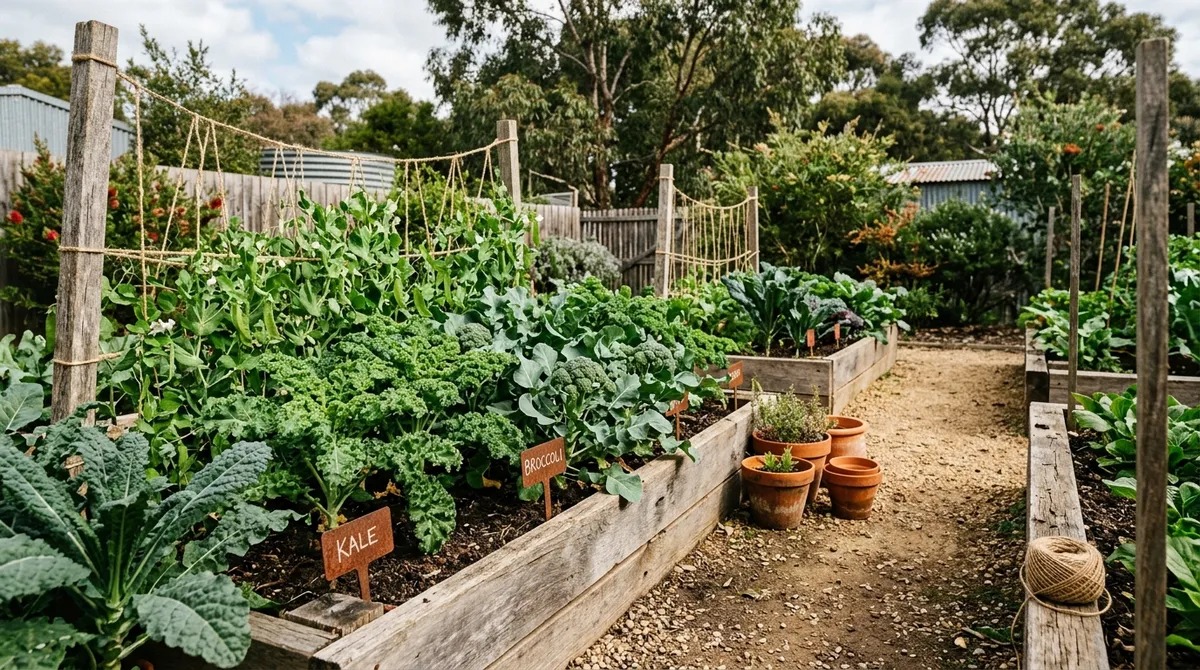
What to Plant in Winter in South East Queensland
SEQ's best growing season: 60+ crops for the cool, dry months from April to September
Gardeners who move to SEQ from southern states often make the same mistake: they try to garden on the Melbourne or Sydney calendar. In SEQ, winter is your prime growing season. The days are warm (20-23 degrees), the nights are mild, humidity drops to comfortable levels, and most pests go quiet. You can grow nearly everything from April to September.
The dry season runs from roughly April to September, with June to August receiving the least rainfall. Brisbane averages just 35mm of rain in August compared to 160mm in February. This dry, mild weather is ideal for an enormous range of food plants.
Leafy Greens and Salad Crops
These are the stars of SEQ winter. Sow every 2-3 weeks for continuous harvest:
- Lettuce: All types thrive. Cos, butterhead, oak leaf, and loose-leaf varieties. Direct sow or transplant seedlings. Harvest outer leaves for months of production.
- Spinach (English): Grows properly in SEQ winter, unlike summer when it bolts within weeks. Sow direct from April. Harvest baby leaves from 4 weeks.
- Silverbeet: Year-round in SEQ, but winter crops are the cleanest with no leaf miner damage. Rainbow chard adds colour to the garden.
- Kale: Tuscan kale (cavolo nero), curly kale, and Red Russian all produce heavily through winter. Sweeter after cool nights.
- Rocket: Grows fast in cool weather without the bitterness of summer-grown rocket. Sow direct every 3 weeks.
- Asian greens: Bok choy, pak choy, tatsoi, mizuna, mibuna, and Chinese cabbage. Sow from March. These bolt in SEQ's warm months but hold beautifully through winter.
- Endive and radicchio: Excellent winter salad additions. Sow in April for harvesting through June and July.
Brassicas
The brassica family performs brilliantly in SEQ winter. Start seedlings in trays in March and April, then transplant 4-6 weeks later. Protect from cabbage white butterfly with fine netting.
- Broccoli: Transplant seedlings in April and May. Harvest main heads from June, then side shoots continue for weeks. Varieties: Green Sprouting, Di Cicco, Waltham 29.
- Cauliflower: More demanding than broccoli but grows well from April transplants. Snowball and Mini cauliflower varieties suit smaller gardens.
- Cabbage: Green, red, savoy, and Chinese varieties. Sugarloaf is a fast-growing variety for SEQ. Transplant April to June.
- Kohlrabi: Often overlooked, but fast (8 weeks from transplant) and delicious raw or cooked. Purple Vienna is widely available.
- Brussels sprouts: Marginal in coastal SEQ because nights are not cold enough. Gardeners in the western corridor (Ipswich, Gatton) and hinterland (Tamborine, Maleny) have better success.
Root Vegetables
Direct sow root crops into loose, well-prepared soil. Heavy clay soils common in Ipswich and south Brisbane benefit from raised beds for root crops.
- Carrots: Sow from March to July. Nantes types are the most reliable. Thin to 3cm spacing. Harvest from 10-12 weeks.
- Beetroot: Fast and forgiving. Sow from March to August. Harvest baby beets from 8 weeks or full-size at 12 weeks. Bull's Blood has edible leaves and roots.
- Turnips: Sow direct from April. Hakurei (Japanese salad turnip) is ready in 5-6 weeks. Purple Top White Globe for larger roots.
- Radish: The fastest crop in the garden. Sow and harvest in 4-5 weeks. Daikon radish needs longer (8-10 weeks) and grows well in SEQ winter.
- Parsnips: Sow from March to May. Slow to germinate (2-3 weeks). Needs 16-20 weeks to full size. Worth the wait in soups and roasts.
Legumes, Alliums, and Herbs
Legumes
- Peas: Sow from April to July. Snow peas and sugar snap peas are the most productive. Provide a trellis. Greenfeast for shelling peas.
- Broad beans: Sow from April to June. Aquadulce and Coles Dwarf are reliable in SEQ. Pinch out growing tips once pods form to reduce aphid problems.
- Climbing beans: In frost-free coastal areas (Redcliffe, Wynnum, Coolangatta), climbing beans produce through winter. Blue Lake and Scarlet Runner are good choices.
Alliums
- Garlic: Plant cloves from March to May. SEQ suits subtropical and turban varieties better than the hard-neck types grown in cool climates. Harvest in October and November.
- Onions: Sow seed in March or transplant seedlings in April and May. Short-day varieties (Early Texas Grano, Cream Gold) suit SEQ's latitude.
- Leeks: Transplant in April and May. Slow growing but trouble-free. Harvest from August onwards.
- Spring onions: Direct sow from March to August. Ready in 8-10 weeks. Sow every 3 weeks for continuous supply.
Herbs
- Coriander: Winter is the only time coriander grows properly in SEQ. It bolts to seed within 3 weeks in warm weather. Sow direct every 2-3 weeks from April to August.
- Parsley (flat-leaf and curly): Sow from March. Productive for 6 months or more.
- Dill: Sow direct from April. Use it fresh or let it self-seed for next year.
- Fennel (bulbing): Sow in April or May for bulb harvest in July and August.
Warm-Season Crops That Keep Going
One of SEQ's great advantages is that many warm-season crops continue producing through winter in frost-free coastal areas. Gardeners in Brisbane's inner suburbs, Redcliffe, the Gold Coast, and the Sunshine Coast can keep harvesting:
- Tomatoes (planted in the February to April autumn window)
- Capsicum and chilli (slow down but still produce)
- Eggplant (continues if protected from cold wind)
- Sweet potato (harvest tubers in May and June from summer plantings)
- Herbs: Basil slows but survives in sheltered spots. Rosemary, thyme, oregano, and sage are at their best in winter.
Gardeners in the western corridor (Ipswich, Springfield, Gatton) and elevated areas (Toowoomba, Tamborine) will experience frost. These warm-season crops need protection or should be removed before June.
A Winter Planting Schedule for SEQ
March to April: Garlic, onion seed, brassica seedlings, carrots, beetroot, peas, broad beans, lettuce, Asian greens, coriander, parsley, dill. Transplant tomato seedlings for the autumn crop.
May to June: Continue sowing leafy greens, root crops, and herbs. Transplant brassica seedlings. Last chance for garlic and broad beans.
July to August: Sow lettuce, rocket, spinach, and Asian greens for succession. Start tomato seeds indoors for the spring crop. Begin sowing spring onions and radish for fast harvests.
Plan Your Winter Garden
Get a personalised planting calendar for your SEQ suburb with week-by-week sowing reminders.
Open the Planting Season AppFrequently Asked Questions
What can I grow in winter in SEQ?
SEQ winters support over 60 crops. Leafy greens, brassicas, root vegetables, legumes, alliums, and herbs all thrive. In frost-free coastal areas, warm-season crops like tomatoes and capsicum continue producing through winter.
Is winter really the best growing season in SEQ?
Yes. SEQ winter days average 20-23 degrees with low humidity and almost no rain from June to August. Pest pressure drops dramatically. Fungal diseases are rare. Cool-season crops thrive, and many warm-season crops still produce because night temperatures rarely drop below 5 degrees in coastal areas.
When should I start planting for winter in SEQ?
Start transitioning in April as the wet season ends. April and May are ideal for sowing most winter crops. Garlic goes in from March to May. Brassica seedlings transplant well in April and May. Keep sowing leafy greens every 2-3 weeks through to August for continuous harvest.
Do I need to water much in SEQ winter?
SEQ winters are dry, averaging only 30-50mm of rain per month from June to August. You will need to water regularly, typically 2-3 times per week. Drip irrigation on a timer is efficient. Mulch heavily to retain moisture between waterings.
Free Monthly Planting Calendar
Get a personalised email each month with what to plant, seasonal tips, and harvest reminders for your region.
We send one email per month. Unsubscribe any time.