
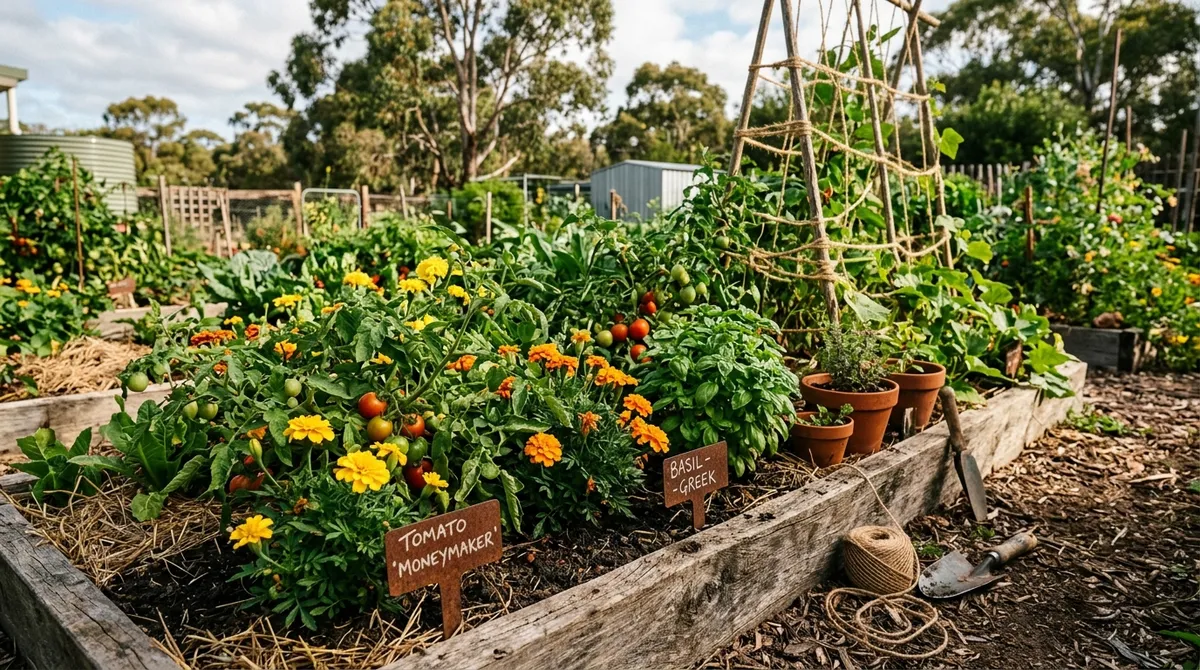
Companion Planting for South East Queensland
Subtropical pairings, trap cropping for pests, and timing around SEQ's wet and dry seasons
Companion planting in SEQ serves a practical purpose: managing the region's year-round pest pressure without relying on chemicals. The subtropical climate means insects, both helpful and harmful, are active in every month. Pairing the right plants together attracts beneficial predators, confuses pests, and improves overall garden health.
The strategies below are tested in SEQ conditions and account for the region's two distinct seasons: the cool dry period (April to September) and the hot wet period (October to March).
Attracting Beneficial Insects
The most effective companion planting strategy for SEQ gardens is growing flowering plants that attract predatory and parasitic insects. These beneficial insects eat or parasitize the pests that damage your crops.
Key Beneficial Insect Plants for SEQ
- Dill: Attracts parasitic wasps that lay eggs inside caterpillars and aphids. Grows best from April to August in SEQ. Let some plants flower rather than harvesting all the foliage.
- Coriander: The flowers attract hoverflies, whose larvae consume large numbers of aphids. Sow from April to August (bolts too fast in warm weather, which is actually useful here since the flowers are what you want).
- Fennel: Powerful attractant for parasitic wasps and lacewings. Grow as a perennial in SEQ. Place at the edge of the garden because fennel roots produce chemicals that inhibit some nearby plants.
- Sweet alyssum: Low-growing annual that flowers almost year-round in SEQ. Attracts hoverflies and parasitic wasps. Plant as a living mulch under taller crops.
- Marigolds (French, Tagetes patula): Repel whitefly, attract hoverflies, and suppress root-knot nematodes in the soil. Plant throughout the garden, especially near tomatoes and brassicas.
- Lemongrass: Perennial in SEQ. Repels mosquitoes and some garden pests. Grows into a large clump, so place at garden edges.
The goal is to have something flowering in your garden in every month of the year. In SEQ, this is achievable because the mild winter allows flowers year-round. A mix of dill, coriander, sweet alyssum, and marigolds covers all seasons.
Proven Pairings for SEQ Vegetable Gardens
Autumn and Winter Pairings (April to September)
- Tomatoes + basil + marigolds: The classic trio. Basil may improve tomato flavour and repels aphids. Marigolds deter whitefly. Plant basil between tomato plants and marigolds at the end of each row.
- Brassicas + dill + nasturtiums: Dill attracts parasitic wasps that control cabbage white butterfly caterpillars. Nasturtiums act as a trap crop for aphids, drawing them away from your broccoli and cabbage.
- Lettuce + radish + carrots: Radish matures fast and is harvested before carrots need the space. Lettuce provides living mulch that shades the soil and retains moisture for slow-growing carrots.
- Peas + brassicas: Peas fix nitrogen in the soil, which brassicas use for leaf growth. Interplant climbing peas on a trellis with brassicas growing at the base.
- Garlic + almost anything: Garlic's strong scent deters many insects. Interplant garlic cloves through your winter vegetable beds, especially near lettuce and brassicas.
Spring and Summer Pairings (October to March)
- Corn + beans + pumpkin (Three Sisters): Corn provides a trellis for climbing beans. Beans fix nitrogen. Pumpkin vines shade the soil as living mulch. Plant corn first, then beans 2 weeks later, then pumpkin 2 weeks after that. This combination works well in SEQ's wet season.
- Sweet potato + lemongrass: Both are vigorous growers that tolerate SEQ summer heat. Lemongrass at the borders repels pests while sweet potato covers the ground.
- Cucumber + sunflower + dill: Sunflowers provide partial shade for cucumbers during SEQ's intense summer sun. Dill attracts predatory insects that control cucumber beetles.
- Zucchini + borage: Borage flowers attract pollinators, improving zucchini fruit set. Borage also repels tomato hornworm and other pests. It self-seeds freely in SEQ, so manage it or it will take over.
Trap Cropping for SEQ Pests
Trap cropping uses sacrificial plants to lure pests away from your main crop. This strategy is particularly effective in SEQ, where pest numbers are high and chemical-free management is important.
- Nasturtiums for aphids: Plant nasturtiums at the corners and edges of your vegetable beds. Aphids prefer nasturtiums over most vegetables. Check nasturtiums regularly and remove heavily infested plants.
- Mustard for caterpillars: Cabbage white butterflies lay eggs on mustard plants before brassicas. Plant mustard 2-3 weeks before transplanting broccoli or cabbage. Inspect mustard leaves and remove caterpillars and eggs.
- Sunflowers for stink bugs: Green vegetable bugs (stink bugs) are attracted to sunflowers. Plant sunflowers away from your main tomato and bean crops to draw the bugs there instead.
- Cherry tomatoes for fruit fly: If growing a mix of tomato varieties, place early-ripening cherry tomatoes at the garden edge. Fruit fly will target these first. Use them as monitoring plants and apply bait spray to the foliage. Cover your main-crop tomatoes with exclusion netting.
Plants to Keep Apart
Some plants inhibit each other's growth or attract shared pests. These combinations should be avoided in SEQ gardens:
- Fennel and most vegetables: Fennel roots release chemicals that inhibit tomatoes, beans, and brassicas. Grow fennel in a separate bed or pot.
- Tomatoes and brassicas: Both are heavy feeders competing for the same nutrients. Tomatoes also attract pests that spread to brassicas.
- Beans and onions or garlic: Alliums inhibit the nitrogen-fixing bacteria on bean roots, reducing their growth.
- Potatoes and tomatoes: Both are solanaceous crops susceptible to the same diseases (early blight, bacterial wilt). Growing them together increases disease pressure.
Seasonal Companion Planting Calendar
March to April: Plant marigolds, dill, and coriander alongside autumn tomatoes and brassicas. Sow nasturtiums as trap crops at bed edges. Interplant garlic through all beds.
May to August: Maintain flowering dill and coriander for beneficial insects. Underplant brassicas with sweet alyssum. Companion plant peas with leafy greens.
September to November: Transition to summer companions. Plant basil with tomatoes (spring crop). Sow sunflowers, borage, and lemongrass. Set up Three Sisters plantings.
December to February: Maintain lemongrass borders. Keep sweet alyssum flowering. Focus trap crops around fruiting vegetables to manage high pest pressure.
Plan Your Companion Planting
Get companion planting suggestions for every crop in your SEQ garden, matched to your planting calendar.
Open the Planting Season AppFrequently Asked Questions
What are the best companion plants for tomatoes in SEQ?
Basil planted alongside tomatoes repels aphids and may improve flavour. Marigolds deter whitefly and nematodes. Plant dill or fennel nearby to attract predatory wasps that control caterpillars. Avoid planting tomatoes near brassicas.
How does companion planting help with pest control in SEQ?
Companion planting works in three ways: repelling pests with strong-scented plants (basil, marigolds, lemongrass), attracting beneficial insects with flowering herbs (dill, coriander, fennel), and trap cropping where sacrificial plants lure pests away from your main crop.
Does companion planting work differently in subtropical climates?
Yes. SEQ's year-round warmth means pest pressure is constant, so companion planting strategies need to operate in every season. Flowering companions that attract beneficial insects are particularly valuable because predatory wasps, hoverflies, and ladybirds are active through winter in SEQ.
What should I plant with brassicas in SEQ?
Plant dill, coriander, or fennel near brassicas to attract parasitic wasps that control cabbage white butterfly larvae. Nasturtiums act as a trap crop, drawing aphids away from your cabbages and broccoli. Avoid planting brassicas near strawberries or tomatoes.
Free Monthly Planting Calendar
Get a personalised email each month with what to plant, seasonal tips, and harvest reminders for your region.
We send one email per month. Unsubscribe any time.