
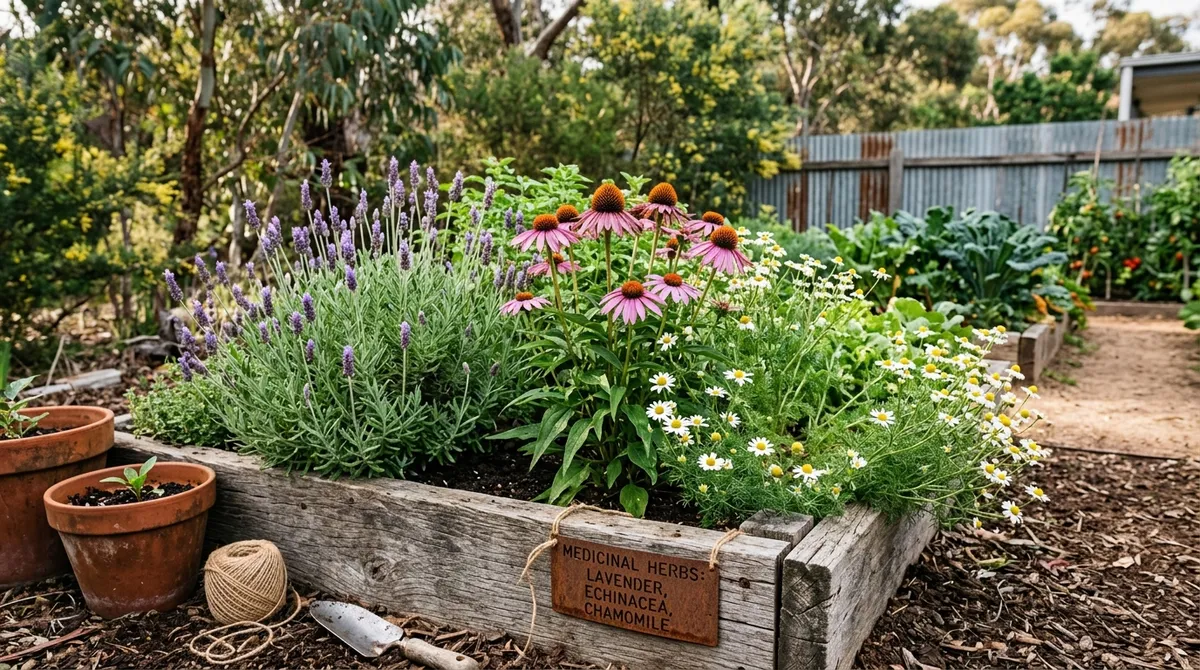
Medicinal Herbs for South East Queensland Gardens
Subtropical-friendly herbs with traditional medicinal uses. Grow them for tea, balms, poultices, or simply to have them on hand.
Best Medicinal Herbs for SEQ
SEQ's subtropical climate suits a wide range of medicinal herbs. Mediterranean herbs (rosemary, thyme, oregano, sage) grow well through the cooler months and struggle with summer humidity. Tropical herbs (ginger, turmeric, lemongrass) love SEQ's warm wet season. Native herbs (lemon myrtle, mountain pepper, pigface) are built for the local climate and deserve more love.
Tea and Digestive Herbs
Culinary Herbs with Traditional Use
Balms, Poultices and Topical Use
Warming Tropical Herbs
Australian Native Medicinals
Garden Helpers with Medicinal Value
When to Plant Medicinal Herbs in SEQ
Mediterranean herbs (rosemary, thyme, oregano, sage, lavender) establish best when planted in autumn. Aim for March to May. This gives roots months to develop before summer humidity hits. Plant them in free-draining soil on mounds or in terracotta pots.
Tea herbs like chamomile, calendula, dill and yarrow prefer cool-season growing. Sow March to August. They bolt fast in Brisbane heat, so don't leave it too late.
Tropical herbs (ginger, turmeric) go in August to October. Plant rhizomes 5cm deep after frost risk passes. Harvest when leaves die back in winter, usually May to July the following year.
Mint, lemon balm, Vietnamese mint and lemongrass can be planted year-round from cuttings or divisions. They're forgiving as long as they get regular water in summer.
How to Use Medicinal Herbs Safely
Fresh herb tea is the simplest, safest way to use most medicinal herbs. A few sprigs in hot water for ten minutes. That's a culinary-strength brew. Good for daily wellbeing, digestion, winding down.
Infused oils and balms work well for calendula, chamomile, comfrey and lavender. Pack the jar with dried flowers, cover with olive oil, steep two to four weeks in a warm spot. Strain. Use directly or blend with beeswax for a balm.
Tinctures, concentrated extracts and therapeutic-strength internal use are a different matter. These preparations can interact with medication, affect liver function, or cause other issues at concentrated doses. Learn from a qualified herbalist or book before making them, and get professional advice before using them for specific health conditions.
Comfrey is a special case. It's excellent topically for bruises, sprains and bone injuries. Don't take it internally. The pyrrolizidine alkaloids can damage the liver.
Growing Medicinal Herbs in SEQ
Most medicinal herbs want full morning sun and some afternoon shade through summer. Raised beds or large pots suit Mediterranean herbs. Native herbs like lemon myrtle want the same conditions as any subtropical plant: compost-rich soil, mulch, steady water when young.
Harvest leaves in the morning after dew dries and before the heat builds. Essential oils are at their highest then. Cut sprigs above a leaf node and the plant will bush up.
Dry herbs by hanging bunches upside down in a warm, dark, airy spot. Avoid direct sun which destroys the active compounds. Once crisp (usually one to two weeks), strip the leaves into airtight jars and label. Stored in the dark, most dried herbs hold potency for twelve months.
Related Guides
Frequently Asked Questions
What medicinal herbs grow well in South East Queensland?
Mint, chamomile, calendula, lemon balm, lemongrass, lemon myrtle, ginger, turmeric, sage, thyme, rosemary, oregano, yarrow and comfrey all thrive in SEQ. Native options include lemon myrtle, mountain pepper, Davidson plum and pigface. Most prefer morning sun with afternoon shade through peak summer.
When should I plant medicinal herbs in Brisbane?
Plant Mediterranean herbs (sage, thyme, rosemary, oregano) in autumn (March to May) so roots establish before summer humidity. Plant ginger and turmeric rhizomes August to October. Sow chamomile, calendula and yarrow in cooler months (March to August). Mint and lemon balm can be planted year-round from cuttings.
Are medicinal herbs safe to use at home?
Culinary-strength use of common medicinal herbs in tea or food is generally safe for most adults. Therapeutic-strength preparations (tinctures, concentrated extracts) can interact with medications and are not safe during pregnancy or with certain health conditions. Consult a qualified herbalist, naturopath or your GP before using herbs for health purposes.
Free Monthly Planting Calendar
Get a personalised email each month with what to plant, seasonal tips, and harvest reminders for your region.
We send one email per month. Unsubscribe any time.