

Companion Planting Guide for South East Queensland
Grow plants together for pollination, pest control, and soil improvement. Here's what actually works in SEQ's subtropical climate.
Companion planting isn't folklore. Growing the right plants together produces measurable benefits: improved pollination, reduced pest infestations, soil enrichment, and more efficient use of garden space. In SEQ's subtropical climate, some companion combinations are even more effective than in cooler regions. Others work differently or not at all.
The key is understanding why plants work together, not just following a list. When you understand the mechanism, you can adapt it to your garden.
How Companion Planting Works
Companion plantings work through three main mechanisms. Pollinator attraction draws beneficial insects to your garden. Some companions like borage flower prolifically and attract the bees, hoverflies, and other pollinators that fertilise your vegetables. Others repel pests through scent or root compounds. And some fix nitrogen in the soil or mine deep minerals and bring them to the surface where shallow-rooted plants can use them.
In SEQ, the intensity of the growing season amplifies these effects. The warm season runs long. Pollinators are active for months. Pest populations can explode. Nitrogen demand in fast-growing plants is constant. Companion plantings matter more here than in cooler climates because the stakes are higher and the growing pace is faster.
The Classic SEQ Companion Combinations
| Primary Plant | Companion | Why It Works |
|---|---|---|
| Tomato | Basil | Basil flowers attract pollinators to tomato blooms. May repel some tomato pests. Flavour pairing is culinary gold. |
| Tomato | Borage | Heavy bee attraction increases fruit set. Borage flowers are edible. Plant around tomato bed perimeter. |
| Carrot | Lettuce | Space efficient. Lettuce grows fast and matures before carrot root swell is complete. Remove lettuce before it crowds roots. |
| Carrot | Onion | Onion sulphur compounds deter carrot fly. Onion roots go deep, carrot roots go moderate depth, no competition. |
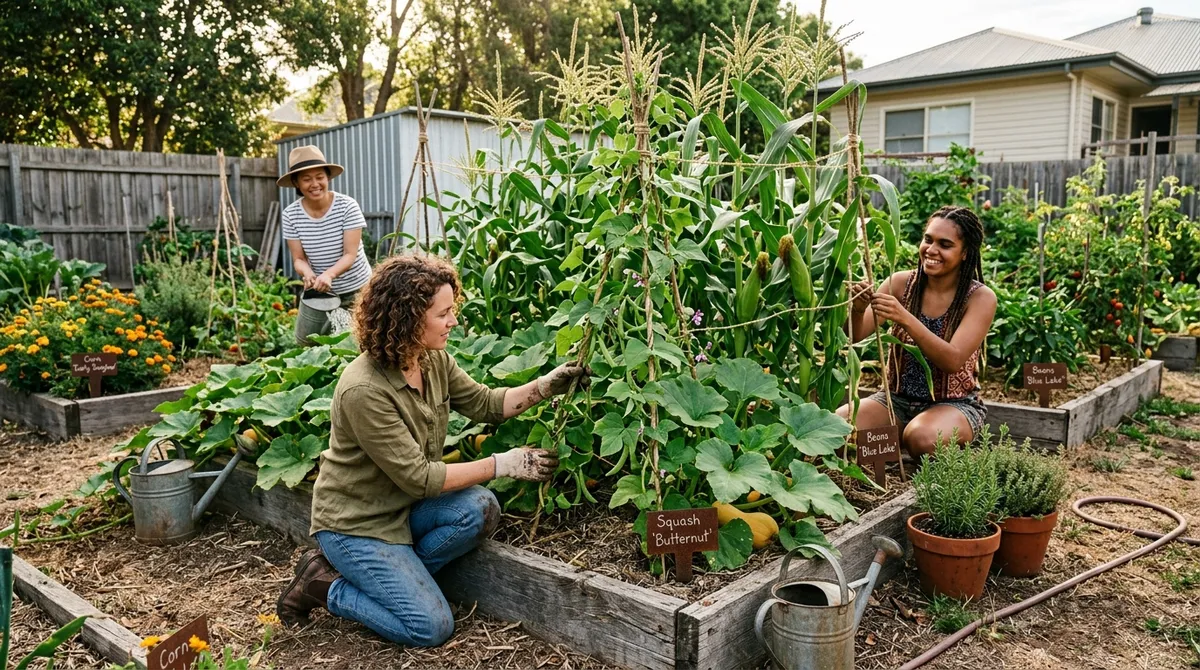
| Beans | Corn | Beans climb corn stalks. Bean roots fix nitrogen for corn, a heavy nitrogen feeder. Classic three sisters pairing with pumpkin. |
| Corn | Pumpkin | Pumpkin sprawls across ground, shading weeds and retaining soil moisture. Corn and beans go vertical, pumpkin goes horizontal. |
| All vegetables | Marigold | Marigold roots deter nematodes. Flowers attract pollinators. Plant around bed perimeter or scattered through rows. |
| All vegetables | Nasturtium | Trap crop for aphids. Nasturtiums attract aphids preferentially over vegetables. Remove infested plants and compost. |
Why SEQ Changes Companion Dynamics
In cooler southern gardens, some companions work primarily because they deter pests. In SEQ, pest pressure is constant and higher, which means companions work harder but sometimes differently. Basil grown beside tomatoes in Victoria might work because it repels a few pests. Basil in Brisbane works because it attracts enough pollinators to ensure full fruit set even when humidity stresses pollen viability.
The constant warmth also means nitrogen dynamics are different. In cool climates, legume companions fix nitrogen slowly. In SEQ's warm season, bean and pea roots fix nitrogen at triple the rate. Your heavy feeders (tomato, corn, pumpkin) respond more noticeably to companion nitrogen fixing. Plan for it.
Humidity in SEQ also affects disease dynamics. While fungal diseases are generally lower in warm-growing gardens, humidity still stresses some plants. Borage's ability to attract more pollinators becomes critical in SEQ because pollen viability is lower in humidity. The companion isn't preventing disease, it's compensating for it.
Plants That Should Never Be Neighbours
Some companion relationships are negative. Keep lettuce away from parsley. Parsley root exudates inhibit lettuce growth in ways that are visible within weeks. Keep carrot away from fennel and dill. Fennel is allelopathic, meaning it releases chemicals that inhibit growth in most neighbouring plants. Your carrot will sulk beside a fennel plant and never reach full size.
Keep brassicas (cabbage, broccoli, cauliflower, kale) away from strawberries. Their root exudates compete directly for nutrients and suppress strawberry crowns. In SEQ, where space is at a premium and gardens are intensive, this separation matters more than in temperate climates.
Keep basil away from rue. Rue is allelopathic to basil and to many other plants. If you're growing rue (it's a culinary herb), give it space and keep basil to the other side of the garden.
Building Your Companion Planting Layout
Start with your main crop vegetables: tomatoes, beans, pumpkins, carrots, lettuce. These are the plants you're growing to eat. Arrange them by root depth and space requirements.
Then add companions as borders or scattered through the bed. Basil goes at the base of tomato stakes. Borage goes around the perimeter where it can sprawl without shading main crops. Marigolds scatter around the edges and between rows.
Use nasturtium as a deliberate trap crop. Plant it densely in a separate small patch or corner. Let it collect aphids while your vegetables stay clean. When the nasturtium is infested, remove it and compost it (not in your bin if you're worried about spreading pests). Replant fresh nasturtium and reset the trap.
Succession sow lettuce to mature just before carrot roots need the space. Plant basil alongside tomatoes at the same time you plant the main crop. These timing relationships matter as much as the spatial arrangement.
Companion Planting Through SEQ Seasons
Cool season (March to August) is when most companion combinations work best in SEQ. Pollinators are abundant, pests are fewer, and plants grow steadily without stress. This is the window to maximise your companion benefits.
Warm season (September to February) requires adjustment. Basil is still a perfect companion for warm-season tomatoes, but borage struggles in peak heat and humidity. Substitute it with other flowering companions that love heat. Marigolds actually perform better in warm season than cool season, so increase their presence.
Summary: Your Companion Planting Approach
Don't overthink companion planting. Start with one strong pairing you understand: tomato with basil, or beans with corn. Once you see the benefits, expand. Plant marigolds around your beds. Add borage in cool months. Watch for the results.
As you build experience, you'll see which combinations work in your specific garden microclimate. SEQ is large and variable. What works in Southport might need adjustment in Toowoomba. Trust your observations more than general rules. Your garden will teach you.
Frequently Asked Questions
What is companion planting and does it really work?
Companion planting is growing plants together for mutual benefit. Some pairs repel pests (basil repels some tomato pests), others attract pollinators (borage attracts bees to tomato flowers), and others improve soil nutrients (beans fix nitrogen for nearby plants). In SEQ's subtropical climate, these relationships sometimes work differently than in temperate gardens.
What are the classic companion planting combinations for SEQ?
The most reliable SEQ combinations are: tomato with basil (pollinator attraction), carrot with lettuce (efficient spacing), onion with carrot (pest deterrent), corn with beans and pumpkin (nitrogen fixing), and borage with any vegetable (pollinator magnet). These work across Australia but are especially effective in SEQ's warm season.
Which plants should I never grow near each other in Brisbane?
Keep lettuce away from parsley, carrots away from fennel and dill, brassicas away from strawberries, and basil away from rue. Fennel releases allelopathic chemicals that inhibit growth in many plants. Keep brassicas separate from strawberries as their root exudates compete for nutrients. These avoidances matter more in SEQ due to intensity of growing season.
Free Monthly Planting Calendar
Get a personalised email each month with what to plant, seasonal tips, and harvest reminders for your region.
We send one email per month. Unsubscribe any time.