
Companion Planting Chart for South East Queensland
Quick reference for plant friendships and enemies. This chart is based on observation and experience in Brisbane, Gold Coast, and Sunshine Coast gardens.
Companion planting works. It is not magic. What you are looking at is the result of thousands of gardeners across subtropical climates testing which plants grow better together. Some combinations work because pollinators prefer flowering plants next to your vegetables. Some work because a plant's roots release chemicals that deter pests or improve soil. Some work because the plants use space and nutrients differently and do not compete. The mechanism matters less than the result. Plant these pairs together, and you will see better growth and fewer problems.
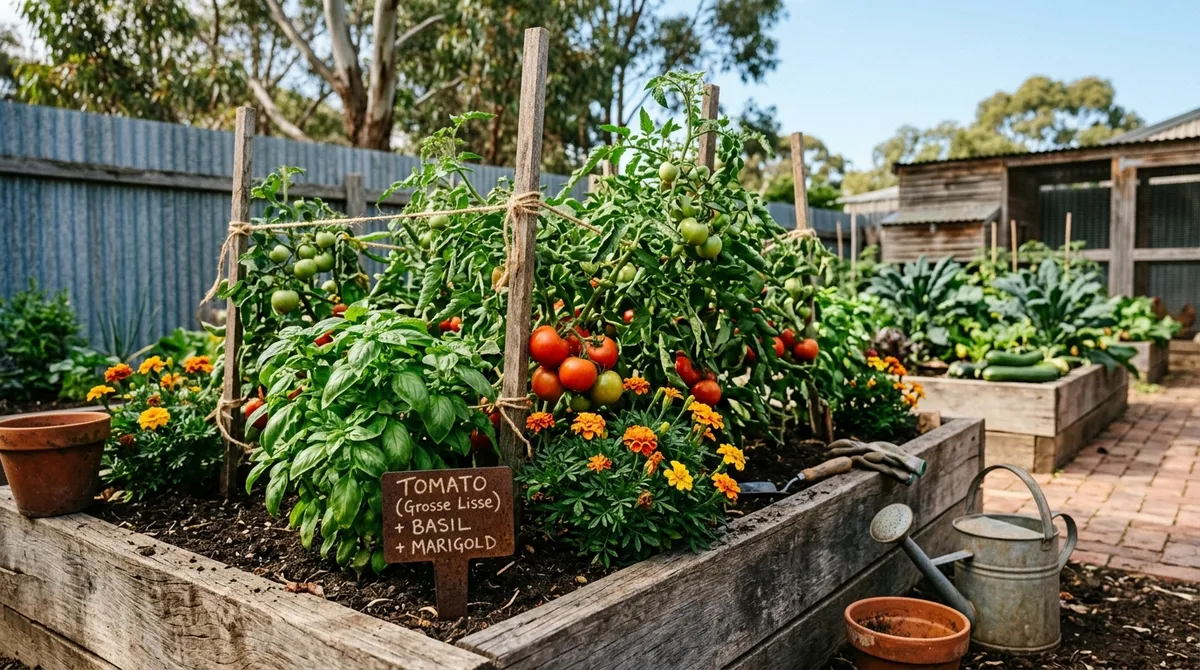
Two plants belong in every bed: marigold and nasturtium. You cannot have too many of either. Marigold roots deter root-knot nematodes and flowers attract pollinators. Nasturtium becomes a trap crop for aphids, keeping them away from your vegetables. If your nasturtiums get infested with aphids, remove them and compost them. Plant fresh nasturtium and reset the trap.
Two universal friends for every bed: marigold and nasturtium. You cannot have too many of either.
Frequently Asked Questions
What makes a good companion plant in SEQ?
Good companions attract pollinators (borage, marigold), deter pests through scent (basil near tomatoes), or fix nitrogen in soil (beans near heavy feeders). In SEQ's subtropical climate, the intensity of the growing season means companion effects are stronger than in cooler regions. Marigold and nasturtium work as universal friends for nearly every bed.
Can I use this chart across all of SEQ?
This chart applies across Brisbane, Gold Coast, Sunshine Coast, and most of SEQ below 800 metres. Hinterland areas above 800 metres and Toowoomba may need adjustments for cooler season timing. The plant pairings work the same, but frost risk and growing season length differ. Check the SEQ Microclimate Guide for your specific zone.
What if I don't have space for all these companions?
Start with marigold and nasturtium, your two universal friends. Then add one specific companion for your main crop. Tomato with basil is the easiest pair to start with. As your garden grows, you can layer in more companions. Even one companion per bed significantly improves results.
Free Monthly Planting Calendar
Get a personalised email each month with what to plant, seasonal tips, and harvest reminders for your region.
We send one email per month. Unsubscribe any time.