
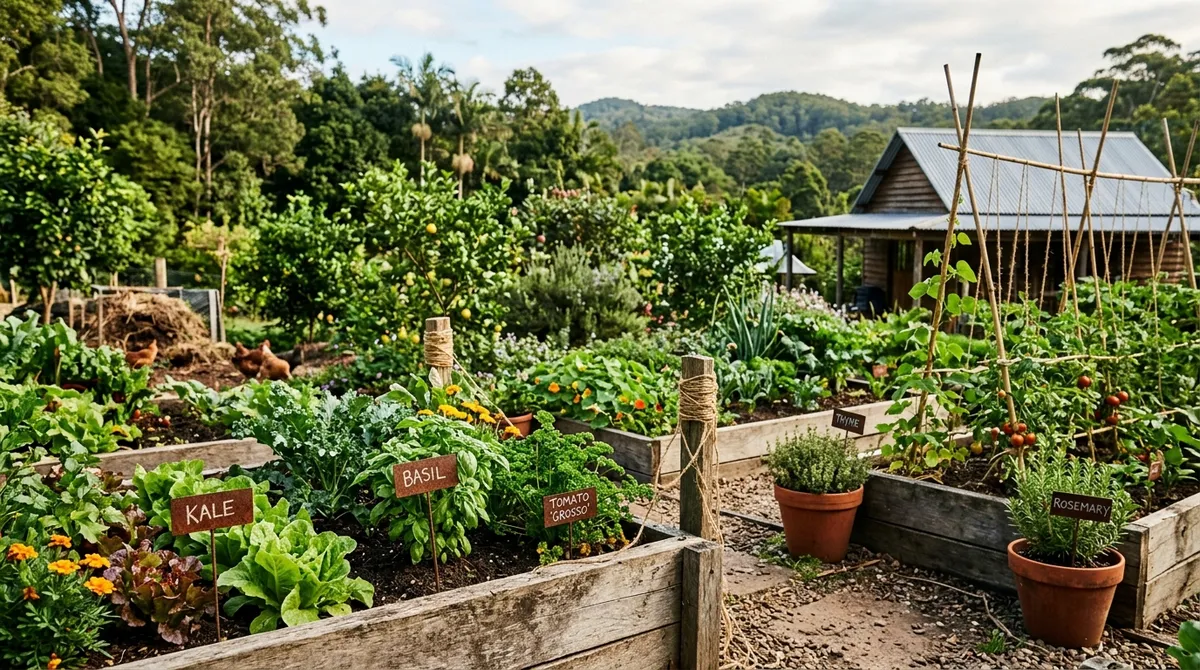
Permaculture in the Northern Rivers
Food forests, banana circles, and guild planting for subtropical conditions
The Northern Rivers is where Australian permaculture took root. The region has been home to permaculture practitioners since the 1970s, and the communities around Nimbin, The Channon, Mullumbimby, and the hinterland valleys have decades of accumulated knowledge about growing food in this subtropical landscape. The climate is ideal for permaculture systems: warm temperatures, reliable rainfall, rich volcanic soils, and a diversity of productive species that grows almost too fast to keep up with.
This guide covers three key permaculture techniques suited to the Northern Rivers: food forests, banana circles, and plant guilds. Each one works with the subtropical climate rather than against it, producing food with minimal ongoing inputs once established.
Food Forests
A food forest mimics the layered structure of a natural forest, with productive species at every level. The Northern Rivers climate supports rapid growth, so a well-designed food forest can begin producing within the first year and become largely self-maintaining within 3-5 years.
The Seven Layers
A subtropical food forest in the Northern Rivers typically includes these layers:
- Canopy layer: Macadamia, avocado, mango (coastal), jackfruit. These large trees form the upper canopy at 8-15 metres. Space them 8-10 metres apart to allow light to the layers below.
- Understorey tree layer: Coffee, tamarillo, custard apple, feijoa, mulberry, lemon, lime, mandarin. These smaller trees (3-6 metres) grow in the dappled shade below the canopy.
- Shrub layer: Pigeon pea (nitrogen-fixing and provides mulch), banana, pepino, blueberry (hinterland only), chilli, lemongrass. These fill the 1-3 metre space between the tree trunks.
- Herbaceous layer: Comfrey (deep-rooted nutrient accumulator), turmeric, ginger, galangal, arrowroot, taro, Queensland arrowroot (canna edulis). These die back seasonally but regrow from roots.
- Ground cover layer: Sweet potato, pumpkin, watermelon (summer), nasturtium, warrigal greens, Brazilian spinach. Living mulch that suppresses weeds and covers bare soil.
- Climber layer: Passionfruit, choko, snake bean, winged bean, dragon fruit (on a post or dead tree). These use existing structures and tree trunks as support.
- Root layer: Cassava, yacon, Jerusalem artichoke, sweet potato (dual purpose). Underground production that fills the space between tree roots.
Establishing a Food Forest in the Northern Rivers
Start by planting the canopy and understorey trees. While they establish (1-3 years), use the open ground between them for annual vegetables and short-lived crops like pigeon pea, which fixes nitrogen and produces biomass for mulch. As the canopy closes, transition the lower layers to shade-tolerant species.
Mulch is critical during establishment. Apply 15-20 centimetres of woodchip, sugarcane mulch, or a mix of both over the entire food forest area. Replenish annually until the system generates its own mulch from leaf litter and prunings. On the red volcanic soils of the Alstonville plateau or Bangalow area, establishment is rapid because the soil is already fertile and well-structured.
Banana Circles
The banana circle is one of the most effective permaculture techniques for the Northern Rivers. It combines food production with organic waste processing and water management in a single, compact system.
How to Build a Banana Circle
- Dig the pit: Excavate a circular pit approximately 2 metres in diameter and 1 metre deep. Mound the excavated soil around the rim to form a raised ring.
- Plant bananas on the rim: Plant 4-6 banana suckers evenly spaced around the rim, on top of the mounded soil. Lady Finger and Ducasse are excellent choices for the Northern Rivers.
- Plant companions: Add taro, sweet potato, or comfrey on the outer slopes of the mound. Lemongrass at the base deters pests and provides useful foliage.
- Fill the pit: Add kitchen scraps, garden waste, cardboard, woody prunings, and any other organic matter to the central pit. The pit acts as a continuous composting system. As material breaks down, it releases nutrients and moisture that the surrounding bananas absorb.
- Add greywater (optional): The pit can receive household greywater (from laundry, shower, or kitchen sink). The organic matter in the pit filters the water, and the bananas use the nutrients. Check local council regulations regarding greywater use.
A mature banana circle produces 20-40 kilograms of bananas per year while processing a household's worth of organic waste. The system improves over time as the composted material enriches the surrounding soil. Many Northern Rivers properties have multiple banana circles, each processing different waste streams.
Plant Guilds for Subtropical Conditions
A plant guild is a community of plants designed to support a central productive species. Each guild member provides a specific function: nitrogen fixation, pest deterrence, pollinator attraction, mulch production, or ground cover.
Avocado Guild
- Central tree: Avocado (Hass or Wurtz)
- Nitrogen fixers: Pigeon pea (also provides windbreak and mulch material), desmodium (ground cover legume)
- Nutrient accumulators: Comfrey (deep tap root mines minerals from subsoil; chop and drop leaves as mulch 4-5 times per year)
- Ground cover: Sweet potato (suppresses weeds, provides food, protects soil from rain impact)
- Pest deterrents: Lemongrass (deters some insect pests), marigolds (attract beneficial insects)
- Climber: Passionfruit (trained up a nearby trellis, not the avocado trunk)
Macadamia Guild
- Central tree: Macadamia (A4 or Beaumont)
- Understorey: Coffee (thrives in the dappled shade beneath the macadamia canopy)
- Nitrogen fixers: Pigeon pea around the drip line, white clover as ground cover
- Nutrient accumulators: Comfrey, yarrow
- Ground cover: Brazilian spinach (Alternanthera sissoo), a perennial edible ground cover that tolerates shade and subtropical humidity
- Herbaceous layer: Turmeric, ginger (both produce well in the filtered light under macadamias)
Citrus Guild
- Central tree: Lemon, lime, or mandarin
- Nitrogen fixers: Pigeon pea (short-lived, replace every 3-4 years), clover ground cover
- Nutrient accumulators: Comfrey, borage
- Pest deterrents: Dill and fennel (attract citrus butterfly parasitoid wasps), tansy (deters citrus leaf miner)
- Ground cover: Nasturtium (edible, attracts pollinators, deters aphids)
- Climber: Choko (vigorous vine that produces heavy crops in the Northern Rivers)
Getting Started With Permaculture in the Northern Rivers
Start small. A single banana circle and one fruit tree guild require minimal space and investment. Observe your property for a full year before making major changes: note where water flows during heavy rain, where the frost settles (in hinterland areas), where the sun hits at different seasons, and which areas stay wet or dry.
Local resources for learning more:
- Permaculture Northern Rivers: Regular workshops, farm tours, and community events throughout the region.
- Nimbin Community Gardens: Working examples of permaculture systems in a community setting.
- The Channon Market: Monthly market where local growers sell produce and share knowledge.
- Mullumbimby Community Gardens: Active community garden with permaculture demonstration areas.
- Local seed libraries: Byron Bay, Lismore, and Mullumbimby all have seed libraries where you can access locally adapted varieties.
Track Your Food Forest
The Planting Season app helps you manage planting schedules, feeding reminders, and harvest tracking for all your permaculture species.
Open the Planting Season AppFrequently Asked Questions
What is a food forest and can I grow one in the Northern Rivers?
A food forest is a multi-layered garden that mimics the structure of a natural forest, with canopy trees, understorey trees, shrubs, herbs, ground covers, climbers, and root crops. The Northern Rivers is one of the best places in Australia to grow a food forest because the warm, wet climate supports rapid growth and a huge diversity of productive species.
What is a banana circle?
A banana circle is a ring of banana plants planted around a central pit that receives organic waste, greywater, or compost. The pit provides moisture and nutrients, and the bananas grow vigorously around it. Plant 4-6 banana suckers in a circle 2-3 metres in diameter around a pit 1 metre deep. Fill the pit with kitchen scraps, garden waste, and cardboard.
What are plant guilds for subtropical conditions?
A plant guild is a group of plants that support each other. A subtropical fruit tree guild might include an avocado as the canopy tree, coffee and tamarillo as understorey, comfrey and sweet potato as ground cover, passionfruit as a climber, and nitrogen-fixing plants like pigeon pea around the edges. Each plant provides something the others need.
Is the Northern Rivers good for permaculture?
The Northern Rivers is Australia's permaculture heartland. The region has a long history of permaculture practice dating to the 1970s, with established communities around Nimbin, The Channon, and the hinterland. The subtropical climate, reliable rainfall, and rich volcanic soils make the region ideal for food forests and regenerative growing systems.
Free Monthly Planting Calendar
Get a personalised email each month with what to plant, seasonal tips, and harvest reminders for your region.
We send one email per month. Unsubscribe any time.