
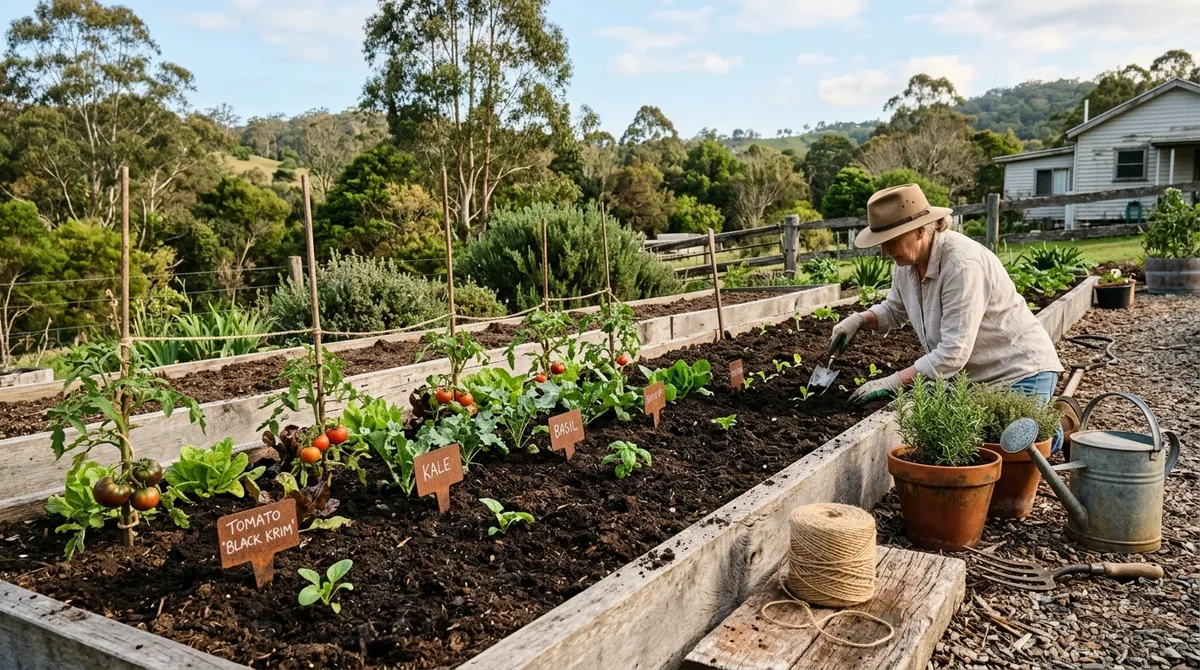
How to Start a Vegetable Garden in the Northern Rivers
Red volcanic soil, flood plain clay, subtropical humidity, and the crops that thrive here
The Northern Rivers grows food unlike anywhere else in New South Wales. The subtropical climate, deep soils, and reliable rainfall create exceptional growing conditions, but they also bring challenges that catch new gardeners off guard. Humidity drives fungal disease. Heavy summer rain waterloggs poorly drained beds. Fruit fly, cane toads, and carpet pythons (harmless, beneficial) are part of the landscape. The learning curve is real, but a well-set-up Northern Rivers garden produces food year-round with less effort than temperate gardens further south.
Understand Your Soil
The Northern Rivers has two distinct soil types, and your approach depends entirely on which one you have.
Red Volcanic Soil (Krasnozem)
Found on the elevated areas around Alstonville, Bangalow, Federal, Eureka, Clunes, and parts of the Nightcap Range. This deep red soil formed from ancient basalt flows and is naturally fertile, well-drained, and slightly acidic (pH 5.5-6.5). It holds moisture well without waterlogging and is rich in iron, phosphorus, and trace minerals.
If you garden on red volcanic soil, you have won the soil lottery. Add compost annually to maintain organic matter, and your beds will produce prolifically with minimal amendment. The only downside is that this soil can set hard on the surface during dry spells, so mulching is important.
Alluvial Flood Plain Soil
Found on the river flats around Lismore, Casino, Coraki, Woodburn, Broadwater, and along the Richmond, Wilsons, and Clarence rivers. This heavy clay soil is extremely fertile (deposited by thousands of years of flooding) but drains poorly. After heavy rain, it stays waterlogged for days. In dry weather, it cracks and becomes concrete-hard.
If you garden on flood plain soil, raised beds are essential. Build beds at least 30-40 centimetres above ground level and fill with a free-draining mix. This keeps roots above the water table during wet periods and gives you control over soil structure. If your property sits on a known flood plain (check Lismore City Council flood maps), consider the flood risk when placing permanent garden infrastructure.
Choose Your Garden Position
Position your vegetable garden for maximum morning sun and some afternoon shade. Northern Rivers summers are hot and humid, and crops like lettuce, coriander, and many brassicas bolt or wilt in full afternoon sun from November to March.
- Morning sun, afternoon shade: The ideal position for most vegetables year-round. A spot that gets sun from dawn to 1pm and then light shade from a tree or building in the afternoon protects crops from the worst summer heat.
- Airflow: Good air movement around plants reduces humidity at leaf level and slows fungal disease. Avoid placing beds in enclosed, still areas where moist air stagnates. A gentle breeze through the garden is your friend.
- Drainage: Even a slight slope helps. If your site is flat and low-lying, raised beds or mounded rows are essential. The Northern Rivers receives 1,200-1,800mm of rain per year, and much of it falls in heavy summer downpours that can dump 100mm in a few hours.
Start With Easy Crops
These crops are reliable producers for beginners in the Northern Rivers, grouped by season:
Winter (March to August): The Easiest Season
- Kale: Plant seedlings in March or April. Produces all winter with minimal pest problems. Tuscan kale (cavolo nero) is the most productive variety.
- Silverbeet: Virtually indestructible. Plant in March and harvest continuously for 6-12 months.
- Lettuce: Sow every 2-3 weeks from March onwards. All varieties thrive in the mild Northern Rivers winter.
- Coriander: Grows beautifully in winter after bolting instantly in summer. Sow from March to July.
- Spring onions: Sow from March to August. Quick (8 weeks) and foolproof.
Summer (September to February): Challenging but Rewarding
- Sweet potato: The ultimate Northern Rivers summer crop. Plant slips from October to December. Grows vigorously through heat and humidity, suppresses weeds, and produces an enormous harvest of tubers from March onwards. Beauregard (orange flesh) and Purple varieties are available from local nurseries.
- Snake beans: Thrive in heat and humidity where regular green beans struggle. Sow from October to January. Very productive and well-adapted to the subtropical climate.
- Cherry tomatoes: More disease-resistant than large tomatoes in humid conditions. Plant in August or September for the first harvest, and again in February for an autumn crop.
- Basil: Grows prolifically from October to April. Harvest regularly to prevent flowering.
- Chilli and capsicum: Plant seedlings from September. Both love the Northern Rivers heat. Chillies in particular produce heavily and continuously.
Managing Humidity and Rain
Humidity is the primary challenge for Northern Rivers vegetable gardens. Warm, moist air promotes fungal diseases that can devastate crops within days. Practical management strategies:
- Space plants widely: Give 30-50 percent more space between plants than you would in a temperate garden. Airflow between plants is critical.
- Mulch heavily: A 10-centimetre layer of sugarcane mulch, straw, or woodchip prevents soil-borne fungal spores from splashing onto foliage during rain. This single step reduces disease incidence dramatically.
- Water at the base: Drip irrigation keeps foliage dry. Overhead sprinklers wet leaves and promote fungal growth. If you must water by hand, do it in the morning so leaves dry before evening.
- Build raised beds: Elevate soil above ground level to improve drainage during heavy rain. Even 20-30 centimetres of elevation prevents waterlogging in most Northern Rivers gardens.
- Plan for seasons: Grow disease-prone crops (tomatoes, cucumbers, zucchini) during the drier months (April to October) rather than fighting humidity all summer. Use summer for heat-loving, humidity-tolerant crops like sweet potato, snake beans, and okra.
Pest Management
The Northern Rivers subtropical environment supports a diverse insect population. Key pests to watch for:
- Queensland fruit fly: Active most of the year. Use exclusion netting, protein bait sprays, and pick fruit early. The most important pest to manage for any fruiting crop.
- Cabbage white butterfly: Caterpillars destroy brassicas. Use fine insect netting over broccoli, cabbage, and cauliflower from planting to harvest. Dipel (Bacillus thuringiensis) spray is an organic option.
- 28-spotted ladybeetle: Skeletonises leaves of potatoes, tomatoes, and beans. Hand-pick or use neem oil spray.
- Slugs and snails: Thrive in the Northern Rivers humidity. Iron-based snail pellets (Multiguard, Sluggo) are pet-safe and effective. Beer traps work for small infestations.
Encourage beneficial insects by planting flowering herbs (dill, fennel, coriander, basil) near your vegetables. The Northern Rivers supports a healthy population of predatory wasps, lacewings, and hoverflies that control many pest species naturally.
Plan Your First Garden
The Planting Season app tells you exactly what to plant this month in the Northern Rivers, with variety recommendations and pest alerts.
Open the Planting Season AppFrequently Asked Questions
When is the best time to start a vegetable garden in the Northern Rivers?
Autumn (March to May) is the ideal time to start. The weather cools, humidity drops, and pest pressure eases. You can plant a huge range of crops from March onwards and enjoy your most productive season through winter.
What type of soil do I have in the Northern Rivers?
The Northern Rivers has two main soil types. Red volcanic soils on the Alstonville plateau, Bangalow, and elevated areas are naturally fertile and well-drained. Alluvial floodplain soils around Lismore, Casino, and the river flats are heavy clay, nutrient-rich but poorly drained. Raised beds are essential on flood plain soil.
How do I deal with humidity and fungal disease?
Space plants widely for airflow. Use drip irrigation instead of overhead watering. Mulch to prevent soil splash. Remove lower leaves on susceptible crops. Choose disease-resistant varieties. Focus your main vegetable production in the drier winter months when humidity and fungal pressure are lowest.
What vegetables grow best for beginners in the Northern Rivers?
Start with kale, silverbeet, lettuce, spring onions, herbs, sweet potato, cherry tomatoes, and snake beans. These crops are forgiving, productive, and well-adapted to subtropical conditions.
Free Monthly Planting Calendar
Get a personalised email each month with what to plant, seasonal tips, and harvest reminders for your region.
We send one email per month. Unsubscribe any time.