
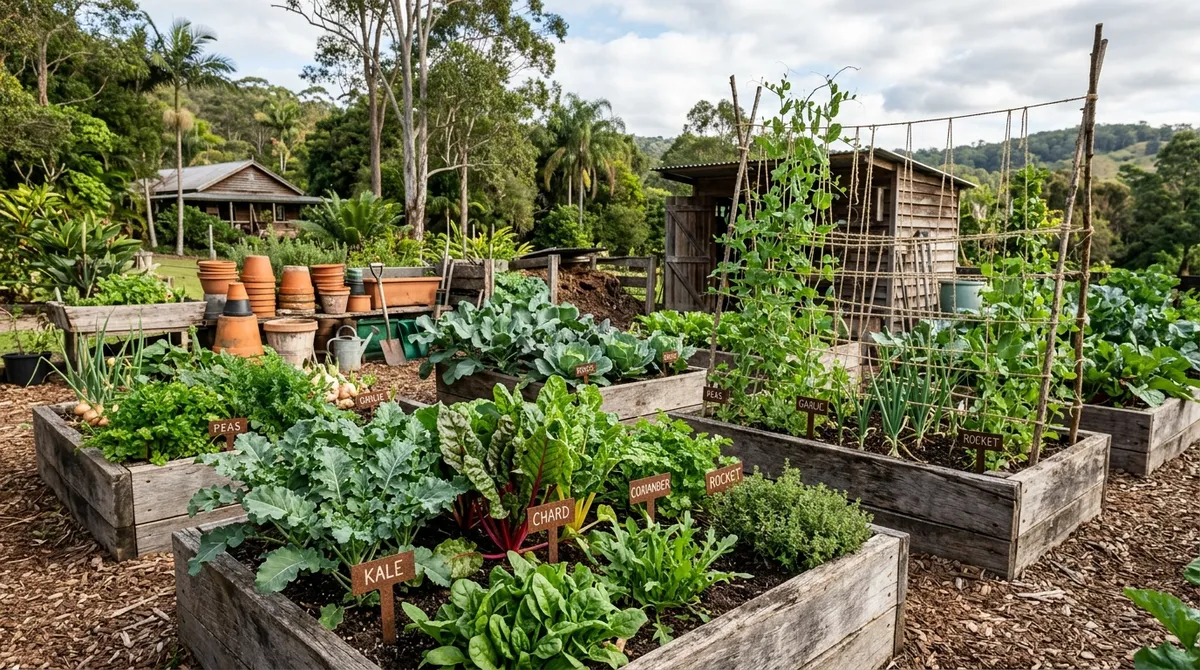
What to Plant in Winter in the Northern Rivers
Mild coastal winters and cooler hinterland conditions open up 50+ crops for your garden
Winter is the most productive growing season in the Northern Rivers. The humidity drops, pest pressure eases, fungal diseases retreat, and the mild temperatures are ideal for a huge range of vegetables. Crops that bolt or struggle in the summer heat (lettuce, coriander, spinach, peas) thrive from March through August. Many experienced Northern Rivers gardeners grow more food in winter than in any other season.
Coastal areas from Byron Bay to Ballina barely experience winter at all. Daytime temperatures sit at 18-22 degrees, overnight minimums rarely drop below 8 degrees, and frost is essentially unknown at sea level. Hinterland areas (Nimbin, The Channon, Bangalow ranges, Dorroughby) are cooler, with light frosts possible from June to August above 200 metres elevation.
Leafy Greens
The Northern Rivers winter is perfect for leafy crops. Low humidity means less fungal disease, and the mild temperatures prevent bolting.
- Lettuce: All types grow beautifully from March to August. Sow every 2-3 weeks for continuous harvest. Cos, butterhead, oakleaf, and loose-leaf varieties all perform well. Direct sow or transplant seedlings.
- Spinach: True spinach (Bloomsdale, Winter Giant) grows slowly but steadily through winter. Sow from March to June. Harvest outer leaves for continuous picking.
- Rocket: Fast-growing and peppery. Sow every 3 weeks from March onwards. Ready to pick in 4-6 weeks. Self-seeds readily.
- Kale: Tuscan kale (cavolo nero) and curly kale both produce prolifically through winter. Plant seedlings in March or April and harvest leaves all season.
- Silverbeet: Extremely productive and hardy. A single planting in March provides greens right through winter and into spring. Fordhook Giant and Rainbow varieties both perform well.
- Asian greens: Pak choi, bok choy, tatsoi, mizuna, mibuna, and Chinese cabbage (wombok) all grow brilliantly in the Northern Rivers winter. Sow from March to July.
Brassicas
The brassica family thrives in the Northern Rivers winter. These crops struggle in summer heat and humidity but produce heavy harvests from May to September.
- Broccoli: Plant seedlings from March to May. Harvest the central head, then continue picking side shoots for weeks. Green Magic and Di Cicco are reliable varieties.
- Cauliflower: Plant seedlings from March to May. Needs consistent moisture. Snowball is the standard white variety. Purple and Romanesco types add interest.
- Cabbage: Plant from March to June. Drumhead and Sugarloaf are popular varieties. Ready in 10-14 weeks from transplanting.
- Kohlrabi: An underrated crop that grows quickly (8 weeks) and handles cool conditions well. Purple Vienna and White Vienna are available from most seed suppliers.
- Brussels sprouts: Best suited to the cooler hinterland areas. Plant in March for harvest from July onwards. They need a long, cool growing season to form tight sprouts.
Root Vegetables
- Carrots: Direct sow from March to July. Nantes and Chantenay types are reliable. Thin seedlings to 3-4 centimetres apart. Ready in 10-14 weeks.
- Beetroot: Sow from March to July. Fast-growing (8-10 weeks). Detroit Dark Red, Bull's Blood, and Chioggia are popular choices. Harvest at golf-ball size for the sweetest flavour.
- Turnips: Quick-growing (6-8 weeks). Sow from March to July. Harvest young for the best texture. Purple Top White Globe is the standard variety.
- Radish: The fastest root vegetable, ready in 4-6 weeks. Sow every 2 weeks for continuous harvest. French Breakfast and Cherry Belle are classics. Daikon radish (sow March to May) takes 8-10 weeks.
- Parsnips: Sow from March to May. They need a long season (16-20 weeks) but the cool Northern Rivers winter produces sweet, well-formed roots. Melbourne Whiteskin and Hollow Crown varieties perform well.
Alliums, Legumes, and Herbs
Alliums
- Garlic: Plant cloves from March to May. The Northern Rivers is warm for garlic, so choose subtropical-adapted varieties from Australian seed suppliers. Harvest in October to November.
- Onions: Plant seedlings from April to June. Short-day varieties (Early Cream Gold, Gladalan Brown) are best for the Northern Rivers latitude.
- Leeks: Plant seedlings from March to June. Slow-growing but very productive. Harvest from July onwards.
- Spring onions: Sow from March to August. Quick-growing (8 weeks) and easy. Sow every 3 weeks for continuous supply.
Legumes
- Snow peas and sugar snap peas: Sow from April to July. Provide a trellis or fence. Harvest begins in 10-12 weeks. Oregon Sugar Pod and Sugar Snap are reliable varieties.
- Broad beans: Sow from April to June. Very cold-hardy. Aquadulce is the standard variety. Harvest in September and October.
- Garden peas: Sow from April to July. Greenfeast and Telephone are productive climbers. These perform best in the cooler hinterland areas.
Herbs
- Coriander: Grows brilliantly in the Northern Rivers winter after bolting instantly in summer. Sow from March to July. Slow-bolt varieties like Calypso extend the harvest.
- Dill: Sow from March to June. Grows quickly and self-seeds readily.
- Parsley: Plant seedlings or sow seed from March to July. Italian flat-leaf and curly varieties both thrive.
- Chives: Perennial and productive year-round. Divide and replant clumps in autumn.
Warm-Season Holdovers (Coastal Only)
Frost-free coastal areas can continue growing some warm-season crops through winter, although growth slows significantly:
- Cherry tomatoes: Plants from the February sowing continue producing into June and July in sheltered coastal gardens.
- Capsicum and chilli: Established plants keep producing slowly through winter on the coast. Protect from cold wind.
- Beans: A late March sowing of dwarf beans produces into June in Byron and Ballina.
These warm-season holdovers are a bonus for coastal gardeners. Hinterland gardens above 200 metres should focus on the cold-hardy crops listed above.
Plan Your Winter Garden
Get personalised planting reminders for every month, tuned to the Northern Rivers subtropical climate.
Open the Planting Season AppFrequently Asked Questions
What can I grow in winter in the Northern Rivers?
Over 50 crops grow well in Northern Rivers winters. Leafy greens, brassicas, root vegetables, alliums, legumes, and herbs all thrive. Frost-free coastal areas can even continue some warm-season crops like cherry tomatoes and capsicum through winter.
Is winter the best growing season in the Northern Rivers?
For vegetables, yes. Winter provides mild daytime temperatures (18-22 degrees on the coast), lower humidity, less pest pressure, minimal fungal disease, and reduced fruit fly activity. Crops that bolt in summer heat thrive through the cooler months. Many Northern Rivers gardeners produce more food in winter than summer.
Can I still grow warm-season crops in winter on the Northern Rivers coast?
Coastal areas from Byron Bay to Ballina stay warm enough in winter for cherry tomatoes, capsicum, and beans to keep producing, although growth slows. Frost-free gardens at sea level can push warm-season crops much later than hinterland gardens above 200 metres.
What is the difference between coastal and hinterland winter planting?
Coastal areas are frost-free with winter minimums of 8-12 degrees, allowing a wider range of crops including warm-season holdovers. Hinterland areas experience light frosts and winter minimums of 2-6 degrees. Stick to cold-hardy crops and use frost cloth for borderline plants in the hinterland.
Free Monthly Planting Calendar
Get a personalised email each month with what to plant, seasonal tips, and harvest reminders for your region.
We send one email per month. Unsubscribe any time.