
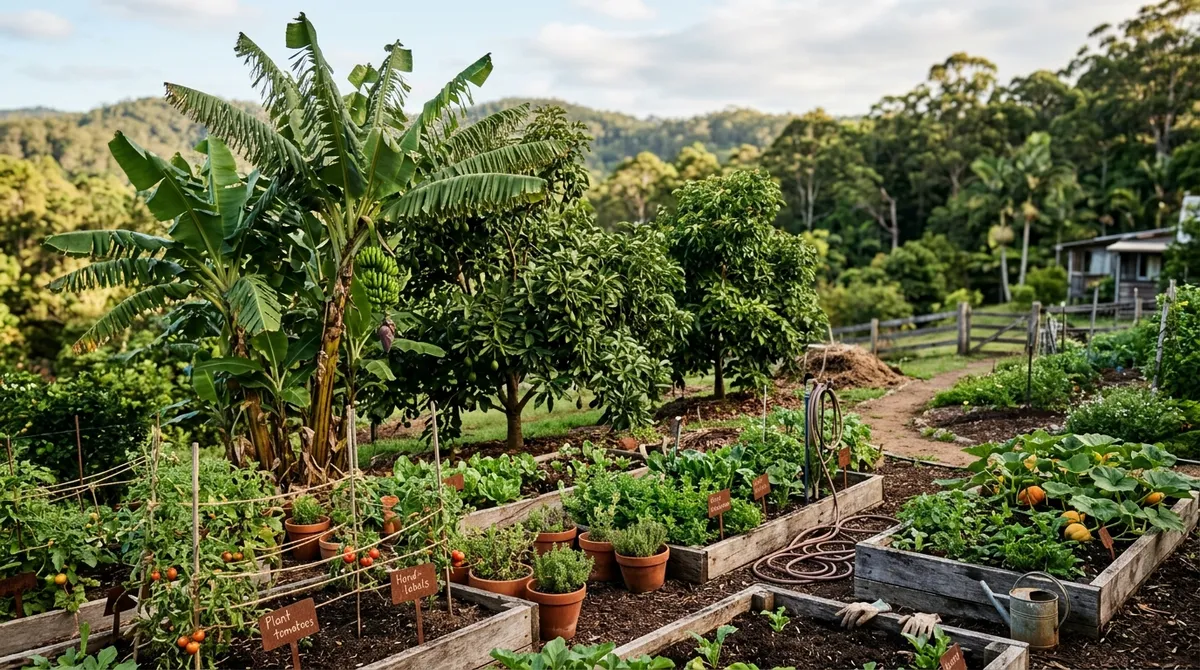
Growing Subtropical Fruit in the Northern Rivers
Macadamia country, avocado heartland, and a climate that grows almost any tropical or subtropical fruit
The Northern Rivers is one of Australia's richest subtropical fruit-growing regions. The combination of warm temperatures, reliable rainfall (1,200-1,800mm per year), and deep volcanic soils creates conditions that suit an enormous range of fruit trees. Macadamias are native to this region. The Alstonville plateau is one of Australia's premier avocado districts. Bananas grow year-round on the frost-free coast, and coffee is a growing specialty crop in the hinterland.
A well-planned backyard in the Northern Rivers can produce macadamias, avocados, bananas, citrus, custard apples, passionfruit, coffee, and dozens of other fruits. Many of these trees are low-maintenance once established and produce for decades.
Macadamia
Macadamias are native to the Northern Rivers and the neighbouring South East Queensland rainforests. The wild trees (Macadamia integrifolia and M. tetraphylla) still grow in remnant Big Scrub rainforest around Lismore, Bangalow, and the Nightcap Range. Growing macadamias here is growing them in their home country.
For backyard trees, buy grafted varieties from nurseries rather than growing from seed. Grafted trees produce consistent quality nuts and begin cropping in 3-5 years. Seedlings can take 7-10 years and produce variable quality.
- A4 (Irvine): Reliable, heavy producer. Medium-sized nut with excellent cracking quality. The most widely planted commercial variety in the region.
- A16: Large nut with high kernel recovery. Vigorous tree that handles wind better than some varieties.
- A203 (Renown): Later-maturing with excellent nut quality. Well-suited to home gardens because the tree stays compact.
- Beaumont (M. tetraphylla hybrid): Rough-shelled but very hardy. Tolerates cooler hinterland conditions better than pure integrifolia varieties. Good choice above 300 metres elevation.
Plant in spring or early summer. Choose a sheltered position protected from strong south-west winds. Macadamias have shallow root systems and can blow over in storms if exposed. Mulch heavily (10-15 centimetres of woodchip or sugarcane) and keep the area under the canopy weed-free. Feed with a balanced organic fertiliser in spring and autumn. A mature backyard tree yields 20-40 kilograms of in-shell nuts per year.
Avocado
The Northern Rivers produces some of Australia's finest avocados. The Alstonville and Bangalow areas sit on deep red volcanic (krasnozem) soils with excellent drainage, exactly what avocados need. Heavy clay soils in the floodplain around Lismore and Casino are less suitable unless you plant on mounded beds.
- Hass: The standard. Dark, pebbly skin that turns from green to purple-black when ripe. Fruits from May to October in the Northern Rivers. Excellent flavour and long harvest window.
- Shepard: Smooth green skin, creamy texture. Fruits earlier (February to April). Does not brown when cut, which makes it popular for salads. Developed in Queensland and well-suited to subtropical conditions.
- Wurtz (Little Cado): Semi-dwarf variety that reaches 3-4 metres. Ideal for smaller backyards and large containers. Produces well despite its compact size. Fruits from August to November.
- Reed: Round, green fruit with a buttery texture. Late season (October to December). Large tree that needs space.
Avocados demand good drainage. Plant on a slope or mound soil 30-40 centimetres above ground level. They hate wet feet, and root rot (Phytophthora) is the primary killer of avocado trees in the Northern Rivers. Mulch generously but keep mulch 20 centimetres away from the trunk. Water deeply during dry spells, especially in the first two years while roots establish.
Banana
Bananas grow year-round in frost-free coastal areas of the Northern Rivers. Hinterland gardens above 200 metres may experience frost damage in winter, so choose cold-tolerant varieties or provide protection.
- Lady Finger: The classic backyard banana. Slim, sweet fruit with excellent flavour. More cold-tolerant than Cavendish. Produces well in sheltered Northern Rivers gardens.
- Ducasse (Sugar Banana): Short, plump fruit with a creamy, custard-like texture when fully ripe. Very productive in the Northern Rivers.
- Cavendish: The supermarket standard. Productive but less cold-tolerant than Lady Finger. Best for frost-free coastal gardens.
- Red Dacca: Red-skinned banana with sweet, slightly tangy flesh. Ornamental and productive. Needs a warm, sheltered position.
Plant suckers in spring or early summer. Choose a sheltered position with full sun. Bananas need wind protection (a fence, hedge, or building on the south and west sides) because the large leaves tear in strong wind and the pseudostem can snap in severe storms. Feed heavily with composted manure and potassium-rich fertiliser every 6-8 weeks during the growing season. Water deeply in dry periods.
Coffee
Arabica coffee is a growing niche crop in the Northern Rivers hinterland. The region sits at the southern limit of commercial coffee production in Australia, and small-batch Northern Rivers coffee has developed a following at local markets and cafes in Byron, Lismore, and Mullumbimby.
Coffee grows best between 100-400 metres elevation in the Northern Rivers, where temperatures are slightly cooler than the coast. The areas around Dunoon, Nimbin, Federal, and the Alstonville plateau are well-suited. Plant in dappled shade (under a light canopy of taller trees) with wind protection. Full sun scorches the leaves in summer.
A single coffee tree yields 1-2 kilograms of green beans per year, enough for home roasting. Cherries ripen from May to August in the Northern Rivers. Harvest when they turn deep red, then pulp, ferment, wash, and dry the beans before roasting. It is a hands-on process, but the quality of home-grown, home-roasted coffee is exceptional.
Custard Apple, Passionfruit, and Other Subtropical Fruit
- Custard apple: African Pride is the standard variety for the Northern Rivers. Fruits from March to June. Self-pollinating (unlike some varieties that need hand pollination). Plant in a sheltered, sunny position. Feed with potassium-rich fertiliser during fruiting.
- Passionfruit: Nellie Kelly (grafted onto a hardy rootstock) is the most reliable variety. Produces heavily from December to June. Plant against a strong trellis or fence. Replace every 5-7 years as vines become unproductive.
- Tamarillo: A small tree (2-3 metres) that produces egg-shaped fruit from April to October. Red and gold varieties are available. Short-lived (5-7 years) but fast-growing and productive from the second year.
- Jaboticaba: Brazilian grape tree. Slow-growing but stunning; fruit grows directly on the trunk and branches. Fruits 2-3 times per year in the Northern Rivers once mature. Sweet, grape-like fruit with thick skin. Available from specialist nurseries.
- Mango: Marginal in the Northern Rivers, best in frost-free coastal positions only. Kensington Pride (Bowen) is the standard variety. Needs a hot, sheltered position and may not fruit reliably every year this far south.
- Citrus: All citrus grows well here. Meyer lemon, Tahitian lime, Eureka lemon, mandarins (Imperial, Emperor), and oranges (Washington Navel, Valencia) are all reliable producers.
Track Your Fruit Trees
The Planting Season app helps you manage feeding, pruning, and harvest schedules for all your subtropical fruit trees.
Open the Planting Season AppFrequently Asked Questions
What subtropical fruit grows best in the Northern Rivers?
Macadamias, avocados, bananas, custard apples, coffee, citrus, passionfruit, tamarillo, and jaboticaba all grow well. The Northern Rivers is Australia's original macadamia country and one of the best avocado-growing regions in the world. Bananas produce year-round in frost-free coastal areas.
Can I grow avocados in the Northern Rivers?
The Northern Rivers is excellent avocado country. Hass is the most popular variety, fruiting from May to October. Shepard fruits earlier (February to April). Wurtz is a dwarf variety suited to smaller gardens. Plant in well-drained soil on a slope. The red volcanic soils around Alstonville and Bangalow are ideal.
How long does a macadamia tree take to produce nuts?
Grafted macadamia trees begin producing small crops in 3-5 years and reach full production in 8-10 years. A mature backyard tree yields 20-40 kilograms of nuts in shell per year. The Northern Rivers has the ideal climate and the rich volcanic soils macadamias evolved in.
Can I grow coffee in the Northern Rivers?
Yes. Arabica coffee grows well in the Northern Rivers hinterland between 100-400 metres elevation. The Lismore, Dunoon, and Nimbin areas produce excellent small-batch coffee. A single tree yields 1-2 kilograms of green beans per year. Plant in dappled shade with wind protection.
Free Monthly Planting Calendar
Get a personalised email each month with what to plant, seasonal tips, and harvest reminders for your region.
We send one email per month. Unsubscribe any time.