
How to Start a Vegetable Garden in Melbourne
The complete beginner guide for Melbourne's cool temperate climate
Starting a vegetable garden in Melbourne is straightforward once you understand a few things about the local climate. Melbourne has distinct seasons, reliable winter rainfall, warm (sometimes very hot) summers, and heavy clay soil across most suburbs. All of that shapes what you grow, when you grow it, and how you set up your beds.
Step 1: Choose Your Spot
Find the sunniest spot in your yard. Most vegetables need at least 6 hours of direct sunlight per day. In Melbourne, north-facing is best because the sun tracks across the northern sky, especially in winter when it sits low. Watch your potential garden site across a full day before committing. Shadows from fences, trees, and buildings shift dramatically between summer and winter as the sun angle changes.
Avoid low-lying areas where cold air and water pool. If your yard slopes, put the garden partway up the slope rather than at the bottom. Frost collects in low spots during winter, and waterlogged clay at the bottom of slopes drowns roots.
A spot close to the house and the kitchen tap is practical. You're more likely to water, weed, and harvest from a garden you walk past every day than one hidden at the back of the property.
Step 2: Deal with Melbourne Clay
Melbourne's basalt clay soil is challenging. It's heavy, sticky when wet, rock-hard when dry, and drains poorly. It is also naturally fertile, full of minerals, and improves dramatically with the right approach.
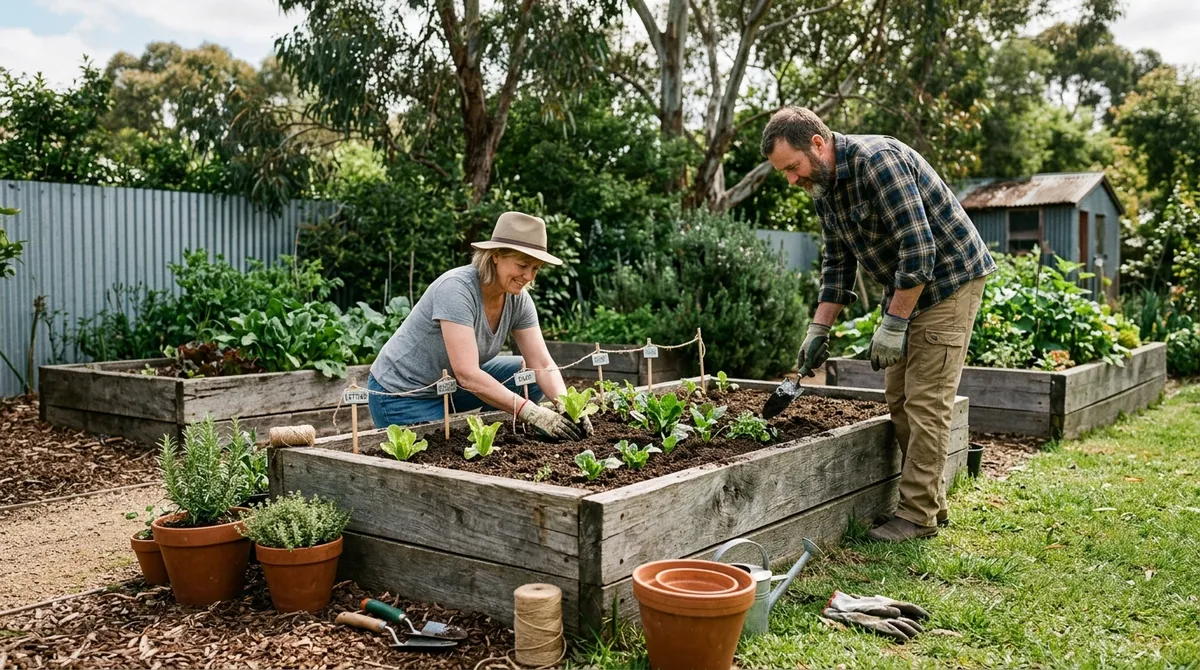
Option A: Raised beds (fastest results). Build or buy raised beds at least 30 centimetres deep. Fill with a mix of 60 percent premium garden mix (topsoil and compost blend), 20 percent aged cow or mushroom compost, and 20 percent coarse organic matter. You'll be planting within days.
Option B: Improve the clay (cheaper but slower). Spread gypsum over the bed at 1 kilogram per square metre and dig it in. Add 10 centimetres of compost on top and fork it into the top 20 centimetres of soil. Repeat the compost addition every season. After two to three years of consistent composting and mulching, the clay transforms into productive soil. See our full clay soil guide for details.
Step 3: Start Small
A single raised bed (1.2 metres by 2.4 metres) is enough to start. You can grow an impressive amount of food in 3 square metres if you plant it well. Resist the urge to build a huge garden in year one. A small, well-maintained bed teaches you more and produces more than a large, neglected one.
Step 4: Plant Your First Crops
Start with reliable, forgiving vegetables that grow well in Melbourne across most seasons.
- Silverbeet: Plant year-round. Grows in any season, handles frost, handles heat, and produces continuously for months. Pick outer leaves and the plant keeps going. This is the single most reliable vegetable for Melbourne beginners.
- Lettuce: Sow from March to September (it bolts in summer heat). Fast results: harvest in 6 to 8 weeks from seed. Cos and butterhead varieties suit Melbourne best.
- Kale: Plant from March to July. Tuscan kale (cavolo nero) is a Melbourne favourite. Harvest outer leaves and the plant produces for 6 months or longer. Handles frost well.
- Radish: Direct sow March to September. Ready in 4 to 6 weeks. The fastest vegetable you can grow. Great for building confidence.
- Parsley: Plant year-round. Italian flat-leaf or curly, both produce continuously for 12 months before going to seed. A useful kitchen staple that keeps producing with minimal care.
Step 5: Understand Melbourne Seasons
Autumn (March to May): The best time to start
Warm soil, cooling air, returning rain, minimal pest pressure, and a huge range of crops to plant. This is the season to set up your garden and plant leafy greens, root vegetables, brassicas, broad beans, peas, garlic, and onions.
Winter (June to August): Keep growing
Maintain autumn crops. Plant more lettuce, spinach, peas, and Asian greens. Prune fruit trees. Plan your summer garden.
Spring (September to November): Transition time
Frost risk continues until mid-October in most suburbs. Start warm-season seedlings indoors from September. Transplant tomatoes, capsicum, zucchini, beans, and basil outdoors from late October onwards.
Summer (December to February): The warm season
Harvest tomatoes, zucchini, beans, cucumber, corn, and basil. Water consistently. Mulch heavily. Manage pests. Succession sow lettuce in a shaded position for continuous salad through the heat.
Essential Tips for Melbourne Beginners
- Mulch everything. Spread 5 to 10 centimetres of straw, sugar cane, or pea straw around your plants. Mulch keeps soil moist, suppresses weeds, and feeds the soil as it breaks down. In Melbourne's variable weather, mulch is your single most valuable tool.
- Water consistently. Drip irrigation on a timer removes the guesswork. Water early in the morning. Irregular watering causes more problems than almost anything else in a vegetable garden.
- Feed regularly. Vegetables are hungry plants. Apply a general-purpose organic fertiliser every 4 to 6 weeks during the growing season. Liquid seaweed fertiliser fortnightly helps with plant health and root development.
- Keep a simple diary. Write down what you planted, when you planted it, and what happened. After one full year, you'll have a personalised planting guide specific to your garden.
Your Personalised Melbourne Garden
Track what to plant each month with reminders tailored to Melbourne's climate.
Open the Planting Season AppFrequently Asked Questions
When is the best time to start a vegetable garden in Melbourne?
Autumn (March to May) is the best time to start. The soil is still warm from summer, rain returns after the dry months, pest pressure drops, and there are dozens of easy crops to plant.
What are the easiest vegetables to grow in Melbourne?
The easiest vegetables are silverbeet (grows year-round, very forgiving), lettuce (fast results in 6 to 8 weeks), kale (handles frost and heat, continuous harvest), radish (ready in 4 to 6 weeks), and herbs like parsley, chives, and rosemary.
Do I need raised beds in Melbourne?
Raised beds are strongly recommended because most suburbs have heavy clay soil that drains poorly. A raised bed 30 centimetres deep gives you instant good soil. You can also garden directly in improved clay with gypsum, compost, and mulch over time.
How much sun does a vegetable garden need in Melbourne?
Most vegetables need at least 6 hours of direct sunlight per day. Choose a north-facing spot. Leafy greens can manage with 4 hours. Fruiting crops (tomatoes, capsicum, zucchini) need the full 6 to 8 hours.
Free Monthly Planting Calendar
Get a personalised email each month with what to plant, seasonal tips, and harvest reminders for your region.
We send one email per month. Unsubscribe any time.