
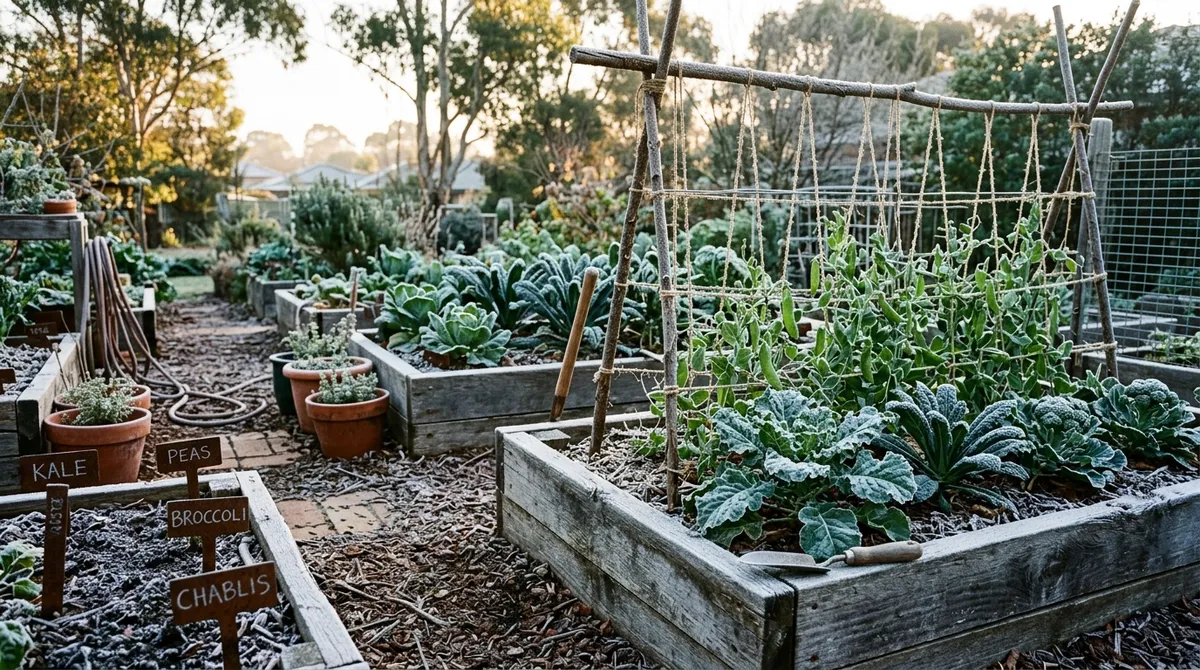
What to Plant in Winter in Melbourne
Winter is Melbourne's second growing season, and it's a good one
Many Melbourne gardeners pack it in when the cold arrives. The tomato plants are pulled out, the beds sit empty, and the garden goes quiet until September. That is a waste of five productive months. Melbourne's winter, with its regular rainfall, mild daytime temperatures, and low pest pressure, is one of the best growing seasons of the year for dozens of crops.
Cool-season vegetables actually prefer temperatures between 5 and 18 degrees. Melbourne's winter sits right in that range for most of the season. Frosts can damage a few crops, but the majority of winter vegetables handle it well, and some taste better after a frost. Short days slow growth compared to summer, but plants still produce steadily through the coldest months.
Melbourne's cool temperate climate (USDA zone 9b, with outer suburbs dipping into 9a) receives around 150 to 200 millimetres of rain between June and August. That natural rainfall reduces watering chores considerably. Pest pressure drops too. Aphids, fruit fly, and caterpillars are far less active in winter, which means cleaner harvests without constant intervention.
15 Best Crops for Melbourne Winter
1. Broad Beans
The classic Melbourne winter crop. Sow directly from April to July. Aquadulce Claudia and Coles Dwarf are proven varieties. Stake tall varieties against winter winds. Harvest young pods for the best flavour, or let them mature for dried beans. Broad beans fix nitrogen in the soil, improving it for the summer crops that follow. Pinch out growing tips once the first pods form to discourage black aphids and redirect energy to the beans.
2. Peas
Sow directly from April to July. Snow peas (Oregon Sugar Pod), sugar snap peas, and shelling peas (Greenfeast, Massey) all thrive. Provide climbing support with a trellis, stakes, or wire netting. Melbourne's cool, moist conditions are exactly what peas need. Pick snow peas flat and young. Pick sugar snaps when the pod is plump but still crisp. Peas stop producing once warm weather arrives in spring, so get them in early for a longer harvest window.
3. Garlic
Plant cloves from late March to May. Melbourne's cold winters provide the chill period garlic needs to form large bulbs. Harvest in November or December when the bottom leaves brown off. Softneck varieties store longest. Hardneck varieties produce scapes (edible flower stems) and have stronger flavour. Buy Australian-grown seed garlic from garden centres rather than supermarket garlic, which is often treated to prevent sprouting.
4. Broccoli
Plant seedlings from March to May for winter and early spring harvest. Green Sprouting and Di Cicco produce side shoots for months after the main head is cut. Space plants 40 centimetres apart in rich, well-composted soil. Feed with blood and bone every 3 to 4 weeks. Cover with fine netting to exclude cabbage white butterfly.
5. Cauliflower
Transplant seedlings in March or April. Requires rich soil and consistent moisture. Snowball and Purple Cape are reliable Melbourne varieties. Cauliflower is fussier than broccoli and needs steady conditions to form tight heads. Fluctuating temperatures can cause "buttoning" (premature, undersized heads). Mulch around plants to keep soil temperature stable.
6. Cabbage
Plant March to May. Savoy types handle frost best. Sugarloaf is a fast-maturing variety that works well in smaller gardens. January King produces beautiful blue-green heads with purple tinges and excellent cold tolerance. Red cabbage adds colour to winter beds and stores well after harvest.
7. Brussels Sprouts
Plant seedlings in February or March for winter harvest. They need a long growing season (20 to 28 weeks) and actually develop better flavour after frost. This is a crop Melbourne gardeners can grow that Brisbane gardeners struggle with. Pick sprouts from the bottom of the stem upward as they firm up. Remove the lower leaves as you harvest to improve airflow around the developing sprouts.
8. Kale
Direct sow or transplant from March to July. Tuscan kale (cavolo nero) is a Melbourne favourite and produces dark, crinkled leaves that are outstanding in soups and stir-fries. Curly kale and Red Russian are also reliable. Harvest outer leaves continuously and the plant keeps producing through winter and into spring. Kale is one of the hardiest vegetables in the garden and shrugs off frost that would flatten lettuce.
9. Spinach
True spinach (Bloomsdale, Viroflay) grows beautifully in Melbourne winter. Sow from March to August. Spinach bolts quickly in warm weather, making winter the only reliable season for it in Melbourne. Pick outer leaves regularly to keep plants producing. Spinach is high in iron and pairs well with the garlic you planted alongside it.
10. Carrots
Sow seed directly from March to July. Nantes and Chantenay types handle Melbourne's heavy clay better than long varieties like Imperator. Thin seedlings to 3 centimetres apart once they are established. In heavy clay, grow carrots in raised beds filled with a sandy loam mix for straighter roots. Carrots germinate slowly in cold soil (up to 3 weeks), so mark the row and keep the surface moist.
11. Beetroot
Sow March to July. Bull's Blood and Chioggia are reliable varieties. Soak seeds overnight before planting to speed germination in cold soil. Beetroot seeds are actually clusters of 2 to 3 seeds, so thin the seedlings early. The leaves are edible and nutritious. Harvest roots at golf-ball size for the sweetest flavour, or let them grow larger for cooking and roasting.
12. Lettuce
Sow every 3 weeks from March through August for a continuous supply. Butterhead and cos types handle cold best. Oak leaf varieties bolt later than iceberg types during unpredictable warm spells that Melbourne occasionally throws in mid-winter. Lettuce grows well in partially shaded positions during winter, making use of spots that are too dim for summer crops.
13. Asian Greens
Bok choy, pak choy, tatsoi, and mizuna all thrive in Melbourne winter. Sow from March to August. They germinate fast and reach harvest size in 6 to 8 weeks. Tatsoi forms rosettes close to the ground and handles frost well. Mizuna produces frilly, mild-flavoured leaves that work raw in salads. Wombok (Chinese cabbage) needs a longer run (10 to 12 weeks) but produces large, dense heads.
14. Parsnips
Sow March to June. They need 16 to 20 weeks to mature, so early sowing gives the best results. Parsnips love Melbourne's cold winters and taste sweeter after frost converts their starches to sugars. Use fresh seed each year, as parsnip seed loses viability quickly. Germination is slow (2 to 3 weeks), so mix radish seed through the row as a marker crop.
15. Coriander
Winter is the best time to grow coriander in Melbourne. It bolts within weeks in summer heat, but grows slowly and produces abundant leaf through the cool months. Sow every 3 weeks from April to August for continuous harvest. Slow-bolt varieties like Leisure extend the harvest further. Let some plants flower and set seed to produce your own coriander seed for cooking.
Other Crops Worth Planting
- Silverbeet: Sow or transplant year-round in Melbourne. Winter crops are less bitter and more tender than summer plantings. Rainbow chard adds colour to dark winter beds.
- Rocket: Direct sow March to August. Wild rocket is hardier than cultivated rocket and produces smaller, peppier leaves through the coldest months.
- Onions: Plant seedlings or sets from April to June. Brown, white, and red varieties all do well. They need a long season and harvest in late spring or early summer.
- Leeks: Transplant seedlings from March to June. Slow through winter but ready from late winter through spring. Excellent frost tolerance.
- Turnips: Fast growing and frost hardy. Sow April to July for roots in 8 to 10 weeks.
- Radish: The fastest winter crop. Sow every two weeks from March to August for continuous harvest in 4 to 6 weeks.
- Parsley: Sow or transplant year-round. Italian flat-leaf parsley is hardier than curly in cold weather.
- Chives: Existing plants keep producing through winter. Divide and replant established clumps in autumn.
Month-by-Month Winter Planting Guide
June
Melbourne's winter has arrived properly by June. Average daytime maximums sit around 14 degrees, with overnight lows of 6 to 7 degrees. Frosts are possible in outer eastern suburbs (Lilydale, Upper Ferntree Gully, Belgrave) and northern suburbs on the basalt plains (Sunbury, Craigieburn). Coastal suburbs (Brighton, Sandringham, Williamstown) are milder and rarely frost.
Sow peas, broad beans, spinach, lettuce, rocket, Asian greens, kale, silverbeet, carrots, beetroot, radish, and coriander. Transplant cabbage and kale seedlings. Last reasonable chance for garlic planting. Plant bare-rooted fruit trees (this is the best time for deciduous trees in Melbourne). Continue harvesting broccoli and cauliflower from autumn plantings.
July
The coldest month in Melbourne. Averages of 13 degrees during the day, 5 to 6 degrees overnight. Frost frequency increases. Days are shortest, with about 9.5 hours of daylight. Growth slows but does not stop. This is a good month for soil preparation and planning.
Sow peas, lettuce, spinach, Asian greens, radish. Plant more kale and silverbeet seedlings. Prune deciduous fruit trees while dormant. Order seed potatoes for August planting. Prepare beds for spring by digging in compost and aged manure. Spread lime on beds that have been growing brassicas to prevent clubroot building up.
August
The transition month. Days lengthen noticeably and temperatures start climbing. Average maximums reach 15 degrees. Late frosts are still possible through mid-August, especially in the east and in frost hollows.
Continue cool-season sowings of lettuce, spinach, peas, and radish. Plant seed potatoes in early August. From mid-August, start tomato and capsicum seeds indoors on a heat mat or warm windowsill. Sow basil seeds indoors. Plan your warm-season garden layout. Early August is the last good chance for sowing peas, as they will struggle once temperatures climb above 25 degrees regularly.
Frost Protection for Melbourne Gardens
Frost is part of Melbourne's winter, but it does not have to mean crop losses. Most winter vegetables handle light frost (0 to minus 2 degrees) without damage. Brassicas, peas, broad beans, garlic, onions, root vegetables, and spinach all tolerate frost well. Lettuce, coriander, and young seedlings of any type are the most vulnerable.
Quick Frost Protection Methods
- Frost cloth: Drape lightweight horticultural fleece over vulnerable plants on nights forecast below 2 degrees. Support it on stakes or hoops so it does not rest directly on foliage. Remove it each morning to allow light and airflow.
- Recycled materials: Old bed sheets, hessian sacks, or cardboard boxes work for single-night protection. Remove promptly in the morning.
- Watering before frost: Water the soil in the afternoon before a cold night. Wet soil holds heat better than dry soil and releases warmth slowly overnight. This can raise the temperature around plants by 1 to 2 degrees.
- Mulch: A thick layer of straw, sugarcane, or pea straw mulch insulates the soil and protects shallow roots from freezing. Keep mulch 5 centimetres away from plant stems to avoid collar rot.
Cold Frames and Cloches
A cold frame is a low, enclosed structure with a transparent lid that traps solar heat during the day and protects plants from frost at night. Build one from an old window frame hinged over a timber box, or buy flat-pack polycarbonate cold frames from hardware stores. Cold frames raise temperatures inside by 5 to 10 degrees compared to the open garden, which extends the range of crops you can grow and speeds up germination of slow starters like parsnips and coriander.
Individual cloches made from cut-off plastic bottles or upturned glass jars work well over single plants or newly planted seedlings. Push them into the soil slightly so wind cannot blow them away. Vent cloches on sunny days to prevent overheating.
In Melbourne's outer eastern suburbs and hills areas where frost is more frequent (the Dandenong Ranges, the Yarra Ranges, upper Yarra Valley), cold frames and cloches make a noticeable difference. They protect lettuce, coriander, and Asian greens that would otherwise suffer on the coldest nights.
Soil Preparation for Winter Planting
Melbourne's basalt clay soils become cold and waterlogged in winter. Raised beds, even just 20 centimetres high, improve drainage and warm up faster in weak winter sun. Dig in compost before planting to improve soil structure and water-holding capacity in sandy soils, or to break up heavy clay.
Apply a complete organic fertiliser (blood and bone, or a pelletised chicken manure product) before planting. Winter crops grow more slowly than summer crops, so they do not need as much nitrogen, but they still need phosphorus and potassium for root development and overall health. Side-dress brassicas every 3 to 4 weeks with additional fertiliser, as they are heavy feeders.
Avoid walking on wet clay beds, which compacts the soil and makes it harder for roots to penetrate. Use stepping stones or boards to distribute your weight if you need to access beds for planting or harvesting.
Get Your Melbourne Winter Planting List
Track what to plant each month with reminders tailored to Melbourne's climate.
Open the Planting Season AppFrequently Asked Questions
What vegetables can I plant in winter in Melbourne?
Melbourne winter is ideal for broad beans, peas, garlic, onions, leeks, broccoli, cauliflower, cabbage, Brussels sprouts, kale, silverbeet, spinach, lettuce, rocket, Asian greens, carrots, beetroot, turnips, parsnips, radish, and coriander. Most of these prefer cool conditions and will bolt to seed if planted in warm weather.
Is it too cold to garden in Melbourne in winter?
Melbourne winters rarely drop below minus 2 degrees in most suburbs, and many vegetables thrive in cool conditions between 5 and 15 degrees. Winter is one of the most productive gardening seasons in Melbourne. Brassicas, root vegetables, and leafy greens grow steadily through the cold months with minimal pest pressure.
When should I plant garlic in Melbourne?
Plant garlic cloves in Melbourne from late March through May. Earlier planting gives bulbs more time to develop before the summer harvest. Choose Australian-grown varieties suited to cool temperate climates. Plant cloves pointy end up, 5 centimetres deep, spaced 15 centimetres apart.
Can I grow tomatoes in winter in Melbourne?
Tomatoes cannot grow outdoors in Melbourne through winter. Temperatures are too cold, frost will kill the plants, and daylight hours are too short. Focus on cool-season crops through winter and start tomato seeds indoors from mid-September for transplanting after the last frost in late October or November.
How do I protect my winter garden from frost in Melbourne?
Cover frost-sensitive seedlings with frost cloth or old bed sheets on nights forecast below 2 degrees. Remove covers each morning. Build cold frames from recycled windows over raised beds for continuous protection. Mulch around plants to insulate roots. Water soil in the afternoon before a cold night, as wet soil holds heat better than dry soil.
Free Monthly Planting Calendar
Get a personalised email each month with what to plant, seasonal tips, and harvest reminders for your region.
We send one email per month. Unsubscribe any time.