
Frost-Tolerant Vegetables for Melbourne
Work with the cold instead of fighting it
Frost is a fact of life in Melbourne gardens. Most suburbs see frost from late May through to mid-October, and outer areas like the Yarra Valley, Dandenong Ranges, and western plains can experience frost from April through to late October. Understanding which crops handle frost, which ones improve with it, and which ones will die changes how productively you garden through winter.
Understanding Melbourne Frost
Melbourne frost is caused by radiative cooling on clear, calm nights. Cloud cover acts like a blanket, so overcast nights rarely frost. The coldest conditions occur when a high-pressure system sits over Victoria, bringing clear skies and still air.
Frost severity varies dramatically across Melbourne. Inner-city suburbs (Carlton, Fitzroy, South Yarra) may only see light frost a handful of times each winter, with minimums rarely below minus 1. The urban heat island, buildings, and concrete retain warmth from the day. Outer suburbs and elevated areas are different. Coldstream in the Yarra Valley regularly drops to minus 4 or minus 5 degrees. The Dandenong Ranges can be colder than the city by 3 to 5 degrees on frost nights. Western suburbs like Melton and Sunbury are exposed to cold westerly drainage and frost heavily through winter.
Frost hollows form where cold air pools in low-lying areas. If your garden sits at the bottom of a slope or in a depression, you'll experience harder frosts than a garden partway up the slope. Cold air flows downhill like water and collects in the lowest point.
Frost-Hardy Crops (survive to minus 5 degrees)
These crops will survive Melbourne's hardest frosts without any protection. Many of them improve in flavour after frost exposure.
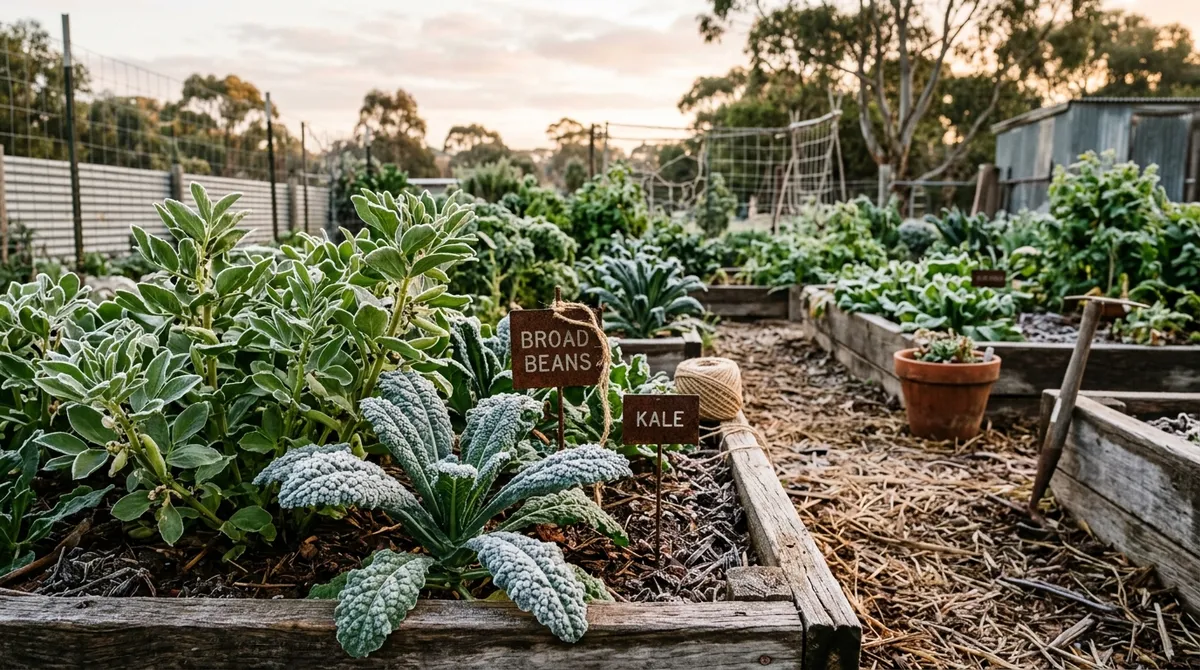
- Kale: The hardiest edible green you can grow. Tuscan kale (cavolo nero) and curly kale both handle heavy frost. Leaves become sweeter and more tender after frost. Leave plants in the ground all winter and harvest outer leaves as needed.
- Brussels sprouts: Frost is actually essential for the best Brussels sprouts flavour. The cold triggers sugar production in the developing sprouts. Plants tolerate temperatures well below minus 5 degrees. Harvest from the bottom of the stalk upwards as sprouts mature through winter.
- Parsnips: Leave them in the ground through the coldest months. Frost converts their starches to sugars, making the roots noticeably sweeter. Harvest as needed through winter and into early spring.
- Garlic: Planted in autumn, garlic sits dormant through frost periods and grows actively during milder spells. Frost causes no damage to established plants. The cold vernalisation period is essential for bulb formation.
- Broad beans: Established plants handle heavy frost. Young seedlings are more vulnerable, so plant in April or May when frosts are still light, giving plants time to establish before the worst cold arrives.
- Leeks: Extremely frost hardy. They stand in the ground through the entire Melbourne winter without damage. Harvest as needed.
- Onions: Established onion plants tolerate frost well. The tops may yellow slightly after hard frost but recover quickly.
Frost-Tolerant Crops (survive light frost to minus 2 degrees)
These crops handle typical Melbourne frost but may suffer damage during the hardest freezes in outer suburbs.
- Cabbage: Most varieties tolerate frost well, especially savoy types with crinkled leaves. Red cabbage and January King are particularly cold-hardy.
- Broccoli: Handles light frost. The main head may discolour slightly after heavy frost, but side shoots continue producing. Cover with frost cloth on nights forecast below minus 3.
- Cauliflower: Less frost-tolerant than broccoli. Wrap developing heads with their own leaves or use frost cloth on cold nights to prevent the curds from turning brown.
- Spinach: True spinach is surprisingly frost-hardy. Plants may wilt after a hard frost but usually recover by mid-morning as temperatures rise. Bloomsdale Long Standing is one of the hardiest varieties.
- Silverbeet: Handles light frost well. Outer leaves may be damaged by hard frost, but the plant keeps producing from the centre. Pull off damaged leaves and new ones replace them within days.
- Carrots: The roots themselves tolerate frost. The foliage may brown back in heavy frost, but the roots stay good in the ground. Mulch over the shoulders of carrots to prevent frost damage to the exposed tops.
- Beetroot: Similar to carrots. Roots tolerate frost in the ground. The leaves may be damaged but grow back.
- Peas: Established pea plants handle light frost. Flowers may drop in hard frost, but new flowers form as conditions improve. Protect young seedlings during their first few weeks.
- Lettuce: Most varieties tolerate light frost. Butterhead types are hardier than iceberg. Cover with frost cloth on nights forecast below minus 2.
Frost-Sensitive Crops (need protection below 2 degrees)
Keep these crops out of the frost zone entirely, or provide protection.
- Tomatoes, capsicum, eggplant, chilli: All Solanaceae family members are killed by any frost. Clear them from the garden by late autumn or protect with heated structures.
- Basil: Killed by frost and damaged by temperatures below 5 degrees. A strictly warm-season herb in Melbourne.
- Zucchini, pumpkin, cucumber: All cucurbits are killed by frost. Remove spent plants in autumn.
- Beans: Both bush and climbing beans are frost-sensitive. Broad beans are the exception.
- Corn: Frost kills corn plants instantly.
Frost Protection Methods
Frost cloth and covers
Drape frost cloth, old sheets, or hessian over plants before sunset on frost-risk nights. The cover traps radiant heat from the soil and creates a warmer microclimate around the plants. Remove covers by mid-morning once temperatures rise above 5 degrees. Stakes or hoops help keep the fabric off the foliage, which prevents contact damage.
Watering before frost
Water the garden in the afternoon before a frost night. Moist soil holds more heat than dry soil and releases it slowly overnight, raising the air temperature around plants by 1 to 2 degrees. This simple trick can make the difference between damage and survival for frost-tolerant crops.
Location and microclimates
Plant frost-sensitive crops against north-facing walls, fences, or buildings. These surfaces absorb solar heat during the day and radiate it back at night. A tomato plant against a brick wall in Northcote may survive a light frost that kills the same variety in the middle of an exposed Werribee backyard.
Cold frames and cloches
Glass or polycarbonate cold frames extend your growing season by several weeks at each end. Place them over seedlings in early spring or late autumn to protect from frost while still providing light. Plastic bottle cloches (cut the bottom off a large soft drink bottle) work well for individual seedlings.
Know Your Frost Dates
Get suburb-specific frost timing and planting reminders for Melbourne.
Open the Planting Season AppFrequently Asked Questions
Which vegetables survive frost in Melbourne?
Kale, silverbeet, broad beans, peas, garlic, onions, leeks, parsnips, carrots, beetroot, turnips, Brussels sprouts, cabbage, and spinach all survive frost in Melbourne. Many of these crops actually improve in flavour after frost exposure, as cold temperatures convert starches to sugars.
When does Melbourne get frost?
Most Melbourne suburbs experience frost from late May through to mid-October. Inner-city suburbs may only see frost from June to September, while outer areas like the Yarra Valley, Dandenong Ranges, and western plains can frost from April through to late October.
How do I protect my vegetables from frost in Melbourne?
Cover frost-sensitive plants with frost cloth, old sheets, or hessian before sunset on frost-risk nights. Water plants in the afternoon before a frost, as moist soil holds heat better than dry. Use cloches or cold frames for young seedlings. Avoid planting frost-sensitive crops in low-lying areas where cold air pools.
Does frost improve the taste of vegetables?
Yes. Frost causes some vegetables to convert starches into sugars as a natural defence mechanism. Parsnips, carrots, Brussels sprouts, kale, and celeriac all taste noticeably sweeter after frost exposure. This is one of the advantages of Melbourne's cold climate compared to subtropical and tropical growing regions.
Free Monthly Planting Calendar
Get a personalised email each month with what to plant, seasonal tips, and harvest reminders for your region.
We send one email per month. Unsubscribe any time.