
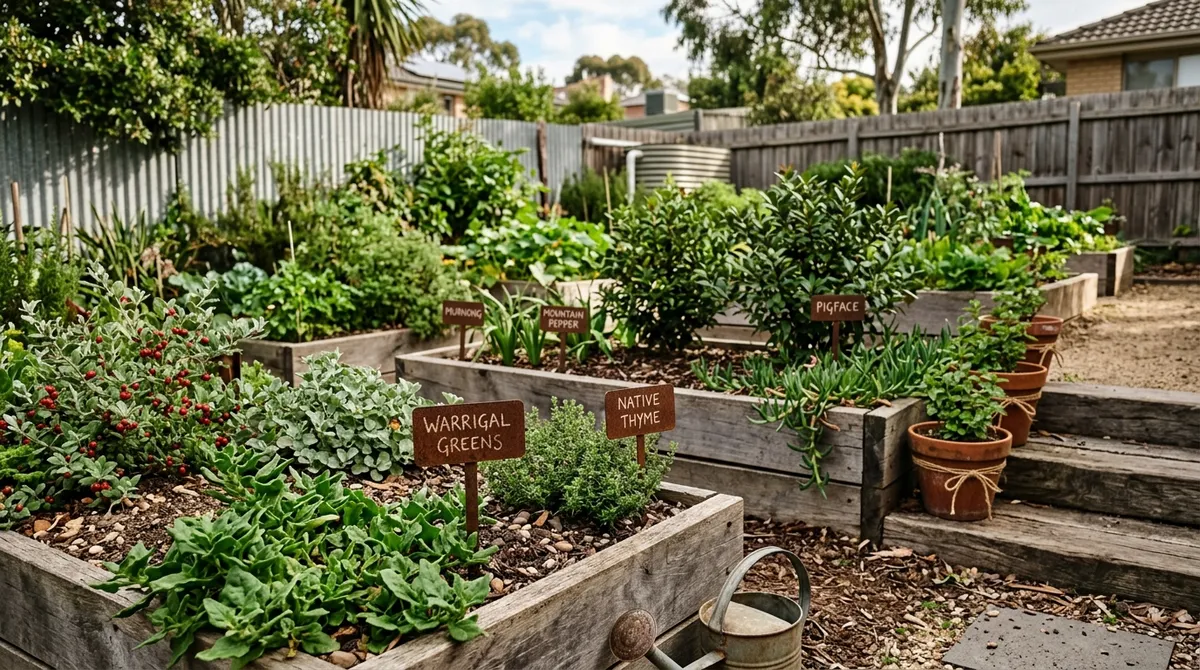
Native Edible Plants for Melbourne Gardens
Low-water bush foods that thrive in Victoria's climate
Melbourne sits in a region with a rich diversity of native edible plants. Many of these species evolved in the cool temperate forests, grasslands, and coastal environments of southern Victoria, so they grow with minimal water, no fertiliser, and very little maintenance once established. Adding native edibles to your garden gives you unique flavours that no supermarket sells, supports local wildlife, and creates a food-producing garden that handles Melbourne's dry summers and water restrictions without stress.
Mountain Pepper (Tasmannia lanceolata)
Mountain pepper is native to the cool temperate rainforests of Victoria and Tasmania, making Melbourne one of the best places in Australia to grow it. It's an evergreen shrub reaching 2 to 3 metres that thrives in part shade to full shade. The leaves and berries both have an intense peppery heat followed by a numbing sensation on the tongue.
Plant in a sheltered, partly shaded position with moist, well-drained soil rich in organic matter. The Dandenong Ranges and Yarra Valley are ideal growing areas, but inner Melbourne gardens with shade and mulch work well too. Mountain pepper handles frost without damage.
Harvest leaves year-round. Pick berries in late autumn when they turn from red to dark purple/black. Dry the berries and grind them for pepper, or use leaves fresh in cooking. Mountain pepper is excellent in stews, rubs, and alongside kangaroo or lamb.
Lemon Myrtle (Backhousia citriodora)
Lemon myrtle is native to the subtropical rainforests of Queensland, but it adapts well to Melbourne gardens in a warm, sheltered position. The leaves contain the highest natural concentration of citral (lemon flavour compound) of any plant, making them intensely aromatic for tea, baking, seafood, and desserts.
Plant against a north-facing wall or fence for warmth and wind protection. Young plants need frost protection for their first two to three winters, so cover with frost cloth on cold nights. Mature trees (3 to 5 years) handle light frost. In outer suburbs with heavy frost, grow in a large pot that can be moved under cover in winter.
Harvest leaves year-round. Use fresh, dried, or frozen. A single established tree provides more leaves than most households can use.
Native Raspberry (Rubus parvifolius)
Native raspberry grows wild in many parts of Victoria, including the Dandenong Ranges, the Great Otway National Park, and the Yarra Ranges. It produces small, sweet-tart red berries in summer (December to February) that taste similar to cultivated raspberries with a slightly more floral note.
Plant in part shade with moist, well-drained soil. Native raspberry spreads by underground runners, so give it space or plant in a contained area. It handles frost well. The canes are thorny, so position it away from pathways. Harvest berries when they turn deep red and pull easily from the stem.
Warrigal Greens (Tetragonia tetragonioides)
Warrigal greens are a native spinach-like plant found across coastal Victoria. Captain Cook's crew ate them to prevent scurvy. The thick, succulent leaves taste similar to spinach and grow prolifically with minimal care.
Plant in full sun to part shade. Warrigal greens tolerate poor soil, salt spray, and drought, making them one of the toughest edible plants you can grow. They spread as a groundcover and self-seed readily. The leaves must be blanched in boiling water for 15 seconds before eating to remove oxalates (the same compound found in raw spinach, just in higher concentrations).
Warrigal greens produce year-round in Melbourne, slowing in the coldest months but never stopping entirely. Use as a cooked green in any recipe calling for spinach.
Native Mint (Mentha australis)
Native mint grows along creeks and in moist forest areas across Victoria. It has a lighter, more delicate flavour than European peppermint or spearmint, with a slightly sweeter finish. It works well in salads, teas, desserts, and cocktails.
Plant in a moist, partly shaded position. Like its European relatives, native mint spreads vigorously, so contain it in a pot or a dedicated section of the garden. It handles frost and grows year-round, though it dies back somewhat in the coldest months.
Davidson Plum (Davidsonia jerseyana)
Davidson plum is a stunning small tree with large, ribbed leaves and deep purple fruit that hangs directly from the trunk. The fruit is intensely sour and astringent when raw but transforms into extraordinary jams, sauces, syrups, and desserts when cooked with sugar.
Plant in a sheltered position with morning sun and afternoon shade. Davidson plum needs frost protection when young. Established trees handle light frost. Grow in rich, moist soil with plenty of organic mulch. In Melbourne, plant against a warm north or east-facing wall. Outer suburbs with heavy frost should grow in a large pot.
Fruit appears from December to March and falls when ripe. Collect from the ground or pick when it pulls easily from the trunk.
Pigface (Carpobrotus rossii)
Pigface is native to Victoria's coastal areas, growing on sand dunes and clifftops from the Mornington Peninsula to the Great Ocean Road. The succulent leaves and bright pink-purple fruit are both edible.
The fruit (available in late summer to autumn) tastes like a salty, sweet fig. The fleshy leaves can be eaten raw in salads or cooked as a vegetable. Pigface is extremely drought-tolerant, handles salt, and thrives in poor, sandy soil. It makes an excellent groundcover or trailing plant in a pot or hanging basket.
Plant in full sun with free-draining soil. It handles frost but prefers the milder conditions of bayside and coastal Melbourne suburbs.
Getting Started with Native Edibles
Start with mountain pepper and warrigal greens, which are the easiest native edibles for Melbourne gardens. Both tolerate a range of conditions, handle frost, and produce usable harvests within their first year. Add lemon myrtle and native raspberry once you have the right positions established.
Native edible plants generally need less fertiliser than European vegetables. Avoid high-phosphorus fertilisers, which can damage native root systems. Use a native plant fertiliser or simply mulch with leaf litter and compost.
Explore Melbourne's Native Edibles
Track native edible plants alongside your vegetable garden with tailored growing advice.
Open the Planting Season AppFrequently Asked Questions
What native edible plants grow in Melbourne?
Melbourne gardens can grow mountain pepper, lemon myrtle, native raspberry, warrigal greens, native mint, Davidson plum, pigface, and native pepper cress. Many of these are low-water and low-maintenance once established.
Can lemon myrtle grow in Melbourne?
Yes, lemon myrtle grows well in Melbourne in a sheltered, frost-protected position. Plant against a north-facing wall. Mature trees handle light frost. Young plants need frost cloth protection for their first two to three winters.
Is mountain pepper easy to grow in Melbourne?
Mountain pepper is one of the easiest native edibles for Melbourne. It is native to Victoria's cool temperate rainforests, so Melbourne's climate is ideal. It tolerates shade, handles frost well, and needs minimal watering once established.
Where can I buy native edible plants in Melbourne?
Native edible plants are available at specialist native nurseries, some Bunnings stores, and Friends of the Botanic Gardens plant sales. Local council indigenous plant sales often have native edibles at lower prices.
Free Monthly Planting Calendar
Get a personalised email each month with what to plant, seasonal tips, and harvest reminders for your region.
We send one email per month. Unsubscribe any time.