
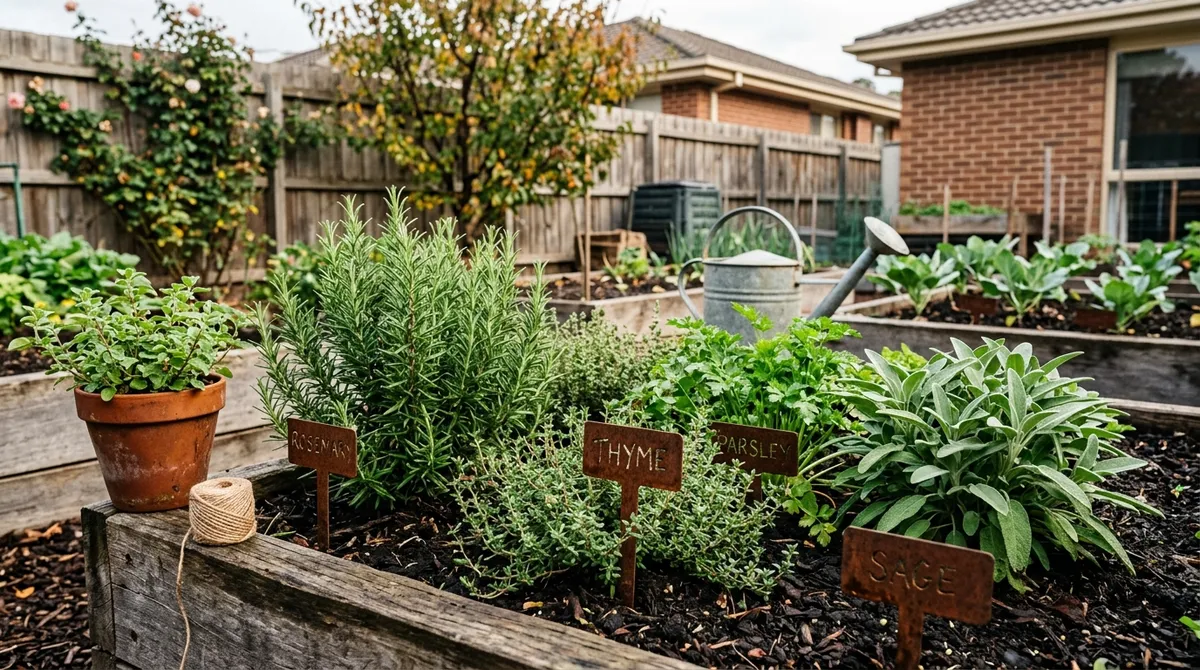
Best Herbs for Melbourne's Cool Climate
Year-round herbs that handle Melbourne's frosts, heat, and everything in between
Melbourne's cool temperate climate suits a wider range of herbs than most people realise. While tropical herbs like lemongrass and ginger struggle outdoors through winter, Mediterranean herbs thrive in conditions that mirror their native habitat. Cool-season herbs like coriander and dill actually perform better in Melbourne than in warmer climates, where they bolt to seed within weeks. The key is understanding which herbs suit which season and giving each one the right position.
Year-Round Performers
Rosemary
Rosemary is perfectly suited to Melbourne. It handles frost, tolerates drought, and grows year-round. Plant it in full sun with free-draining soil. Melbourne's clay is the main risk: rosemary rots in waterlogged soil. Raise the planting position with mounded soil or put it in a raised bed. Tuscan Blue is an upright variety ideal for cooking. Prostrate varieties work as groundcovers or trailing over walls. Rosemary lives for 10 to 15 years in Melbourne and develops into a large, woody shrub if left unpruned.
Thyme
Thyme thrives in Melbourne's conditions. Plant in full sun with sharp drainage. Common thyme (Thymus vulgaris) is the standard cooking variety. Lemon thyme adds a citrus note. Both handle frost without damage. Cut back hard in late winter to prevent the plant becoming woody and bare in the centre. Thyme does well in pots, between pavers, and at the front of raised beds.
Parsley
Italian flat-leaf parsley grows year-round in Melbourne. It's biennial, producing leaves for 12 to 18 months before flowering, seeding, and dying. Plant new seedlings every 12 months to maintain continuous supply. Curly parsley is slightly less cold-hardy but still grows through Melbourne winter. Both types tolerate part shade and prefer rich, moist soil. Parsley handles frost well and actually grows more vigorously in cool weather than in summer heat.
Chives
Chives are a perennial herb that grows year-round in Melbourne, dying back slightly in the coldest months. The mild onion-flavoured leaves are useful in salads, eggs, potatoes, and soups. Garlic chives (flat-leaved, garlic flavour) are equally productive. Both spread by clumping and can be divided every two to three years. Plant in full sun to part shade in any reasonable soil.
Bay Laurel
Bay laurel grows as a small evergreen tree in Melbourne, reaching 3 to 5 metres if unpruned. It handles frost, drought, and Melbourne's clay soil. A single tree provides more bay leaves than any household needs. Pick leaves as required. Bay grows well in a large pot, making it suitable for courtyard and balcony gardens. Prune to shape in late winter.
Mediterranean Herbs: The Dry Soil Group
Mediterranean herbs evolved in hot, dry summers and cool, wet winters, which is similar to Melbourne's climate. The critical requirement is drainage. These herbs die from root rot in waterlogged clay far more often than from cold or heat.
Sage
Common sage grows well in Melbourne with full sun and free-draining soil. Purple sage and golden sage are decorative varieties with the same culinary use. Sage handles frost. Cut back by half in late winter to prevent legginess. Replace plants every three to four years when they become woody.
Oregano
Greek oregano is the most flavourful variety for Melbourne. Plant in full sun with dry, free-draining soil. It spreads by underground runners, so contain it in a pot or dedicate a section of the bed. Oregano dies back in the coldest months but regrows strongly from the roots in spring. The flavour is most concentrated just before flowering.
Lavender
English lavender (Lavandula angustifolia) thrives in Melbourne. The flowers are used in baking, teas, and flavoured sugar. French and Spanish lavenders grow well too but are less cold-hardy. Plant in full sun with excellent drainage. Melbourne's clay is the enemy here: raise the planting position or grow in pots. Prune after flowering to maintain shape.
Cool-Season Specialists
Coriander
Coriander is a cool-season herb that performs brilliantly in Melbourne from April to October. In summer, it bolts to seed within three to four weeks. In winter, it grows slowly and produces abundant leaf for months. Sow seed directly every three weeks through the cool months for continuous supply. Slow-bolt varieties (Calypso, Leisure) extend the harvest period slightly into warmer weather. Use the seeds (dried) as a separate spice once the plant does bolt.
Dill
Dill grows best in Melbourne's cooler months (March to October). It bolts quickly in summer heat. Sow directly where it is to grow because dill dislikes transplanting. The feathery leaves are excellent with fish, potatoes, and salads. The seeds flavour pickles and breads. Let some plants go to seed and they will self-sow, providing new plants without effort.
Chamomile
German chamomile grows as a cool-season annual in Melbourne. Sow seed in autumn (March to April) for winter and spring flowering. The daisy-like flowers are dried for tea. Chamomile self-seeds readily once established, so you may only need to plant it once. It handles frost without damage and prefers full sun with average soil.
Warm-Season Herbs
Basil
Basil is strictly a summer herb in Melbourne. Plant seedlings outdoors from late October (inner suburbs) to mid-November (outer suburbs), after the last frost risk. Sweet basil (Genovese) is the standard cooking variety. Thai basil handles Melbourne's variable weather slightly better than Italian types. Greek basil (compact, small-leaved) works well in pots.
Basil needs full sun, warm soil, shelter from cold winds, and consistent watering. Pinch off flower buds to extend leaf production. Once night temperatures drop below 10 degrees in March or April, basil stops growing and should be pulled out. Accept it as a seasonal pleasure and enjoy it fully while it lasts.
Mint
Mint grows vigorously from spring through autumn in Melbourne. It dies back to the ground in winter but regrows from the roots in September. Grow mint in a pot or a contained bed because it spreads aggressively by underground runners. Spearmint and common mint are the standard varieties. Chocolate mint, apple mint, and Vietnamese mint (which needs more warmth) are interesting alternatives.
Building Your Melbourne Herb Garden
Start with the year-round performers: rosemary, thyme, parsley, chives, and bay laurel. These five herbs cover most cooking needs and produce 12 months a year. Add coriander and dill for the cool season, basil and mint for the warm season, and you'll have fresh herbs from your garden every day of the year.
Group herbs by water needs. Rosemary, thyme, sage, oregano, and lavender go together in dry, sunny, well-drained soil. Parsley, chives, coriander, dill, and mint go together in richer, moister soil. Mixing these groups leads to problems because overwatering the Mediterranean herbs causes rot, and underwatering the moisture-lovers causes bolting and stress.
Track Your Melbourne Herb Garden
Get seasonal planting reminders for herbs tailored to Melbourne's climate.
Open the Planting Season AppFrequently Asked Questions
What herbs grow best in Melbourne?
The most productive herbs for Melbourne are rosemary, thyme, parsley, chives, mint, oregano, sage, bay laurel, coriander (in cool months), and basil (in warm months). Mediterranean herbs thrive in Melbourne's similar climate.
Can I grow basil in Melbourne?
Basil grows well from November to March. Plant seedlings after the last frost. It needs full sun, warm temperatures above 15 degrees, and protection from cold winds. Treat it as a summer annual.
Which herbs grow in Melbourne winter?
Rosemary, thyme, sage, bay laurel, chives, parsley, coriander, and winter savory all grow through Melbourne's winter. Coriander actually performs best in winter because it bolts rapidly in warm weather.
How do I keep herbs alive through Melbourne's variable weather?
Plant Mediterranean herbs in free-draining soil with full sun. They handle frost and heat but rot in waterlogged clay. Plant moisture-loving herbs in richer soil with consistent moisture. Mulch in summer. Avoid overwatering Mediterranean herbs in winter.
Free Monthly Planting Calendar
Get a personalised email each month with what to plant, seasonal tips, and harvest reminders for your region.
We send one email per month. Unsubscribe any time.