
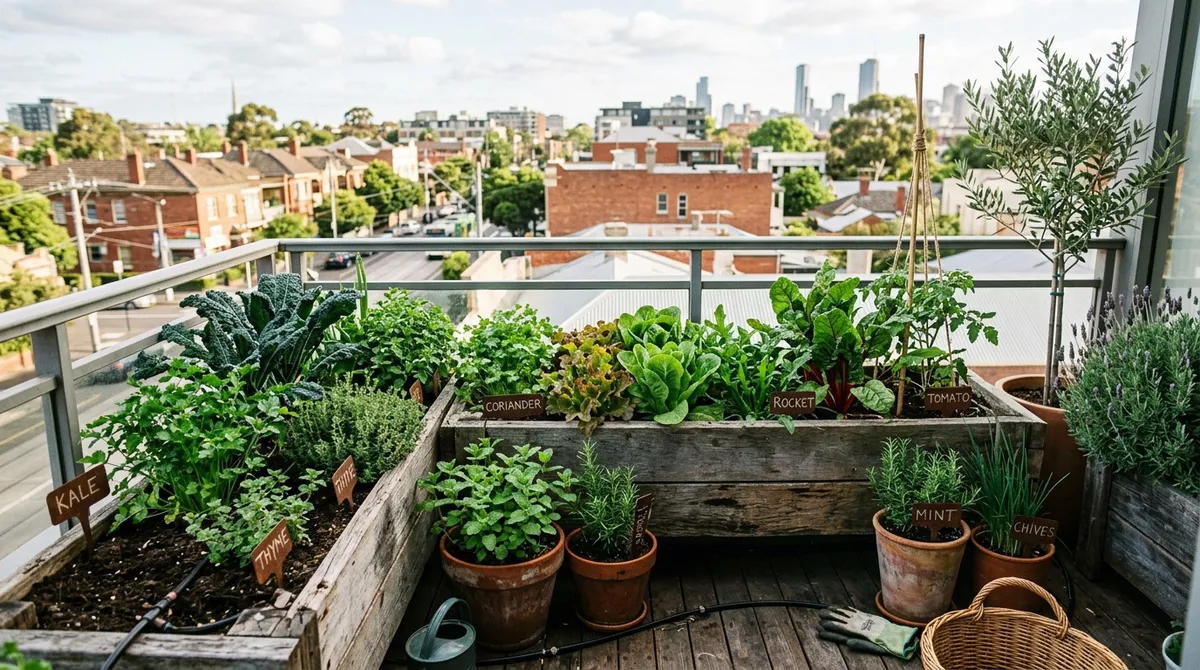
Balcony Vegetable Gardening in Melbourne
Grow food in containers, even on a small apartment balcony
Melbourne's apartment boom means more people are gardening on balconies and in courtyards than ever before. The good news is that balcony gardening in Melbourne has a genuine advantage: your elevated position, reflected heat from buildings, and proximity to warm walls create a microclimate that is often warmer than a suburban backyard at ground level. You can extend your growing season at both ends and grow crops that ground-level gardens in outer suburbs struggle with.
Assess Your Balcony
North-facing (best)
A north-facing balcony receives direct sunlight from morning through afternoon. This is the best orientation for food growing. You can grow tomatoes, capsicum, chillies, herbs, greens, and most vegetables here. Melbourne's winter sun is low in the sky, so check that overhead floors or awnings are high enough to let sunlight reach your plants between May and August.
East-facing
Morning sun only, typically 4 to 6 hours. Good for leafy greens (lettuce, silverbeet, kale, Asian greens), herbs (parsley, chives, mint, coriander), radish, and spring onions. Tomatoes and capsicum may produce, but less abundantly than on a north-facing balcony.
West-facing
Afternoon sun, which is intense in summer. Good for summer crops like tomatoes and basil, but hot afternoon sun can stress plants in January and February. Provide shade during extreme heat. Leafy greens may bolt in the intense afternoon warmth.
South-facing (most limited)
Minimal direct sun. Limited to shade-tolerant crops: mint, parsley, lettuce in cooler months, and mushroom growing kits. Consider supplementing with a small grow light for seedling starts.
Containers and Growing Medium
Container size determines what you can grow. Bigger is always better because larger soil volumes hold moisture longer and buffer temperature swings. Melbourne's hot northerly winds can dry out small pots in hours.
- Herbs: Minimum 20 centimetre diameter pots. Group several herbs in a larger trough (60 centimetres long, 20 centimetres wide) for convenience and better moisture retention.
- Lettuce and greens: 25 centimetre pots, or plant multiple in a window box or trough. Shallow-rooted, so depth is less important than width.
- Tomatoes and chillies: Minimum 30 centimetre pots, ideally 40 centimetres. Each plant needs its own pot. Fabric grow bags (25 to 40 litres) are a great alternative because they're lightweight, which matters on balconies.
- Root vegetables (carrots, beetroot, radish): Deep containers, at least 30 centimetres. Carrots need containers at least as deep as the expected root length, so choose short varieties like Chantenay for shallower pots.
- Strawberries: 20 centimetre pots, hanging baskets, or vertical pocket planters. Strawberries do well trailing over the sides of containers.
Use a premium potting mix rated to Australian Standard (look for the five red ticks on the bag). Garden soil is too heavy and dense for containers. Add water crystals to help retain moisture in hot weather. Self-watering pots or wicking beds are worth the extra cost for balcony growing because they reduce the daily watering burden.
What to Grow: Season by Season
Spring (September to November)
Start herb pots: basil (from mid-October), parsley, chives, rosemary, and thyme. Plant lettuce and silverbeet seedlings. From late October, plant cherry tomato and chilli seedlings. Sow radish and spring onion seeds directly into containers.
Summer (December to February)
Harvest tomatoes, chillies, and basil. Keep lettuce going in a partially shaded spot. Water containers daily, twice daily during heatwaves. Succession sow radish and spring onions every two weeks. Feed all plants with liquid fertiliser fortnightly.
Autumn (March to May)
Remove spent tomato and basil plants. Plant kale, silverbeet, lettuce, spinach, Asian greens, and coriander seedlings. Sow peas directly into deep containers with a small trellis. Plant garlic cloves in pots (they grow well in containers). Start broad beans in large pots.
Winter (June to August)
Maintain autumn plantings. Harvest kale, silverbeet, and lettuce. Sow more lettuce and radish. The balcony's warmth means winter crops often grow faster here than at ground level. Move pots away from the edge on frost nights, or drape with frost cloth.
Melbourne Balcony Challenges
Wind
Upper-level balconies cop strong winds, especially from the north and west. Melbourne's gusty weather can snap tomato stems, dry out soil rapidly, and knock over lightweight pots. Use heavy ceramic or concrete pots near exposed edges. Install a windbreak screen. Group pots together behind the windbreak. Stake all tall plants firmly.
Weight limits
Check your body corporate rules and structural load limits before loading a balcony with heavy pots. Wet soil is surprisingly heavy: a 40-litre pot of moist potting mix weighs around 30 kilograms. Spread weight across the balcony rather than concentrating it in one spot. Lightweight fabric grow bags and plastic pots reduce the load significantly.
Watering
Containers dry out faster than garden beds, especially in Melbourne's hot northerly winds. Self-watering pots are the best investment for balcony gardening. If using standard pots, water early in the morning. In summer, you'll need to water daily. Add a saucer under each pot to catch runoff and give roots a reservoir, but empty saucers after heavy rain to prevent waterlogging.
Heat extremes
Concrete and glass balconies amplify heat. On 40-degree days, move heat-sensitive plants (lettuce, herbs) to the most sheltered position. Shade cloth draped over a frame protects against extreme heat. Light-coloured pots stay cooler than dark ones.
Track Your Balcony Garden
Get planting reminders sized for Melbourne containers and small spaces.
Open the Planting Season AppFrequently Asked Questions
What vegetables grow on a Melbourne balcony?
Herbs, lettuce, silverbeet, kale, cherry tomatoes, chillies, dwarf beans, radish, spring onions, and strawberries all grow well in containers on a Melbourne balcony. Choose compact and dwarf varieties bred for containers. A north-facing balcony gives you the most options.
How do I protect balcony plants from Melbourne wind?
Use heavy, wide pots that resist tipping. Place plants against the building wall rather than near the railing. Install a windbreak screen along exposed sides. Group pots together so plants shelter each other. Stake tall plants securely.
Can I grow tomatoes on a balcony in Melbourne?
Yes, cherry and dwarf tomato varieties grow well on north-facing Melbourne balconies. Use pots at least 30 centimetres in diameter. Tiny Tim, Tumbling Tom, and Patio Prize are proven balcony varieties. Plant from late October and water daily in summer.
What size pots do I need for a balcony vegetable garden?
Herbs need pots at least 20 centimetres in diameter. Lettuce and greens need 25 centimetres. Tomatoes and chillies need 30 centimetres or larger. Always use pots with drainage holes. Fabric grow bags are a lightweight alternative.
Free Monthly Planting Calendar
Get a personalised email each month with what to plant, seasonal tips, and harvest reminders for your region.
We send one email per month. Unsubscribe any time.