
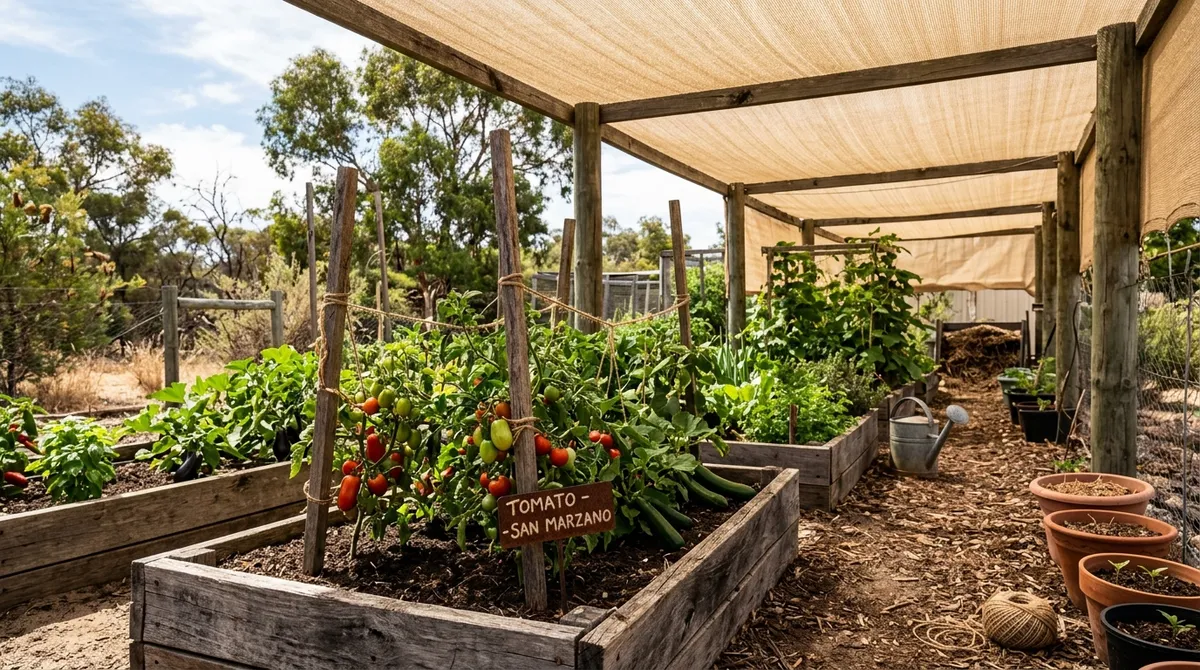
Summer Heat Gardening in Perth
Shade cloth, watering schedules, heat-tolerant crops, and strategies for surviving 40-degree days
Perth averages 28 days per year above 35 degrees and regularly hits 40 or higher during January and February. The eastern suburbs (Midland, Swan Valley, Mundijong) are consistently hotter than the coast. A run of 40-degree days can wilt plants, scorch leaves, and cause tomatoes to drop their flowers without setting fruit.
The good news: with the right preparation, you can keep your garden productive through Perth's toughest weeks. Shade cloth, smart watering, mulch, and heat-tolerant crop choices make a real difference.
Shade Cloth: Your Best Investment
Shade cloth is the single most effective tool for summer gardening in Perth. A simple frame over your vegetable beds, covered with shade cloth, reduces air temperature by 5-10 degrees and prevents sunburn on leaves and fruit.
- 50% shade cloth is the best all-round choice for vegetables. It blocks half the sun's intensity while still allowing enough light for fruiting crops like tomatoes, capsicums, and beans.
- 30% shade cloth suits heat-tolerant crops that need maximum light, such as eggplant, okra, and sweet potato.
- 70% shade cloth is only for shade-loving plants like lettuce, coriander, and parsley during peak summer.
Build a simple frame from 25 millimetre PVC conduit or star pickets and attach shade cloth with cable ties. The frame should sit at least 60 centimetres above the tallest plants to allow airflow. Shade cloth suppliers in Malaga, Osborne Park, and Canning Vale sell by the metre and can cut to size. Bunnings carries pre-made shade cloth panels in common sizes.
Install shade cloth by late October, before the first serious heat arrives. Leave it in place until late March. Remove for winter to maximise sunlight during Perth's shorter, cooler days.
Watering for Extreme Heat
Perth's sandy soil and hot summers create a difficult combination for garden watering. Sandy soil drains fast, and summer evaporation is intense. Plants can go from well-watered to wilting in a single hot afternoon.
Daily Routine
Water early in the morning, before 7am if possible. This gives plants several hours to absorb moisture before peak heat. Drip irrigation on a timer is the most efficient method and is unrestricted under Perth's watering roster (only sprinklers are roster-limited).
Run drip systems for 20-30 minutes per session in sandy soil. Shorter, more frequent watering keeps the root zone moist without wasting water that drains below the roots. In heavy sand (Bassendean, Quinns Rocks, Joondalup), two 15-minute sessions per day may work better than one 30-minute session.
Heatwave Preparation
Check the Bureau of Meteorology forecast regularly from November onwards. Before a forecast heatwave (3 or more consecutive days above 38 degrees):
- Give the garden a deep soak the evening before the heat arrives.
- Top up mulch to at least 8-10 centimetres.
- Harvest any ripe or near-ripe fruit. Heat stress causes premature fruit drop.
- Move potted plants to the most shaded position available.
- Check and clean drip irrigation emitters so they are flowing properly.
Heat-Tolerant Crops for Perth Summers
Some crops handle 40-degree days far better than others. Focus your summer garden on species that evolved in hot climates.
- Sweet potato: Perth's summer heat and sandy soil are ideal for sweet potato. Plant slips from October and harvest from March to May. The vines act as living mulch, shading the soil.
- Okra: Loves extreme heat and produces prolifically in Perth. Sow from October. Pick pods every 2-3 days while still tender (8-10 centimetres long).
- Snake beans: These long, thin beans grow fast in hot conditions when regular French beans struggle. Sow from October and provide a tall trellis.
- Eggplant: A heat lover that produces through Perth's hottest months. Fairy Tale and Black Beauty are reliable varieties.
- Kangkong (water spinach): A tropical leafy green that thrives in summer heat. Grows in regular garden beds or in pots sitting in trays of water.
- Malabar spinach: A climbing vine producing thick, glossy leaves through summer when regular spinach bolts immediately. Grows vigorously in Perth's heat.
- Rosella (hibiscus): The calyces make outstanding jam and cordial. Rosella handles 40-degree days easily and produces from March to May.
Mulch and Soil Protection
Bare soil in a Perth summer can reach 60 degrees at the surface. At that temperature, roots die, soil biology shuts down, and water evaporates within hours.
Apply 8-10 centimetres of organic mulch (pea straw, sugar cane, or lucerne) across all garden beds. This reduces soil temperature by 10-15 degrees and cuts water use by 30-50%. Pull mulch 5 centimetres away from plant stems to prevent collar rot.
Reapply mulch in November and again in January. Perth's hot, dry conditions break down organic mulch faster than in humid climates. By February, your original November mulch layer will be half its starting depth.
Protecting Sensitive Crops
Tomatoes stop setting fruit when daytime temperatures exceed 38 degrees for consecutive days. The flowers drop without pollinating. This is a heat response, and you cannot prevent it. Keep plants healthy through the hot spell, and they will resume fruiting when temperatures moderate.
Lettuce, coriander, spinach, and most brassicas bolt quickly in Perth's summer. Grow these crops from April to October instead. If you want leafy greens in summer, switch to kangkong, Malabar spinach, or amaranth.
Sunburn on fruit (white or pale patches on the sun-facing side) is common on tomatoes, capsicums, and eggplant. Shade cloth prevents this. If individual fruit is exposed, drape a piece of light fabric or shade cloth directly over the affected truss.
Get Summer Growing Reminders
The Planting Season app sends you seasonal alerts so you never miss a watering or planting window through Perth's summer.
Open the Planting Season AppFrequently Asked Questions
How do I protect my garden from extreme heat in Perth?
Install 50% shade cloth over vegetable beds. Water deeply in the early morning. Apply 8-10 centimetres of mulch. On days forecast above 40 degrees, give an extra deep soak the evening before.
What vegetables grow well in Perth's summer heat?
Sweet potato, okra, snake beans, rosella, eggplant, chillies, and heat-tolerant tomato varieties handle Perth's extreme heat. Kangkong, Malabar spinach, and amaranth are leafy greens that thrive above 35 degrees.
When should I water my Perth garden in summer?
Water early in the morning, before 7am. Drip irrigation is unrestricted under Perth's water roster. On the evening before a forecast heatwave, give the garden an extra deep soak.
What percentage shade cloth should I use in Perth?
50% shade cloth is the best all-round choice for vegetable gardens. It reduces heat and UV while still allowing enough light for fruiting crops. Use 30% for heat-tolerant crops and 70% only for shade-loving plants like lettuce.
Free Monthly Planting Calendar
Get a personalised email each month with what to plant, seasonal tips, and harvest reminders for your region.
We send one email per month. Unsubscribe any time.