
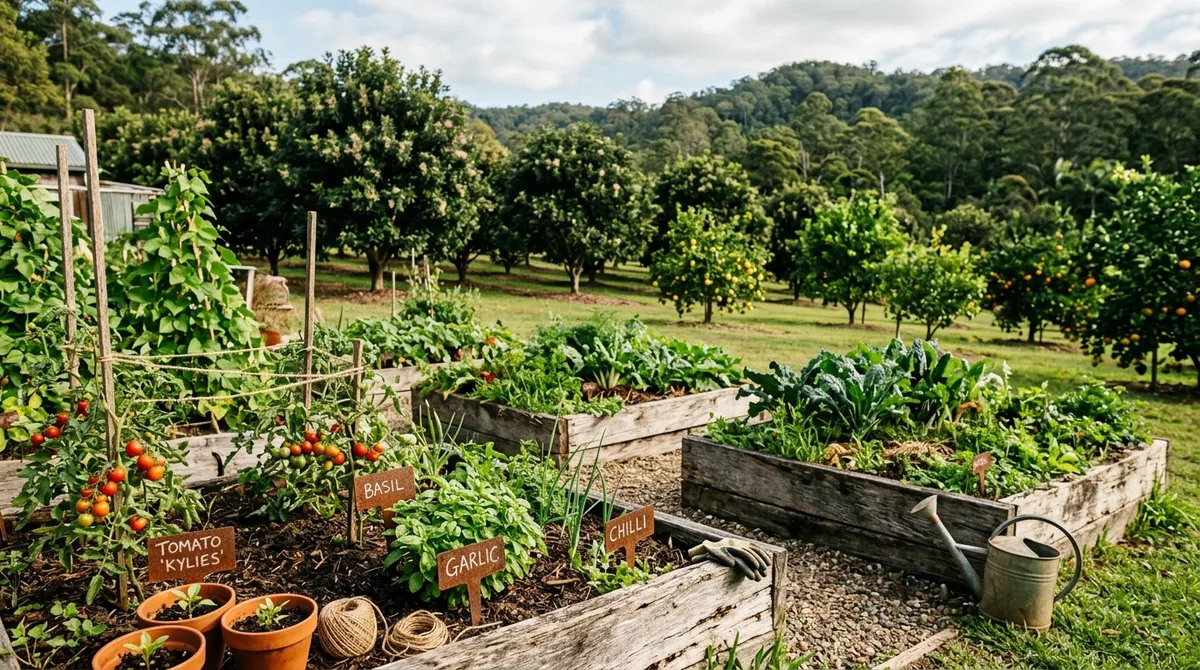
Best Fruit Trees for the Northern Rivers
Avocado, macadamia, coffee, citrus, and hinterland stone fruit on volcanic red soil
The Northern Rivers is Australia's subtropical fruit bowl. Commercial orchards of avocado, macadamia, and citrus dot the hinterland from Alstonville to Kyogle. Coffee plantations operate around Byron Bay and Nimbin. Backyard gardeners can grow everything from mangoes on the coast to apples in the cooler hinterland. The combination of deep volcanic soil, reliable rainfall (1200-1800 millimetres annually), and warm temperatures makes this one of the most productive fruit-growing regions in the country.
The region splits into two zones for fruit growing: the warm, humid coast (Byron Bay, Ballina, Lennox Head) where tropical species thrive, and the cooler hinterland (Nimbin, The Channon, Dorroughby, upper Bangalow) where some deciduous fruit produces well.
Avocado
The Northern Rivers is one of Australia's top avocado-producing regions. The Alstonville plateau, with its deep red volcanic soil and reliable rainfall, produces commercial Hass, Shepard, and Reed avocados. Backyard trees thrive in the same conditions.
- Hass: The standard variety, producing dark-skinned, creamy-fleshed fruit from August to January. Self-fertile but produces better with a B-type pollinator nearby. Available as grafted trees from Daleys Fruit Tree Nursery in Kyogle.
- Shepard: Green-skinned, nutty-flavoured fruit that does not oxidise (turn brown) when cut. Ripens February to April. A-type flowers. Excellent for the Northern Rivers' warm conditions.
- Reed: Large, round fruit with buttery flesh. Late season (June to October). Reliable bearer once established. Slightly more cold-tolerant than Hass.
- Wurtz (Little Cado): A dwarf variety reaching 3-4 metres. Ideal for small backyards. Produces Hass-like fruit on a compact tree. Good for containers on balconies in coastal areas.
Avocados need excellent drainage. Phytophthora root rot is the main killer, and the Northern Rivers' heavy rainfall makes drainage critical. Plant on slopes or mounds, never in low-lying areas that collect water. Mulch thickly but keep mulch 30 centimetres from the trunk. A mature avocado tree produces 200-500 fruit per season.
Macadamia
Macadamia is native to the Northern Rivers region. Wild macadamia trees still grow in remnant rainforest around Lismore and the Big Scrub. The commercial macadamia industry started here in the 1960s, and the Northern Rivers remains one of Australia's largest production areas.
For backyard growing, choose grafted varieties for reliable nut quality and earlier bearing (3-5 years from planting versus 7-10 years for seedlings). A246 (Beaumont) is the most widely planted variety, producing well-filled nuts on a spreading tree. 842 (Kakadu) is a newer variety with excellent nut quality. Macadamias grow 8-12 metres tall but can be pruned to 4-5 metres for easier harvesting.
Plant in well-drained soil in full sun. Macadamias are moderately wind-tolerant but produce better with windbreak protection. The trees are attractive ornamentals with glossy foliage and pendant flower clusters. Nuts fall to the ground when ripe (March to September). Collect regularly to prevent rat damage. Crack nuts using a macadamia cracker (standard nutcrackers cannot handle the extremely hard shell).
Coffee
Coffee growing in the Northern Rivers has expanded steadily as the climate warms. Several small plantations operate around Byron Bay, Bangalow, Newrybar, and Nimbin. The subtropical climate provides warmth for growth, while cool winter nights develop the complex flavours that distinguish specialty coffee.
Plant Arabica varieties: Typica, Bourbon, or Catuai are the most common in the region. K7 is a rust-resistant variety suitable for organic growers. Coffee grows as a shrub or small tree to 3-5 metres. Plant in a partly shaded position protected from strong winds. The dappled shade under a macadamia or avocado tree is ideal.
Harvest red (ripe) cherries from May to August. Each cherry contains two beans. Processing involves removing the fruit flesh (pulping), fermenting for 12-24 hours, washing, drying, and roasting. A mature tree produces 1-3 kilograms of green beans per year, enough for a dedicated home coffee drinker.
Citrus
All citrus types grow well in the Northern Rivers. The warm climate and acidic volcanic soil suit citrus perfectly, producing sweeter fruit than cooler regions.
- Lemons: Eureka (year-round bearing) and Meyer (sweeter, cold-tolerant) are the standard choices. A single tree provides enough lemons for a household.
- Limes: Tahitian lime produces prolifically in the Northern Rivers' warmth. Makrut (kaffir) lime is grown for its aromatic leaves, essential in Thai cooking.
- Oranges: Washington Navel (winter eating), Valencia (summer juicing), and blood oranges all produce well. The warm conditions develop excellent sweetness.
- Mandarins: Imperial is the classic variety. Afourer produces large, easy-to-peel fruit with outstanding flavour. Emperor ripens late (August to September).
Plant citrus in full sun with good drainage. Feed with citrus fertiliser in spring, summer, and autumn. The main pests are citrus leaf miner (treat with eco-oil), scale insects, and stink bugs. Fruit fly is active year-round; use protein bait sprays and exclusion netting.
Hinterland Stone Fruit and Apples
The Northern Rivers hinterland above 200 metres elevation (Nimbin, The Channon, Dorroughby, upper Bangalow, and the Nightcap Range) receives enough winter chill for some deciduous fruit. Stone fruit and apples that fail on the warm coast can produce on these cooler sites.
- Low-chill peaches and nectarines: Tropic Beauty, Flordaprince, and Gulf varieties need only 150-250 chill hours and produce well in the hinterland. Harvest January to February.
- Plums: Mariposa and Santa Rosa (Japanese plums) need moderate chill and produce reliably above 200 metres elevation.
- Low-chill apples: Anna and Dorsett Golden need only 200-300 chill hours. They produce medium-quality fruit, acceptable for eating and cooking. Granny Smith, which needs higher chill, may produce on the highest hinterland sites.
Deciduous fruit trees on the hinterland need careful variety selection. Choose low-chill varieties specifically bred for subtropical conditions. Standard high-chill varieties (most apples, cherries, European plums) will not receive enough cold in the Northern Rivers to fruit properly.
Plan Your Northern Rivers Orchard
Get variety recommendations and seasonal reminders for fruit trees in the Northern Rivers.
Open the Planting Season AppFrequently Asked Questions
What fruit trees grow best in the Northern Rivers?
The Northern Rivers suits a wide range of subtropical and tropical fruit trees. Avocado, macadamia, citrus (all types), banana, coffee, custard apple, mango (coastal areas), and passionfruit all produce well. The hinterland also grows temperate stone fruit and apples because the cooler nights provide some chill hours. The region's volcanic red soil and reliable rainfall create excellent growing conditions.
Can I grow avocados in the Northern Rivers?
The Northern Rivers is one of Australia's premier avocado-growing regions. Commercial orchards around Alstonville, Bangalow, and Clunes produce Hass, Shepard, and Reed varieties. Backyard trees produce well on the deep red volcanic soil. Plant grafted trees in a well-drained position with good airflow. Avocados are sensitive to root rot (Phytophthora), so excellent drainage is critical. A single mature tree can produce 200-500 fruit per season.
Can I grow coffee in the Northern Rivers?
Coffee grows well in the Northern Rivers, and several small commercial plantations operate around Byron Bay, Bangalow, and Nimbin. The subtropical climate provides the warmth coffee needs, while the altitude and cool winters slow ripening and develop complex flavours. Plant Arabica varieties in a partly shaded, sheltered position. Harvest red cherries from May to August. A mature tree produces 1-3 kilograms of green beans per year.
When should I plant fruit trees in the Northern Rivers?
Plant subtropical fruit trees in spring (September to November) when soil is warm and rainfall is increasing. This gives trees a full growing season to establish before winter. Deciduous trees (stone fruit, apples) are best planted bare-root in winter (June to August). Potted trees can go in year-round, but avoid planting during the peak of summer heat (January to February) as new trees struggle to establish in extreme conditions.
Free Monthly Planting Calendar
Get a personalised email each month with what to plant, seasonal tips, and harvest reminders for your region.
We send one email per month. Unsubscribe any time.