
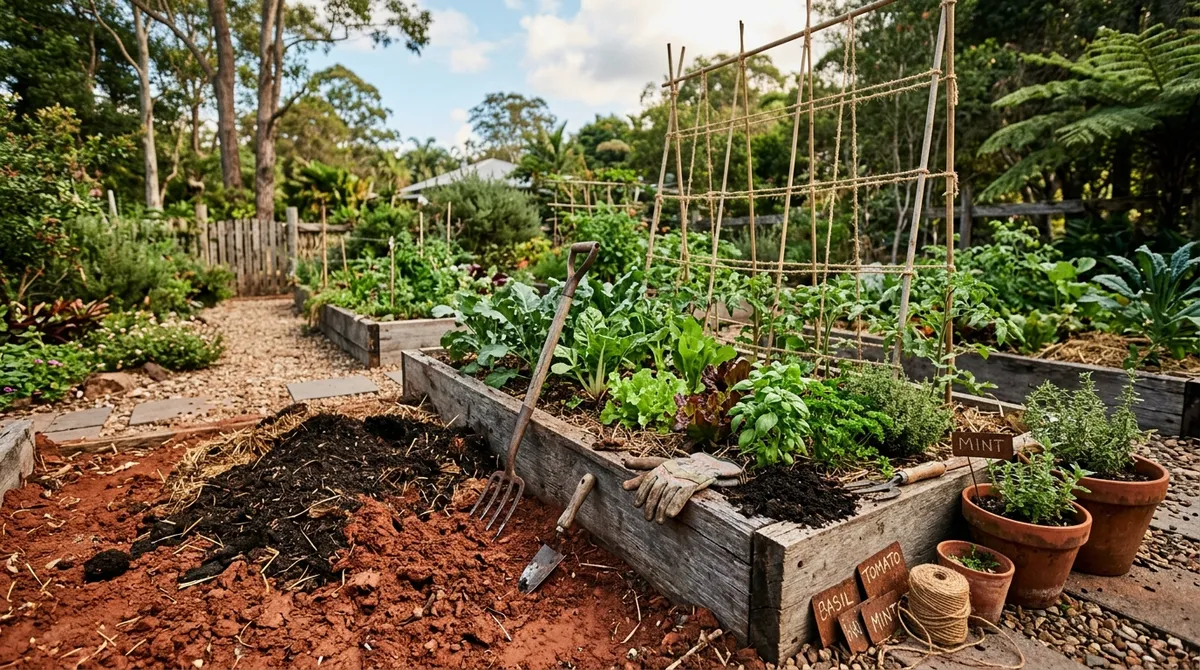
Gardening in Northern Rivers Red Soil
Volcanic krasnozem, alluvial clay, drainage strategies, and raised beds for the region's distinctive soils
The Northern Rivers has some of Australia's most fertile soil. The deep red krasnozem that covers the hinterland from Alstonville to Nimbin and Kyogle formed from basalt lava flows of the ancient Tweed Shield Volcano (centred on what is now Mount Warning). This soil supports macadamia orchards, dairy farms, coffee plantations, and the region's famous subtropical fruit industry. It is naturally rich in iron, trace minerals, and organic matter.
The challenge is managing this soil in a high-rainfall environment. The Northern Rivers receives 1200-1800 millimetres of rain annually, with most falling in intense bursts between November and March. Red clay becomes sticky and unworkable when saturated, and low-lying areas near the Richmond and Wilsons rivers flood regularly. Knowing your soil type and managing water are the keys to productive gardening here.
Understanding Your Soil Type
The Northern Rivers has two main soil types, and your approach depends on which one you have.
Red Krasnozem (Volcanic Soil)
Found across the hinterland hills and plateaus: Alstonville, Bangalow, Federal, Rosebank, Dorroughby, Nimbin, The Channon, and Kyogle. This deep, well-structured red soil is naturally fertile and slightly acidic (pH 5.5-6.5). It drains reasonably well on slopes but can waterlog on flat ground during heavy rain. The red colour comes from iron oxides in the weathered basalt.
Krasnozem is excellent garden soil with some management. It holds nutrients well, supports strong root growth, and maintains good structure if you avoid compacting it when wet. The main issue is its tendency to set hard when dry and become slippery and sticky when wet. Adding organic matter improves both problems.
Alluvial Clay (Flood Plain Soil)
Found on the river flats: Lismore, Casino, Coraki, Woodburn, Broadwater, and along the Richmond River corridor. This grey to brown clay soil was deposited by river flooding over thousands of years. It is extremely fertile (flood deposits carry nutrients) but poorly drained. These areas are prone to inundation during major rain events, with the 2022 Lismore floods a recent example of the extreme end.
Gardening on flood plains requires raised beds and an acceptance that floods will occasionally reset your garden. Build beds at least 30-50 centimetres high, use materials that can withstand temporary submersion, and choose quick-establishing crops that can be replanted after flood events.
Improving Drainage
Drainage is the most important soil management task in the Northern Rivers. Root rot, nutrient leaching, and soil compaction are all symptoms of poor drainage in heavy clay.
- Organic matter: Add 10-15 centimetres of compost, aged cow manure (locally available from dairy farms), or composted sugarcane mulch to garden beds annually. Organic matter improves soil structure by creating air pockets and channels that allow water to move through the profile. Over 3-5 years of consistent additions, even heavy clay becomes workable.
- Gypsum: Apply agricultural gypsum (calcium sulphate) at 1-2 kilograms per square metre on heavy clay. Gypsum causes clay particles to clump together (flocculate), creating larger pore spaces for water and air. It does not change soil pH, which is important because Northern Rivers soils are already at a good level for most crops.
- Raised beds: Build beds 30-50 centimetres above ground level, filled with a blend of existing soil, compost, and coarse organic matter. Timber sleepers, recycled plastic lumber, or galvanised steel are common materials. On flood plains, raised beds are essential rather than optional.
- Swales and drainage channels: Direct excess water away from garden areas. On sloping sites, contour swales (shallow trenches running across the slope) intercept runoff and allow it to soak in gradually. On flat sites, drainage channels leading to lower ground or storm water systems keep beds from sitting in standing water.
Working With Red Soil
Red krasnozem has specific handling requirements. Follow these principles for the best results.
Never dig or walk on red soil when it is saturated. Compaction from foot traffic or machinery destroys the soil structure that takes years to build. Lay permanent paths between beds using woodchip, gravel, or pavers. If you must access beds during wet weather, stand on a plank to distribute your weight.
Mulch heavily and continuously. A 10-15 centimetre layer of sugarcane mulch, woodchip, or hay protects the soil surface from rain impact (which causes crusting), feeds soil organisms, and regulates moisture. The Northern Rivers' warm, wet climate breaks down mulch quickly, so top it up every 3-4 months. Local sugarcane mulch is available from Bunnings in Lismore and Ballina, or directly from cane farms on the Tweed and Richmond flood plains.
Test your soil pH annually. Red krasnozem is naturally slightly acidic, which suits most vegetables and fruit trees. If pH drops below 5.5 (common after years of heavy composting), apply agricultural lime at 200-500 grams per square metre. Alluvial flood plain soils tend to be closer to neutral (pH 6.5-7.0).
Raised Beds for the Northern Rivers
Raised beds are the single most effective improvement for Northern Rivers gardens. They solve drainage problems, warm soil faster in winter, reduce weed pressure, and make gardening physically easier.
Build beds 30-50 centimetres high and no wider than 1.2 metres (so you can reach the centre from either side). Fill with a blend of 50 percent existing soil, 30 percent compost, and 20 percent coarse organic matter (composted bark, rice hulls, or aged woodchip). This mix provides good fertility, drainage, and water-holding capacity.
On flood-prone sites, consider using galvanised steel raised beds with removable mesh bases. These survive temporary submersion and can be cleaned and replanted quickly after flood events. Avoid treated pine on flood plains, as floodwater can leach chemicals into the soil.
Wicking beds are an excellent option for the Northern Rivers, though they work differently here than in drier climates. The water reservoir provides insurance during dry spells (the region does experience dry periods in September and October), while the raised bed profile ensures roots are never waterlogged during heavy rain.
Erosion Control on Slopes
Many Northern Rivers properties sit on sloping ground where the hinterland ridges meet the river valleys. Bare soil on slopes erodes rapidly during heavy rain, and red soil stains paths, driveways, and stormwater systems.
- Contour planting: Arrange garden beds and rows across the slope (following the contour lines) rather than up and down. This slows water movement and gives it time to soak in.
- Living mulch: Plant ground covers like sweet potato, pumpkin, or nasturtium between rows to protect bare soil. These crops cover the ground quickly in the Northern Rivers' warm conditions.
- Vetiver grass hedges: Plant vetiver grass along contour lines to act as a living barrier. Vetiver's deep roots (2-3 metres) stabilise soil, and the dense hedge slows water flow and filters sediment. Available from local nurseries in the Northern Rivers.
- Terracing: For steeper slopes, build terraced beds using timber, stone, or recycled concrete. Each terrace creates a level planting area and prevents soil washing downhill.
Get Soil-Specific Advice
The Planting Season app adjusts recommendations based on your local soil type and conditions.
Open the Planting Season AppFrequently Asked Questions
What is krasnozem soil in the Northern Rivers?
Krasnozem (from the Russian for 'red earth') is the distinctive red volcanic soil found across the Northern Rivers hinterland. It formed from the weathering of basalt lava flows from the ancient Tweed Shield Volcano (Mount Warning). This soil is deep, well-structured, and naturally rich in iron, aluminium, and trace minerals. It supports the region's macadamia orchards, dairy farms, and subtropical fruit production.
Is Northern Rivers red soil good for gardening?
Red krasnozem soil is excellent for gardening. It holds nutrients well, has good structure when managed correctly, and supports strong plant growth. The main challenge is that it becomes sticky and compacted when wet and rock-hard when dry. Adding organic matter (compost, aged manure, mulch) improves its water-holding capacity and workability. The soil is naturally slightly acidic (pH 5.5-6.5), which suits most vegetables and fruit trees.
Why does my Northern Rivers garden flood in the wet season?
The Northern Rivers receives 1200-1800 millimetres of rainfall annually, with most falling between November and March. Clay subsoils (both red krasnozem and alluvial grey clay) drain slowly during prolonged wet periods. Low-lying areas near the Wilsons River, Richmond River, and their tributaries are particularly prone to waterlogging and flooding. Raised beds (30-50 centimetres high) are the most effective solution because they lift root zones above the saturated ground.
How do I improve drainage in Northern Rivers soil?
Add generous amounts of organic matter (compost, aged manure, sugarcane mulch) to improve soil structure and drainage. Gypsum (calcium sulphate) helps break up clay particles without changing pH. Build raised beds for vegetables and herbs. Install swales and drainage channels to direct excess water away from garden beds. On sloping sites, contour beds across the slope to slow water runoff and reduce erosion.
Free Monthly Planting Calendar
Get a personalised email each month with what to plant, seasonal tips, and harvest reminders for your region.
We send one email per month. Unsubscribe any time.