
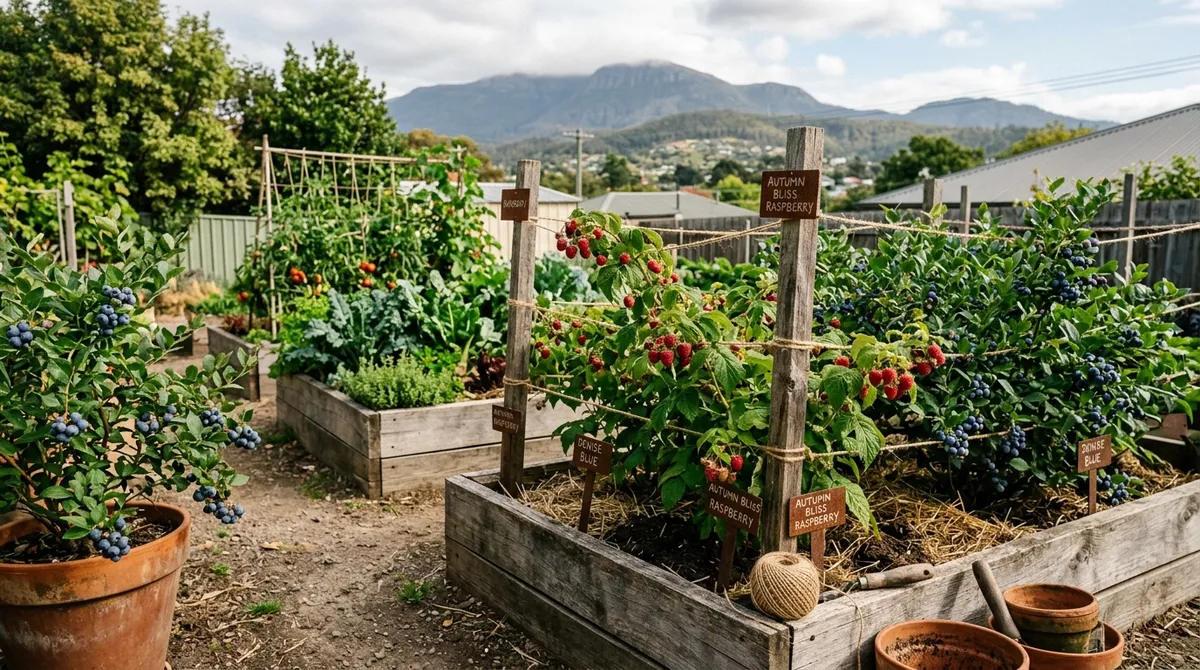
Growing Berries in Tasmania
Blueberries, raspberries, strawberries, and currants thrive in Tasmania's cool climate
Tasmania is arguably the best berry-growing region in Australia. The cool climate provides the chill hours that blueberries, raspberries, currants, and gooseberries need to fruit heavily. The mild summers (rarely above 30 degrees) allow a long, slow ripening period that develops outstanding flavour. Commercial berry farms across the state, from the Derwent Valley to the northwest coast, prove how well these crops suit Tasmanian conditions.
Backyard berry growing is equally rewarding. A few blueberry bushes, a row of raspberries, a strawberry bed, and a blackcurrant bush provide fruit from November through to April. Berries freeze beautifully too, so a productive summer patch can supply you year-round.
Blueberries
Blueberries grow exceptionally well in Tasmania. The high chill hours (800-1200 in Hobart, higher inland) satisfy their dormancy requirements, and many Tasmanian soils are naturally acidic, which blueberries prefer. The commercial blueberry industry in Tasmania has expanded significantly, confirming how suited the conditions are.
Varieties
- Bluecrop: The industry standard. Reliable, heavy-cropping, with large, firm berries. Mid-season (January to February). Excellent flavour. The safest choice for beginners.
- Brigitta: Late season (February to March). Very large berries with outstanding flavour. Good storage qualities. Developed in Australia and well proven in Tasmanian conditions.
- Denise: Early season (December to January). Medium-sized, sweet berries. Extends the harvest when combined with mid and late varieties.
- Northland: Very cold-hardy variety suited to inland Tasmania and highland areas. Medium berries, good flavour. Mid-season.
Plant at least two different blueberry varieties for cross-pollination. Cross-pollinated plants produce larger, more abundant fruit. Space bushes 1.2-1.5 metres apart in a row.
Soil and Planting
Blueberries need acidic soil with a pH of 4.5-5.5. Test your soil pH before planting. Tasmania's dolerite soils are often naturally acidic (pH 5.0-6.0), which is close to ideal. If your soil is above pH 5.5, lower it by digging in sulphur chips (200 grams per square metre) 3 months before planting, or grow in large pots filled with camellia/azalea potting mix.
Plant bare-root blueberry bushes from June to August. Container-grown plants can go in year-round. Dig in generous amounts of peat moss or composted pine bark to the planting area. Mulch with pine bark or pine needles to maintain acidity. Avoid lime, wood ash, and mushroom compost, which raise pH.
Raspberries
Raspberries are one of the easiest and most productive berries for Tasmanian gardens. They grow vigorously in the cool climate and produce heavily with minimal care. A row of 10 canes produces kilos of fruit.
Varieties
- Willamette: The standard summer-fruiting raspberry. Large, dark red fruit with classic raspberry flavour. Produces from December to February. Very reliable in Tasmania.
- Chilcotin: Summer-fruiting. Large, firm berries with excellent flavour. Productive and disease-resistant.
- Heritage: Everbearing (autumn-fruiting). Produces from February to April on current-season canes. Smaller fruit than summer varieties but extends the season into autumn.
- Autumn Bliss: Everbearing. Large berries for an autumn variety. Produces from late January to April. Good for Hobart's milder coastal areas.
Planting and Training
Plant bare-root raspberry canes from June to August, 50 centimetres apart along a wire trellis. Use a simple two-wire system: stretch galvanised wire at 60 centimetres and 1.2 metres high between sturdy end posts. Tie canes to the wires as they grow.
Summer-fruiting varieties fruit on last year's canes. After harvest (February to March), cut the canes that fruited to ground level. Tie in the new season's canes for next year. Everbearing varieties fruit on current-season growth. Cut all canes to ground level in winter (June to July). New canes grow in spring and fruit from late summer.
Strawberries
Strawberries produce well in Tasmania, and the cool climate develops intense flavour. The main harvest runs from November to January, with some everbearing varieties producing into March.
- Red Gauntlet: Classic variety with large, sweet fruit. Very productive in Tasmanian conditions. June-bearing (main crop November to January).
- Adina: An Australian variety with large, firm fruit. Good disease resistance. Reliable in cool climates.
- Albion: Everbearing. Produces from October to March with smaller flushes of large, sweet berries throughout. Ideal for extending the harvest.
- Temptation: Everbearing with excellent flavour. Can be grown from seed (unusual for strawberries). Compact plants suit pots and hanging baskets.
Plant strawberry runners from February to April (autumn planting) or August to September (spring planting). Autumn-planted runners establish over winter and produce a full crop the following spring. Space plants 30 centimetres apart in rows or in a dedicated raised bed. Mulch with straw to keep fruit clean and reduce soil splash.
Replace strawberry plants every 3-4 years. Productivity declines as plants age. Save runners from your best-performing plants to start the next bed.
Currants and Gooseberries
Blackcurrants, redcurrants, and gooseberries are ideal cool-climate berries that grow superbly in Tasmania. They need 800-1000 chill hours, which Tasmania provides easily. These berries struggle in warmer parts of Australia, making Tasmania one of the few places they reliably produce.
- Blackcurrants: Magnus and Ben Lomond are productive varieties. Strong-flavoured berries used for jams, cordial, and liqueurs. Harvest January to February. Very hardy; tolerates minus 10 degrees and colder.
- Redcurrants: Rovada and Jonkheer van Tets produce clusters of translucent red berries. Tart flavour, excellent for jellies and garnishes. Harvest December to January.
- Gooseberries: Invicta (green, sweet when ripe) and Captivator (red, thornless) are reliable varieties. Harvest December to January. Gooseberry fool, crumbles, and jams are traditional uses.
Plant bare-root currants and gooseberries from June to August. They tolerate part shade and heavy soil better than most berries. Prune in winter by removing the oldest branches (3-4 years old) at ground level to encourage productive new growth.
General Berry Care in Tasmania
Water berries regularly through the fruiting season (November to March). Inconsistent watering causes small, dry fruit and cracked skin. Drip irrigation is ideal. Mulch all berry plants with straw, pea straw, or pine bark to retain moisture and suppress weeds.
Feed with a balanced organic fertiliser in late winter (August) and again after fruit set (November). Blueberries prefer an acid-specific fertiliser. Avoid lime around all berry plants.
Net all berries against birds. Blackbirds, starlings, and native silvereyes will strip a berry patch in hours. Install bird netting over a frame before fruit starts colouring (late November for most species). Use fine mesh (under 10 millimetres) to exclude small birds.
Track Your Berry Calendar
Get seasonal reminders for planting, pruning, and harvest timing for berries in your Tasmanian location.
Open the Planting Season AppFrequently Asked Questions
What berries grow best in Tasmania?
Blueberries, raspberries, strawberries, blackcurrants, redcurrants, and gooseberries all thrive in Tasmania's cool climate. The high chill hours satisfy berry plants that struggle in warmer parts of Australia.
When should I plant berries in Tasmania?
Plant bare-root berries from June to August during winter dormancy. Potted strawberry runners go in from February to April or August to September. Container-grown blueberries can be planted year-round.
Do blueberries grow well in Tasmania?
Blueberries grow exceptionally well in Tasmania. The cool climate provides chill hours and Tasmania's naturally acidic soils suit them. Highbush varieties like Bluecrop, Brigitta, and Denise are the best choice.
How do I grow raspberries in Tasmania?
Plant bare-root canes in winter, 50 centimetres apart along a wire trellis. Summer-fruiting varieties produce from December to February. Everbearing varieties produce from February to April. Prune after fruiting.
Free Monthly Planting Calendar
Get a personalised email each month with what to plant, seasonal tips, and harvest reminders for your region.
We send one email per month. Unsubscribe any time.