
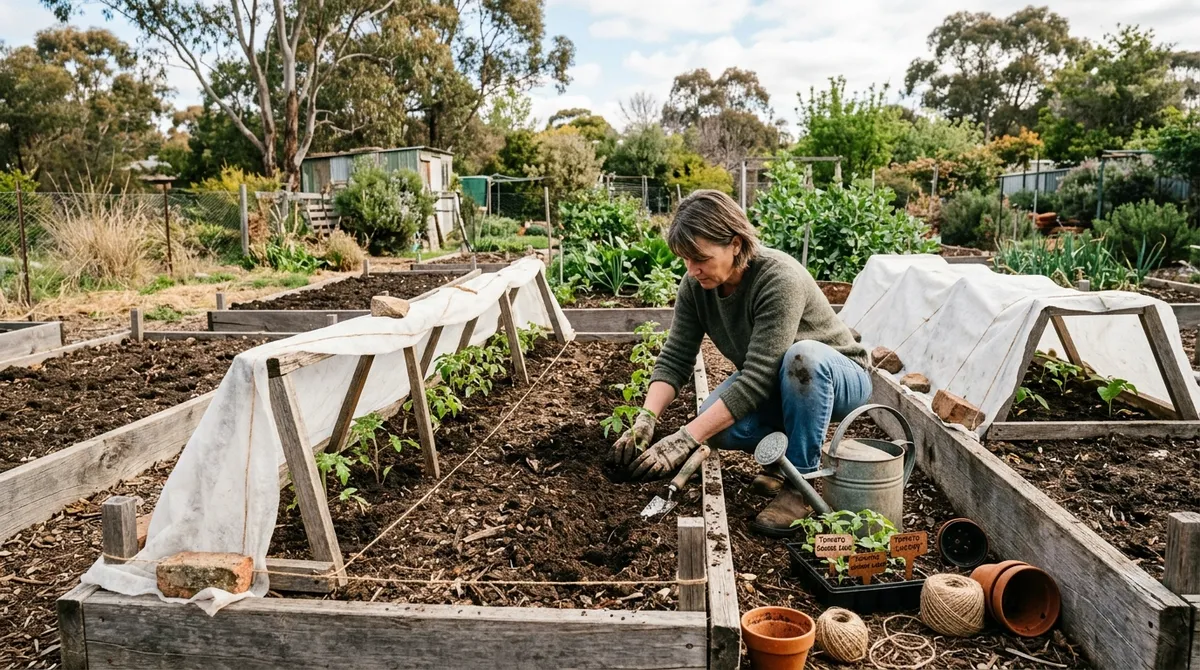
When to Plant Tomatoes in Canberra
A short season demands careful timing, early varieties, and a head start indoors
Canberra has one of the shortest tomato seasons of any Australian capital. Hard frosts regularly arrive until late October, and they return by mid-April. That gives you roughly four months of frost-free growing, and tomatoes need every one of them. The good news: Canberra's hot, dry summers and intense sunlight produce tomatoes with outstanding flavour, often better than anything grown on the humid coast.
The strategy is simple. Start seeds early under cover, transplant after the last frost, choose fast-maturing varieties, and have a plan for picking green tomatoes before autumn frost arrives.
Canberra's Tomato Timeline
Start Seeds Indoors: September
Sow tomato seeds in early to mid-September, six to eight weeks before your planned transplant date. Use seed-raising trays on a heat mat or sunny north-facing windowsill. Canberra's September days average 15 to 17 degrees, which is too cool for tomato germination without added warmth. A heat mat set to 22-25 degrees gives reliable germination in 7-10 days.
If you have a greenhouse or enclosed sunroom, you can start as early as late August. The extra two weeks give seedlings time to develop strong root systems before planting out.
Transplant Outdoors: Mid-November
Most Canberra gardeners follow one rule: nothing tender goes out before Melbourne Cup Day (first Tuesday in November). Frost has been recorded in the ACT as late as the third week of October, and cold snaps in early November are common in Tuggeranong, Belconnen, and Gungahlin. These valley suburbs sit lower than the inner city, making them more frost-prone.
Harden off seedlings for 7-10 days before transplanting. Move them outdoors during the day and bring them in at night. Once overnight temperatures consistently stay above 8 degrees, plant them into prepared garden beds or large pots (at least 30 litres).
Soil temperature matters. Stick a thermometer 10 centimetres into the soil mid-morning. You need at least 16 degrees for tomato roots to grow actively. Black plastic mulch or dark-coloured raised beds can warm soil 3-5 degrees above ambient.
Harvest Window: Late December to March
Early varieties begin ripening in late December, roughly 55-65 days after transplanting. The main harvest runs through January and February. By late February, Canberra nights begin cooling rapidly, and fruit set slows. Pick all remaining fruit (including green tomatoes) before the first autumn frost, typically mid-April.
Best Tomato Varieties for Canberra
Variety selection is critical in Canberra. Long-season heirlooms that take 85-90 days to mature are a gamble. Choose varieties that ripen in 55-70 days from transplant.
- Tigerella: Striped, tangy fruit that matures in 55-60 days. One of the most reliable performers in cool climates. Available at most Canberra nurseries including the CSIRO Plant Industry garden sales.
- Early Girl: Classic early producer, 50-55 days to first ripe fruit. Medium-sized, good flavour, and sets fruit in cooler temperatures than most varieties.
- Tommy Toe: Prolific cherry tomato that copes well with Canberra's temperature extremes. Very productive from January onwards.
- Rouge de Marmande: Semi-heirloom slicer that matures in 65-70 days. Slightly ribbed fruit with excellent flavour. Handles cooler nights better than most large tomatoes.
- Roma: The sauce tomato. Matures in 70-75 days, so plant it early. Produces heavily in late January and February.
- Black Cherry: Rich, complex-flavoured cherry tomato. Matures in 65 days. Good disease resistance.
Avoid Brandywine, Mortgage Lifter, and other late-maturing beefsteaks unless you have a greenhouse. They often produce green fruit that never ripens before frost in Canberra's open garden.
Greenhouse and Season Extension
A greenhouse or polytunnel adds 6-8 weeks to the Canberra tomato season. You can transplant in mid-October and harvest into March or early April. Even an unheated structure works well because Canberra's clear, sunny days generate strong solar gain.
Options for season extension without a full greenhouse:
- Wall-o-Water cloches: Water-filled sleeves placed around individual plants. The thermal mass of the water protects against frost to around minus 4 degrees. This lets you transplant 2-3 weeks earlier.
- Cold frames: A simple frame with a clear lid, placed over garden beds. Effective for hardening off seedlings and protecting newly transplanted plants in November.
- Black plastic mulch: Laid over beds 2 weeks before transplanting, this warms soil by 3-5 degrees and gives roots an earlier start.
- North-facing brick walls: Plant tomatoes against a north-facing brick wall. The thermal mass radiates warmth overnight and can raise the microclimate by 2-3 degrees, enough to dodge a light frost.
Microclimate Differences Across the ACT
The ACT spans several distinct microclimates. Valley floors in Tuggeranong and parts of Belconnen regularly record temperatures 3-5 degrees colder than the inner city on still, clear nights. Cold air pools in these low-lying areas, creating frost pockets that can catch gardeners off guard.
- Inner Canberra (Braddon, Turner, Dickson, Barton): The urban heat island effect provides slight frost protection. You can often transplant a week earlier here. Red Hill and Griffith benefit from good elevation and northerly aspect.
- Belconnen and Gungahlin: Valley locations with significant frost pockets. Wait until mid-November for transplanting. The suburbs around Lake Ginninderra can be especially cold on calm mornings.
- Tuggeranong: Canberra's coldest valley for gardening. Frost records to minus 7 degrees have been measured here. Treat this area as a full zone colder than inner Canberra. Greenhouses or raised beds with thermal mass are strongly recommended.
- Weston Creek and Woden: Moderate conditions, slightly protected by surrounding hills. Transplant from early to mid-November.
Feeding, Watering, and Common Problems
Canberra's alkaline clay soils need preparation before planting tomatoes. Dig in generous amounts of compost, well-rotted manure, and some sulphur to lower pH slightly. Tomatoes prefer a pH of 6.0-6.8, and Canberra soils commonly sit at 7.0-7.5.
Watering in Canberra means working within ACT water restrictions. Drip irrigation on a timer is the most efficient approach. Water deeply 2-3 times per week rather than a light daily sprinkle. Mulch with pea straw or lucerne to retain moisture and keep roots cool during Canberra's hot January days (regularly 35-40 degrees).
Feed with a balanced organic fertiliser every 3-4 weeks once flowering begins. Liquid potash (from seaweed or wood ash extract) improves fruit set and flavour. Canberra's intense UV light means tomatoes ripen with higher sugar content than coastal-grown fruit.
Common problems in the ACT include sunscald (protect fruit with foliage, avoid over-pruning), blossom end rot (caused by irregular watering), and European earwigs (trap with rolled newspaper or upturned pots stuffed with straw).
Summary: Your Canberra Tomato Calendar
September: Start seeds indoors on a heat mat. Greenhouse growers can start in late August.
Early November: Harden off seedlings. Prepare beds with compost and black plastic mulch.
Mid-November: Transplant outdoors after the last frost. Use cloches or Wall-o-Water for extra protection.
Late December to February: Main harvest period. Water deeply and feed fortnightly.
March to April: Pick remaining green fruit before the first autumn frost. Ripen indoors.
Track Your Tomato Season
Get month-by-month reminders for sowing, transplanting, and harvesting in your Canberra suburb.
Open the Planting Season AppFrequently Asked Questions
When should I plant tomatoes in Canberra?
Sow tomato seeds indoors in September under heat mats or grow lights. Transplant seedlings outdoors from mid-November, after the last frost date has passed. Most Canberra gardeners use Melbourne Cup Day (first Tuesday in November) as their safe transplant marker. Harvest runs from late December through February.
What are the best tomato varieties for Canberra?
Choose early-maturing varieties to make the most of the short season. Tigerella (55-60 days), Early Girl (50-55 days), Tommy Toe cherry, and Rouge de Marmande all perform well. Avoid late-season varieties like Brandywine, which struggle to ripen before autumn frosts arrive in April.
Can I grow tomatoes in a greenhouse in Canberra?
A greenhouse extends the Canberra tomato season by 6-8 weeks. You can transplant seedlings in mid-October (a month earlier than outdoor planting) and harvest into March or even April. Unheated greenhouses and polytunnels work well because Canberra's sunny days provide plenty of warmth during the day.
Why do my Canberra tomatoes stop fruiting in February?
Canberra nights cool rapidly in late February and March, regularly dropping below 10 degrees. Tomato flowers stop setting fruit below 13 degrees overnight. Pick any remaining green tomatoes before the first autumn frost (usually mid-April) and ripen them indoors on a sunny windowsill.
Free Monthly Planting Calendar
Get a personalised email each month with what to plant, seasonal tips, and harvest reminders for your region.
We send one email per month. Unsubscribe any time.