
How to Start a Vegetable Garden in Canberra
Short season strategies, soil prep for alkaline clay, and the best beginner crops for the ACT
Canberra's continental climate makes vegetable gardening different from anywhere else in Australia. The summers are hot and dry, the winters are genuinely cold, and the growing season is compressed into a short, intense window. The payoff is worth the effort. Canberra's intense sunlight, cool nights, and low humidity produce vegetables with concentrated flavour that coastal gardeners rarely achieve.
This guide covers everything you need to get started: choosing a site, preparing the soil, selecting crops that match the season, and working within the ACT's water restrictions.
Choose Your Site
Sun exposure is the most important factor. Vegetables need at least 6 hours of direct sunlight per day, and 8 hours is better. In Canberra, north-facing positions are ideal because they catch the maximum winter sun and warm up quickly in spring.
Avoid placing your garden at the bottom of a slope. Cold air drains downhill in Canberra and pools in low areas, creating frost pockets that shorten your season by weeks. A position on a gentle north-facing slope, or against a north-facing wall or fence, gives you the longest possible growing window.
Access to water matters too. Position your garden near a tap for easy connection of drip irrigation or a soaker hose. If you plan to use rainwater tanks (an excellent idea in Canberra's dry climate, averaging just 616 millimetres of rain per year), consider proximity to the tank or downpipe.
Prepare Canberra's Soil
Most Canberra backyards sit on heavy clay soil. This soil is dense, poorly drained in winter, and cracks hard in summer. It is also typically alkaline, with a pH between 7.0 and 7.5. Vegetables prefer slightly acidic to neutral soil (pH 6.0-6.8), so some amendment is needed.
If You Are Planting in the Ground
- Apply gypsum: Spread 1 kilogram per square metre over the surface and water in. Gypsum breaks clay structure without changing pH. Apply in autumn and again in spring for the first two years.
- Add compost: Work 10-15 centimetres of quality compost into the top 20 centimetres of soil. Mushroom compost from Canberra suppliers adds organic matter and slightly lowers pH. Repeat annually.
- Add aged manure: Cow, sheep, or horse manure (well rotted, at least 6 months old) improves soil structure and adds nutrients. Apply 5-10 centimetres and dig in.
- Lower pH if needed: For acid-loving crops like blueberries and potatoes, add agricultural sulphur (50 grams per square metre) or composted pine bark to lower pH gradually.
If You Are Using Raised Beds
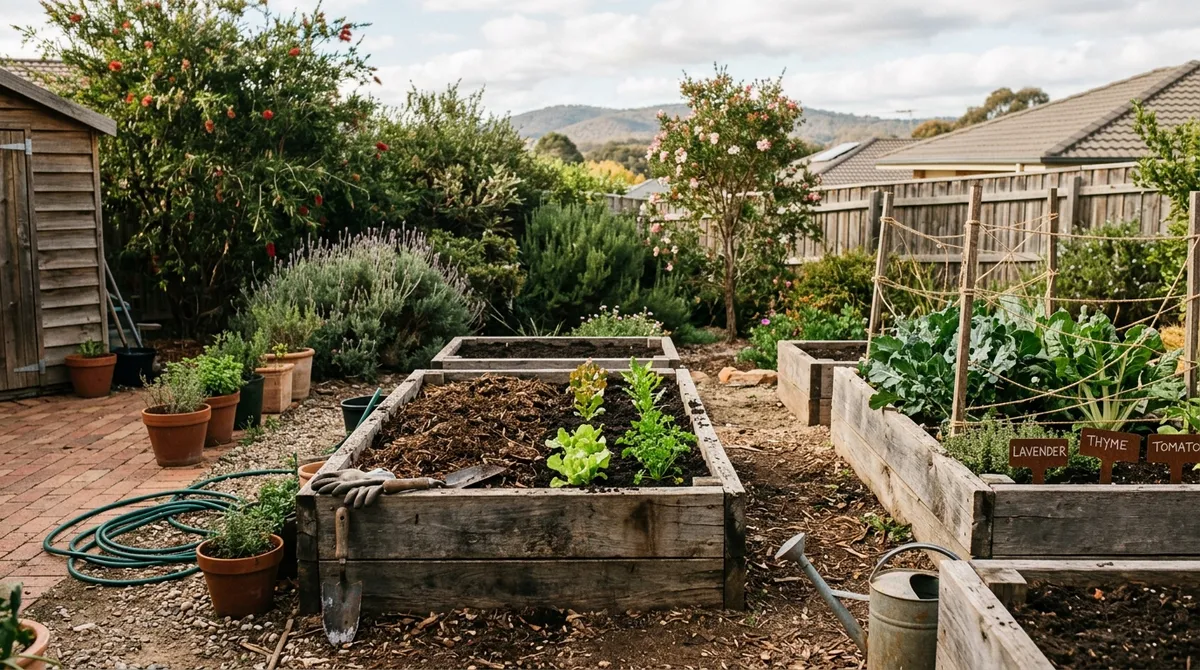
Raised beds are the most popular approach in Canberra for good reasons. They warm up faster in spring (extending the season by 2-3 weeks), drain well in wet winters, and you control the soil mix. Fill beds with a mix of 60 percent quality garden soil, 30 percent compost, and 10 percent well-rotted manure. Local landscape suppliers like Canberra Sand and Gravel, SoilWorx, and Capital Landscape Supplies offer vegetable garden mixes ready to go.
Start With Easy Crops
Beginners in Canberra should start with crops that match the current season. Here are reliable options for each planting window:
Autumn and Winter (March to August)
- Garlic: Plant cloves in April or May. One of the easiest and most rewarding crops in Canberra. Harvest in November.
- Broad beans: Direct sow from late March to May. Very cold-hardy. Harvest in October.
- Kale and silverbeet: Plant seedlings from March to May. Both survive hard frost and provide greens all winter.
- Snow peas: Sow from April to June. Provide a trellis. Harvest in September and October.
Spring and Summer (September to January)
- Tomatoes: Start seeds indoors in September. Transplant mid-November. Choose early varieties like Tigerella or Early Girl.
- Zucchini: Direct sow or transplant from mid-November. Fast-growing and very productive. One or two plants will produce more than a family can eat.
- Lettuce: Sow from September to November, then again in March. Grow under shade cloth in summer to prevent bolting.
- Herbs: Rosemary, thyme, sage, and oregano are perennial and survive Canberra winters. Parsley and coriander grow well in the cooler months. Basil is summer-only (transplant after last frost in November).
Working With ACT Water Restrictions
The ACT has permanent water conservation measures. Sprinklers and hand-held hoses can only be used before 10am and after 4pm. Drip irrigation and soaker hoses have no time restrictions, making them the best choice for vegetable gardens.
Practical water-saving strategies for Canberra gardens:
- Mulch everything: A 5-8 centimetre layer of pea straw, lucerne, or sugar cane mulch reduces water loss by up to 70 percent. Canberra's dry westerly winds can desiccate bare soil rapidly.
- Install drip irrigation: A basic drip system with a timer costs $50-100 from Bunnings and saves hours of hand watering. Run it 2-3 times per week for 20-30 minutes during summer.
- Collect rainwater: The ACT government has historically offered rebates for rainwater tanks. A 2,000-litre tank connected to a downpipe captures enough roof runoff from a single rain event to water a small vegetable garden for weeks.
- Consider wicking beds: These self-watering raised beds have a water reservoir at the base that wicks moisture up to plant roots. They use 50 percent less water than conventional beds and are ideal for Canberra's dry climate.
Plan for the Short Season
Canberra's frost-free period (mid-November to mid-April in most suburbs) is shorter than Sydney, Melbourne, or Adelaide. Maximise your harvest with these strategies:
- Start seeds indoors: Tomatoes, capsicum, eggplant, and cucumbers all benefit from indoor sowing 6-8 weeks before transplanting. This gives them a head start that translates to weeks of extra harvest.
- Use season extension: Frost cloth, cold frames, and greenhouses stretch your growing season in both directions. A simple cloche over new transplants in November protects against late frost.
- Succession sow: Plant lettuce, radish, and Asian greens every 2-3 weeks from September through to April. This provides continuous harvests instead of one glut.
- Grow year-round: Canberra's winter is tough, but garlic, broad beans, kale, silverbeet, and root vegetables all grow through it. A well-planned garden produces food in every month.
Plan Your First Garden
The Planting Season app tells you exactly what to plant this month in your Canberra suburb, with frost date reminders.
Open the Planting Season AppFrequently Asked Questions
When is the best time to start a vegetable garden in Canberra?
Early spring (September to October) is a good time to set up beds and prepare soil. Start planting frost-hardy crops from March for autumn and winter harvests. The main warm-season planting window is mid-November to January. Many Canberra gardeners find autumn the best time to build new beds because you can fill them, amend the soil, and have everything ready for spring planting.
What vegetables grow best in Canberra?
For beginners: silverbeet, kale, broad beans, garlic, snow peas, lettuce (under cover in winter), tomatoes (short-season varieties like Tigerella), zucchini, and herbs like rosemary, thyme, and parsley. These crops are reliable producers in Canberra's continental climate.
How do I improve Canberra's clay soil for vegetables?
Add gypsum (1 kg per square metre) to break up the clay structure. Mix in compost, aged manure, and coarse organic matter annually. Canberra clay is typically alkaline (pH 7.0-7.5), so adding sulphur or composted pine bark helps lower pH for acid-loving crops. Raised beds filled with imported soil mix are the fastest option.
Can I garden within ACT water restrictions?
Yes. ACT permanent water restrictions allow garden watering before 10am and after 4pm. Drip irrigation and soaker hoses can be used at any time. Mulching reduces water loss by up to 70 percent. Wicking beds and self-watering containers are extremely water-efficient and well-suited to Canberra's dry climate.
Free Monthly Planting Calendar
Get a personalised email each month with what to plant, seasonal tips, and harvest reminders for your region.
We send one email per month. Unsubscribe any time.