
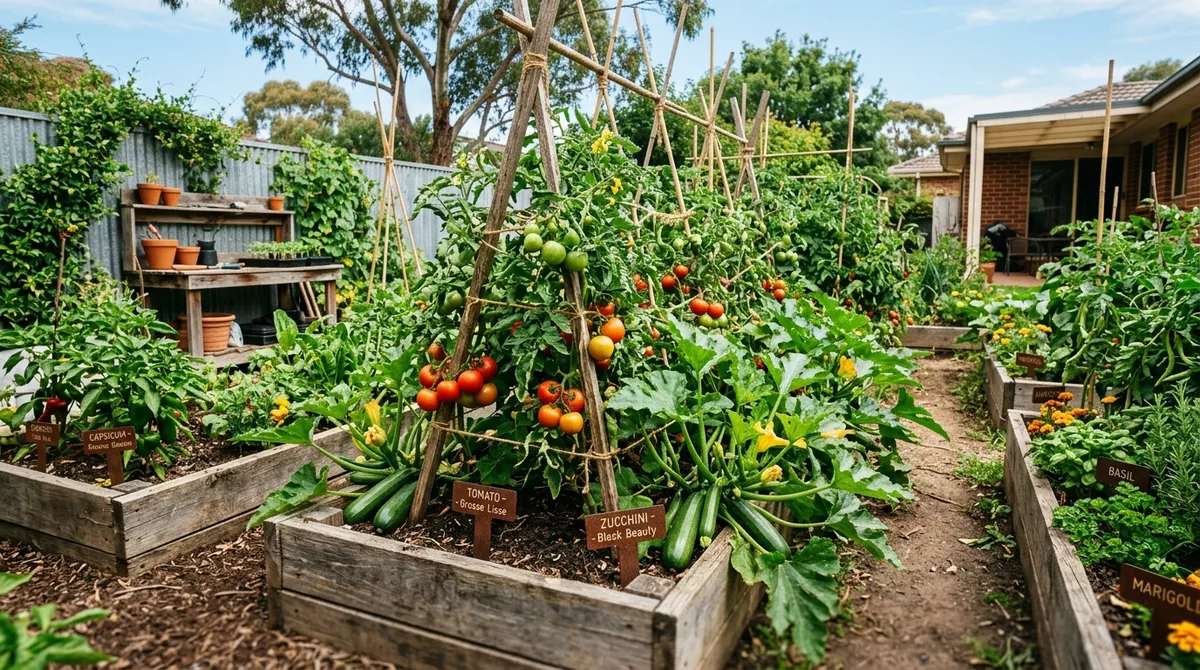
Summer Gardening in Canberra
Short, hot summers from November to March demand smart watering, shade strategies, and fast-growing crops
Canberra summers are intense. Days regularly reach 35-40 degrees in January and February, humidity drops to 10-20 percent, and the UV index is among the highest of any Australian capital. The growing season is short (roughly mid-November to mid-March between the last spring frost and first autumn frost), so every week counts. The upside is clear skies and strong sunlight that produce vegetables and fruit with concentrated, outstanding flavour.
Successful summer gardening in the ACT comes down to three things: getting crops in early, managing water efficiently under ACT restrictions, and protecting plants from extreme heat on the hottest days.
Best Crops for Canberra Summers
Choose fast-maturing varieties that can complete their cycle in the 4-5 month frost-free window. Slow-maturing crops that need 90+ days are a risk unless planted very early.
- Tomatoes: The signature summer crop. Plant in mid-November and harvest from late December to March. Early-maturing varieties (Tigerella, Early Girl, Tommy Toe) are the safest choices.
- Zucchini and summer squash: Fast-growing and prolific. Direct sow in November. First harvest in 6-8 weeks. One or two plants produce enough for a household.
- Beans (climbing and bush): Sow directly from mid-November. Bush beans produce in 8-10 weeks. Climbing beans crop over a longer period. Both handle Canberra's dry heat well.
- Cucumbers: Direct sow in late November when soil is warm. Lebanese and apple cucumbers perform reliably. Water consistently to prevent bitterness.
- Capsicums and chillies: Start seeds indoors in September, transplant in November. These need the full season to produce well. Choose early varieties in colder suburbs.
- Corn: Direct sow in November. Plant in blocks of at least 4 x 4 for wind pollination. Harvest in 10-12 weeks. Early varieties like Honey and Pearl mature in time.
- Eggplant: Needs a warm, sheltered position. Start indoors in September, transplant against a north-facing wall in November. Produces from January to March.
- Basil: Sow or transplant after mid-November. Produces prolifically through summer. Pinch flower heads to extend the harvest.
Watering Strategies Under ACT Restrictions
Canberra's permanent water restrictions shape how you water a summer garden. Hand-held hoses, drip irrigation, and watering cans are permitted at any time. Sprinklers are restricted to before 10am and after 6pm.
Drip irrigation is the most efficient system for Canberra vegetable gardens. A basic drip setup with a battery-operated timer costs $50-80 from Bunnings in Tuggeranong, Belconnen, or Fyshwick. Run drip lines along each row and set the timer for early morning (6-7am). Water deeply 2-3 times per week rather than a shallow daily sprinkle.
Mulch is essential. A 8-10 centimetre layer of pea straw, lucerne, or sugarcane mulch reduces evaporation by 50-70 percent and keeps root zones 5-8 degrees cooler than bare soil. Apply mulch after transplanting, keeping it a few centimetres away from plant stems.
Wicking beds are an excellent investment for Canberra. These self-watering raised beds hold a reservoir of water beneath the soil, which plants access through capillary action. Wicking beds use 50 percent less water than conventional raised beds and provide consistent moisture through heatwaves. Several Canberra community gardens (including COGS plots in Holder and Charnwood) use wicking bed systems.
Managing Extreme Heat
Canberra heatwaves (three or more consecutive days above 35 degrees) typically occur 2-4 times per summer, usually in January and February. Garden plants struggle during these events, especially in exposed, full-sun positions.
- Shade cloth: A 30-50 percent shade cloth draped over a simple frame protects crops during the worst heat. Install it permanently over lettuce and leafy greens, or roll it out only during heatwave days for heat-loving crops like tomatoes and capsicums.
- Afternoon shade: Position heat-sensitive crops (lettuce, spinach, herbs) where they receive morning sun but are shaded from the western afternoon sun. A fence, wall, or taller crop (corn, sunflowers) can provide this shade naturally.
- Deep watering before heatwaves: Give the entire garden a thorough soaking the evening before a predicted heatwave. Moist soil acts as a heat buffer, keeping root zones cooler than dry soil.
- Avoid transplanting during heat: Schedule transplanting for cool, overcast days or late afternoon. New transplants are vulnerable to heat stress for the first 7-10 days.
Succession Planting and the Autumn Transition
Canberra's summer season is too short for a single big planting to cover the whole period. Succession planting (sowing small batches every 2-3 weeks) keeps fresh produce coming continuously.
Sow beans, lettuce, and zucchini in three batches: mid-November, early December, and early January. The first batch produces in January, the second in February, and the third in March. This approach also spreads risk; if a heatwave damages one planting, the next batch is coming up behind it.
Start planning the autumn transition in late February. Sow broccoli, cauliflower, cabbage, and kale seeds in trays from mid-February. Transplant them into beds vacated by spent summer crops in March. Direct sow peas, broad beans, and garlic from late March to April. This overlap between summer and autumn crops keeps the garden productive year-round.
Pest Management in Summer
Canberra's dry summers reduce fungal problems compared to coastal cities, but several pests are active during the warm months.
- European earwigs: Active at night, feeding on soft fruit, seedlings, and flower petals. Trap them with rolled newspaper or upturned pots stuffed with damp straw. Collect traps each morning and dispose of earwigs.
- Aphids: Cluster on new growth of beans, capsicums, and brassicas. A strong jet of water from the hose dislodges them. Encourage ladybirds and lacewings as natural predators.
- Fruit fly: Queensland fruit fly is present in the ACT, though less prevalent than in warmer regions. Use protein bait traps from October and net fruiting crops.
- Sunscald: White, papery patches on tomatoes and capsicums caused by intense direct sun. Maintain adequate foliage cover over fruit. Do not over-prune tomato plants in Canberra; the leaves protect the fruit.
Plan Your Canberra Summer Garden
Get month-by-month planting reminders for summer crops in your Canberra suburb.
Open the Planting Season AppFrequently Asked Questions
What can I grow in Canberra in summer?
Canberra's hot, dry summers suit tomatoes, capsicums, chillies, eggplant, zucchini, cucumbers, beans, corn, and melons. All of these need to be planted or transplanted in November and harvested before autumn frost arrives in mid-April. Heat-tolerant herbs like basil, coriander (bolt-resistant varieties), and rosemary also perform well. Leafy greens struggle in the hottest months unless grown in afternoon shade.
How do I water my garden under ACT water restrictions?
ACT permanent water restrictions allow garden watering with a hand-held hose, drip irrigation, or watering can at any time. Sprinklers and unattended hoses are restricted to before 10am and after 6pm. Drip irrigation on a timer is the most efficient approach. Mulch all beds with 8-10 centimetres of pea straw or lucerne to reduce evaporation by 50-70 percent. Wicking beds and self-watering pots are excellent options for water-efficient summer growing.
Why do my plants wilt in Canberra's summer heat?
Canberra regularly reaches 35-40 degrees in January and February with very low humidity. Plants lose water through their leaves faster than roots can absorb it, causing temporary wilting in the afternoon even when soil moisture is adequate. This is normal. If plants recover by morning, they have enough water. If they remain wilted in the morning, water deeply. Shade cloth (30-50 percent) over garden beds reduces heat stress significantly.
When should I start planting autumn crops in Canberra?
Start sowing autumn crops in late February to early March. Broccoli, cauliflower, cabbage, kale, lettuce, spinach, and Asian greens can all be sown or transplanted from this point. These crops grow through the cooling autumn months and are harvested from April onwards. Some, like kale and silverbeet, continue producing through winter with frost protection.
Free Monthly Planting Calendar
Get a personalised email each month with what to plant, seasonal tips, and harvest reminders for your region.
We send one email per month. Unsubscribe any time.