
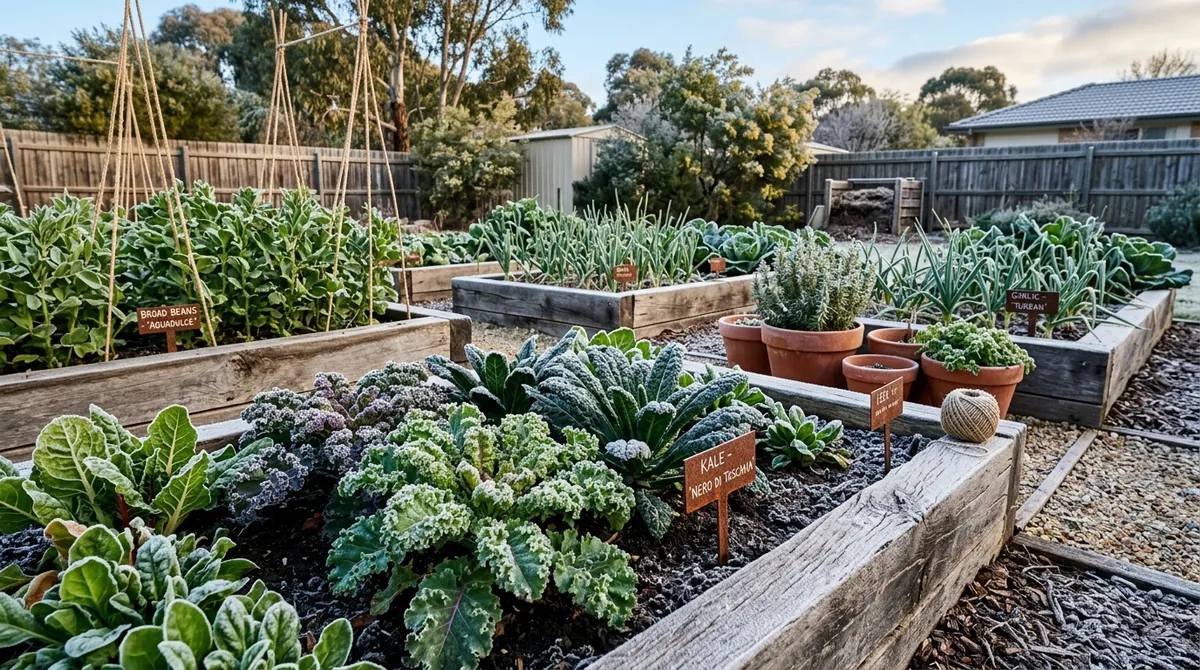
What to Plant in Winter in Canberra
Hardy crops that survive hard frosts, plus season extension strategies for the ACT
Canberra winters test any gardener. Overnight temperatures regularly drop to minus 3 or minus 5 degrees, and Tuggeranong Valley has recorded minus 7 degrees. The ground freezes, frost lingers on shaded beds until mid-morning, and anything tender turns to mush overnight. The growing list is short compared to coastal cities, but the crops that do grow through a Canberra winter are among the most rewarding of the year.
Garlic planted in autumn produces fat bulbs by November. Broad beans sown before the cold hits yield heavily in spring. Kale and silverbeet feed you right through the darkest months. The key is choosing the right crops, planting at the right time, and using simple protection methods to keep things alive through the worst of it.
The Reliable Winter Crops
Garlic
Garlic is the single best winter crop for Canberra. Plant cloves in April or May, pointy end up, 5 centimetres deep and 15 centimetres apart. Canberra's cold winters provide the vernalisation (cold period) that garlic needs to form large bulbs. Australian Purple, Monaro Purple (bred locally for highland conditions), and Italian White are excellent choices. Harvest in November when the lower leaves start browning.
Broad Beans
Sow broad bean seeds directly from late March through May. They germinate in cool soil and grow slowly through winter, then flower and pod heavily in September and October. Aquadulce is the standard cold-climate variety, tolerating frosts to minus 5 degrees once established. Crimson Flowered is a heritage variety that also performs well. Stake plants in exposed positions, as Canberra's winter winds can flatten unstaked rows.
Onions and Shallots
Plant onion seedlings in April and May. Early-maturing varieties like Early Cream Gold and Gladalan Brown handle Canberra's cold well. French shallots (Golden or Red) planted in autumn produce clusters of bulbs by late spring. Both need well-drained soil, so raised beds or mounded rows work best in Canberra's heavy clay.
Snow Peas and Sugar Snap Peas
Sow seeds from April to June. Snow peas tolerate frost once established, though very hard frosts (below minus 4 degrees) will damage flowers. A cloche or frost cloth over the trellis protects blooms during the coldest weeks. Oregon Sugar Pod and Yakumo are reliable performers. Harvest begins in September.
Hardy Greens That Survive Frost
These leafy crops handle hard frost and keep producing through winter:
- Kale: Tuscan kale (cavolo nero) and curly kale both thrive in Canberra winters. Frost actually improves the flavour by converting starches to sugars. Plant seedlings in March or April for continuous harvest through winter. Kale tolerates minus 7 degrees without damage.
- Silverbeet: Extremely tough and productive. Fordhook Giant handles the cold well. Existing plants from autumn keep producing through winter. New seedlings planted in March establish before the hard frosts arrive.
- Spinach: True spinach (Bloomsdale Long Standing or Winter Giant) grows well through Canberra winters. Sow from March to May. Growth slows dramatically in June and July but picks up again in August. Frost cloth accelerates growth.
- Asian greens: Tatsoi and mizuna are the hardiest options. Both tolerate frost to minus 5 degrees. Pak choi is less hardy and benefits from cloche protection. Sow from March to May for winter harvest.
Root Vegetables
Root crops sown in late summer and early autumn will grow through winter and be ready for harvest in late winter or early spring:
- Carrots: Sow from February to April. They grow slowly through winter but develop excellent sweetness from the cold. Chantenay and Nantes types handle heavy soils better than long varieties.
- Beetroot: Sow from February to April. Tolerates light frost. Detroit Dark Red and Chioggia both perform well. Harvest at golf-ball size for the best flavour.
- Turnips: Fast-growing and frost-tolerant. Sow from March to May. Purple Top White Globe is the classic variety. Ready in 8-10 weeks.
- Parsnips: Sow from February to March. They need a long season (16-20 weeks) but frost sweetens the roots. Hollow Crown is the standard variety. Leave them in the ground and harvest as needed through winter.
Season Extension for Winter
Simple protection methods expand what you can grow through Canberra winters:
- Cold frames: A timber frame with a clear polycarbonate or glass lid creates a micro-greenhouse over a garden bed. Inside temperatures sit 5-8 degrees above ambient on sunny days. Lettuce, coriander, and even rocket grow under cold frames when they would freeze in open ground.
- Frost cloth tunnels: Drape horticultural fleece over wire hoops to create low tunnels. This provides 2-3 degrees of frost protection, enough to keep borderline crops like lettuce and coriander alive. Remove the cloth on sunny days to prevent overheating.
- Greenhouse growing: An unheated greenhouse in Canberra stays well above freezing on most winter days thanks to solar gain. Grow lettuce, herbs, Asian greens, and early spring seedlings inside. Ventilate on sunny days to prevent damping off.
What to Avoid Planting in Winter
Canberra's winters are too cold for tomatoes, capsicum, zucchini, beans (except broad beans), corn, cucumber, basil, and all tropical or subtropical crops. These plants die at the first frost. Start planning for these crops in August and September, with indoor sowing, ready for transplanting after the last frost in November.
Lettuce struggles outdoors in Canberra's coldest months without protection. It survives light frost but turns to mush below minus 3 degrees. Grow it under a cold frame or frost cloth from May to August.
Month-by-Month Winter Planting Calendar
March: Sow broad beans, kale, silverbeet, spinach, carrots, beetroot, turnips, Asian greens. Plant garlic cloves late in the month.
April: Plant garlic, onion seedlings, shallots. Sow broad beans, snow peas, kale, spinach. Last chance for root vegetables.
May: Final garlic planting. Sow broad beans and snow peas. Plant out any remaining brassica seedlings (broccoli, cauliflower, cabbage).
June to July: The coldest months. Very little new planting. Focus on harvesting established crops and protecting them with frost cloth. Start planning spring sowings.
August: Begin sowing tomato, capsicum, and eggplant seeds indoors. Sow early peas outdoors. The days are getting longer, and growth picks up noticeably.
Plan Your Winter Garden
Get personalised planting reminders for every month, tuned to Canberra's frost dates and cold-hardy crops.
Open the Planting Season AppFrequently Asked Questions
What can I grow in Canberra in winter?
Garlic (plant in April to May), broad beans, onions, shallots, snow peas, spinach, silverbeet, kale, and Asian greens like tatsoi and mizuna. These crops tolerate frost and grow slowly through the cold months, ready for harvest in spring. Under cloches or in cold frames, you can also grow lettuce and coriander.
When does winter planting start in Canberra?
Plant garlic and broad beans from late March through May. Onion seedlings and shallots go in during April and May. Hardy greens like kale, spinach, and silverbeet can be planted from March to June. Earlier planting gives crops more time to establish before the coldest weeks in June and July.
How do I protect winter crops from frost in Canberra?
Use frost cloth or horticultural fleece draped over hoops to create mini tunnels. Cold frames with clear lids work well for leafy greens. Even a simple layer of straw mulch around plants insulates roots against hard frost. Avoid watering late in the afternoon, as wet foliage freezes more readily overnight.
Is it worth gardening in Canberra in winter?
Absolutely. Garlic planted in autumn produces large bulbs by November. Broad beans sown in April yield heavily in October. Kale and silverbeet provide fresh greens all winter long. The crops that grow through Canberra's cold months are among the most productive of the entire year.
Free Monthly Planting Calendar
Get a personalised email each month with what to plant, seasonal tips, and harvest reminders for your region.
We send one email per month. Unsubscribe any time.