
Native Edible Plants for Sydney Gardens
Bush food plants that thrive in Sydney's climate with minimal water and maintenance
Native edible plants are some of the most rewarding crops you can grow in Sydney. They're adapted to Australian soils, need less water than European vegetables, rarely suffer from common pests, and produce flavours you simply cannot buy at the supermarket. A single lemon myrtle tree supplies enough dried leaf to replace all your purchased herbal tea, and a finger lime produces gourmet fruit worth $100 per kilogram at farmers markets.
These seven native edibles are proven performers in Sydney gardens.
1. Lemon Myrtle
Lemon myrtle produces intensely lemon-scented leaves that contain more citral (the compound responsible for lemon flavour) than lemongrass or lemon itself. The leaves are used fresh or dried in teas, cakes, marinades, dressings, and curries. A single tree provides enough leaves for a household indefinitely.
In Sydney, lemon myrtle grows into a dense, attractive tree reaching 3 to 5 metres. It handles full sun to part shade and tolerates clay soil once established. Plant in autumn or spring. Water regularly for the first two years, then it's drought-tolerant. White flowers in summer are fragrant and attract native bees.
Harvest leaves any time by picking individual leaves or pruning small branches. Dry leaves in a dehydrator or hang in bunches in a warm, airy spot. Store dried leaves in airtight jars.
Grows well in a 40 to 50 litre pot on a sunny balcony or patio.
2. Finger Lime
Australia's native citrus, producing elongated fruit filled with tiny juice vesicles that pop in your mouth like caviar. The flavour is tart and citrusy, brilliant on seafood, in cocktails, and on desserts. Finger limes sell for $80 to $150 per kilogram at Sydney farmers markets.
The tree is naturally compact (2 to 3 metres), thorny, and well adapted to Sydney's climate. It grows in the wild in the rainforests of northern NSW, so it handles part shade better than commercial citrus. Fruits from May to September. Plant in a sheltered spot with well-drained soil. Feed with native-plant fertiliser (low phosphorus) twice a year.
Several cultivars are available: Rainforest Pearl (pink vesicles), Alstonville (green), and Judy's Everbearing (heavy producer). All grow well in Sydney.
3. Davidson Plum
Davidson plum is a small rainforest tree with large, glossy leaves and clusters of deep purple fruit. The fruit is too sour to eat raw but makes outstanding jams, sauces, chutneys, and ice cream. The colour is dramatic, a deep magenta that stains everything it touches.
Two species are available. Davidsonia jerseyana (smooth Davidson plum) is the best choice for Sydney. It grows to 3 to 5 metres and prefers a sheltered, semi-shaded position. It's a rainforest understorey tree, so it actually prefers dappled light. Plant under the canopy of larger trees or on the south side of a building.
Fruit ripens from November to January, falling from the tree when ready. Collect daily. One tree produces enough fruit for a year's supply of jam once it's mature (about 5 years from planting).
4. Warrigal Greens
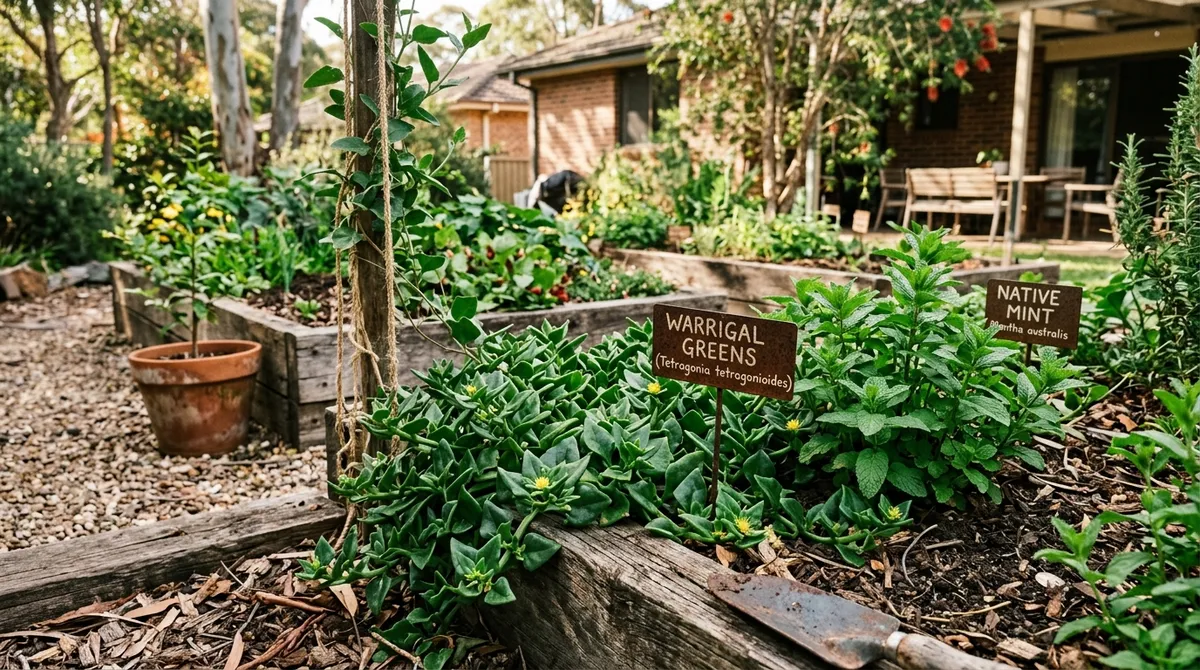
Warrigal greens (Tetragonia tetragonioides) is a native groundcover that grows along the Sydney coastline in the wild. The thick, triangular leaves taste similar to spinach and can be used the same way in cooking. Captain Cook's crew ate them to prevent scurvy.
One important note: warrigal greens contain oxalates and should be blanched in boiling water for 30 seconds before eating, then drained and rinsed. After blanching, use them exactly like spinach in any recipe.
Warrigal greens are almost impossible to kill in Sydney. They spread vigorously as a groundcover, tolerate salt spray, full sun, part shade, poor soil, and drought. Plant from cuttings or seedlings in spring. Give them room to spread or contain them in a raised bed or large pot. They produce year-round, with heavier growth from spring to autumn.
5. Pigface
Pigface (Carpobrotus glaucescens) is a succulent groundcover native to Sydney's coastal areas. The fleshy leaves are edible (salty, slightly sour) and the fruit is sweet and fig-like. It's common on headlands, dunes, and clifftops throughout Sydney Harbour and the coast.
In the garden, pigface is excellent for dry, sandy, or coastal conditions. It tolerates full sun, salt wind, and drought. Plant cuttings directly into the ground any time of year. It roots readily and spreads to cover bare soil. The bright pink or purple flowers appear from spring to autumn.
Eat the fruit when it's soft and ripe (pull the top off and squeeze the pulp out). The leaves can be added to salads raw or cooked like a succulent green.
6. Mountain Pepper
Mountain pepper (Tasmannia lanceolata) produces peppery leaves and berries that are used as a native spice. The heat is different from black pepper, with a numbing quality similar to Sichuan pepper. The dried berries are ground and used as a pepper substitute. The leaves are used fresh in cooking or dried and crumbled.
Mountain pepper is a cool-climate plant from Tasmania and the Victorian highlands, so it needs a shaded, sheltered position in Sydney. The south side of a building or under tree canopy works well. It struggles in full Western Sydney sun. Coastal and North Shore gardens with some shade are ideal.
The tree grows to 2 to 3 metres. It's dioecious (separate male and female plants), so you need both for berries. Ask the nursery for one of each. Berries ripen from February to April, turning from red to black.
7. Native Raspberry
Native raspberry (Rubus parvifolius) produces small, sweet berries from November to March. The flavour is more delicate than commercial raspberries, sweet and slightly tart. The plant is a scrambling shrub that grows 1 to 2 metres and spreads by suckering.
Native raspberry grows in the wild across the Sydney region, in woodland edges and disturbed areas. It handles part shade, tolerates poor soil, and needs minimal water once established. Provide a trellis or let it scramble along a fence. The thorny stems provide habitat for small birds.
Fruit is small and delicate. Pick it ripe and eat immediately, or freeze for later use. The yield from a single plant is modest, so plant 3 to 4 for a worthwhile harvest.
Growing Tips for Native Edibles
- Fertiliser: Use native-plant fertiliser (low phosphorus). Many Australian natives are sensitive to high phosphorus levels, which can burn roots and kill plants. Standard garden fertilisers are too high in phosphorus for most natives.
- Watering: Water regularly for the first 1 to 2 years while plants establish. After that, most native edibles are drought-tolerant and need only occasional deep watering during extended dry spells.
- Soil: Most native edibles tolerate Sydney's clay soil better than exotic crops. Finger lime and lemon myrtle prefer well-drained soil with added compost. Warrigal greens and pigface grow in almost anything.
- Mulch: Apply leaf litter or bark mulch around native plants. Keep mulch away from the trunk. Native mulch mimics the natural leaf litter these plants evolved with.
Explore Native Edibles in the Plant Library
The Planting Season app includes growing calendars and care guides for native edible plants.
Open the Planting Season AppFrequently Asked Questions
What native edible plants grow well in Sydney?
The best native edibles for Sydney gardens are lemon myrtle (leaves for tea and cooking), finger lime (citrus caviar fruit), Davidson plum (tart fruit for jams and sauces), warrigal greens (native spinach substitute), pigface (succulent with edible fruit and leaves), native raspberry, and mountain pepper (peppery leaves and berries).
Are native edible plants low maintenance?
Most native edibles are very low maintenance once established. They are adapted to Australian soils and conditions, need less water than exotic vegetables, and rarely suffer from the pests and diseases that affect European crops. A light application of native-plant fertiliser (low phosphorus) once or twice a year is enough.
Where can I buy native edible plants in Sydney?
Native edible plants are available at specialist native nurseries in Sydney. The Australian Botanic Garden at Mount Annan has a growing friends nursery. Daleys Fruit Tree Nursery ships to Sydney. Some Bunnings stores carry lemon myrtle and finger lime. Local community gardens and plant swaps are also good sources for warrigal greens and pigface cuttings.
Can I grow bush food in pots in Sydney?
Lemon myrtle, finger lime, native pepper, and warrigal greens all grow well in large pots. Use a native potting mix (low phosphorus) and place in a position with at least 4 hours of sun. Finger lime and lemon myrtle can stay in 40 to 50 litre pots for years. Warrigal greens will trail over the edge of a large container.
Free Monthly Planting Calendar
Get a personalised email each month with what to plant, seasonal tips, and harvest reminders for your region.
We send one email per month. Unsubscribe any time.