
When to Plant Tomatoes in Brisbane
Ditch the spring sowing advice and follow SEQ's two perfect windows
If you've been told to plant tomatoes in spring, you're getting advice designed for Melbourne, not Brisbane. In South East Queensland, spring is the worst time to plant tomatoes. It sets them up directly into January's brutal humidity, fruit fly swarms, and fungal diseases that will wreck your crop.
The real tomato magic in SEQ happens during two specific windows: autumn sowing and late winter sowing. Plant at these times, manage the pests that come with them, choose the right varieties, and you'll harvest tomatoes that taste the way they should.
🌱 Plant profile: Tomato, with sowing times for your region, companion plants and common pests.
The Two Windows: Autumn and Late Winter
Autumn Sowing (February to April)
Autumn sowing starts around February and runs through April. You're planting into warm soil when seedlings germinate quickly, then they grow through the mild autumn, all the way to a full harvest in May, June, and July. By the time summer humidity hits in December and January, your plants are exhausted and ready to be pulled out anyway.
This window dodges the worst of fruit fly season (which ramps up hard from November onward) and lets you harvest during autumn and winter when the tomatoes are smaller, firmer, and less likely to crack in the heat. The bonus: you're not fighting peak humidity during the flowering stage when fungal diseases love to move in.
Start seeds indoors in January or February, harden them off by mid-February, and plant them out by late February to early March. If you're buying seedlings from a nursery, get them in the ground by April at the latest.
Late Winter Sowing (August to September)
Late winter sowing is your second chance. Start seeds in June or July, get seedlings hardened off by late July, and plant them out in August or September. These tomatoes hit flowering and early fruiting during the cool spring months, then crop hard through November and December, just before the January heat becomes unbearable.
This window catches the transition between cooler weather and warm weather. Your plants get their roots established during mild temps, then hit flowering when daylight is lengthening but before the peak humidity arrives. Fruit fly pressure is building, but not yet catastrophic.
Why Spring Sowing Fails in SEQ
Spring (September to November) is when most Australian gardening guides tell you to plant tomatoes. It's wrong for Brisbane. Plant in spring and you'll be setting out seedlings just as the soil heats up, daylight lengthens dramatically, and humidity starts climbing. By the time they reach flowering stage in December, they're hitting peak fruit fly activity and peak humidity at the same time.
The flowers drop or set fruit that splits. Fruit fly larvae tunnel through your tomatoes before they're even ripe. Fungal diseases like early blight establish themselves on stressed plants. You might get some fruit in January, but it'll be cracked, fly-infested, or diseased. Then the plant collapses in February and you're done.
Managing Fruit Fly in Your Tomato Patch
Fruit fly is the SEQ gardener's constant opponent, and tomatoes are one of their favourite targets. During autumn and late winter sowing, fruit fly pressure is lower, but it's still present and building.
The best strategy is exclusion: use fine mesh netting over your plants during high-risk months (November through February). It's labour-intensive to set up, but it works. Drape the netting so it sits away from the foliage and leaves room for pollinating insects underneath. Secure the edges into the soil so nothing gets underneath.
During lower-risk months (March through October), you can skip the netting, but stay vigilant. Inspect fruit daily. At the first sign of fruit fly activity (tiny puncture marks on developing fruit), start using baiting programs. Protein-based lures placed around the perimeter of your garden attract and kill fruit fly adults before they lay eggs in your tomatoes.
Don't bother with individual baited fruit in late season. By the time fruit fly populations are heavy, the netting is your only reliable defence.
Best Tomato Varieties for SEQ
Not all tomato varieties suit SEQ's climate. Some bolt in heat, others crack in humidity, and some just don't produce much fruit when it matters. These four have proven themselves in Brisbane gardens:
- Tommy Toe: A dwarf cherry tomato that produces masses of small, sweet fruit. It tolerates humidity well, resists cracking, and is relatively untroubled by fruit fly early in the season. Great for continuous picking through autumn and winter.
- Grosse Lisse: The classic slicing tomato. It's heat and humidity tolerant, produces reliable fruit, and stores well. It's what you see in farmers markets through May to July.
- Black Russian: A heritage variety with dark, rich fruit. Smaller yields than Grosse Lisse, but the flavour is worth it. Plant it and let it have space to sprawl.
- Apollo Improved: An Australian heirloom bred specifically for warm climates. Early to produce, resistant to some fungal diseases, and handles humidity better than most.
Avoid most European heirlooms (except Black Russian), fine-skinned varieties that crack easily, and anything marketed as "heat-loving" based on trials in central Australia. Your humidity is different from Tamworth's dryness.
Staking, Mulching, and Spacing
Tomato plants in SEQ need good air flow to resist fungal diseases, especially in autumn and winter when humidity sits high and drying is slow. Space plants at least 60 centimetres apart, more if you're growing indeterminates that will sprawl. A 1.2-metre row of plants needs at least a metre of width.
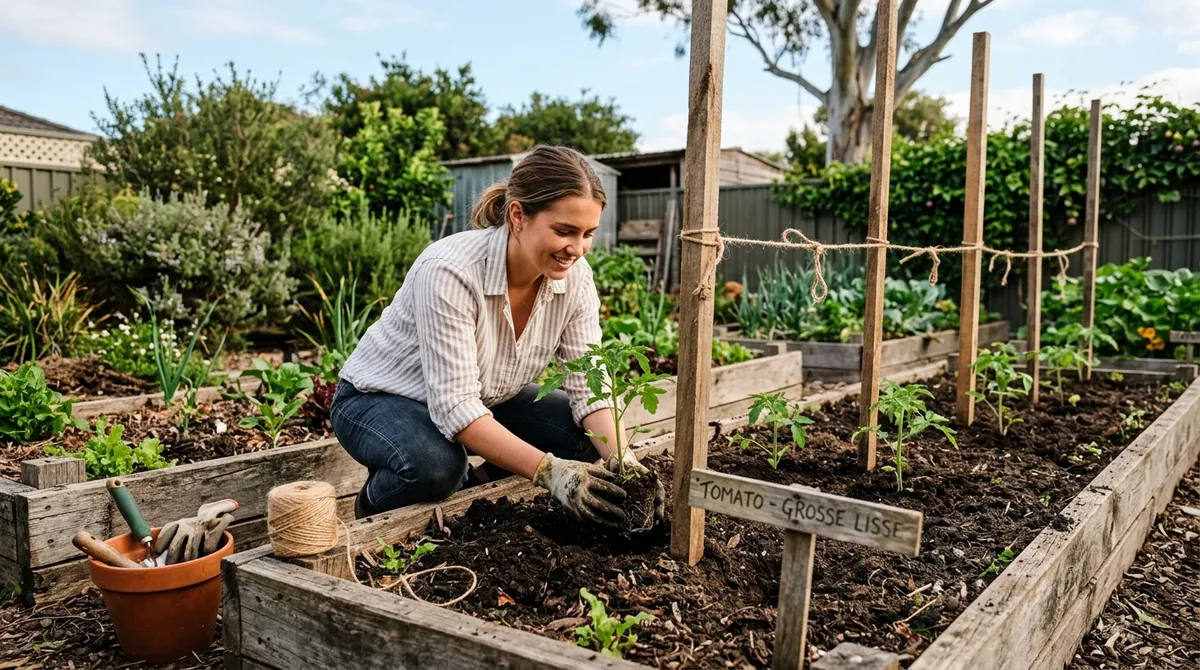
Stake determinate varieties (Grosse Lisse, Tommy Toe) upright to keep fruit off soil. Use wooden stakes or metal cones, driven deep into the soil before planting. Tie the plant loosely with soft ties as it grows. Indeterminate varieties (Black Russian, Apollo) can sprawl on the ground, but they'll need much more space and careful fruit monitoring for rot and fruit fly.
Mulch around the base of plants (not touching the stem) with straw or compost. Mulch keeps soil evenly moist, which reduces the stress that leads to fruit cracking. It also keeps soil pathogens from splashing onto leaves when you water. Water at the base of the plant, early in the morning, and avoid wetting the foliage.
Companion Planting for Tomato Success
Basil grown beside tomatoes is one of SEQ's most reliable companion plantings. It's not a myth. Basil attracts pollinators that visit your tomato flowers, and some evidence suggests it repels a few tomato pests. More importantly, it looks great, smells great, and you can harvest it fresh while you're picking tomatoes.
Plant basil seedlings at the base of tomato stakes in late February or late August. Give it space to sprawl and pinch the growing tips regularly to keep it bushy. If you're using Thai basil (which is more humidity-tolerant than Italian in summer), the flavour pairing with tomatoes is still excellent.
Marigolds are another traditional companion. Plant them around the perimeter of your tomato bed. They may help deter some insects, but honestly, they're more valuable as an indicator: when marigolds start flowering heavily, you know warm conditions are here and you need to start monitoring for fruit fly.
Summary: Your Tomato Timeline
Autumn crop: Start seeds in January, plant out by late February, harvest May to July.
Late winter crop: Start seeds in June, plant out in August to September, harvest November to December.
Forget spring. Forget the standard southern Australian advice. Plant tomatoes during these two windows, choose varieties that don't buckle under humidity, manage fruit fly with netting and vigilance, and you'll have fresh tomatoes when they taste the best.
Frequently Asked Questions
When should I plant tomatoes in Brisbane?
Plant tomatoes in two windows in Brisbane: autumn (February to April) or late winter (August to September). Avoid spring sowing, which leads to humidity, fruit fly, and disease problems. Autumn sowing produces harvest in May to July. Late winter sowing produces harvest in November to December.
Why does spring planting fail for tomatoes in SEQ?
Spring planting sets tomatoes into peak fruit fly season (November onwards), high humidity in December and January, and fungal diseases during flowering. Plants become stressed, fruit cracks or splits, and fruit fly larvae infest developing tomatoes. By February the plants collapse. Autumn and late winter sowing avoids these problems.
What are the best tomato varieties for Brisbane?
The best tomato varieties for Brisbane and SEQ are: Tommy Toe (dwarf cherry, produces masses of sweet fruit), Grosse Lisse (classic slicing tomato, heat tolerant), Black Russian (dark heritage variety, excellent flavour), and Apollo Improved (Australian heirloom bred for warm climates). Avoid European heirlooms and fine-skinned varieties that crack easily in humidity.
Plant profile
The tomato profile has sowing times for your region, companion plants and common pests.
Free Monthly Planting Calendar
Get a personalised email each month with what to plant, seasonal tips, and harvest reminders for your region.
We send one email per month. Unsubscribe any time.
Related Tomato Guides
Suckers, laterals, and topping. Step-by-step pruning for bigger fruit and healthier plants.
How to Grow Roma TomatoesThe best sauce and passata tomato. Varieties, planting guide, and blossom end rot prevention.
Preserving Tomatoes at HomePassata, oven-roasted sauce, sun-dried, and frozen. Turn a glut into a year's supply.