
Watering Guide for South East Queensland Gardens
How much water do your plants need in SEQ. Watering frequency guide for 40+ vegetables, herbs, and fruit trees in Brisbane, Gold Coast, and Sunshine Coast conditions.
Watering is the skill that makes or breaks an SEQ garden. Not pest management. Not soil preparation. Watering. Get your watering right, and everything else becomes easier. The trick is understanding that SEQ's heat and soil types demand different watering than cooler regions.
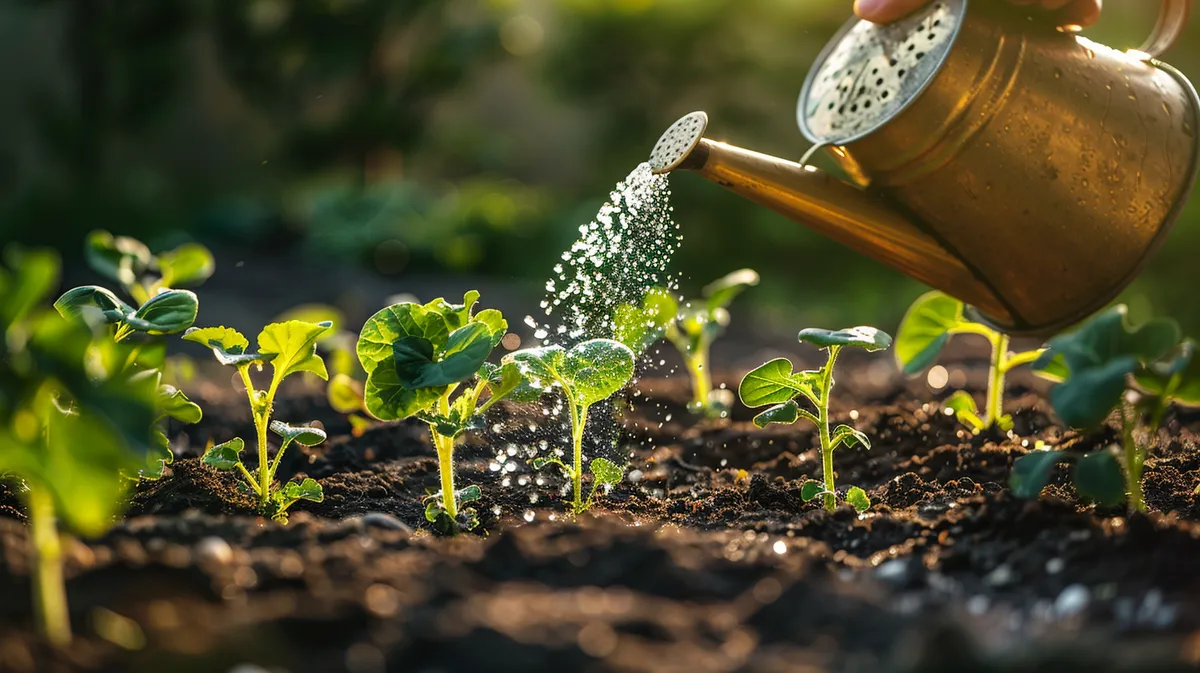
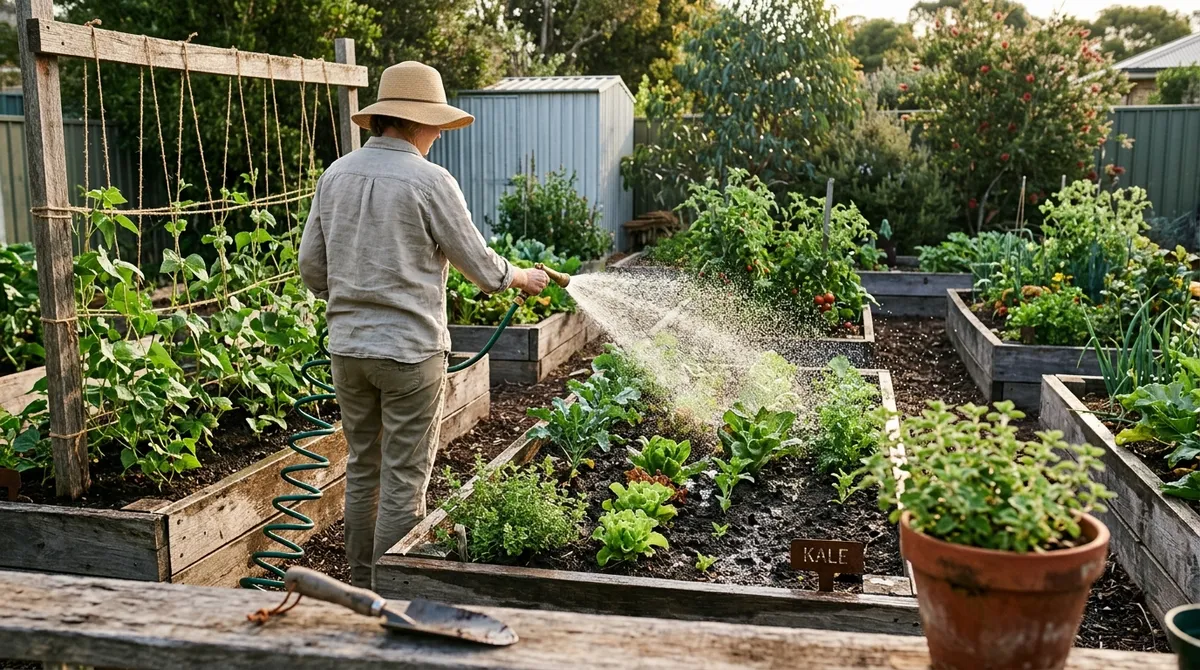
Always water in the early morning before 7 am. Morning watering means foliage dries quickly as the sun rises, reducing fungal disease. Never water in the evening during warm months. Wet foliage and soil overnight in summer heat creates perfect conditions for mildew and root rot. Always water at the soil level, not the foliage, except for seedlings under 4 weeks old.
| Plant | Watering Frequency | Notes |
|---|---|---|
| DAILY (Most demanding) | ||
| All seedlings under 4 weeks | Once or twice daily | Critical establishment period. Soil must never dry. Keep consistently moist but not waterlogged. Once roots are 5 cm deep, reduce to every 2 days. |
| Lettuce and leafy greens in 35°C+ | Once or twice daily | Wilt quickly in extreme heat. In Brisbane, lettuce needs daily watering November to March. Mulch heavily with 7 cm of straw. Afternoon misting helps on extreme days. |
| All container plants in summer | Once daily minimum, twice on extreme heat days (above 35°C) | Pots heat up faster than soil. Check soil moisture daily by pushing your finger 3 cm into the pot. Water until it drains from the bottom. Double-potting (pot inside pot) helps insulate. |
| EVERY 2-3 DAYS (Heavy drinkers during fruiting) | ||
| Tomato | Every 2-3 days | Consistent moisture prevents blossom end rot (calcium disorder). In sandy soil, water every 2 days. In clay, every 3 days. Mulch to 7 cm. Do not let soil dry completely between waterings. |
| Cucumber | Every 2-3 days | Bitter fruit if water-stressed. Water heavily when flowering and fruiting. Sandy soil needs daily watering. Drip irrigation works well for cucumbers. |
| Zucchini | Every 2-3 days | Heavy drinker during fruiting. Inconsistent watering causes rot at flower end. Water deeply at the base. Avoid wetting foliage to prevent powdery mildew. |
| Capsicum | Every 2-3 days | Fruit drop if drought-stressed. Water consistently from flowering onwards. Once fruit is setting, reduce watering slightly to concentrate flavour. |
| Beans | Every 2-3 days | Water at the base, never the foliage. Wet leaves encourage rust fungus. Once flowers appear, water more frequently to support pod set. |
| Basil | Every 2-3 days | Wilts dramatically in hot weather but recovers fast with water. In extreme heat, water daily. In cool season, every 3-4 days. Better to err on the wet side with basil. |
| Most fruiting crops (eggplant, okra, etc.) | Every 2-3 days | Increase to daily in sandy soil. Mulch heavily to reduce watering frequency. Insufficient water reduces fruit set and causes small, bitter fruit. |
| TWICE WEEKLY (Moderate drinkers) | ||
| Pumpkin | Twice weekly | Deep roots, less frequent once established (after 8 weeks). During fruit set, increase to every 2 days. Once soil is covered with vines, reduce frequency. |
| Corn | Twice weekly | Critical during tasselling and silking. Any stress at this stage reduces cob size and kernel number. Water deeply, not frequently. Sandy soil may need 3 times weekly. |
| Sweet Potato | Twice weekly | Drought-tolerant once vines cover soil. During establishment (first 6 weeks), water more frequently. Once vines spread, mulch retains moisture and reduce watering frequency. |
| Most fruit trees (citrus, avocado, mango) | Twice weekly when young, fortnightly when mature | Deep water less often is better than shallow daily watering. Young trees (under 3 years) need consistent moisture. Mature trees only in dry spells exceeding 3 weeks. Mulch to 10 cm. |
| Most herbs (oregano, thyme, rosemary, sage) | Twice weekly in summer, weekly in cool season | Most prefer drier conditions. Mediterranean herbs prefer dry feet. Water deeply but infrequently. Do not mulch heavily as it retains too much moisture. |
| WEEKLY (Cool-season and drought-tolerant plants) | ||
| Cool-season brassicas (broccoli, cabbage, kale) once roots established in winter | Weekly | In winter (May to August), water weekly only when rain is absent. In spring (September), increase to twice weekly as temperatures rise. Heavy mulch reduces frequency. |
| Carrot, beetroot, radish | Weekly | Overwatering splits roots and causes forked growth. Keep soil consistently moist, not wet. Once they reach fingertip size, reduce watering further. |
| Most winter crops (once roots established) | Weekly | Good mulch reduces requirement further. Winter rainfall often means you do not need to water for weeks. Check soil moisture first. |
| DROUGHT TOLERANT (Prefer dry, once established) | ||
| Rosemary | Once established, no additional watering needed | Prefers dry. Overwatering kills it faster than neglect. Water once when planting, then let it find its own moisture. Works as an excellent bank slope plant. |
| Thyme | Once established, no additional watering needed | Mediterranean origin, hates wet feet. Plant in well-draining soil. Once established (4 to 6 weeks), no watering needed even in dry spells. |
| Chilli (perennial) | Every 2-3 weeks in dry season only | Slight stress improves heat and flavour. Water during fruiting (if no rain for 3 weeks), then stop. Dormant in winter, no water needed. |
| Warrigal Greens | No watering once established | Native, adapted to dry spells. Water to establish (first 4 weeks), then never again. Produces more reliably with less water. |
| Comfrey | No watering once established | Deep tap root finds its own water. Water once when planting, then ignore. More water paradoxically produces weaker plants. |
| Yarrow | No watering once established | Companion plant, very tough. Excellent in poor, dry soil. Plant once, never water again. Spreads readily. |
| Galangal | Weekly in growing season, none in winter dormancy | Reduce water in winter dormancy (May to August). Tolerates dry conditions once established. Mulch well. |
| Fig | Deep water fortnightly in dry spells only | Deep roots, drought-hardy. Young figs need water fortnightly in first year. Mature trees, only water if no rain for 4 weeks. Drought stress intensifies flavour. |
| Established Citrus | Deep water fortnightly in dry spells | Young citrus (under 3 years) needs regular watering. Once established, only water in dry spells exceeding 3 weeks without rain. Deep watering is better than frequent shallow watering. |
Frequently Asked Questions
When should I water my garden in SEQ?
Water in the early morning before 7 am, ideally. Morning watering means foliage dries quickly as the sun rises, reducing disease. Never water in the evening during warm months, as wet foliage and soil overnight creates perfect conditions for fungal disease. In cool months, evening watering is fine. Always water at the soil level, not the foliage.
How much water do plants need in SEQ summer?
SEQ summer (November to February) is hot and intense. Container plants need daily watering, often twice on the hottest days (above 35 degrees Celsius). In-ground plants on sandy soil need daily or twice-daily watering. In-ground plants on clay soil need watering every 2 to 3 days. Mulch heavily (5 to 10 centimetres) to reduce watering frequency. Water until it runs from the bottom of pots or saturates the soil to 15 centimetres depth.
Do I overwater more or underwater more in SEQ?
Most SEQ gardeners overwater. The heat and dry feeling of the soil make it seem like plants need constant water. Overwatering causes more problems than underwatering. Check the soil moisture before watering. Push your finger 5 centimetres into the soil. If it feels moist, wait. If it feels dry, water deeply. Healthy roots should be white and firm, not dark and mushy.
Free Monthly Planting Calendar
Get a personalised email each month with what to plant, seasonal tips, and harvest reminders for your region.
We send one email per month. Unsubscribe any time.