
Water-Smart Gardening in South East Queensland
Grow abundantly through droughts and restrictions. Mulch deep, irrigate smart, choose drought-tolerant plants, and capture rainwater.
South East Queensland experiences periodic droughts and frequent water restrictions. Council bans spray irrigation in summer, bore licenses expire, and mains water charges climb. Yet food gardens demand water. The solution is water-smart gardening, which uses less water while growing more food. This isn't rationing. It's simply matching watering method and plant choice to SEQ's climate reality.
Water-smart gardens capture every drop of rain, store it in tanks or soil, deliver it efficiently to roots, and grow plants built for heat. The result is a garden that produces through restrictions, survives droughts, and costs less to maintain.
1. Mulch Deeply for Moisture Storage
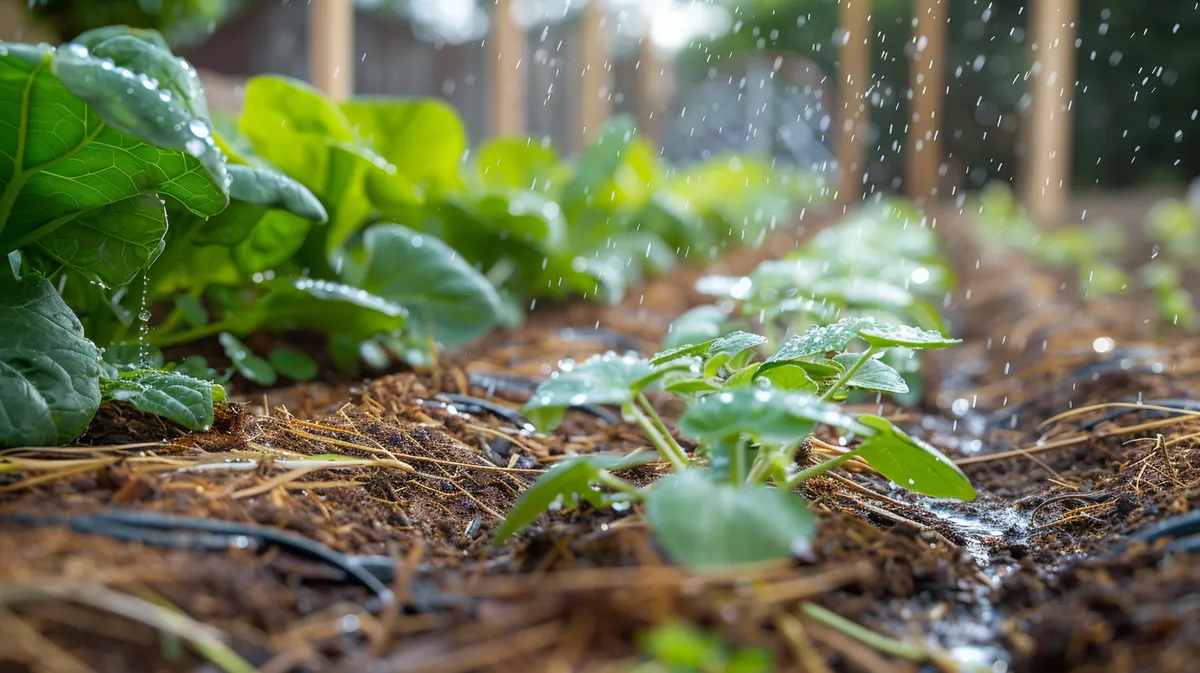
Mulch is the single most important water-smart tool. Bare soil loses water fast. Mulched soil stays moist for twice as long. In summer heat, mulched soil stays 5-8 degrees cooler, which cuts water loss by half and reduces plant stress.
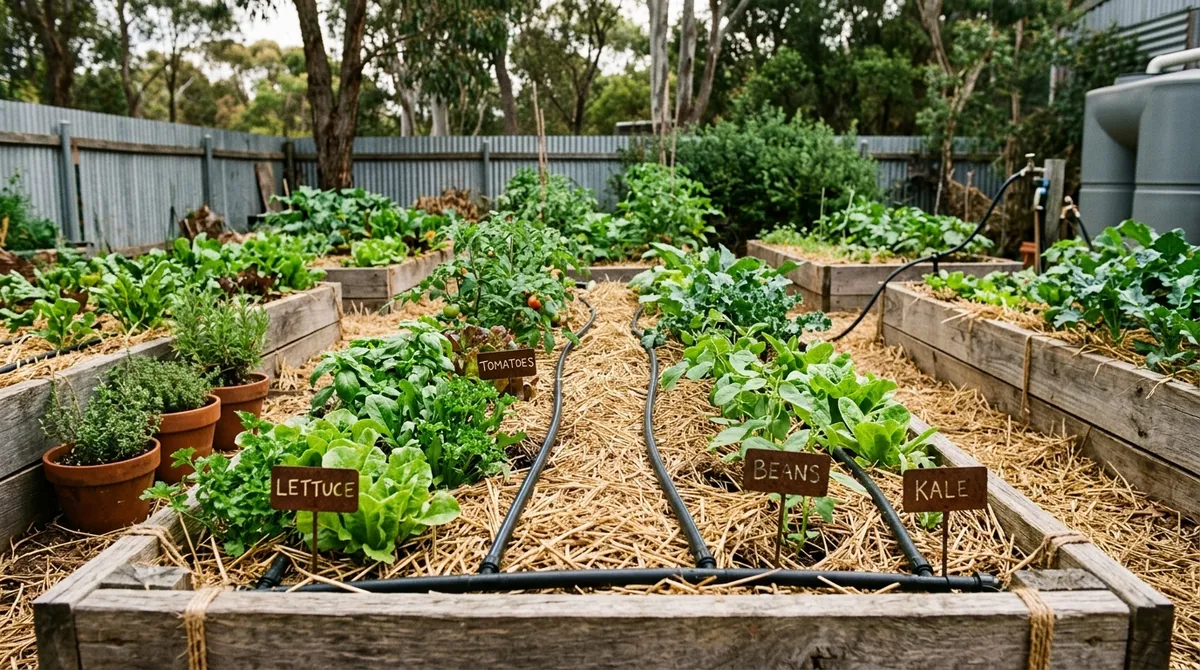
How to apply: Spread 7-10cm of organic mulch (straw, woodchip, shredded bark) around plants, keeping a 5cm clear zone around stems to prevent rot. Apply in spring as soil warms, and top up in autumn before dry season. Mulch breaks down continuously, feeding soil biology and improving structure, so reapply every 12-18 months.
Best mulches for SEQ: Sugarcane mulch (breaks down quick, slightly acidic, good for leaf-heavy crops). Pea straw (nitrogen-rich, great for fruiting plants). Composted bark (lasts longer, good for perennials). Avoid fresh wood chips that lock up nitrogen as they decompose.
Cost benefit: A single mulch application saves 30-40% of water input over a season. On a 20m2 garden, that's hundreds of litres saved.
2. Choose Irrigation Methods That Deliver Water to Roots
Overhead sprinklers waste water. They wet foliage instead of soil, boost fungal disease in humid climates, and lose 20-40% to evaporation before water hits ground. SEQ's subtropical summers make overhead irrigation almost useless in heat of day.
Drip irrigation: Hose with drip emitters or soaker tape delivers water directly to soil at root level. Water loss to evaporation drops to 5%. You control flow rate and duration precisely. Install drip lines in spring, and they pay for themselves in saved water within one season. Lay soaker tape 5cm under mulch and water slowly for 20-30 minutes at a time rather than quick bursts.
Self-watering containers: If space is tight and water restrictions mean no hose use, self-watering pots hold a reservoir that wicks water up as soil dries. Perfect for small spaces, apartment balconies, or areas where hose restrictions ban hand watering.
Watering cans: During active bans on spray and hose irrigation, hand watering from cans is usually allowed. It's slow but water reaches soil directly. Water in early morning or evening to cut evaporation loss.
3. Water Timing Is Everything
Watering time determines how much water actually benefits plants. Water in heat, and most evaporates before roots drink it. Water at night and cool, moist conditions encourage fungal disease.
Best time: Early morning, 5-7am. Soil is cool and absorbs water efficiently. Plants drink deep before hot sun arrives. Foliage dries quickly (reducing disease). This single habit cuts water use by 20% compared to midday watering.
Duration: Water slowly for 20-30 minutes rather than 5 minutes of fast soaking. Slow watering lets soil absorb moisture deeply, reaching established roots rather than wetting just the top 5cm. Deep soaking once or twice weekly beats daily sprinkles.
Frequency: During heat, mature plants need deep water 2-3 times weekly. Young seedlings need more frequent light watering. Let soil dry slightly between waterings (it should feel moist, not soggy). Most plants prefer cycling between moist and slightly dry over constant wet.
4. Grow Drought-Tolerant Edibles
Some plants demand water constantly. Others thrive on summer rains and survive long dry spells. Filling your garden with drought-tolerant edibles reduces overall water pressure.
Sweet Potato: Once established, sweet potato barely needs watering. It's a vigorous vine with deep roots that find water in poor soil. Plant in spring (September to October) and harvest in autumn. One plant feeds 3-4 people.
Rosemary: Mediterranean herb that laughs at heat and drought. Once established, water only during extreme heat spells. Prune regularly to encourage tender shoots for kitchen use.
Pigface: Native coastal succulent that thrives in hot, sandy, salty spots. Barely water after establishment. Edible leaves, flowers, and fruit. Perfect for impossible corners.
Native plants with edible fruit: Lemon Myrtle, Mountain Pepper, and Davidson Plum are built for SEQ heat. Once established (3+ years), they produce food with minimal water input beyond natural rainfall.
Less water crops: Root vegetables (carrot, parsnip, beetroot) tolerate drought better than leafy crops. Beans and pumpkins, once established, need less frequent watering than tomatoes or lettuce.
5. Capture Rainwater in Tanks
Rainwater tanks are the ultimate water-smart tool. Brisbane averages 1,100mm of rain annually, mostly falling between November and March. Harvesting even 10% of that roof water supplies months of summer irrigation.
Tank sizing: A 2,000-5,000 litre tank suits most home gardens. For a 100m2 roof, one heavy rainfall (50mm) fills a 5,000 litre tank. Install gutters and downpipes that direct water cleanly into the tank. Screen overflow pipes to keep mosquitoes out.
Tank placement: Elevate tanks on stands so gravity feeds drip lines below (no pump needed). Hide tanks behind sheds or fence, or paint them to match your garden aesthetic.
Summer strategy: Fill tanks in spring and early summer, then restrict watering to tank-only during restrictions. Most SEQ gardens survive hot, dry periods on captured rainwater plus infrequent mains hand watering.
6. Use Grey Water Wisely
Grey water from showers, baths, and kitchen sinks is legal in most SEQ council areas during water restrictions. It's a significant water source you're already producing.
What's safe: Water from showers, baths, washing machines, and kitchen sinks (if low in food waste). Avoid high-soap loads, dishwasher water heavy in detergent, and any water from toilets.
Application: Drain grey water to soil level, not on foliage. Avoid high-sodium detergents that build salt in soil over time. Rotate grey water between different beds to prevent salt accumulation. Test soil pH and salinity annually if using grey water regularly.
Storage: A 200-litre grey water tank can intercept shower runoff. Divert it straight to mulched garden beds. During winter, you may have excess grey water, so direct it to stormwater drains rather than creating swampy beds.
7. Group Plants by Water Needs
High-water crops (tomatoes, lettuce, capsicum, zucchini) and low-water crops (herbs, root vegetables, drought-tolerant natives) have vastly different water demands. Plant them separately so you water each zone appropriately rather than overwatering drought-tolerant plants or underwatering thirsty ones.
High-water zone: Tomatoes, capsicums, beans, leafy greens, cucumbers. Mulch heavily, water 3-4 times weekly in summer. Place near drip lines or tanks.
Medium-water zone: Potatoes, brassicas (cabbage, broccoli), peas. Water 2-3 times weekly in growing season.
Low-water zone: Herbs (rosemary, thyme, oregano), root vegetables, native plants, garlic. Water weekly in summer, less in cooler months. Plant here and forget.
Grouping cuts watering workload and lets each zone thrive without competition.
8. Self-Watering Containers for Restrictions
During strict hand-watering bans, self-watering pots keep small gardens productive. These have a water reservoir in the base that wicks moisture up to soil as it dries. You fill the reservoir weekly instead of daily hand watering.
What grows well: Leafy greens (lettuce, spinach, rocket), herbs, cherry tomatoes, chillies in smaller varieties. Use pots at least 30cm deep for fruiting crops.
Cost: Self-watering pots run $30-80 each. They're valuable during restrictions and worth the investment if you live in a water-sensitive area.
The Water-Smart Garden Works Year-Round
Mulch, drip irrigation, smart watering timing, drought-tolerant plants, rainwater capture, and smart grouping work together. A water-smart garden uses 30-50% less water than a standard vegetable garden, produces more food, and thrives through SEQ's inevitable dry spells. Start with mulch and drip irrigation this spring. Add a rainwater tank in summer. By next year, you've built a garden that grows abundantly without guilt during water restrictions.
Frequently Asked Questions
Can I use grey water in my vegetable garden during water restrictions?
Yes, but with care. Grey water from showers, baths, and sinks (not toilets) is usually allowed during restrictions because it's reuse. Avoid grey water with heavy soaps, oils, or food waste. Drain it to soil level, not on leaves. Grey water high in salts can build up in soil over time, so rotate which beds receive it. Always check your council's specific restrictions on grey water use, as they vary.
How much mulch should I apply, and when?
Apply 7-10cm of organic mulch around plants, keeping it 5cm clear of stems to prevent rotting. Mulch in spring as soil warms up, and top up in autumn before dry season hits. Mulch breaks down and improves soil structure, so you'll need to reapply every 12-18 months. In hot, dry periods, thick mulch keeps soil 5-8 degrees cooler and retains far more moisture than bare soil.
What's the best time to water if I can only water by hand?
Water early morning, ideally between 5-7am, before heat hits. Soil absorbs water better when cool, and moisture reaches roots before the day's heat draws it away. Morning watering also reduces fungal disease risk because foliage dries quickly. Never water midday in heat, as most water evaporates before roots drink it. Evening watering works if morning isn't possible, though it increases fungal disease risk in humid summers.
Free Monthly Planting Calendar
Get a personalised email each month with what to plant, seasonal tips, and harvest reminders for your region.
We send one email per month. Unsubscribe any time.