
How to Start a Vegetable Garden in Brisbane
Four easy crops, one simple bed, and you'll be harvesting vegetables within 8 weeks. Here's the complete beginner guide.
Starting a vegetable garden in Brisbane is simpler than you think. You don't need perfect soil, years of experience, or even much space. You need four things: a patch of sun, soil that drains, four easy crops, and water.
Pick the right time to start, choose forgiving varieties, avoid the common beginner mistakes that plague SEQ gardeners, and you'll have fresh vegetables on your table within 2 months.
Step 1: Assess Your Space
Walk your yard in the morning and afternoon. Find the spot that gets at least six hours of direct sun. Most Brisbane suburbs get full sun in the cooler months and partial shade in summer, which is fine for cool-season vegetables. The vegetable garden doesn't need to be big. A space 1.2 metres long and 0.6 metres wide is enough to start.
Check how close it is to your water source. Walking 20 metres with a hose every day gets old fast. If possible, site your garden within 10 metres of an outdoor tap or hose.
Check the soil. Poke a spade in. If it sinks easily and the soil is dark and crumbly, your ground is good. If it's heavy clay or compacted hard, consider building a raised bed instead of fighting the soil.
Step 2: Choose Raised Bed or In-Ground
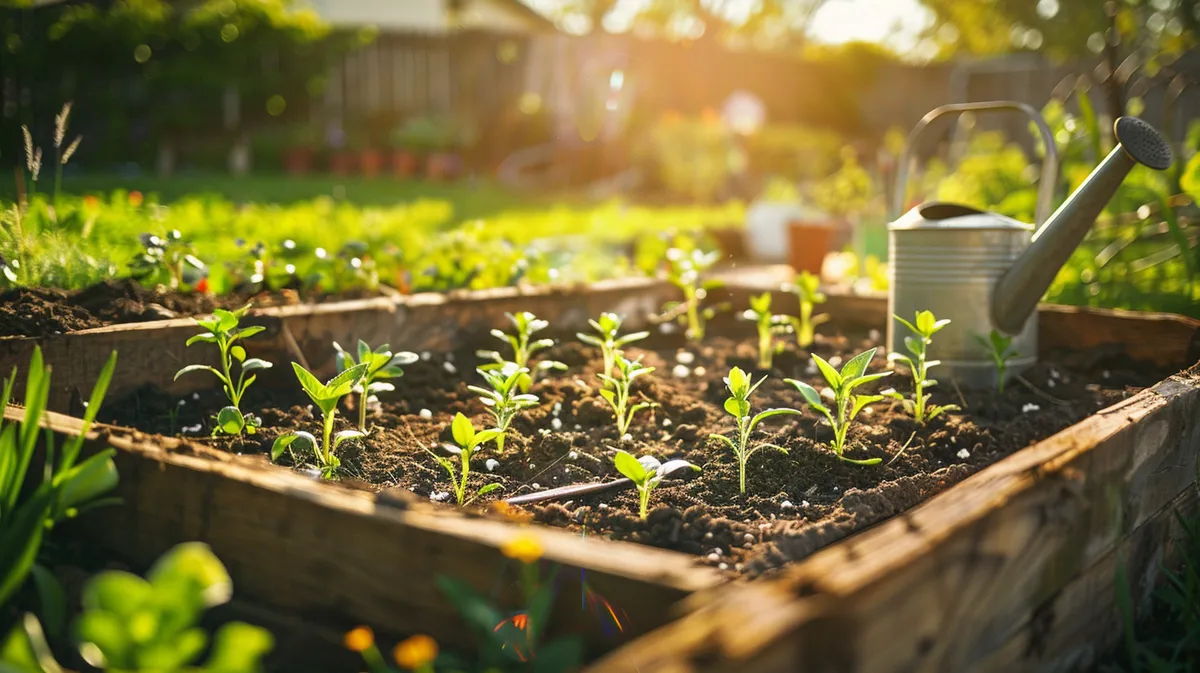
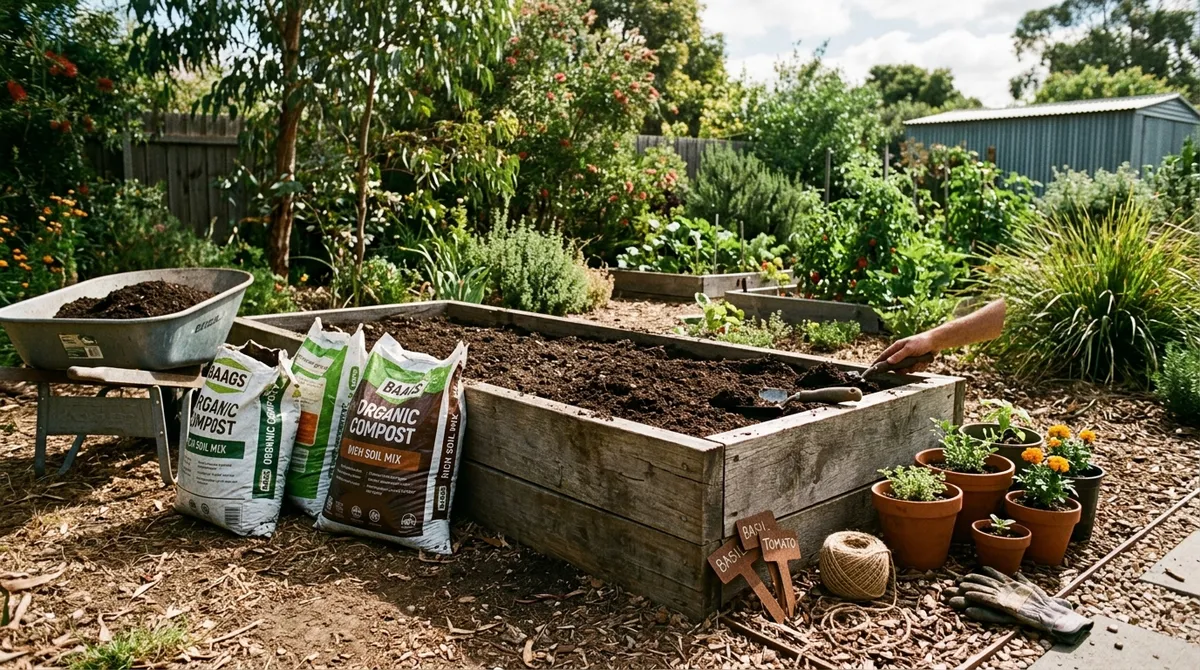
Raised beds are easier for beginners. Build a simple wooden frame 1.2 metres long, 0.6 metres wide, and 0.3 metres deep. Line it with shade cloth or newspaper at the bottom to slow weed emergence. Fill it with quality potting mix and aged compost. You now have perfect soil for growing vegetables. Total cost is around $30 to $50.
In-ground planting works if your soil is reasonable. Dig in 5 to 10 centimetres of compost to improve it. In SEQ's heat, organic matter breaks down fast, so add more compost than you think you need.
If your soil is clay, sandy, or compacted, raised beds are worth the small effort. You'll have faster growth and fewer disease problems.
Step 3: Pick Four Easy Crops for Your First Season
Lettuce is ready in 8 weeks. Choose heat-tolerant varieties like Green Mignonette or Buttercrunch for your first attempt. Sow seeds directly or buy seedlings from the nursery. Space plants 25 centimetres apart.
Radish is the fastest crop available. Ready in just 4 weeks. Sow seeds directly 1 centimetre deep, 5 centimetres apart. Radishes are virtually impossible to kill and are perfect for building confidence.
Basil and parsley are herbs that give continuous supply. Buy seedlings from the nursery, plant them 25 centimetres apart, and pinch off the growing tip regularly. You'll harvest herbs for months from one plant.
Silverbeet is a workhorse. Sow seeds directly, 30 centimetres apart. Pick the outer leaves as they reach full size, leaving the inner leaves to keep growing. One plant produces for months. Silverbeet handles heat and cold. Plant it and forget about it.
Step 4: When to Plant in Brisbane
August is the perfect month to start gardening in Brisbane. Plant in late August and you're moving into autumn. Cool weather helps vegetables establish without stress. By the time spring arrives in September, your vegetables are already growing hard. You'll harvest lettuce and radish by October, silverbeet by November.
If you're starting at another time: March is your second-best option. Plant in early autumn and harvest through winter. Avoid December, January, and February for cool-season crops. The heat and humidity stress plants and pests explode. Wait until March.
Spring (September to November) is not ideal for beginners, but it works. Heat, humidity, and pests ramp up. Pest management becomes part of the challenge earlier than necessary.
Step 5: Basic Watering Routine
Water deeply when you plant. Then water when the top 2 centimetres of soil are dry. In cool months, this might be every 2 to 3 days. In warm months, daily. Let your finger tell you when to water, not a schedule.
Water at the base of plants in the early morning. Avoid wetting the foliage. Wet leaves encourage fungal diseases. A drip line or soaker hose is ideal but not necessary. A hose nozzle set to a gentle flow works fine.
Let the soil dry slightly between waterings. Don't keep it waterlogged. Waterlogged soil kills more vegetables than drought does.
Step 6: Mulch to Save Water and Suppress Weeds
Cover the soil around plants with 5 centimetres of mulch. Straw, compost, or shredded leaves all work. Mulch keeps soil cool, retains moisture, suppresses weeds, and improves the soil as it breaks down. Leave a 5-centimetre gap around plant stems to prevent rot.
In SEQ's warm months, mulch is especially valuable because it keeps roots cooler and reduces watering frequency.
Seven Common Beginner Mistakes in Brisbane
1. Planting spring vegetables in spring. Tomatoes, capsicum, and eggplant go into the ground September to November. You're setting them up for humidity, fruit fly, and disease. Start with lettuce and radish instead.
2. Overcrowding plants. Space feels empty when you first plant. Resist the urge to pack plants tightly. Crowding reduces air flow, increases disease, and plants compete for nutrients. Use the spacing recommended on seed packets.
3. Planting too much of one thing. Start with one lettuce plant, not six. If it succeeds, plant more next season. If you harvest four lettuces in two weeks and can't eat them, you'll get discouraged.
4. Not addressing SEQ's drainage. Brisbane's summer rain falls hard and fast. If your soil doesn't drain, roots rot. Fix drainage with raised beds or digging in compost to improve structure.
5. Watering foliage instead of the base. Wet leaves encourage mildew, especially in humidity. Water the soil only. This is the biggest fungal disease prevention tool available.
6. Ignoring pests until they're out of control. Check your plants every few days. Pick off insects by hand early. A few slugs on lettuce is fine. Dozens of slugs stripping leaves is a problem you created by ignoring early signs.
7. Giving up after a minor setback. One plant dies. The bugs got some leaves. Mildew appeared on the silverbeet. This is normal. It's not failure. Remove the affected plant, improve conditions, and keep growing.
Your First-Season Timeline
August: Build raised bed (if needed), fill with soil, plant lettuce seeds, radish seeds, basil seedling, silverbeet seeds.
September: First radishes ready. Lettuce growing fast. Mulch around plants. Remove any slugs.
October: First lettuce harvest. Continue picking radish as roots reach eating size. Herbs producing.
November: Silverbeet ready to start picking outer leaves. Ongoing harvests of all four crops.
December: Summer heat arrives. Cool-season crops slow down. Plan your next crop for March.
Moving Into Year Two
After your first harvest in October, congratulations. You've grown food. Now you can add complexity. Try a tomato plant. Attempt beans. Grow capsicum.
Your second season's success is built on the confidence and skills you gained from four simple crops. Start with the basics, master them, then expand.
Frequently Asked Questions
What's the best time to start a vegetable garden in Brisbane?
March to August (cool dry season) is the best time for beginners in Brisbane. Vegetables grow reliably, pests are fewer, and diseases are less aggressive. Plants don't stress from heat. August is actually the best month to start because you're planting into autumn and will harvest through winter when conditions are perfect for learning.
What four vegetables should a complete beginner plant in Brisbane?
Lettuce (ready in 8 weeks, variety of colours), Radish (ready in 4 weeks, incredibly fast), Herbs like basil and parsley (continuous supply, hard to kill), and Silverbeet (ready in 8-10 weeks, produces for months by picking outer leaves). All four are forgiving, don't need staking or complex training, and produce real food quickly. Start with these before attempting tomatoes or beans.
Should I use a raised bed or plant directly in the ground?
Raised beds are better for beginners because you control the soil quality completely and avoid ground-level pest and disease problems. A 1.2m x 0.6m x 0.3m bed (90cm length is more manageable) gives enough space for four rows of different crops. Fill with quality potting mix and compost. If your yard has reasonable soil, in-ground planting works, but raised beds are more forgiving and let you garden on concrete or clay.
Free Monthly Planting Calendar
Get a personalised email each month with what to plant, seasonal tips, and harvest reminders for your region.
We send one email per month. Unsubscribe any time.