
How to Improve Brisbane Clay Soil for Vegetables
Testing, organic matter, gypsum, raised beds, and the long-term approach to turning heavy clay into productive garden soil
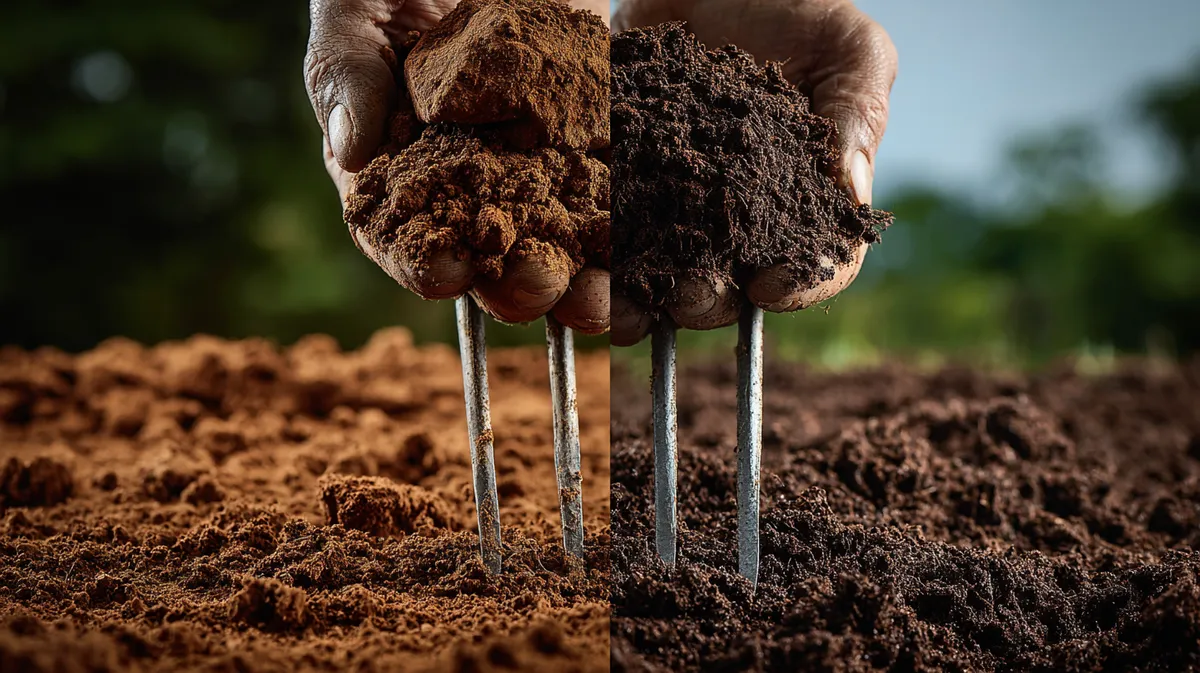
Most Brisbane backyards sit on heavy clay soil. During winter, the ground is rock-hard and cracks deeply. After rain, it waterlogged and sticky. You try to dig a vegetable bed and your spade bounces off. Root vegetables come out deformed. Carrots fork into multiple twisted shapes. Water either pools on top or drains nowhere. Growing vegetables in clay feels impossible.
But clay isn't worthless. With the right approach, clay improves dramatically. The key is understanding that clay improvement takes time, and there are shortcuts if you want results faster. You can build raised beds immediately and start growing. You can also improve existing clay soil year by year. The best approach often combines both strategies.
Understanding Your Soil: The Testing Approach
Before you start amending, know what you're working with. Take a handful of moist soil and squeeze it. If it forms a tight ball that barely breaks apart when you poke it, you have clay soil. If it stays sticky and waterlogged, you have heavy clay. If it cracks deeply after a few days of drying, that's typical Brisbane clay.
For more accuracy, try the jar test. Fill a jar with soil, add water, a few drops of detergent, and close the lid. Shake vigorously for a minute. Set it on a bench and let it settle. Sand (largest particles) settles in minutes and sits at the bottom. Silt settles over a few hours. Clay (finest particles) takes days and settles last, creating a layer at the top. The proportions tell you your soil composition. Most Brisbane soil is clay-dominant with less sand and silt.
A soil testing service (available through your local council or university) gives precise nutrient levels and pH. This is useful if you want to know exactly what needs fixing. For most home gardeners, though, the jar test is sufficient, and you can proceed with standard amendment strategies.
The Quick Fix: Raised Beds
If you want vegetables growing immediately, build raised beds and fill them with quality potting mix or compost. A raised bed 60 centimetres wide by 1.2 metres long and 30 centimetres deep holds about 200 litres of soil. That's enough to grow lettuces, herbs, and other shallow-rooted crops. Deeper beds (45 centimetres) suit tomatoes and longer-rooted vegetables.
Use timber, composite, or metal frame materials. Line the base with landscape fabric to prevent perennial weeds from coming through. Fill with quality potting mix or a mixture of compost, aged manure, and potting mix. Cost is higher than in-ground bed amending, but results are immediate.
You can start growing vegetables in your raised bed within weeks. Meanwhile, you gradually improve the underlying clay. This is a practical strategy if you're starting a vegetable garden for the first time.
The Long-Term Approach: Amending Clay in Place
Building raised beds is a shortcut. But you can also improve existing clay soil over time. This approach takes years instead of weeks but works well if you're patient.
The principle is simple: add organic matter to clay. Organic matter breaks up clay particles and improves drainage. It also feeds soil microorganisms that further condition the soil.
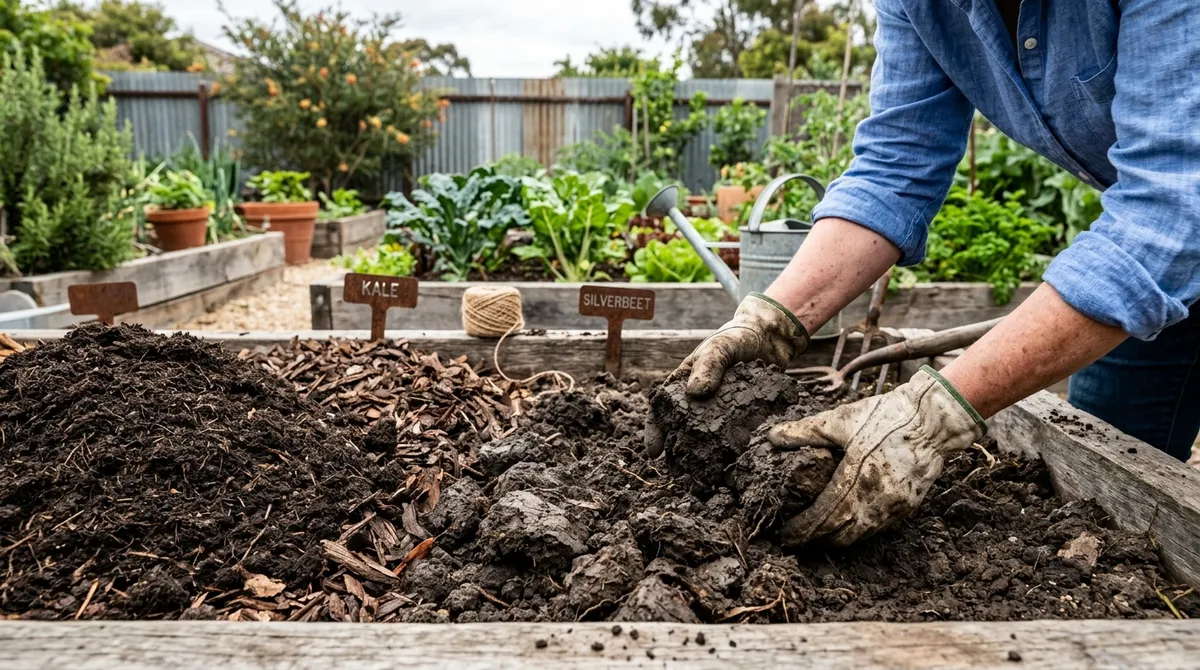
Add compost and aged manure. Every year, dig in 5-10 centimetres of compost or aged manure to your vegetable bed in autumn or spring. Over 3-5 years, you'll dramatically improve soil structure. Don't dig deeper than 20-25 centimetres. Digging deep can bury organic matter where soil organisms can't access it quickly.
Use gypsum on clay-dominant soils. Gypsum (calcium sulfate) has a specific effect on clay. It improves soil structure without changing pH. Apply gypsum at 1 kilogram per 10 square metres. It works best when you also add organic matter. Gypsum helps break apart clay particles so compost can penetrate more effectively.
Apply mulch heavily. Add 5-10 centimetres of mulch (wood chips, sugarcane mulch, or straw) to the surface of your garden bed. Mulch keeps soil cooler and moister, reduces compaction from rain and foot traffic, and breaks down over time to add organic matter. Replace mulch as it decomposes.
Build a worm farm. Worm castings are excellent for improving clay. A small worm farm produces castings you can dig into beds. The worms also compost your kitchen scraps and garden waste, creating a closed loop. Worm castings improve soil structure and add nutrients.
Which Vegetables Tolerate Clay Soil
While you're improving soil, grow vegetables that tolerate clay. This lets you harvest while working on long-term improvement.
Clay-tolerant vegetables: Beans, peas, brassicas (cabbage, broccoli, cauliflower, Brussels sprouts), and leafy greens all tolerate heavy clay. These plants prefer consistent moisture, which clay provides. Beetroot handles clay well. Spinach and silverbeet thrive. Plant these first while improving soil.
Vegetables that prefer amended soil: Carrots and radish need loose soil for straight roots. Tomatoes and capsicums produce better in improved soil with better drainage. Cucumbers and zucchini appreciate lighter soil. These crops should be grown once you've amended beds.
This strategy lets you maintain productivity during the soil improvement period. Grow beans and brassicas in year one while adding compost. By year two or three, soil is improved enough for root vegetables and long-season solanums.
Gypsum: The Clay Breaker
Gypsum is a chemical amendment that specifically targets clay structure. It doesn't change soil pH (unlike lime or sulphur). It works by improving how clay particles bind together, making the soil more crumbly and easier to work.
Apply gypsum at 1 kilogram per 10 square metres in autumn. Water it in. For best results, apply gypsum alongside organic matter. The organic matter and gypsum work together to restructure clay.
Results aren't immediate. You'll notice improvements over months as gypsum works and organic matter decomposes. Gypsum is cheap and widely available at hardware stores and garden centres.
Working with Clay: The Practical Approach
Don't dig clay when it's wet. Working wet clay compacts it and destroys structure. Wait until soil is moist but crumbly. If clay sticks to your spade, it's too wet. Let it dry a few days and try again.
Don't add sand to heavy clay. The old advice to add sand is wrong. Adding sand to clay without organic matter creates concrete. Only add sand if you're adding large amounts of organic matter simultaneously to prevent this.
Mulch is your friend. Heavy mulch (10 centimetres) on top of clay does remarkable work over time. It keeps the soil beneath cool and moist, preventing the extreme cracking that typifies dry clay. Mulch also breaks down, adding organic matter.
Focus on the top 20-25 centimetres. This is the root zone for most vegetables. Improving this layer is more valuable than trying to amend deep into clay. Work organic matter into the top 25 centimetres only.
Be patient. Clay improvement genuinely takes years. But after 3-5 years of adding compost and mulch, soil texture is noticeably different. After 5-10 years, clay soil becomes good vegetable soil.
Quick Wins: The Hybrid Approach
Many gardeners use both strategies. Build one or two raised beds for immediate results and fast-growing crops like lettuce and basil. In-ground beds are amended gradually for longer-term crops. Over time, in-ground beds improve, and you can reduce your reliance on raised beds if you prefer.
Another hybrid approach is to build mounds or swales. Create raised mounds (15-20 centimetres high) of improved soil directly on top of existing clay. This gives you intermediate drainage and root depth without building frames. Swales are slightly sunken areas that retain moisture for drought-tolerant crops growing on mounds.
Chemical Amendments vs Organic Approach
Gypsum is a safe, effective chemical amendment. Some gardeners prefer purely organic approaches using compost, manure, and mulch only. Both work. Organic methods take longer but don't require ongoing chemical inputs. Chemical methods (gypsum) can speed results but still require organic matter for long-term sustainability.
Most successful Brisbane gardeners combine both. They use gypsum to help restructure clay quickly, then build long-term improvement with compost and mulch.
Timeline for Clay Improvement
Year 1: Dig compost and aged manure into the top 25 centimetres. Apply mulch heavily. Plant clay-tolerant crops. Soil is still heavy but workable.
Year 2: Add another layer of compost and manure. Mulch again. Clay texture is noticeably looser. You can successfully grow root vegetables like beetroot and radish. Tomatoes and capsicums still produce but benefit from extra care.
Year 3-5: Continue adding organic matter annually. By year five, soil is genuinely improved. It drains better, works easier, and grows all vegetables well. Carrots are straight. Tomatoes are vigorous.
Long-term: Maintain your improved soil with annual mulch and compost applications. You're no longer fighting clay. You're maintaining good soil.
Frequently Asked Questions
How do I know if my Brisbane soil is clay?
Take a handful of moist soil and squeeze it. If it forms a tight ball that barely breaks apart, you have clay soil. If it stays sticky and waterlogged, it's heavy clay. If it crumbles after a few days of drying and cracks deeply, that's typical Brisbane clay. The jar test is more accurate: fill a jar with soil, water, and detergent. Shake well and let it settle. Clay settles last (can take days), creating a layer at the top. Sandy soil settles in minutes. Most Brisbane backyards have clay or clay-loam soil.
What's the fastest way to improve clay soil for vegetables?
Building raised beds filled with quality potting mix is the fastest approach. You get immediate results without amending existing soil. Takes weeks instead of years. For in-ground beds, add 5-10 centimetres of compost or aged manure every year. Apply gypsum (calcium sulfate) to clay-dominant soils to improve soil structure. Add mulch. These methods gradually improve clay soil, but results take seasons. Worm farms in combination with compost add organic matter efficiently.
Which vegetables grow best in clay soil versus which need amended soil?
Beans, brassicas (cabbage, broccoli, cauliflower), and peas tolerate clay soil well. These plants prefer consistent moisture that clay provides. Root vegetables like carrots and radish need amended soil with more sand and organic matter for straight roots and good elongation. Tomatoes, capsicums, and other long-term crops benefit from improved soil. Start with clay-tolerant crops while improving soil. Switch to demanding crops once clay is amended.
Free Monthly Planting Calendar
Get a personalised email each month with what to plant, seasonal tips, and harvest reminders for your region.
We send one email per month. Unsubscribe any time.