
Growing Strawberries in Brisbane
South East Queensland is Australia's strawberry capital. Here's how to harvest pounds of fruit through winter.
Brisbane sits on the edge of the world's strawberry belt. The combination of mild winters, good autumn rainfall, and long cool-season daylight makes SEQ the ideal place to grow strawberries. Bundeena, Beenleigh, and a hundred other farms around Brisbane exist because the climate is perfect. You don't need a farm, though. A backyard patch of strawberries will produce more fruit than you can eat from June through October.
The key is timing. Plant runners in autumn, not spring. Let them establish through winter, and you'll harvest when the fruit is sweetest and the pest pressure is lowest.
🌱 Plant profile: Strawberry, with sowing times for your region, companion plants and common pests.
When to Plant Strawberry Runners
Strawberry runners go into the ground from April through June in Brisbane. This is the window. Earlier than April and the soil is still warm from summer, which stresses new runners. Later than June and you'll only get a light harvest in your first year because the plants won't have enough time to establish a strong crown before cooler weather arrives.
April and May are the sweet spot. Autumn weather has cooled the soil, autumn rains are settling in, and young runners settle into dormancy slowly. They develop roots through the mild autumn and winter, then burst into flower in late August and September. The harvest hits full stride in June and July.
Get your runners from local specialists if you can. Sunny Ridge, Ashbern Farms, and most Bunnings seasonal racks stock runner varieties selected for Australian growing. Plant them as soon as you get them. The sooner runners are in the ground, the sooner they establish.
Strawberry Varieties for SEQ
Not all strawberry varieties work equally well in Brisbane. Some are bred for cool climates and struggle. Others crack in humidity. A few are built for the SEQ winter and will produce kilos of fruit.
Kabarla is Queensland-bred. It was developed by the Queensland DPI to thrive in SEQ winters. High yield, reliable setting, excellent flavour. This is the pick-your-own favourite in Brisbane farms and it's just as good in backyards.
Festival is the most-grown commercial strawberry in Australia. Large, firm, sweet berries bred specifically for SEQ winter production. It's bulletproof. Plant it, mulch it, net it, and harvest for months.
Red Gauntlet is a reliable old English favourite that still thrives in SEQ. Soft, sweet berries, heavier cropper than most heirlooms. If you want traditional strawberry flavour, Gauntlet delivers it.
Albion is day-neutral, which means it fruits on and off through most of the year instead of one winter flush. The berries are firm and transport-friendly, though slightly less sweet. It's the option if you want consistent small harvests year-round.
Soil Preparation and Spacing
Strawberries need well-draining soil rich in organic matter. Before planting runners, dig in compost or aged manure. Work it through the top 15 centimetres. Strawberries hate waterlogged soil and will rot if drainage is poor.
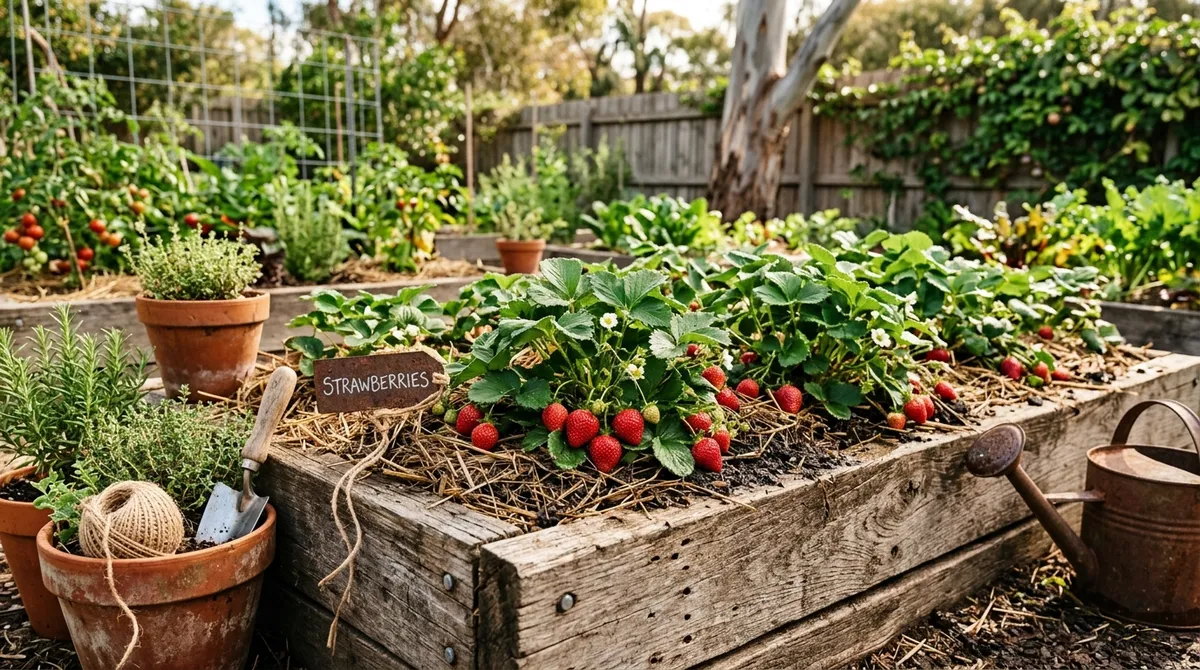
Space runners 30 centimetres apart. If you're planting a bed, leave at least 45 centimetres between rows so you can walk through to pick and manage runners without stepping on the plants. A 1.2-metre bed will fit four rows of four plants, giving you sixteen plants in a manageable space.
Plant runners so the crown (where the leaves meet the roots) sits at soil level. Plant too deep and the crown rots. Plant too shallow and the roots dry out. Level with the surface is correct.
Mulching Against Slugs and Soil Rot
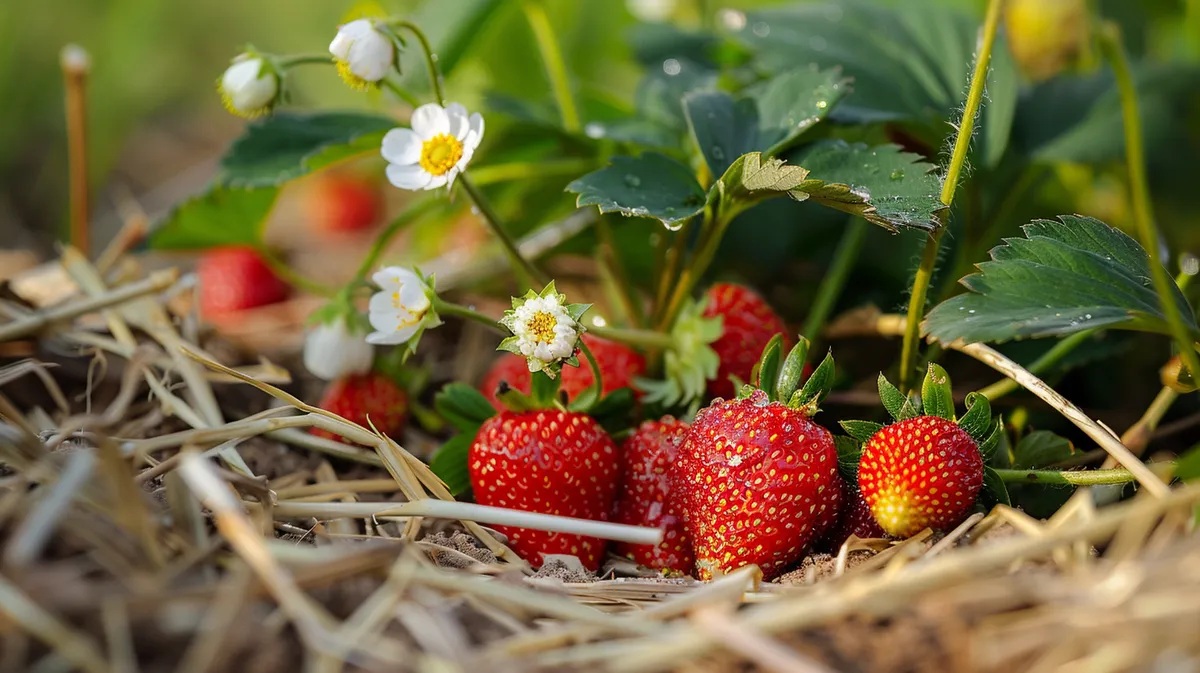
After planting, mulch with sugar cane straw. Lay it thickly, 5 centimetres, around each plant but not touching the crown. Sugar cane straw keeps the fruit off bare soil where it rots or gets diseased. It also keeps the soil cool and moist, reducing stress during warmer parts of autumn.
The traditional wisdom says sugar cane straw reduces slug pressure. It does reduce it. Slugs still live under straw, but less prolifically than in dense hay. Pick fruit daily and do slug patrols in the evening with a torch. Remove slugs by hand. One slug can destroy a dozen berries in a night. Manual removal is worth the time.
Managing Birds and Fruit Fly
Birds love strawberries. Magpies, kookaburras, and a dozen other species will strip a bed. Once the first berries colour, net the plants. Use fine mesh netting, 30 centimetres above the foliage, pinned at the edges so birds can't slip underneath. The netting also helps keep slugs off the fruit.
Fruit fly pressure is lower in strawberries than in tomatoes, but builds from September onward. Monitor for tiny punctures on developing fruit. At the first sign of fruit fly activity, increase your netting and do daily harvest. Don't leave ripe fruit sitting on the plants overnight.
Watering and Feeding
Water strawberries consistently through growing season. The plants need regular moisture, especially in spring as they flower and fruit. Water at soil level in the early morning. Don't wet the foliage. Wet foliage encourages fungal diseases like grey mould.
Strawberries don't need heavy feeding, but a light application of balanced fertiliser in spring helps. When the plants start flowering, switch to a higher potassium feed to encourage fruit development. Follow the instructions on the packet. Too much nitrogen produces leaves and few berries.
The Summer Dormancy Issue
Here's the reality of growing strawberries in SEQ: your plants will slow dramatically through January and February. The long days, heat, and humidity tell strawberry plants to rest. Leaves turn dull, production drops to almost nothing, and some plants just look dead. This is normal. It's not a disease, and the plants aren't done.
When dormancy hits, stop harvesting the dying leaves. Leave the plants alone. Reduce watering frequency slightly but don't let them dry out completely. Think of this as the dormancy period. By late February and March, as temperatures cool again, the plants wake up. New leaves emerge, growth resumes, and you get another flush of fruit through autumn.
This dormancy is one reason to plant new runners every autumn instead of keeping the same plants for years. After three seasons, productivity drops and the plants are better replaced. Use the runners the original plants make and start fresh. A strawberry bed cycles naturally.
Growing Strawberries in Containers
Strawberries grow brilliantly in containers. A 20-centimetre pot holds one plant. Hanging baskets suit strawberries perfectly because fruit hangs down where birds can't reach as easily. Fill containers with quality potting mix, not garden soil. Water containers more frequently than in-ground plants, especially in warmer weather.
Containers let you control the soil quality and drainage completely. They also let you move plants into afternoon shade during summer dormancy if your garden bakes in full sun. If space is limited, containers are the best option.
Summary: Your Strawberry Timeline
April to June: Plant runners 30 centimetres apart in well-draining soil.
June to August: Plants establish through cool months. Minimal harvest in first year, possibly nothing.
September to October: Flowering and early fruiting. Start netting against birds.
November to December: Peak fruit production before summer dormancy.
January to February: Summer dormancy. Plants rest. Minimal production. This is normal.
March to April: Production resumes as temperatures cool. Plant new runners if replacing.
Frequently Asked Questions
When should I plant strawberries in Brisbane?
Plant strawberry runners in Brisbane from April to June. This timing lets them establish roots before winter and produce heavily from June through October. Avoid planting in spring or summer, when heat stress weakens plants and pest pressure peaks. Autumn planting is the SEQ standard.
What are the best strawberry varieties for SEQ?
The best varieties for Brisbane are Kabarla (QLD-bred, high yield), Festival (bulletproof commercial variety), Red Gauntlet (reliable heirloom), and Albion (day-neutral, fruits most of the year). Kabarla and Festival are optimised for SEQ winter production and are the most profitable for home growers.
How do I protect strawberries from birds and slugs in Brisbane?
Use bird netting placed 30cm above the plants to prevent pecking. Pin it at the edges so birds can't slip underneath. For slugs, mulch with sugar cane straw (not hay), water at soil level only, remove dead leaves, and do evening patrols with a torch to remove slugs manually. Avoid slug pellets in productive gardens.
Plant profile
The strawberry profile has sowing times for your region, companion plants and common pests.
Free Monthly Planting Calendar
Get a personalised email each month with what to plant, seasonal tips, and harvest reminders for your region.
We send one email per month. Unsubscribe any time.