
Growing Pumpkin and Zucchini in SEQ
Timing, space, hand pollination, and companion planting for productive harvests
Pumpkin and zucchini are the backbone of Brisbane spring and early summer gardens. Both thrive in warm soil and produce abundantly if you understand SEQ's particular growing conditions. The main challenges are pollination in humid weather and powdery mildew in warm, moist air. Master these and your pumpkin and zucchini will be spectacular.
🌱 Plants in this guide: Pumpkin and Zucchini. Each plant profile has sowing times for your region, companion plants and common pests.
Planting Timing in SEQ
Sow seeds directly into the soil from September to December. September and October are ideal. Soil is warm, germination is quick, and plants establish before peak humidity arrives in December. Seeds sown in September produce pumpkins ready for harvest in late January through April. This timing avoids the worst fruit fly pressure (though pumpkin is less vulnerable than tomato or capsicum).
Zucchini is faster. Sow in October or November and you're harvesting in December and January. December sowing still works but crops right into the February to March fruit fly peak, so earlier is better.
Don't sow too early. September sowing can lead to flowering before the soil has warmed completely, reducing pollination success. Late August sowing sometimes works but risks weak germination in still-cool soil.
Space Requirements: Give Them Room
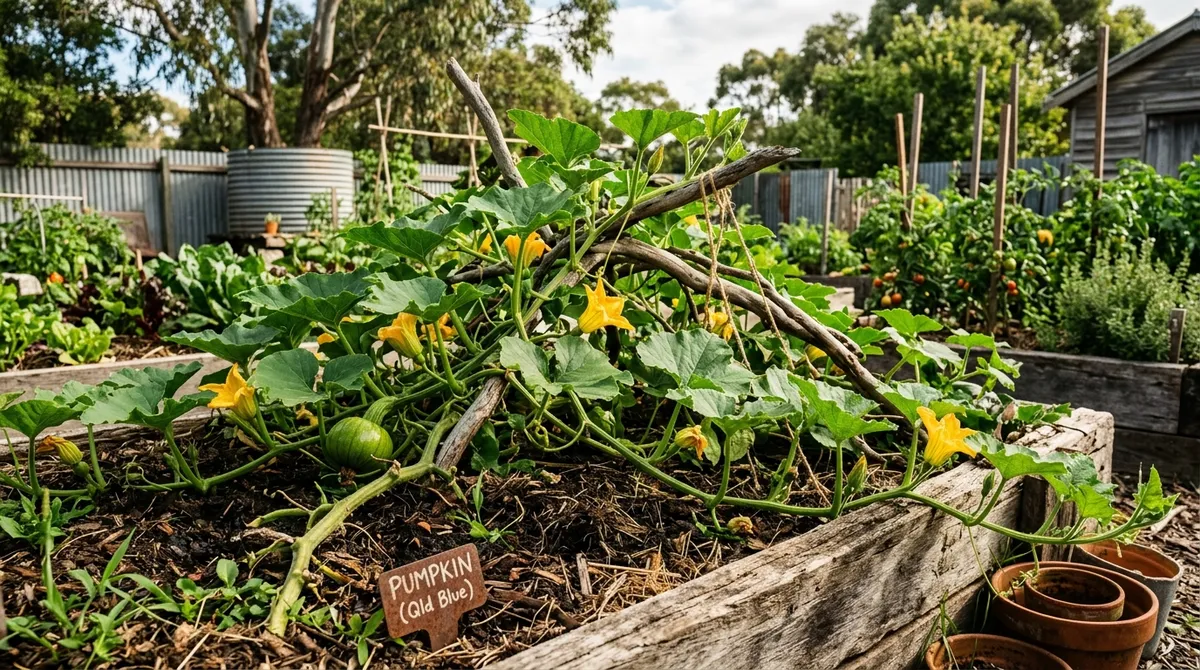
Pumpkin vines spread aggressively. Space plants at least 1.2 to 1.5 metres apart. They'll sprawl across the garden, and that's fine. They climb if you provide a sturdy support, but they're heavy. Support strong stakes or a robust trellis system. Tie stems with soft ties as they grow.
Zucchini is more compact but still needs space. Space plants 60-90 centimetres apart. They produce multiple fruits at once. Crowding leads to poor air circulation, humidity buildup, and powdery mildew.
Both crops benefit from mulched soil. Apply 5-10 centimetres of mulch around plants, keeping it clear of the stem. Mulch keeps roots cool, retains moisture, and suppresses weeds.
Pollination in Brisbane's Humid Climate
This is the critical issue for Brisbane gardeners. Brisbane's humidity interferes with pollen viability. Even though plants produce abundant flowers, pollination often fails, and flowers drop without setting fruit. You get lots of flowers, no fruit, and frustration.
The solution is hand pollination. Early in the growing season, start hand-pollinating flowers. It sounds complicated but it's genuinely easy.
How to hand-pollinate: Wake up early, around 6 to 7 a.m., when flowers are fresh and open. Identify male flowers (they have a thin stem behind the flower and no fruit swelling). Identify female flowers (they have a small immature fruit at the base of the flower). Use a small artist's brush, cotton bud, or even your finger to gently brush pollen from the male flower's centre onto the female flower's stigma (the sticky centre). Do this multiple times if multiple female flowers are open.
Even light hand pollination dramatically improves fruit set. One successfully pollinated female flower produces one or more mature fruits. After the first few fruits set, the plant's own pollination activity often improves and hand pollination becomes less critical. But in the early phase, hand pollination is the difference between a productive plant and one that flowers and produces nothing.
Managing Powdery Mildew
Powdery mildew is the most common disease on pumpkin and zucchini in Brisbane. It's a fungal disease that appears as white powder on leaves, stems, and sometimes fruit. It doesn't kill plants overnight but steadily weakens them, reducing yields and fruit quality.
Prevention is more effective than treatment. Improve air circulation by removing the lowest leaves once the plant is established. Space plants well apart. Water at the base, never overhead. Morning watering is better because leaves dry quickly after the sun hits them.
At the first sign of powdery mildew (white coating on leaves), start spraying. Organic sulphur dust or liquid sulphur work well. Apply every 7-10 days. Neem oil is another organic option. Follow product instructions for application rates and frequency. Some people use baking soda sprays (1 tablespoon per litre of water with a squirt of detergent). These work moderately well but sulphur is more reliable.
Variety selection helps. Some zucchini and pumpkin varieties show better resistance to powdery mildew than others. Ask your nursery or seed supplier which varieties perform best in your region.
Feeding and Watering
Pumpkin and zucchini are heavy feeders. Prepare soil with generous amounts of compost or aged manure before planting. Apply mulch on top. As the plants grow, side-dress with compost or a balanced fertiliser every 3-4 weeks. Don't overdo nitrogen, which promotes lush foliage at the expense of flowers and fruit.
Water deeply and consistently, especially during flowering and fruiting. A single plant can drink a lot in hot weather. Check soil moisture regularly. Water should be available to the roots even in the hottest part of summer. Let soil dry slightly between waterings but never completely dry out.
Variety Selection for SEQ
For pumpkin, Queensland Blue and Butternut are reliable in SEQ. Jap pumpkins (also called Kabocha) are smaller and sweeter, perfect for home gardens. Black Beauty and other decorative pumpkins work well for specific harvest timing.
For zucchini, classic green varieties like Blacktail and Ronde perform reliably. Yellow zucchini (Gold Rush) and patterned varieties add colour. Early Bush is specifically bred for compact growth, useful in smaller gardens.
Test varieties. Note which perform best in your garden. Powdery mildew resistance varies with variety and conditions.
Companion Planting: The Three Sisters Adapted for SEQ
The traditional Three Sisters method (corn, beans, and squash together) works in SEQ with adaptation. The idea is brilliant: corn provides a trellis for beans, beans fix nitrogen for all three, and squash covers the ground to retain moisture and suppress weeds.
In SEQ, plant corn in September. Plant pumpkin or zucchini at the same time, alongside or slightly separate from the corn. Plant climbing beans (like scarlet runner beans) once corn is established (mid-October). The corn provides structure, the squash sprawls across the ground, and the beans climb the corn.
This system works beautifully in spring and early summer. The challenge is humidity in January and February. Powdery mildew pressure increases in the dense Three Sisters setup. Ensure excellent spacing and air circulation. Remove lower squash leaves regularly. The trade-off is you get three crops from one space, but disease management is more intensive.
Harvesting Pumpkin
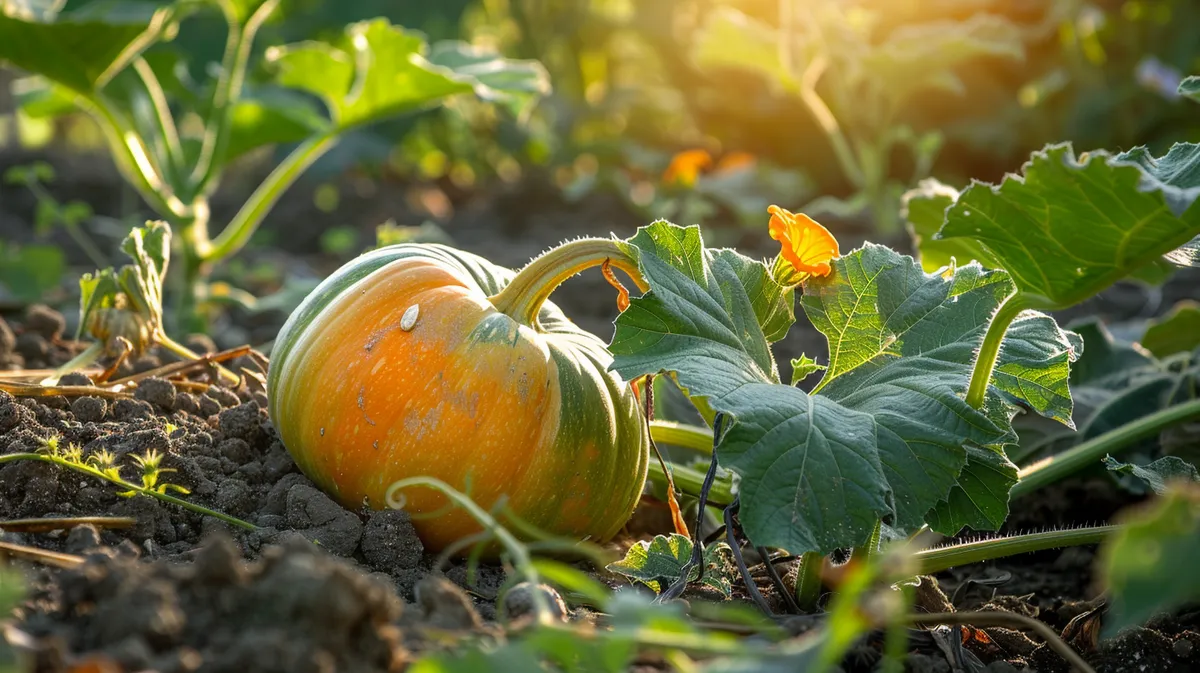
Pumpkin is ready when the skin is hard and the stem dries and cracks slightly. Colour is important. Queensland Blue turns blue-grey. Butternut turns tan. Jap pumpkins turn deep orange. Most pumpkins are ready 100-150 days after planting.
Leave pumpkins on the vine as long as possible. Harvest before the first frost (unlikely in Brisbane but theoretically possible in June). Cut pumpkins with a knife, leaving a 5-10 centimetre stem attached. Don't use the stem as a handle when harvesting; it will snap off and the pumpkin will rot quickly.
Cure harvested pumpkins by storing them in a warm, dry place (like a shed) for 7-10 days. This hardens the skin further and heals any small cuts. After curing, store in a cool, dark place. Properly cured pumpkins last months.
Harvesting Zucchini
Zucchini is best picked young, around 15-20 centimetres long. At this size, the flesh is tender and flavour is delicate. Large zucchini are edible but can be watery and have larger seeds.
Pick zucchini every 2-3 days. Regular harvesting stimulates more flowering and fruiting. If you miss fruit and let it mature fully, the plant often stops producing new flowers. This is the plant's way of completing its reproductive cycle. Keep picking to keep it in production mode.
Don't twist zucchini off the vine. Cut with a knife or secateurs to avoid damaging the plant.
Dealing with Fruit Fly
Queensland fruit fly occasionally attacks pumpkin and zucchini, though it prefers tomato and capsicum. If fruit fly pressure is high, monitor developing fruits. Remove any infested fruit immediately. The same exclusion netting and baiting strategies used for tomatoes work for pumpkin and zucchini if populations are severe.
Early sowing (September to October) helps because fruit develops before peak fly season. By January and February when flies are at peak, your pumpkins and zucchini are mature or nearing maturity and less vulnerable.
End-of-Season Management
Pumpkin and zucchini slow down in May and June as temperatures drop and days shorten. By June, growth has mostly stopped. Plants often get tired, disease pressure increases, and yields drop. This is when to pull them out and prepare the bed for winter crops.
Cut plants at the base and remove them. Don't compost diseased material (powdery mildew infected foliage). Put disease-free plant matter in the compost. Dig in compost and aged manure to prepare for winter brassicas or other cool-season crops.
Frequently Asked Questions
When do I plant pumpkin and zucchini in SEQ?
Sow pumpkin and zucchini seeds directly in the soil from September to December in SEQ. September and October are ideal. Seeds germinate quickly in warm soil. Pumpkin takes 100-150 days to maturity depending on variety, so September or October planting gives harvest in January to April. Zucchini is faster, reaching harvest 50-70 days after planting. December planting still works for zucchini but risks cutting into the fruit fly season.
Why do my pumpkin and zucchini flowers drop without making fruit?
Flowers drop due to poor pollination in humid conditions. Brisbane's humidity interferes with pollination. Hand pollination fixes this. Use a small brush or cotton bud to transfer pollen from male flowers (flowers without a small fruit behind them) to female flowers (flowers with a small fruit/ovary at the base). Do this in early morning when flowers are open. Even one successful hand pollination per plant produces multiple fruits.
How do I prevent powdery mildew on pumpkin and zucchini?
Powdery mildew attacks pumpkin and zucchini foliage in warm, humid weather. Improve air circulation by removing lower leaves and spacing plants well apart. Water at the base, not overhead. Apply sulphur spray at the first sign of white coating on leaves. Organic sulphur dust or liquid sulphur both work. Apply every 7-10 days. Neem oil also helps. Some varieties show better resistance than others. Prevent overfeeding nitrogen, which promotes lush foliage that's more susceptible.
Plant profiles
Each profile has sowing times for your region, companion plants and common pests.
Free Monthly Planting Calendar
Get a personalised email each month with what to plant, seasonal tips, and harvest reminders for your region.
We send one email per month. Unsubscribe any time.