
Growing Herbs on a Brisbane Balcony
Fresh herbs in containers, tailored to your north or south-facing outdoor space
A balcony is the perfect place to grow fresh herbs. You don't need garden beds or soil digging. You don't need much space. Pots sit on your balcony railing or corner, and you're harvesting basil, mint, and coriander for dinner on the same day. The trick is choosing herbs that tolerate container life and understanding which balcony direction suits which plant.
Brisbane balconies come in two types: north-facing and south-facing. North-facing balconies get hot afternoon sun and little relief from heat. South-facing balconies stay cool with indirect light and shade in the afternoon. Each direction favours different herbs.
Container gardening also means you control the soil quality, the watering, and the nutrients in a way that's harder in the ground. This advantage becomes obvious when you grow herbs like coriander that bolt if conditions aren't perfect.
The Best Herbs for Brisbane Balcony Containers
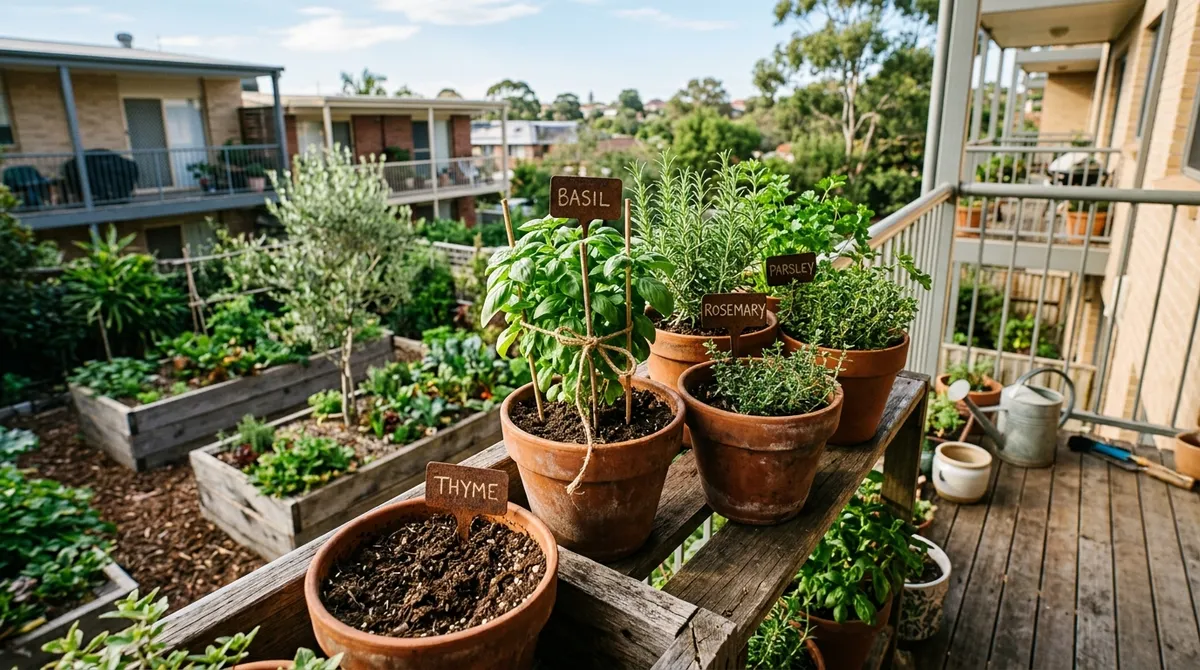
Basil is the obvious choice. Use Thai Sweet Basil from October to April (it handles the humidity), and Italian basil from February to September (it prefers cooler months). Both grow fast in warm, moist soil with at least 6 hours of sun. A 20cm pot per plant is enough. Water daily in summer. Place on a north-facing balcony where it gets maximum warmth.
Mint is nearly impossible to kill. It thrives in containers and actually prefers pots because it stops trying to take over your entire garden. Keep mint moist but not waterlogged. Pinch the tips regularly to keep it bushy. One 20cm pot of mint will feed a household. Mint tolerates both hot and cool balconies, though it prefers afternoon shade in Brisbane's hottest months.
Chives grow anywhere, in any pot size from 15cm upwards. They tolerate full sun and part shade equally. Plant chives year-round, harvest by cutting the outer leaves when they reach 15 centimetres tall. Chives flower in spring and early summer. The flowers are edible and attract pollinators. One pot lasts years if you keep harvesting.
Parsley likes containers and grows well on a south-facing balcony where it doesn't get afternoon scorching. It needs consistent moisture and will bolt if dried out or exposed to prolonged heat. Grow parsley from March to October. A 20cm pot suits one plant. Harvest outer stems first to encourage bushiness.
Coriander is trickier but worth the effort. It bolts instantly in summer heat, so grow it only from March to September. Plant on a south-facing balcony where it gets morning sun and afternoon shade. Water consistently. The moment the temperature hits 25 degrees regularly, coriander will flower. Once it flowers, leaf quality drops fast. Harvest constantly and pinch off buds the instant they appear.
Rosemary thrives in containers on a north-facing balcony. It's drought-tolerant once established and actually prefers pots to garden beds because drainage is excellent. It takes longer to get going than basil or mint, but one rosemary plant lasts years. Use a 20-25cm pot and don't overwater. Harvest from the tips regularly.
Thyme is another perennial that loves container life. It's small, slow-growing, and handles drought. A 15cm pot is fine. Thyme tolerates full sun and heat. It's happy on a north-facing balcony year-round. Pinch tips to keep it tidy and productive.
Vietnamese Mint is a tropical herb that handles Brisbane's humidity and heat perfectly. It grows vigorously in containers and produces flavour-packed leaves year-round. Plant Vietnamese mint on a north-facing balcony in a pot at least 20cm. It needs consistent moisture in summer. Pinch the tips regularly to keep the plant bushy. The flavour is complex, with peppery and slightly sour notes that work beautifully in Asian dishes.
Container Sizes and Pot Choices
Most single herbs need pots 20-30 centimetres in diameter. That's roughly a 10-litre pot. One herb per pot is the safe approach. You avoid competition for water and nutrients, and you can tailor the watering schedule to each plant's needs.
Mint is the exception. You can plant mint alone in a pot and it will spread within the pot without escaping. Parsley and coriander benefit from solo pots too because they have different watering needs from heat-loving basil.
Rosemary and thyme can start in 15cm pots and graduate to 25cm as they grow. Basil and mint can handle smaller pots initially, but they'll be more productive in 25-30cm pots where they have more room for roots.
Use terracotta, plastic, or fabric pots. Terracotta looks beautiful and breathes well, but it dries out faster in Brisbane's heat. Plastic holds moisture better. Fabric pots are excellent for drainage. Whatever you choose, always use pots with drainage holes in the base.
Potting Mix and Soil
Use quality potting mix, not garden soil. Potting mix is light, drains well, and doesn't compact in pots the way garden soil does. Buy a mix labelled for vegetables or general purpose containers. Add a handful of compost to the mix for fertility. You can also add perlite or coarse sand to improve drainage if you're growing plants like rosemary and thyme that hate wet feet.
Top-dress pots with a layer of compost or mulch in spring to add slow-release nutrients. In summer, you may need to feed once or twice with a dilute liquid fertiliser because potted herbs drain fast and nutrients leach out. Follow the product instructions carefully.
Watering in Brisbane Heat
This is where container growing shines in SEQ. You water pots on demand. Push your finger into the soil. If it's moist, don't water. If it's dry at the base of the pot, water until it drains from the bottom. Basil and mint need consistent moisture and will wilt dramatically if allowed to dry out. Rosemary and thyme prefer drier conditions.
In January and February, check pots daily. A 20cm pot can dry out in a single hot day if exposed to full sun. Morning watering is best. Water the soil, not the foliage, to reduce disease risk.
If you go away, move pots to the shadiest part of your balcony and water well before you leave. Group pots together so they shade each other and reduce evaporation. Clay pots dry faster, so these are the ones to move to shade first.
North-Facing Balconies: Heat and Sun
North-facing Brisbane balconies are hot. They get direct afternoon sun and heat radiating off walls and railings. Pots heat up fast. Soil dries quickly.
Herbs that thrive on north-facing balconies include Thai basil, mint, chives, rosemary, thyme, and Vietnamese mint. These are heat-lovers that actually produce better with intensity. Italian basil tolerates north-facing exposure in autumn and winter but needs afternoon shade in summer.
Parsley and coriander struggle on north-facing balconies year-round. They bolt faster or get stressed by the heat. If you have only a north-facing balcony, accept that parsley and coriander are seasonal crops you'll grow on a south-facing balcony or not at all.
South-Facing Balconies: Shade and Cool
South-facing Brisbane balconies stay cool with morning or afternoon light and good afternoon shade. They're perfect for herbs that prefer cooler conditions or consistent moisture.
Parsley and coriander absolutely thrive on south-facing balconies where they don't bake. Basil also produces well on south-facing exposures. Italian basil is actually happier here than on a north-facing balcony because it avoids heat stress.
All the perennials like rosemary, thyme, and chives grow fine on south-facing balconies too. Mint certainly does. The only downside is slower growth in cooler months, but that's actually helpful for herbs like coriander that you want to stay productive longer without bolting.
Grouping by Water Needs
One practical tip is to group pots by watering needs. Basil and mint in one spot (they need consistent moisture). Rosemary and thyme in another (they prefer drier conditions between watering). This way you're not watering thyme when it prefers to dry out, and you're not forgetting basil when it's desperately thirsty.
This grouping also helps with space management. All your thirsty herbs sit in one shadier corner where they dry out slower. Drought-tolerant herbs sit in the hottest, sunniest corner.
Keeping Coriander from Bolting
This deserves emphasis because coriander bolting is the most common balcony herb failure. Coriander bolts when three conditions align: heat above 25 degrees, strong sun, and plant maturity (4-6 weeks after planting).
Grow coriander only from March to September when temperatures stay under 25 degrees most days. Plant on a south-facing balcony where it gets afternoon shade. Use a 20cm pot with good-quality potting mix. Water consistently. Start harvesting as soon as leaves reach harvestable size. The instant you see flower buds forming, pinch them off. Pinch the growing tips to encourage side branching instead of the vertical flowering stem.
Even with perfect care, Brisbane coriander will eventually bolt in May and June as the plant matures. This is normal. Accept a 6-8 week harvest window and replant in autumn.
Seasonal Rotation
Your balcony herb garden works best with seasonal rotation. From March to September, grow Italian basil, parsley, and coriander on your south-facing balcony. From September to April, switch to Thai basil, Vietnamese mint, and chives. Mint, rosemary, and thyme are year-round performers on any balcony.
This rotation keeps your balcony productive year-round. You're always growing herbs suited to the current season's temperature and light.
Frequently Asked Questions
Which herbs grow best in containers on Brisbane balconies?
Basil, mint, chives, parsley, coriander, rosemary, thyme, and Vietnamese mint all thrive in containers on Brisbane balconies. Basil and mint prefer warmer months. Parsley and coriander tolerate both warm and cool seasons but bolt quickly in heat. Rosemary, thyme, and chives are year-round performers. Vietnamese mint is tropical and handles Brisbane humidity well.
How do I keep coriander from bolting on my balcony?
Coriander bolts (flowers and goes to seed) when temperatures exceed 25 degrees consistently. Grow coriander in late autumn, winter, and early spring. Place pots on a south-facing balcony where they get afternoon shade. Keep the soil consistently moist. Harvest leaves regularly and pinch off any flower buds as soon as they appear. In summer, coriander will bolt regardless, so switch to cilantro seed or grow Vietnamese mint instead.
What size pots do I need for balcony herbs?
Use 20-30cm diameter pots for single herb plants like basil, chives, and parsley. Mint and coriander need similar sizes. Rosemary and thyme can handle smaller 15cm pots initially but will need 25-30cm as they grow. Use quality potting mix with good drainage. Always use pots with drainage holes. Group pots by water needs so you can tailor watering to each plant's requirements.
Free Monthly Planting Calendar
Get a personalised email each month with what to plant, seasonal tips, and harvest reminders for your region.
We send one email per month. Unsubscribe any time.