
Growing Ginger and Turmeric in SEQ
Buderim is Australia's ginger capital. Learn to grow fresh spices that cost a fraction of supermarket prices.
Ginger and turmeric both thrive in South East Queensland. The climate is perfect. The humidity that stresses cool-season vegetables actually helps these warm-season spices flourish. One rhizome yields half a kilogram to a kilogram of fresh spice. Fresh ginger and turmeric are exponentially better than dried versions from supermarket shelves, and growing them costs almost nothing once you've sourced the initial rhizomes.
The routine is simple: plant rhizomes in spring, let them grow through summer, harvest when the foliage dies back in late autumn. Both follow identical timing and similar growing requirements.
🌱 Plants in this guide: Ginger and Turmeric. Each plant profile has sowing times for your region, companion plants and common pests.
Planting Ginger and Turmeric Rhizomes
Plant ginger and turmeric rhizomes in spring, from August to October in Brisbane. This timing is critical. Cool autumn soil lets rhizomes establish roots slowly without rotting. By the time summer heat arrives, they've got strong roots and are ready to grow fast.
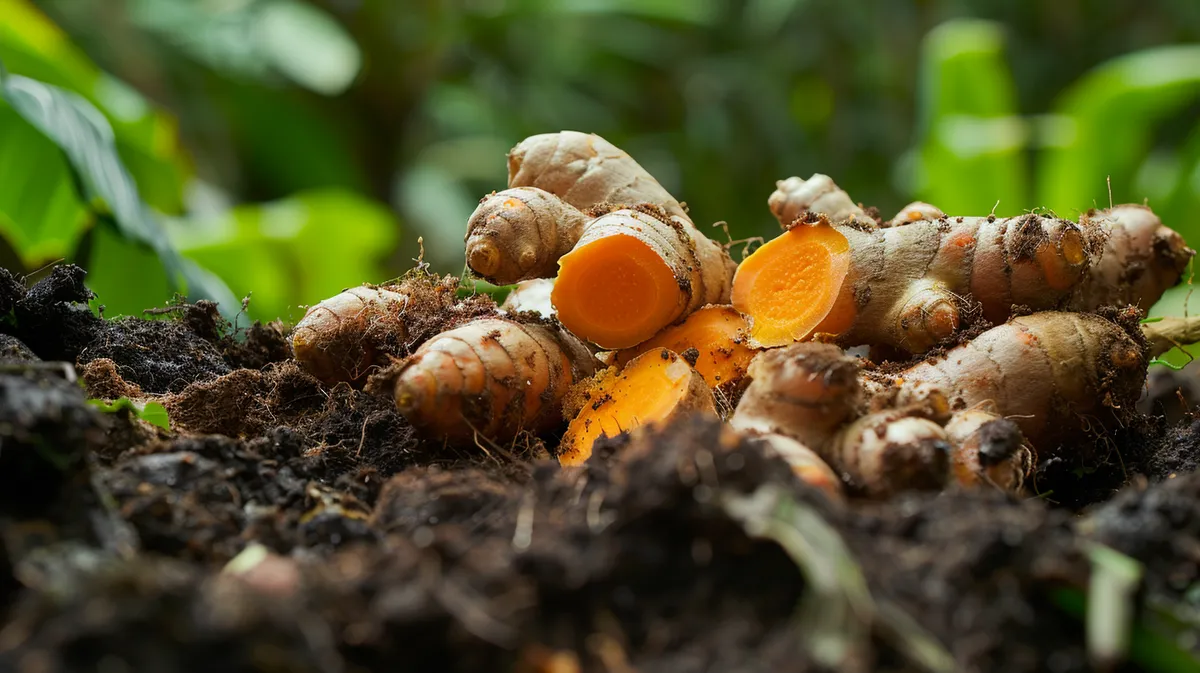
Buy rhizomes with visible eyes (growth nodes). They should be firm and plump, not soft or shrivelled. For ginger, the Queensland Yellow or Buderim strain is the commercial standard bred for SEQ. It produces fat, pale-yellow rhizomes with mild to hot intensity. For turmeric, most rhizomes available to home growers are the standard culinary type. You might find specialty varieties like Japanese Pink turmeric, which is grown for the edible flower buds.
Plant rhizomes 5 centimetres deep with the eye pointed upward. Space them 25 to 30 centimetres apart if planting multiple rhizomes. They'll develop into individual plants with substantial foliage by mid-summer.
Site Selection and Soil Preparation
Both ginger and turmeric prefer filtered light under trees rather than full scorching sun. This is perfect for SEQ gardens because it matches the natural forest understory conditions they evolved in. Plant them under fruit trees, use shade cloth in the hottest parts of your garden, or choose a position that gets morning sun and afternoon shade.
Prepare soil with heavy organic matter. Dig in compost or aged manure to a depth of 15 centimetres. These plants love rich, moist soil. The more compost you can work in, the bigger your rhizomes will grow. Turmeric is particularly responsive to soil improvement.
Drainage must be good. If your soil is heavy clay, consider building a raised bed or mound. Ginger and turmeric will rot in waterlogged soil, especially over winter when watering needs are lower.
Watering and Feeding Through Growing Season
Ginger and turmeric are water-hungry plants. They love consistent moisture, especially from September through January when they're putting on active growth. Water deeply at the base of plants, aiming for soil that's moist but not waterlogged.
Feed monthly through growing season with a balanced fertiliser. A slow-release granule or liquid feed works equally well. Ginger and turmeric respond well to feeding and will reward you with bigger rhizomes if they're well-nourished. By July, as foliage starts looking tired and ready to die back, stop feeding. The plant is signalling that it's approaching harvest.
In a dry spring, new rhizomes might need supplementary watering. Check soil moisture by digging down a few centimetres. If it's dusty and dry, water. If it's cool and moist, you're good.
Harvest Timing and Storage
Harvest happens when the foliage dies back. In SEQ, this typically occurs between April and June, roughly 270 days after planting in August. The leaves turn yellow and start to collapse. This is the signal that the rhizomes are mature.
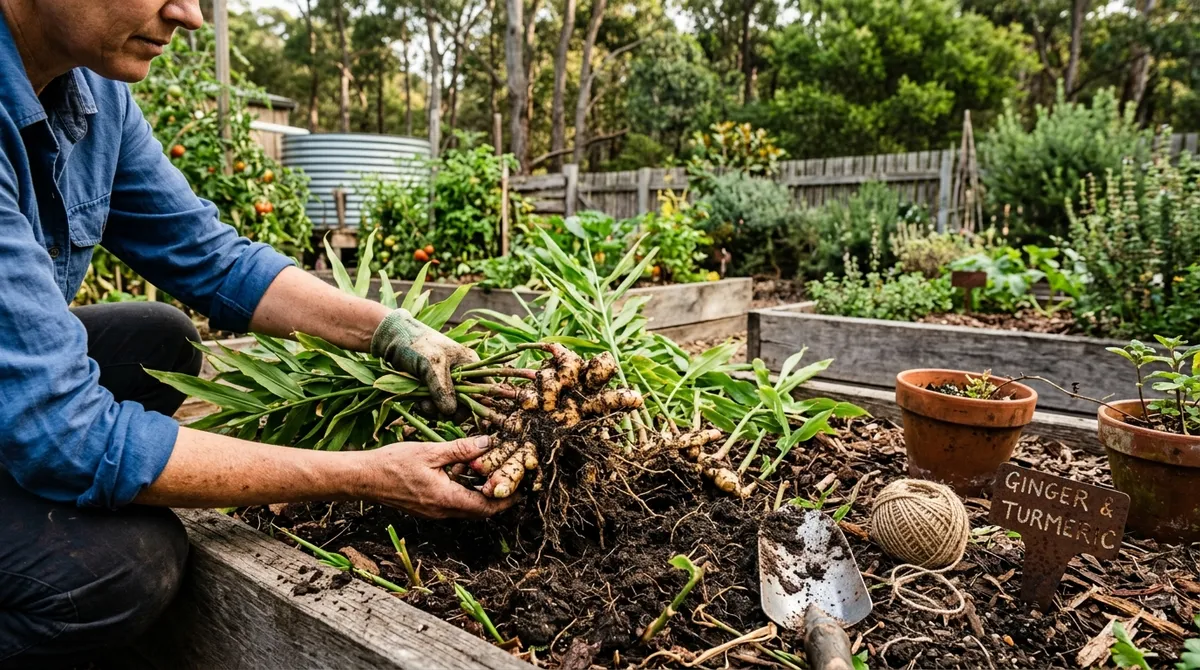
Carefully dig around the base of the plant. Use a garden fork to loosen soil, then lift the whole plant. Ginger and turmeric rhizomes are bulky and cluster around the original planted piece. Separate them gently. Trim off the foliage and soil.
Store fresh ginger and turmeric in a cool, dark place. A paper bag in the pantry works, or a cool shelf away from direct sunlight. Fresh rhizomes keep for weeks, sometimes months, if stored properly. If you get a big harvest, slice rhizomes and dry them in a warm place, or freeze them in portions.
The quality of fresh home-grown spice is remarkable. Fresh ginger has a hot, clean bite. Fresh turmeric is earthy and intense. Grinding dried home-grown rhizomes into powder transforms your cooking.
Container Growing Ginger and Turmeric
Both spices grow brilliantly in containers. Use a large pot, 20 to 25 litres. Fill it with quality potting mix. Plant one rhizome per container, 5 centimetres deep. Position containers in filtered light under a tree or behind a structure that provides afternoon shade.
Container plants need more frequent watering than in-ground plants, especially in warm months. Check soil moisture every few days and water when the top 5 centimetres feel dry. The advantage of containers is control. You can move plants into deeper shade during peak summer if needed. You can bring pots inside if pest problems arise.
Container-grown rhizomes may yield slightly less than in-ground plants, but the harvest is still substantial. One container can produce enough fresh ginger or turmeric for months of cooking.
Common Problems and Prevention
Rhizome rot is the main enemy. It happens in waterlogged soil, especially in winter when evaporation is low. Prevent it with good drainage. If you notice soft, mushy rhizomes or a foul smell around the base of plants, stop watering immediately, improve drainage, and remove affected rhizomes.
Soft rot bacteria can establish in warm, wet conditions. There's no chemical control for home growers. Prevention is the only option: ensure good soil drainage, avoid overhead watering, and remove any affected plants promptly.
Pests are rarely a problem for ginger and turmeric in SEQ. Slugs might nibble foliage, but they rarely cause significant damage. Remove slugs manually or use baiting if necessary.
Varieties Beyond Standard Ginger
Japanese Pink turmeric, also called Myoga, is grown for the edible pink flower buds rather than rhizomes. These buds are prized in Japanese cuisine, with a mild, pleasant flavour. Myoga is shade-loving and grows well under fruit trees in SEQ. It's a perennial, so it can stay in the same spot year after year. Plant it once and it will produce buds for decades.
Standard ginger has a few varieties, but the Buderim strain dominates home growing because it's reliable and adapted to SEQ. If you find other varieties at specialist nurseries, the growing method is identical.
Your Ginger and Turmeric Timeline
August to October: Plant rhizomes 5 centimetres deep in prepared soil.
September to December: Foliage emerges and grows rapidly through spring and summer.
January to March: Peak foliage growth and rhizome expansion.
April to June: Foliage dies back, signalling harvest readiness.
June to July: Harvest rhizomes, clean, and store.
Frequently Asked Questions
When should I plant ginger and turmeric in Brisbane?
Plant ginger and turmeric rhizomes in spring (August to October) in Brisbane. This timing lets roots establish before summer warmth arrives. Both plants grow through spring and summer, then the foliage dies back in autumn, signalling harvest time (May to June in SEQ). One rhizome yields 500 grams to 1 kilogram of fresh spice.
Where do I buy ginger and turmeric rhizomes for planting?
Buy ginger rhizomes from Buderim Ginger (the commercial strain bred for SEQ), greengrocer fresh sections in spring, Daleys Fruit nursery, or Bunnings seasonal racks. For turmeric, Daleys Fruit stocks rhizomes. Nurseries often stock rhizomes in August and September. Quality rhizomes have visible eyes (growth nodes) and are firm, not shrivelled or soft.
Can I grow ginger and turmeric in containers in Brisbane?
Yes, both grow brilliantly in containers. Use a large pot (20-25 litres) filled with quality potting mix. Containers let you move plants into afternoon shade during peak summer heat if your garden bakes in full sun. The trade-off is more frequent watering, especially in warm months. Container-grown plants may yield slightly less than in-ground, but handling is easier for smaller spaces.
Plant profiles
Each profile has sowing times for your region, companion plants and common pests.
Free Monthly Planting Calendar
Get a personalised email each month with what to plant, seasonal tips, and harvest reminders for your region.
We send one email per month. Unsubscribe any time.