

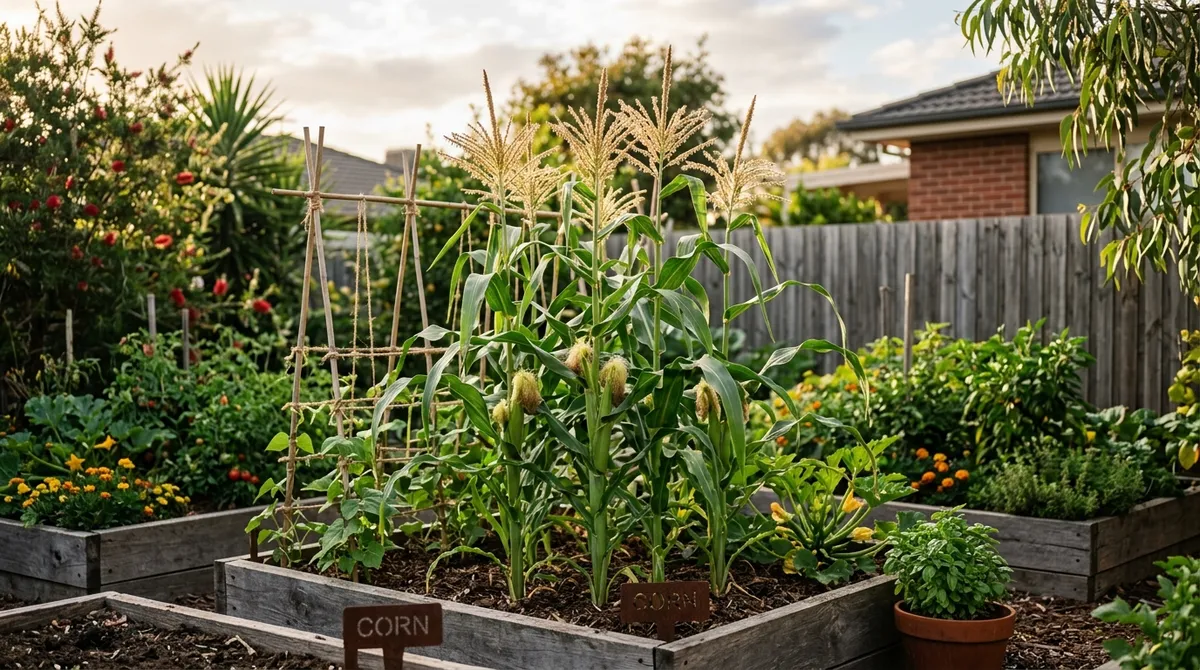
Growing Corn in South East Queensland
Plant in a block for wind pollination. Sow September to January. Grow corn with beans and pumpkin using the Three Sisters method. Harvest at peak sweetness.
Corn thrives in SEQ heat. Brisbane's warm soil and long, hot summers are precisely what corn wants. Unlike cool-climate gardeners who must start seeds indoors and gamble on frost, SEQ growers simply sow directly into warm soil and watch them explode. A single corn plant produces 1-3 ears of sweet, tender corn that never matches supermarket staleness. The challenge isn't growing corn in heat, it's pollinating it correctly and fighting corn earworm. This guide covers block planting for pollination, the Three Sisters technique (corn, beans, pumpkin), and harvesting at peak sweetness.
🌱 Plant profile: Sweet Corn, with sowing times for your region, companion plants and common pests.
Timing: September to January Sowing Window
Corn needs warm soil to germinate and grow fast. Sow too early (before September), soil is cool and seeds rot. Sow too late (after January), corn sits in cooler months fighting slow growth and poor pollination.
Sowing window: September (spring) through January (early summer). September-sown corn flowers in December and harvests in January to February. November-sown corn flowers in February and harvests in March to April. Choose either window based on your schedule.
Why the window works: September soil is warming toward summer heat (18 to 25°C). Seeds germinate in 7 to 10 days. Plants grow quickly through warming spring. November and December bring peak temperature and day length, triggering heavy flowering and ear development. Harvest in January to February gives you peak sweetness before cooler months slow sugar production.
Avoid late January to August: Soil cools, growth slows, day length shortens, and pollination becomes unreliable. Crops planted after January will sit for months before reaching flowering stage.
Germination temperature: Corn germinates best in 18-32°C soil. Spring and early summer provide this range consistently. Direct sow into garden beds (no indoor starting needed, unlike cool climates). Seeds planted 3cm deep, 15cm apart.
Block Planting for Reliable Pollination
Corn is wind-pollinated. Male flowers (tassels) sit on top of the plant and shed pollen. Female flowers (silks) emerge from the side of the ear. Pollen must land on silks for the ear to develop. Single rows or scattered plants rarely get pollinated because wind carries pollen away without hitting silks.
Block planting works. Plant corn in a square block of at least 4 rows by 4 rows (minimum 16 plants). Pollen released in the block stays within the block and lands on silks. Wind circulates through the block instead of blowing pollen away. A 4x4 block reliably pollinates. Larger blocks (6x6 or 8x8) pollinate even better.
How to set up a corn block: Mark out a square or rectangle. Space plants 30cm apart in rows, with 30cm between rows. This is tight but promotes pollination. Prepare soil heavily with manure or compost before planting. Corn is a hungry feeder and strips nitrogen fast.
Hand pollination: If wind is calm when silks emerge, hand-shake plants gently to distribute pollen. Shake from 8-10am when pollen is most viable. Don't shake hard or you'll damage plants. A light vibration dislodges pollen onto nearby silks.
Spacing and Density
Corn planted at 30cm spacing within a block maximizes pollination. Wider spacing (45cm+) reduces pollination success. Cramped spacing also increases fungal disease by reducing air flow.
Spacing strategy: 30cm between plants, 30cm between rows. This is the sweet spot for SEQ. Rows can run north-south or east-west, but north-south orientation lets morning sun hit all plants equally.
Block size minimums: 4x4 block (16 plants). Smaller blocks pollinate poorly. Larger blocks (6x6 or 8x8) use more space but produce more corn and pollinate reliably.
The Three Sisters: Corn, Beans, and Pumpkin
Native Americans grew corn, beans, and pumpkins together. Corn provides a trellis for beans to climb. Beans fix nitrogen in soil, feeding corn's heavy nitrogen appetite. Pumpkin vines shade the soil, keeping it cool and moist, and crowd out weeds. The three crops support each other.
How to plant the Three Sisters: Plant corn first (as described above). Let corn grow 30cm tall, then plant bean seeds 10cm away from the base of each corn plant (shallow 2cm planting depth). Beans climb the corn stalk naturally. Once beans and corn are established (4 weeks), plant pumpkin seeds 60cm away from corn in the gaps between plants. Pumpkin vines sprawl across the space, eventually shading everything.
Variety selection: Use climbing beans (not dwarf beans) like pole beans or runner beans. They climb fast and vigorously. Use early-maturing pumpkin varieties (90-110 days) like Queensland Blue or Butternut so they finish before cool months slow ripening. Choose corn varieties that are disease-resistant (pumpkin and beans increase humidity).
Advantages in SEQ: Beans fix nitrogen, reducing feeding needs for corn. Pumpkin vines shade soil during peak summer heat, keeping soil cooler and requiring less water. All three crops produce heavily. You harvest corn ears, bean pods, and pumpkins from one block. One block feeds a family for months.
Challenges: The combined roots, vines, and foliage create high humidity and reduce air flow. Fungal diseases (like rust on beans) increase. Plant with 30-50cm gaps for air circulation. Avoid overhead watering. Water at soil level in early morning.
Variety Selection for SEQ Heat
Best sweet corn varieties for Brisbane: Honey and Cream (bicolour kernels, classic sweet, reliable in heat). True Gold (old-fashioned sweetness, more corn flavour than modern sugary types). Popcorn varieties like Strawberry Popcorn (small cobs that dry down for popcorn, ornamental red cobs). All grow well in SEQ heat.
Where to buy: Eden Seeds, Diggers, Mr Fothergill's, Green Harvest. All ship seed to Australia.
Avoid cold-climate varieties: Many supermarket corn varieties were bred for cool climates (Victoria, Tasmania). They don't set ears reliably in SEQ heat. Choose Australian-adapted varieties or new heat-tolerant hybrids.
Feeding: Corn Is Hungry
Corn demands nitrogen. A single corn plant produces 1-3 ears plus 8-10 leaves and a thick stalk. All that biomass requires heavy feeding.
Pre-planting: Dig 5-10cm of well-rotted compost or aged manure into the soil before planting. This supplies nitrogen for the first 6 weeks.
Side feeding: When corn is 30cm tall, spread a ring of compost or balanced fertiliser around each plant (10cm clear of stem). At 60cm height, repeat. This top-up feeding supports ear development.
Watering: Feed and water go together. Corn needs soil consistently moist (not soggy). Inconsistent watering stresses plants and reduces ear development. Mulch soil with 5cm of straw to retain moisture. In hot spells, water deeply twice weekly.
Common Problems and Solutions
Poor pollination (big gaps between kernels on ears): Usually caused by single-row planting or wide spacing. Plant in a block of at least 4x4. Shake plants gently during calm weather when silks emerge. Ensure spacing is 30cm or less.
Corn earworm (larvae inside the ear): The most common problem in SEQ. Earworm moths lay eggs on silks. Larvae burrow into the ear tip, tunneling down and eating kernels. Once inside, sprays don't reach them. Prevention is critical: as soon as ears emerge (thumbnail size), slip each ear into a paper bag and tie the bag closed above the ear. Check bags weekly for holes and larvae. Remove any infested ears immediately. This single technique prevents 95% of earworm damage.
Heliothis (another caterpillar): Same damage and prevention as earworm. Bagging works for both. Growing corn in dense blocks also helps because natural parasitic wasps concentrate in dense plantings and control populations naturally.
Rust or fungal diseases: High humidity from pumpkin and bean foliage increases fungal risk. Avoid overhead watering. Water at soil level in early morning. Improve air circulation by thinning plants if necessary. Remove and destroy any diseased leaves immediately.
Splitting or ratting: Birds and rats sometimes attack mature ears. Netting over ears or bagging protects. Remove bags only at harvest.
Harvesting at Peak Sweetness
Corn sweetness decreases after harvest. Sugar converts to starch rapidly. The longest you can wait from harvest to eating is 4 hours before noticeable sweetness loss. Ideally, harvest and cook immediately.
When to harvest: An ear is ready when silks turn brown and dry, and the ear feels full and firm when gently squeezed. Kernels should be plump and release a milky liquid when punctured with a fingernail. Harvest too early (kernels still watery) and the corn is starchy. Harvest too late (silks fully brown, kernels hard) and corn is mealy.
How to harvest: Grip the ear firmly and twist sharply while pulling downward. The ear breaks from the stalk. Handle gently to avoid damaging the plant.
Timing: Harvest in early morning before heat peaks. Ears are crispest and sweetest when cool.
Storage: Eat immediately if possible. If you must store, place unhusked ears in a sealed container in the coldest part of your fridge. They keep 2-3 days maximum before starch development noticeably increases.
Why SEQ's Warm Soil Gives Corn a Great Start
Southern gardeners start corn indoors in spring and transplant outside weeks later, risking transplant shock. SEQ growers direct sow into warm soil and skip that risk entirely. Warm soil also means faster germination (7-10 days vs 14-21 days), faster growth, and earlier harvest. By the time southern corn is flowering, SEQ corn is harvest-ready. This timing advantage makes growing corn in Brisbane relatively easy.
Frequently Asked Questions
Why is my corn not pollinating, and why do I get ears with big gaps between kernels?
Corn relies on wind pollination. Pollen from male tassels (top) falls on female silks (hanging from ear). Poor pollination happens when you plant corn in a single row, so wind carries pollen away without hitting silks. Plant in a block of at least 4 rows x 4 rows (16 plants minimum) so wind carries pollen within the block where silks catch it. Silks that emerge during wind-free calm days also don't pollinate well. Shake the plants gently by hand when silks emerge if wind is calm. Overcrowding also reduces pollination, so give each plant 30cm spacing.
What's eating my corn, and are those larvae inside the cob corn earworm?
Corn earworm is the most common corn pest in Brisbane. The larva (caterpillar) enters the tip of the ear where silks emerge, then tunnels down into the cob eating kernels. Once inside, spraying doesn't reach it. The best prevention is to cover ears with paper bags as soon as they appear (thumbnail size). Seal the bag above the ear so larvae cannot enter. Check bags weekly for holes and earworm frass (droppings). Remove damaged ears immediately. Heliothis also attacks corn. Both require bagging for reliable protection. Growing corn blocks also helps, natural enemies (parasitic wasps) concentrate in dense plantings.
Is the Three Sisters method worth the complexity, or should I just grow corn alone?
The Three Sisters method works beautifully in SEQ and is worth trying. Beans fix nitrogen, reducing your feeding input. Pumpkin shades the soil and saves water in summer. You harvest three crops from one block. However, if you prefer simplicity, growing corn alone in a block works fine. You'll need more compost and fertiliser to feed corn without beans, and the soil will get hotter and drier without pumpkin shade. Start with corn alone to learn pollination and earworm management, then experiment with Three Sisters in year two once you're confident.
Plant profile
The sweet corn profile has sowing times for your region, companion plants and common pests.
Free Monthly Planting Calendar
Get a personalised email each month with what to plant, seasonal tips, and harvest reminders for your region.
We send one email per month. Unsubscribe any time.