
Fruit Fly Management in Brisbane: Control Queensland Fruit Fly
The #1 pest in SEQ vegetable gardens, and the practical strategies that actually work
Queensland fruit fly is not a minor garden nuisance. It's the dominant limitation on growing warm-season vegetables in Brisbane. A single female can lay hundreds of eggs in developing fruit. Maggots tunnel through tomatoes, capsicums, eggplants, and cucumbers, making them unsellable and inedible. Infected fruit falls from the plant and spreads the pest to neighbours' gardens and the broader region.
Unlike some pests that can be managed with sprays or resistant varieties, Queensland fruit fly requires a combination of tactics. The best Brisbane gardeners use exclusion, monitoring, baiting, and variety selection together. Understanding the fly's lifecycle and seasonal patterns lets you match your effort to the threat level.
Queensland Fruit Fly: The Lifecycle and Seasonal Pattern
Queensland fruit fly (Bactrocera tryoni) has a simple lifecycle. An adult female lays eggs in ripening or ripe fruit. The eggs hatch into maggots that feed inside the fruit for about a week. The maggots drop to the ground, pupate in the soil, and emerge as adults about a week later. The whole cycle takes roughly 3 weeks in warm weather.
This rapid reproduction means populations explode in heat. Brisbane temperatures above 25 degrees favour the pest. November through March are the dangerous months. December, January, February, and March see peak populations. October and April are shoulder months with rising or falling populations. May through September is the window of opportunity for cool-season growing.
Winter temperatures in Brisbane (June to August) drop too low for Queensland fruit fly to breed efficiently. Populations crash naturally. This is why winter is the best time to grow vulnerable crops like tomatoes, capsicums, and eggplants without fruit fly protection.
Not sure whether the fly on your tomatoes is a fruit fly? Hoverflies and wasps are easy to mistake for it. Compare them side by side, with real photos, in our Good Bugs vs Bad Bugs photo guide.
Which Crops Are Most Vulnerable
Tomato, capsicum, and eggplant are the holy trinity of Queensland fruit fly targets. Almost any home gardener growing these in November through March will have fruit fly damage without protection. Cucumber and zucchini are also heavily attacked. Stone fruits like mango and peach suffer severe damage. Citrus can be affected but usually tolerates some damage in home gardens.
Beans are occasionally affected but much less vulnerable than solanums. Leafy greens and root vegetables are essentially safe. Brassicas and cruciferous crops show little to no fruit fly activity. This is one reason why winter crops are so reliable in SEQ.
The vulnerability is not about the plant itself but about the fruit. Fruit fly needs soft, ripening fruit to penetrate. Early-stage green fruit is often safe. Mature, soft fruit is always at risk.
Exclusion Netting: The Most Effective Tactic
Exclusion netting is the single most effective control method. The principle is simple: prevent adult females from reaching fruit to lay eggs. If flies can't lay eggs, there's no damage.
Use fine mesh netting with holes smaller than 1mm. Standard mosquito netting works well. Drape the netting over plants during fruit development. For tomatoes and capsicums, start netting in October when flower buds appear. For cucumbers and zucchini, net as soon as flowers open. The goal is to have netting in place before the first fruit matures.
Critical detail: seal the netting at the base of the plant and around any support stakes. Flies are excellent at finding gaps. If the netting touches fruit, a fly can still lay eggs through the mesh, so ensure gaps between netting and foliage. Pull the netting tight and anchor it with pegs or weights.
Netting stays in place until you've finished harvesting. Remove it in April or May when fruit fly populations drop. Reuse netting from year to year. High-quality netting lasts 3-5 seasons.
Netting has downsides. It reduces light penetration slightly and makes harvesting slower. In hot weather, sealed netting can trap heat and cause stress. But for guaranteed protection from fruit fly, netting is unbeatable.
Protein Baiting: Reducing Population Pressure
Protein baiting is spraying plants with a yeast-based attractant mixed with an insecticide. The yeast attracts adult flies. The insecticide kills them before they lay eggs. This doesn't provide complete protection like netting but significantly reduces population pressure.
Organic options include spinosad-based sprays. These are derived from soil bacteria and break down quickly. Synthetic options include cyantraniliprole. Both work but have different withholding periods.
Spray every 7-10 days from October through March. Time sprays for dusk when temperatures drop and flies are most active. Thoroughly spray foliage, stems, and fruit. The spray dries and remains effective as an attractant-repellent for several days.
Protein baiting works best as one layer in a multi-layered approach, not as a standalone tactic. Combined with netting on premium fruit and monitoring traps, baiting reduces overall damage to acceptable levels in home gardens.
Monitoring Traps: Know Your Enemy
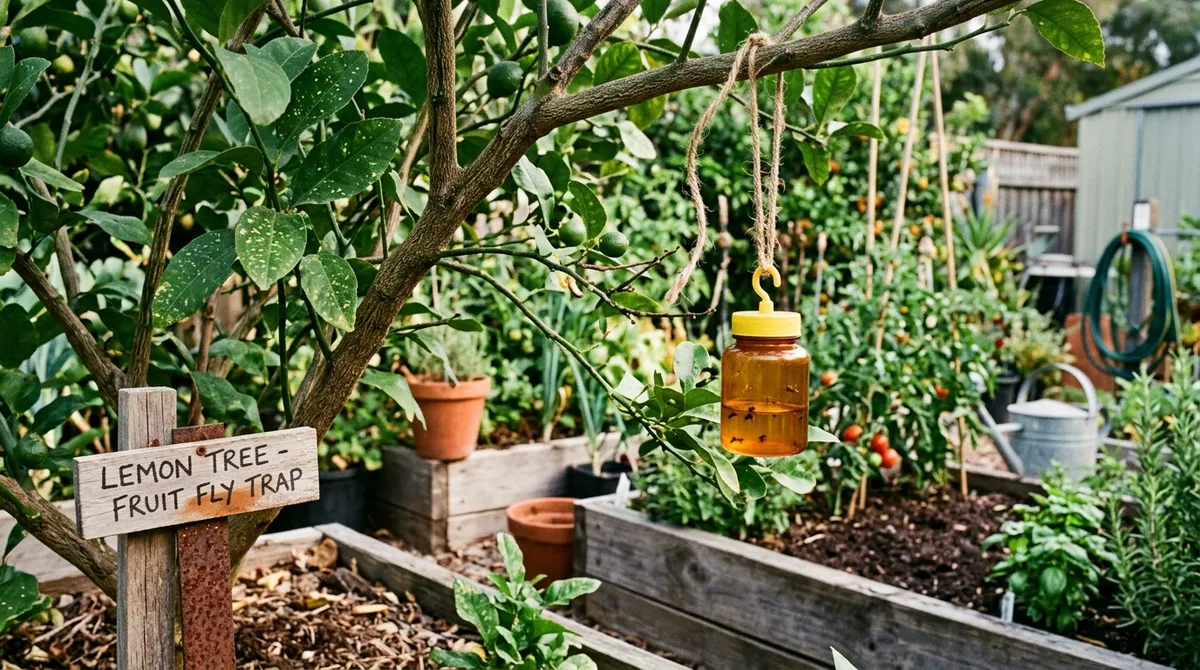
Monitoring traps tell you whether fruit fly is present and at what population level. This information helps you decide how aggressively to respond. Three types of traps exist: cue-lure traps (attract males), methyl eugenol traps (also attract males), and Solarisation traps (visual, attract both sexes but less specific).
Place traps in your garden from September onwards. Check them weekly. A few flies is normal. Dozens of flies in a single trap means populations are rising fast and you should increase baiting or netting immediately. When traps catch zero flies for two weeks in May or June, populations have crashed and you can stop intensive management.
Monitoring traps are inexpensive and provide crucial intelligence. They're worth running throughout the high-risk season.
Removing Infested Fruit
If you see a fruit with tiny puncture marks or notice maggots emerging from fruit, remove that fruit immediately. Place it in a sealed bag and dispose of it in the rubbish, not the compost. Leaving infested fruit on the plant or the ground allows maggots to pupate and create a new generation of flies.
Some gardeners vacuum-collect dropped fruit early in the morning before maggots emerge. This is labour-intensive but effective. The key is not leaving any infested fruit on the ground.
Variety Selection: Some Resistance Exists
No vegetable variety is completely immune to Queensland fruit fly, but some are more tolerant than others. Cherry tomatoes often show less damage than larger slicing tomatoes, possibly because flies prefer larger, softer fruit. Some older tomato varieties like Grosse Lisse are notably tolerant.
Capsicum varieties vary in vulnerability. Asian varieties sometimes tolerate attack better than large bell peppers, though this varies. Test different varieties in your garden and note which perform best under fruit fly pressure.
The truth is that variety selection alone won't solve the problem. You still need netting or aggressive baiting. But starting with tolerant varieties and then adding protection layers gives you the best outcome.
Companion Planting for Pest Deterrence
Some plants repel or confuse pests when planted nearby. Marigolds, nasturtiums, and borage near tomatoes and capsicums may reduce pest pressure slightly. Garlic and chilli planted nearby sometimes help. These are minor effects compared to netting or baiting, but they cost nothing and have other benefits.
The more important companion strategy is crop rotation. Don't plant tomatoes, capsicums, and eggplants in the same spot year after year. Rotate them to different garden beds. This breaks pest cycles and reduces buildup.
Winter Growing: The Fruit Fly-Free Window
This is the key insight for Brisbane gardeners. Grow vulnerable crops in winter instead of summer. Plant tomatoes, capsicums, and eggplants in March or April. They grow through May, June, July, and August when fruit fly is inactive or nearly so. Harvesting peaks in June and July. You've missed the entire December-to-March high-risk period entirely.
Winter-grown tomatoes face zero fruit fly pressure. No netting needed. No baiting needed. The plant grows reliably and produces clean fruit. This is why understanding the fruit fly lifecycle is so valuable. Instead of fighting the pest year-round, you simply avoid the season when it's dangerous.
Integrated Management: Layering Tactics
The most reliable approach combines multiple tactics. For premium fruit like tomatoes and capsicums, use exclusion netting. For surrounding plants, apply protein baiting every 7-10 days. Monitor traps weekly to know when population pressure is rising. Remove any infested fruit immediately. Grow winter crops when possible.
This layered approach is far more effective than relying on any single tactic. Netting might have a tiny gap. Baiting might miss a few flies. But together, they reduce damage to near-zero in home gardens.
Organic vs Chemical Options
Organic-certified baits include spinosad and some botanical oils. These have shorter withholding periods and break down faster than synthetic pesticides. However, they're sometimes less effective against fruit fly and require more frequent application.
Synthetic options like cyantraniliprole are highly effective but have longer withholding periods. Check the label before applying, especially near harvest.
Many successful SEQ gardeners prioritise netting over baiting, which avoids the pesticide question entirely. If you must use baits, read labels carefully and choose products suited to your philosophy.
Frequently Asked Questions
When is Queensland fruit fly worst in Brisbane?
Queensland fruit fly is most active from November through March when temperatures stay warm and host fruits are abundant. It peaks during December, January, February, and March. Populations crash in June, July, and August when cooler temperatures slow reproduction. Brisbane gardens have lowest fruit fly pressure May to September. This is why winter is the ideal season to grow vegetables like tomatoes, capsicums, and eggplants without fruit fly pressure in protected conditions.
What's the best way to stop fruit flies on tomatoes and capsicums?
Exclusion netting is the most effective method. Drape fine netting (1mm holes maximum) over plants during fruit development, especially from October to April. Ensure the netting is sealed at the base so flies can't crawl underneath. Protein baiting with yeast-based sprays reduces populations. Monitor with cue-lure or methyl eugenol traps to track activity. Remove and destroy any infested fruit immediately. Grow tolerant varieties when possible.
Which vegetables are most affected by Queensland fruit fly in SEQ?
Tomato, capsicum, and eggplant are the most vulnerable. Cucumber, zucchini, and stone fruits are also heavily affected. Less commonly damaged crops include beans (occasionally), leafy greens, and root vegetables. Winter crops like brassicas are essentially pest-free. Citrus can be affected but is less critical in home gardens. The severity depends on population pressure, which peaks November to March.
Free Monthly Planting Calendar
Get a personalised email each month with what to plant, seasonal tips, and harvest reminders for your region.
We send one email per month. Unsubscribe any time.