
The Easter Garlic Tradition in SEQ
Plant around Easter, harvest in November, and grow Australian seed garlic that's made for SEQ
There's a tradition in South East Queensland that makes complete sense when you understand the calendar: you plant garlic around Easter, leave it in the ground for six months while you forget about it, and harvest it in November when the bulbs have swollen to full size under the lengthening days of spring.
Easter garlic is reliable, unfussy, and one of the few vegetables you can plant in autumn and largely ignore until winter ends. But there's one non-negotiable rule: you must use proper seed garlic, not supermarket bulbs, and it must be a short-day variety. Australian-grown seed garlic is the foundation of success.
🌱 Plant profile: Garlic, with sowing times for your region, companion plants and common pests.
Why Easter Timing Works in SEQ
Garlic needs a cold period to develop proper bulbs. In southern Australia, this happens naturally in winter. In SEQ, we have mild winters, but they're cold enough. Plant garlic around Easter (late March to early April) and it spends the next few months establishing roots and getting itself oriented to the length of day.
Through winter (May to August), the plant sits there, barely growing, using very little water. It's not demanding. Then as days lengthen in spring, the plant responds to that lengthening day signal and starts bulking up. By November, when you dig your first clove, the bulb is fully formed and ready to harvest.
Plant too late (May or June) and you miss the proper root establishment window. Plant too early (February) and you risk the bulb forming before the cold period, giving you single-clove bulbs instead of properly segmented garlic. Easter is the sweet spot.
Seed Garlic: The Non-Negotiable Starting Point
This is where most first-time garlic growers fail. They take a supermarket bulb, separate the cloves, and plant them expecting a crop. Supermarket garlic is usually imported, often treated with sprouting inhibitors, and almost always the wrong type for SEQ's latitude.
You need Australian-grown seed garlic from a specialist supplier. It's been grown here, so it's adapted to our climate and daylight patterns. It's also certified disease-free, which matters because garlic diseases can persist in soil for years.
Where to Source Seed Garlic
Green Harvest at Willangi, west of Brisbane, sells seed garlic cloves and bulbs specifically selected for SEQ. They also run workshops on planting, so if you're completely new to garlic, it's worth a visit.
Garlic festivals around Australia (usually in spring) have specialist growers selling their own seed garlic. The Tasmanian Garlic Festival in October is too late for Easter planting, but other regions run festivals earlier in the year where you can source seed.
Online suppliers like Diggers' Seeds sometimes have Australian-grown seed garlic available for mail order. Order by August at the latest so it arrives in time for Easter planting.
Seed garlic costs more than a supermarket bulb. A clove of quality seed garlic might cost 50 cents to a dollar, versus a few cents from the produce section. But one quality clove will give you a full bulb. A supermarket clove will give you disappointment.
Short-Day Varieties: The SEQ Requirement
Garlic comes in two main types: long-day varieties, which form bulbs in response to long summer days (14+ hours), and short-day varieties, which form bulbs in response to shorter day lengths (12-13 hours).
SEQ is at 27 degrees south latitude. Our spring days don't get as long as Tasmania or Victoria, so we need short-day varieties. Plant a long-day variety and you'll get leaves and a tiny bulb. Plant a short-day variety and you'll get a proper garlic bulb.
Recommended Varieties
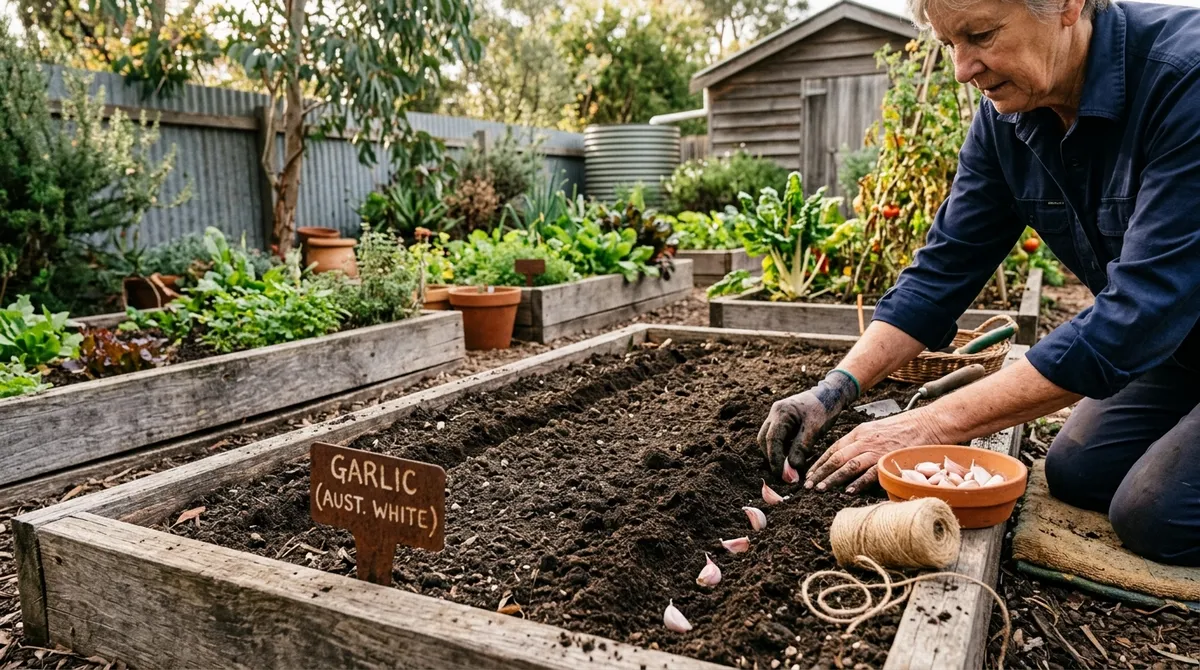
- Australian White: The most reliable short-day variety for SEQ. Stores well, flavour is strong without being harsh, and bulbs are reliable year after year. This is the standard garlic you see in Brisbane farmers markets in November and December.
- Monaro Purple: A red-skinned garlic with purple cloves. Flavour is slightly sweeter than Australian White, and the colour makes it stand out. Also a proper short-day variety. Stores almost as well as Australian White.
- Elephant Garlic: Not true garlic, but a close relative. Much larger cloves, milder flavour, and still responds to SEQ's day length. Great if you want impressive bulbs and don't need the intense garlic bite. Separates into fewer cloves than true garlic.
Avoid imported varieties marketed as "Italian" or "Spanish" garlic unless you know for certain they're short-day types. Avoid anything sold as "hardneck" or "softneck" without knowing the day-length requirement. Ask the supplier directly: "Is this a short-day variety suitable for 27 degrees south?"
Planting Depth and Spacing
Plant individual garlic cloves pointy end up, flat root end down. The clove should sit about 5 centimetres deep, with the tip just below the soil surface. If you plant too shallowly, the clove can frost heave out of the ground in winter. Too deep and it takes forever to sprout.
Space cloves 15 centimetres apart in rows 25 centimetres apart. You're aiming for roughly one plant per 375 square centimetres. Garlic is a small plant with modest space needs, so you can fit quite a few in a small bed.
Prepare soil before planting with compost or well-aged manure worked in a month or two before Easter. Garlic doesn't need heavy feeding, but it appreciates organic matter for moisture retention and slow nutrient release through the growing season.
Water after planting, then let the soil dry out. Through winter and spring, you'll rarely need to water unless you're in a serious dry spell (which is rare in SEQ winter). Garlic in wet soil rots. Garlic with consistent moisture but not waterlogged soil thrives.
The Six-Month Waiting Game
From late March through August, your garlic does almost nothing visible. The leaves might get to 20 centimetres tall and then stop. The plant is establishing roots and acclimatizing to day length. This is completely normal.
Resist the urge to feed it, water it constantly, or fuss over it. Garlic through winter needs almost no attention. Weeding around the plants keeps competitors away, but otherwise, leave it alone.
In September as days lengthen noticeably, growth picks up. The plant sends up leaves, then in October the flower stem (scape) emerges. This is your signal that bulbing is starting.
Scapes and Harvest Readiness
In October, your garlic plants will send up a flower stem called a scape. It's a coiled shoot that will eventually flower. Most SEQ growers cut the scape off at about 10 centimetres of coil, which redirects energy from flower production into bulb development.
Garlic scapes are edible. They taste like mild garlic and are excellent in stir-fries or chopped into salads. This is an unexpected harvest bonus in October.
Cutting scapes doesn't change your harvest window much. Bulbs are ready when the leaves start to yellow and die back, usually from late October through early November. Some growers wait until half the leaves are yellow, others wait until 75 percent. Earlier harvest gives slightly smaller but crisper bulbs. Later harvest gives larger bulbs that store slightly longer.
Harvesting and Curing
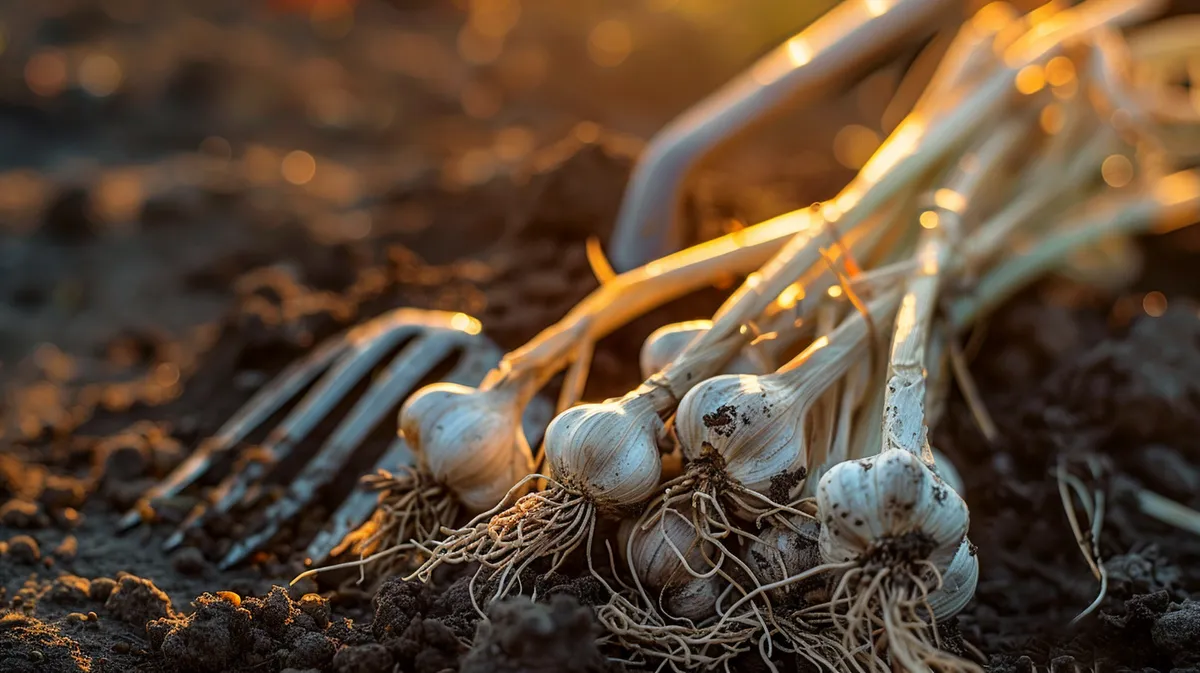
Dig your garlic bulbs carefully with a spade or fork, going deep enough that you don't spear the bulbs. Shake soil off gently. Don't wash them. The soil is protective.
Lay the bulbs in a warm, dry, well-ventilated space for 3 to 4 weeks. A garage, shed, or covered verandah works. The bulbs need to cure, meaning the outer skin papery dries completely and the root end seals itself. This is what makes them store. In Brisbane's humid spring, this takes longer than in drier areas. Give it the full 4 weeks.
Once cured, cut the stem back to about 2 centimetres and trim the root base. Store in a cool, dark, well-ventilated spot. A wire basket in a cupboard is perfect. Australian White and Monaro Purple store for 4 to 6 months if kept cool. Elephant Garlic stores slightly shorter.
Replanting From Your Own Crop
You can save the largest cloves from your November harvest to replant in the next Easter season. This works for several years, but eventually (every 5 to 7 years), you should buy new certified seed garlic to avoid disease buildup and genetic degradation.
Store your seed cloves in the same cool, dry spot as your eating garlic. In February or early March, separate the bulbs into individual cloves and plant them fresh for Easter. They'll be a bit smaller than commercial seed cloves, but they'll still produce good bulbs.
The Tradition and the Timing
There's something satisfying about the Easter garlic rhythm. You plant at Easter, let winter do the work, and harvest in spring when you remember you planted something. It's reliable, it's local, and it takes advantage of SEQ's actual climate instead of fighting against it.
Use Australian-grown seed garlic, choose a short-day variety, plant around Easter, and you'll have fresh bulbs in November that taste nothing like the pale supermarket imports. That's the tradition, and it works.
Frequently Asked Questions
When should I plant garlic in Brisbane and SEQ?
Plant garlic around Easter (late March to early April) in SEQ. This timing allows roots to establish through mild autumn weather and the plant to respond to lengthening spring days. Bulbs mature and are ready to harvest in late October to early November.
What type of garlic do I need for SEQ?
You must use Australian-grown seed garlic and a short-day variety. SEQ is at 27 degrees south latitude, so long-day varieties won't form proper bulbs. Choose Australian White, Monaro Purple, or Elephant Garlic. Never use supermarket bulbs, which are usually treated with sprouting inhibitors and the wrong type for SEQ.
Where can I source seed garlic in Australia?
Source seed garlic from Green Harvest at Willangi west of Brisbane, from garlic festivals around Australia (April to September), or from online suppliers like Diggers' Seeds. Order by August at the latest to ensure delivery before Easter planting. Quality Australian-grown seed garlic is essential for reliable bulb formation.
Plant profile
The garlic profile has sowing times for your region, companion plants and common pests.
Free Monthly Planting Calendar
Get a personalised email each month with what to plant, seasonal tips, and harvest reminders for your region.
We send one email per month. Unsubscribe any time.