
Best Fruit Trees for Small Brisbane Backyards
You don't need an orchard to grow fresh fruit. These space-efficient varieties thrive in suburban backyards.
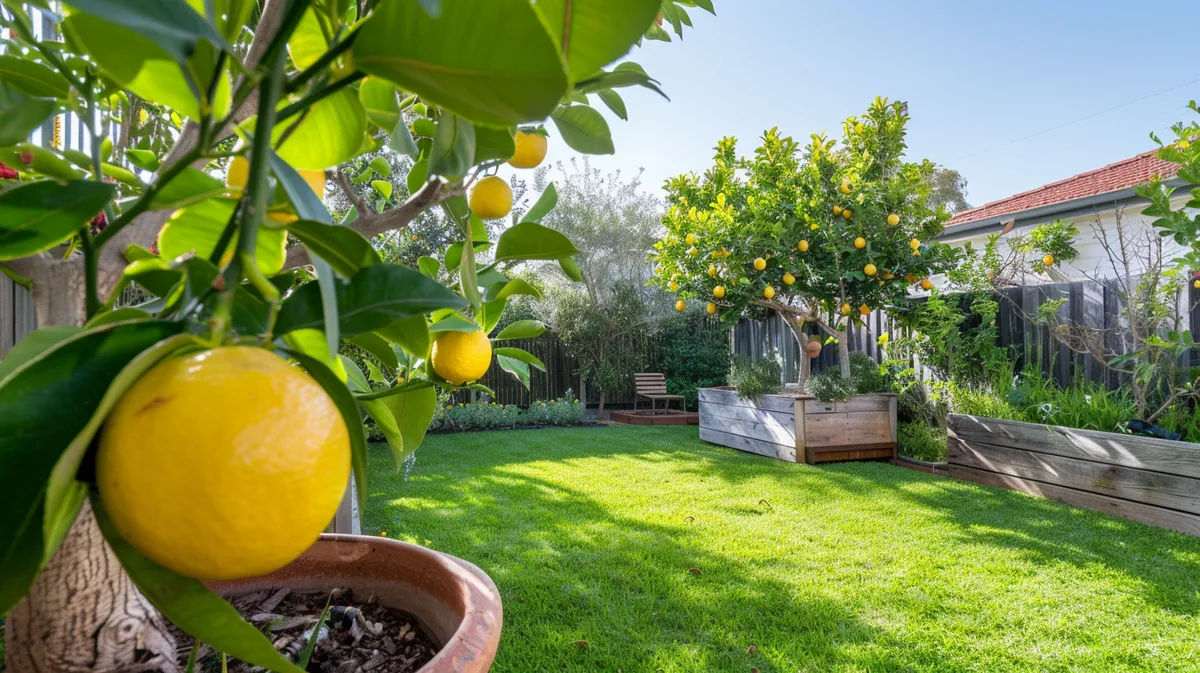
Small backyards can produce serious fruit. The key is choosing trees that stay manageable, produce fast, and respond to pruning and container growing. Brisbane's warm climate lets you grow subtropical fruit that costs a fortune in supermarkets.
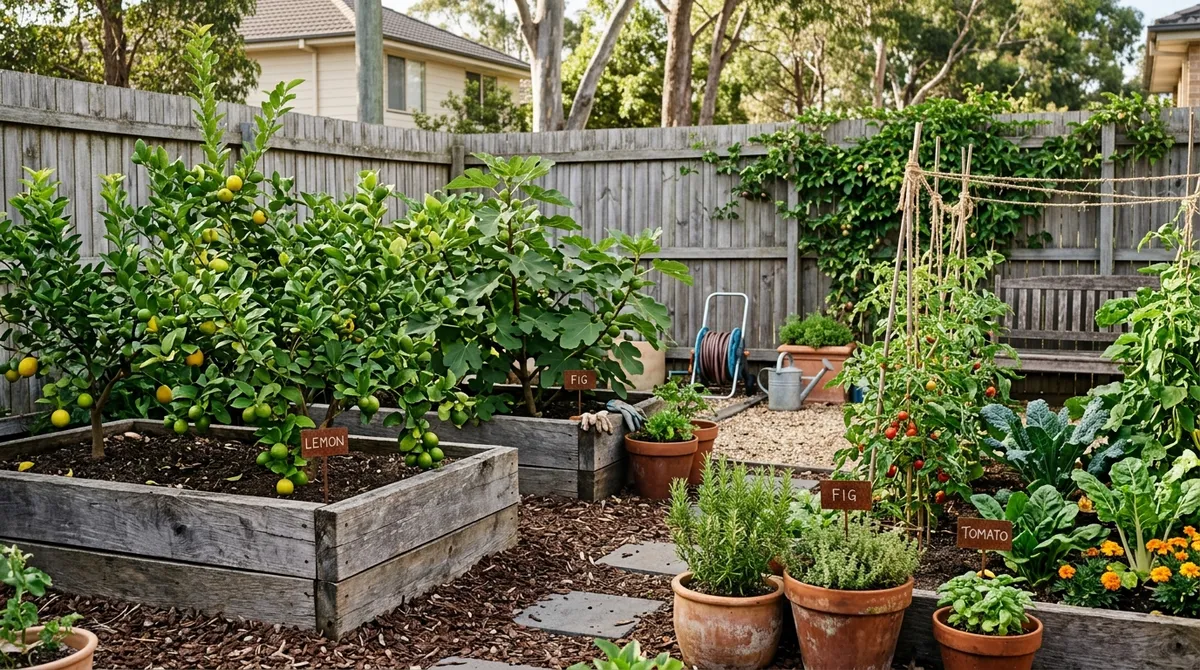
Start with one or two trees. A lemon and a fig in a typical suburban block will keep your kitchen supplied for months of the year. Add passionfruit on a trellis and you've got diversity and extended harvest.
🌱 Plants in this guide: Lemon Tree, Lime Tree, Finger Lime, Fig, Passionfruit and Davidson Plum. Each plant profile has sowing times for your region, companion plants and common pests.
Lemon and Lime Trees: Year-Round Citrus
Lemon and lime trees are the foundation of most Brisbane backyards. They're reliable, productive, and actually benefit from pruning to keep them compact. Plant a standard lemon and a Tahitian lime, and you'll have fresh citrus most of the year.
Both produce fruit at 2 to 3 years from a grafted plant. Don't buy seedlings, they take 7 years. Buy a grafted cultivar on dwarfing rootstock, which keeps the tree to 3 to 4 metres even with minimal pruning.
Lemon and lime need full sun. Space them 3 metres apart if planting multiple citrus. Feed with citrus fertiliser in spring and late summer. Prune after harvest to shape the tree and remove crossing branches. The fruit is best picked as soon as it colours, so pick regularly and let the tree cycle into new flowering.
Both work brilliantly in containers. A 50-centimetre pot on a sunny deck produces fruit for years. Container-grown citrus needs more frequent watering than in-ground trees, especially in warm months. Bring containers under cover during hail season if necessary.
Finger Lime: Citrus Caviar in a Small Tree
Finger Lime is an Australian native citrus producing tiny pearls of juice and flesh, often called citrus caviar. The fruit is prized by chefs and increasingly by home gardeners. One Finger Lime tree produces hundreds of pods, and you'll have more fruit than you know what to do with.
Finger Lime takes 3 years from a grafted plant to first fruit, but once it starts, it produces reliably. The tree is naturally compact, usually 2 to 3 metres, and thorny. Plant it in a position where you won't brush against the thorns regularly.
Finger Lime handles part shade and is a rainforest understorey species, so it doesn't need scorching sun like lemon. This makes it ideal for the shadier corner of your backyard. Once established, it's drought tolerant. Varieties include Rainforest Pearl (green pearls), Pink Ice (pink pearls), and Judy's Everbearing (red).
In containers, Finger Lime works in a 40-centimetre pot on a partly shaded patio. Growth is slower in containers, but productivity is still good.
Fig: The Fast, Compact Workhorse
Fig produces within 18 to 24 months from a young tree. It's tough, deciduous, handles neglect, and produces two crops per year in Brisbane. The fruit is sweet, there are no major pests, and the tree doesn't need chemical fertilisers.
Fig naturally stays 3 to 5 metres, making it one of the smallest fruit trees available. You can keep it smaller with pruning. Plant it in full sun. Water deeply in spring and summer as fruit is developing, then stop watering in autumn to trigger dormancy.
Birds and fruit fly love figs once fruit colours. Net the tree or accept some losses to wildlife. In a small backyard, netting is worth the effort.
Fig is incredibly cold hardy and actually thrives in cooler SEQ zones like Toowoomba and Scenic Rim. In coastal Brisbane, select late-ripening varieties to avoid the worst fruit fly season.
Passionfruit Vine: Maximum Fruit in Minimal Space
Passionfruit isn't a tree, it's a vine, which makes it perfect for small backyards. Give it a strong trellis or fence, and it will produce hundreds of fruits in season. The fruit is prized for its intense flavour and is expensive in shops.
A grafted passionfruit (usually Nellie Kelly grafted onto blue passionfruit rootstock) produces within 12 months. This is the fastest fruit production you can get. The vine is naturally vigorous and benefits from annual pruning to keep it manageable.
Plant in full sun. Feed with potassium-rich fertiliser during flowering and fruiting to boost production. Water deeply and consistently through warm months.
Fruit fly can be a problem. Net the vines during high-risk season (November to February) or accept some losses. The vine lives 5 to 7 years before productivity drops, then it's time to replace it. Plant new passionfruit next to the old one and let it take over as the original declines.
In containers, passionfruit works in a large pot (60 centimetres or larger) with a sturdy trellis. Container-grown vines produce less than in-ground but are useful where space is extremely limited.
Davidson Plum: Native Superfruit
Davidson Plum is an Australian native rainforest tree producing intensely sour, deep purple fruit. Too tart to eat raw, it's exceptional in jams, sauces, and desserts. The fruit is rarely available in shops.
Davidson Plum is slower, taking 3 to 5 years to first fruit from a grafted plant. It handles part shade better than most fruit trees, making it ideal for the shadier side of your backyard. It naturally stays relatively compact, reaching 3 to 5 metres.
The tree is long-lived, 50+ years. Birds and fruit fly attack the fruit, so netting is helpful. The trade-off is premium native fruit that costs $8 to $15 per punnet commercially.
Davidson Plum works in containers (50-centimetre pot) and actually prefers part shade, so you can tuck a container under a larger tree.
Space-Saving Techniques for Small Backyards
Espalier is a formal training method where trees are trained to grow flat against a fence or trellis. Lemon and lime respond beautifully to espalier training. It takes 3 to 4 years to establish, but the result is a highly productive tree that takes up minimal space. A single espalier lemon against your fence line is stunning and productive.
Container growing lets you position fruit trees in the sunniest spots and move them if problems develop. Group containers together to create a microclimate. Small containers are mobile, so you can rearrange your fruit garden without digging.
Dwarfing rootstocks significantly reduce tree size. Ask your nursery for citrus on dwarfing rootstock (usually marked as "dwarf" or with a rootstock code like EM or C22). The difference in mature size is substantial.
Pollination and Fruit Set in Brisbane
Most fruit trees don't need a pollinator partner to set fruit. Lemon, lime, and fig produce with a single tree. Passionfruit produces with one vine. Finger Lime and Davidson Plum produce better with a pollinating partner, but a single tree will still give you fruit.
If you have space for two trees of the same species, you'll get better fruit set. If space is limited, one tree is fine. Just don't expect maximum production.
Your Small Backyard Fruit Plan
Year 1: Plant a lemon and a fig. Both will need water in spring and summer, then minimal care otherwise.
Year 2: Add passionfruit on a trellis. Start harvesting fruit from the passionfruit by mid-year. Get first figs.
Year 3 onward: Lemon starts producing seriously. Passionfruit is fully productive. Fig is prolific. Consider adding Finger Lime or Davidson Plum in year 3 or 4 once you've got the routine established.
Frequently Asked Questions
What are the smallest fruit trees for Brisbane backyards?
The smallest fruit trees suitable for Brisbane are Finger Lime (300cm spacing, dwarfing rootstock), Lemon and Lime trees (can be kept to 3-4m with pruning), Fig (naturally compact, deciduous), and Passionfruit vine (not a tree, sprawls on trellis). These all fruit in 2-3 years from a grafted plant and are manageable in limited spaces. Dwarf rootstocks reduce mature size significantly.
Which fruit trees produce fastest in Brisbane?
Passionfruit produces within 12 months from a grafted plant. Fig produces within 18-24 months. Lemon and Lime trees start producing at 2-3 years. Finger Lime takes 3 years from grafted plant. Davidson Plum is slowest at 3-5 years to first crop. For fastest harvests, prioritise Passionfruit and Fig, then add slower-maturing trees for long-term production.
Can I grow fruit trees in containers in Brisbane?
Yes. Lemon and Lime (50cm+ pot, dwarf varieties), Finger Lime (40cm+ pot), Passionfruit (60cm+ pot with trellis), and Davidson Plum (50cm+ pot) all work in containers. Container-grown trees produce less fruit than in-ground plants but are more manageable in small spaces. Use quality potting mix and water more frequently than in-ground trees, especially in warm months.
Plant profiles
Each profile has sowing times for your region, companion plants and common pests.
Free Monthly Planting Calendar
Get a personalised email each month with what to plant, seasonal tips, and harvest reminders for your region.
We send one email per month. Unsubscribe any time.