
Why Your Basil Dies Every February
And the Thai basil solution that actually survives SEQ's summer humidity
You planted a beautiful basil seedling in October. It thrived through November and December, and you were harvesting fresh leaves for pasta and pesto. Then January arrived. The leaves started getting a funny blotchy appearance. By February, the whole plant was either a papery mess or completely gone.
This is the basil tragedy that repeats every year in Brisbane gardens. The culprit isn't you. It's not lack of water or too much sun. It's downy mildew, and it loves the exact conditions that February brings: warm days, high humidity, and cool nights that don't dry foliage.
The fix is simple: stop growing Italian (Genovese) basil in summer. Grow Thai Sweet Basil instead. It handles the heat and humidity without collapsing, and the flavour is excellent. Save your Italian basil for autumn and winter when it thrives.
🌱 Plant profile: Basil, with sowing times for your region, companion plants and common pests.
The Italian Basil Problem in Peak Summer
Sweet Genovese basil, the kind used in pesto and the standard basil in Australian nurseries, is a Mediterranean herb. It evolved in warm but dry summers. SEQ's summer is warm and absurdly humid. There's a difference.
When humidity sits above 80 percent and nights are warm (anything above 18 degrees), the conditions are perfect for downy mildew to establish itself on basil foliage. Downy mildew doesn't kill the plant instantly. Instead, it colonizes the leaves, blocking photosynthesis. The leaves become blotchy, thin, and eventually papery. The plant gives up.
Heat stress adds to the problem. Italian basil stops growing efficiently above 30 degrees. January and February mean constant heat. The plant is already stressed from high temperatures. Throw downy mildew on top of that and the plant has nothing left.
Fungicide sprays can slow downy mildew, but they don't stop it in the humidity SEQ experiences. You're fighting a losing battle. The better move is to choose a basil variety that doesn't get downy mildew in the first place.
Thai Sweet Basil: The Summer Alternative
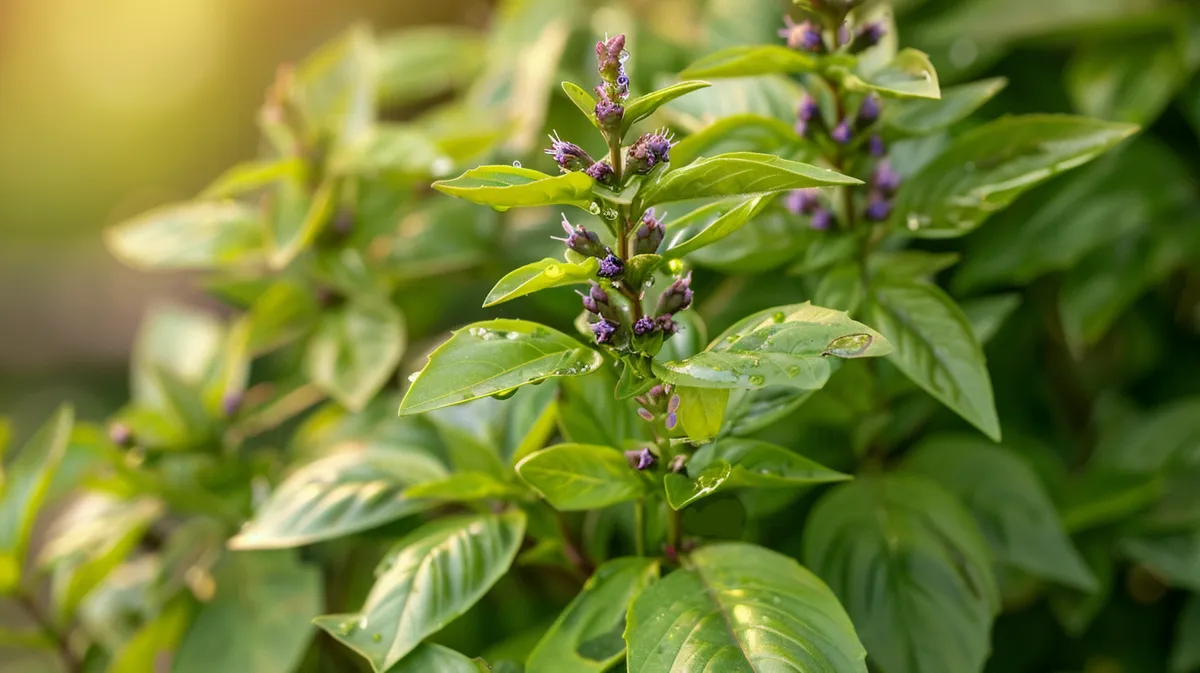
Thai Sweet Basil (sometimes called Thai Basil) is a different species from Italian basil. It evolved in Thailand, which has hot, humid summers. It handles the exact conditions that wreck Italian basil.
Thai basil is more heat-loving and humidity-tolerant than Genovese. It doesn't get downy mildew under normal SEQ summer conditions. It also has a different flavour profile. Thai basil has peppery, slightly anise-like notes. If you're expecting pure Genovese pesto flavour, you'll be surprised. But for Asian cooking, for flavouring salads, and even mixed into tomato dishes, Thai basil is exceptional.
The plant is a bit sturdier than Italian basil, with smaller, slightly thicker leaves. It flowers later than Italian basil (which is good, because flowering means the end of tender leaf production). It will happily sit in a pot or in the ground and produce fresh leaves from October through to May in SEQ.
Start Thai basil seeds in September or early October, or buy seedlings from a nursery that stocks them (some do, though Italian basil dominates the market). Plant out in October. By November it's producing leaves. It peaks through January and February when Italian basil is dying. In May, it starts to flower and slow down. It won't survive the cold months (June to August), so you'll replace it with Italian basil when autumn arrives.
Greek Basil for Pots and Tight Spaces
If you want an even smaller basil that handles summer heat, try Greek Basil (also called Dwarf Basil). It's a compact plant with tiny leaves, very aromatic, and genuinely heat and humidity tolerant.
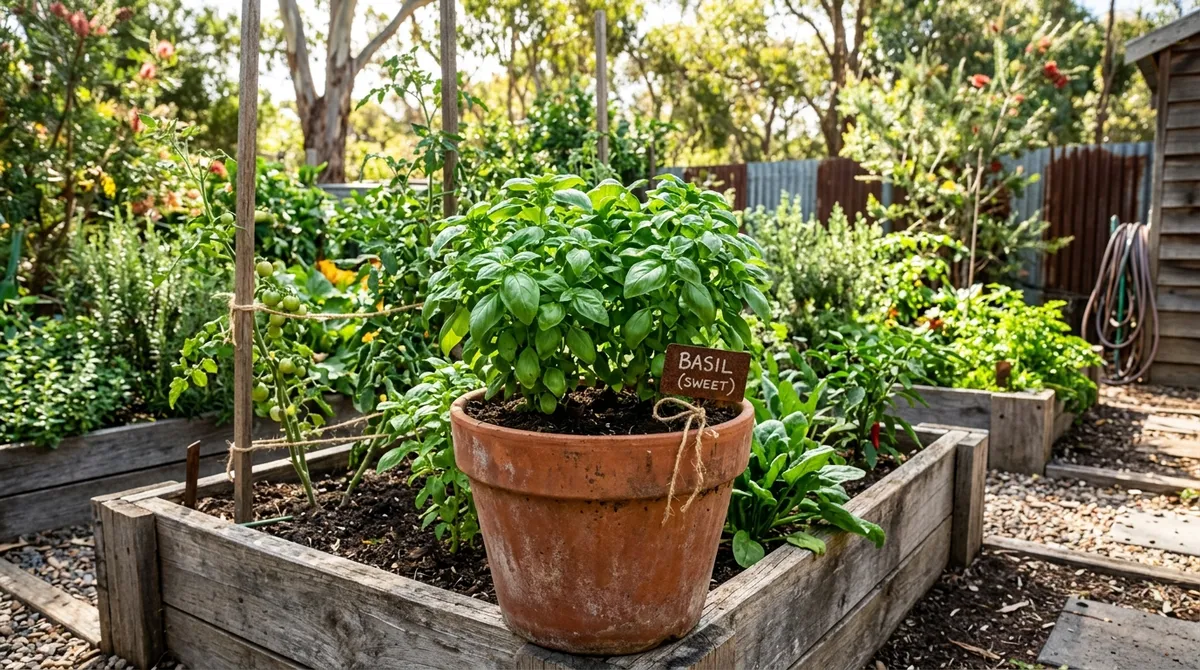
Greek basil works best in pots rather than garden beds. A small terracotta pot, one plant per pot, placed where it gets morning sun but afternoon shade (important in January and February) will produce a modest but consistent harvest through the hot months. It's perfect for a kitchen windowsill or a sheltered courtyard.
The flavour is stronger and slightly different from both Italian and Thai basil. Some people find it too intense. But it's reliable, it's tidy, and it genuinely survives what Brisbane throws at it.
Keeping Italian Basil for the Right Season
Don't give up on Italian basil entirely. It's better than Thai basil in autumn, winter, and spring. It has a cleaner flavour and thinner leaves that are perfect for pesto.
Plant Italian basil in February and March for a late summer/autumn crop. It will grow through mild autumn temperatures, peak through May to July, and start struggling in August when the plant senses shorter days and cooler temps and decides it's time to flower and go to seed. Pull it out in August or September and replace it with Thai basil for spring and summer.
This rhythm works perfectly with SEQ's season. You're harvesting fresh Italian basil exactly when you most want it (autumn and winter), and you're growing Thai basil when you need heat and humidity tolerance (summer). You don't have to choose between them. You just have to time it right.
Growing Basil Successfully: The Fundamentals
Watering at the Base, Not the Foliage
This is critical, especially in humid weather. Water basil at the base of the plant, early in the morning. Never sprinkle water over the leaves. Wet foliage in humid, warm air is exactly what downy mildew needs to establish itself. Keep the soil moist but not waterlogged. Basil hates both drought and swampy conditions.
Pinching and Shaping
Pinch out the growing tip of basil plants regularly. This forces the plant to branch and get bushier instead of shooting up tall and single-stemmed. Start pinching when the plant is about 15 centimetres tall. Remove the top two leaves every time. This sounds aggressive, but it's what keeps basil productive for months instead of flowering and finishing in weeks.
Once the plant has developed a bushy shape with multiple side stems, you can harvest leaves from any point on the plant. Pick from the tips, or pick individual leaves from the side. Either way works. Just don't strip the plant bare.
Sun and Temperature
Basil needs good sun: at least 6 hours daily, ideally more. In Brisbane's summer, afternoon shade (2 to 4 p.m.) helps prevent heat stress on young plants. Once established, basil can handle full sun even in January and February. It's downy mildew and heat stress that kill it, not the light.
Thai basil is more heat-tolerant than Italian, so it can sit in full sun all day. Italian basil prefers some afternoon protection in summer.
Companion Planting: Basil and Tomatoes
Growing basil next to tomatoes is one of SEQ's most reliable companion planting strategies. Plant basil at the base of tomato plants in late February or October (when you also plant tomatoes). As the tomato plant grows, the basil sits beside it, out of shade.
The basil flowers attract pollinators to the tomato flowers. You're harvesting basil at the same time as picking tomatoes. The flavour pairing is obviously perfect for cooking. And if you're growing Thai basil beside a tomato plant in summer, the Thai basil's heat tolerance balances the tomato's stress during peak heat and humidity.
Give the basil space at the base of the stake or trellis. A good spacing is 30 centimetres away from the tomato stem, leaving room for the basil to sprawl without being shaded.
The Seasonal Basil Calendar
February to March: Plant Italian basil seedlings or seeds. It germinates quickly in warm soil and grows fast.
April to August: Harvest Italian basil continuously. Pinch it regularly to keep it bushy. Peak harvest is May to July. By August, start watching for flowering signals.
August to September: Italian basil is flowering and slowing down. Start seeds of Thai basil in pots.
September to October: Pull out tired Italian basil. Plant out Thai basil seedlings. They establish before the heat arrives.
November to April: Thai basil is your main herb. It produces through all the humidity and heat. Peak harvest is January to March.
May onwards: Thai basil starts to slow as days shorten and cool arrives. Switch back to Italian basil planting for the next cycle.
Your Basil Won't Die in February
The solution to basil failure in Brisbane isn't complicated. Grow Italian basil in autumn and winter. Grow Thai basil in spring and summer. Pinch regularly. Water at the base. Choose the right variety for the season, and basil stops being a frustrating puzzle and becomes one of your most reliable herbs.
This works because you're not fighting SEQ's climate. You're working with it.
Frequently Asked Questions
Why does Italian basil die in Brisbane's February?
Italian (Genovese) basil struggles in SEQ's February humidity and heat because downy mildew thrives in warm, humid conditions (above 80% humidity). The combination of high humidity, warm nights, and heat stress overwhelms Italian basil. It evolved in Mediterranean climates with dry summers, not tropical humidity. Downy mildew colonizes the leaves, causing them to become blotchy and papery, and the plant fails.
What basil should I grow in Brisbane summer?
Grow Thai Sweet Basil (Thai Basil) in Brisbane summers. It evolved in Thailand's hot, humid climate and doesn't get downy mildew under normal SEQ conditions. It's heat and humidity tolerant, flowers later than Italian basil, and produces fresh leaves from November through April. Greek Basil (Dwarf Basil) is another compact, heat-tolerant option for pots. Save Italian basil for autumn and winter when it thrives.
How do I keep basil alive and productive year-round?
Grow Italian basil from February to August, then Thai basil from September to April. Water basil at the base only, never on the foliage, to prevent downy mildew. Pinch the growing tips regularly to keep plants bushy and productive. Provide at least 6 hours of sun daily. In summer, give plants afternoon shade protection. This rotation matches each variety to the season where it thrives.
Plant profile
The basil profile has sowing times for your region, companion plants and common pests.
Free Monthly Planting Calendar
Get a personalised email each month with what to plant, seasonal tips, and harvest reminders for your region.
We send one email per month. Unsubscribe any time.