
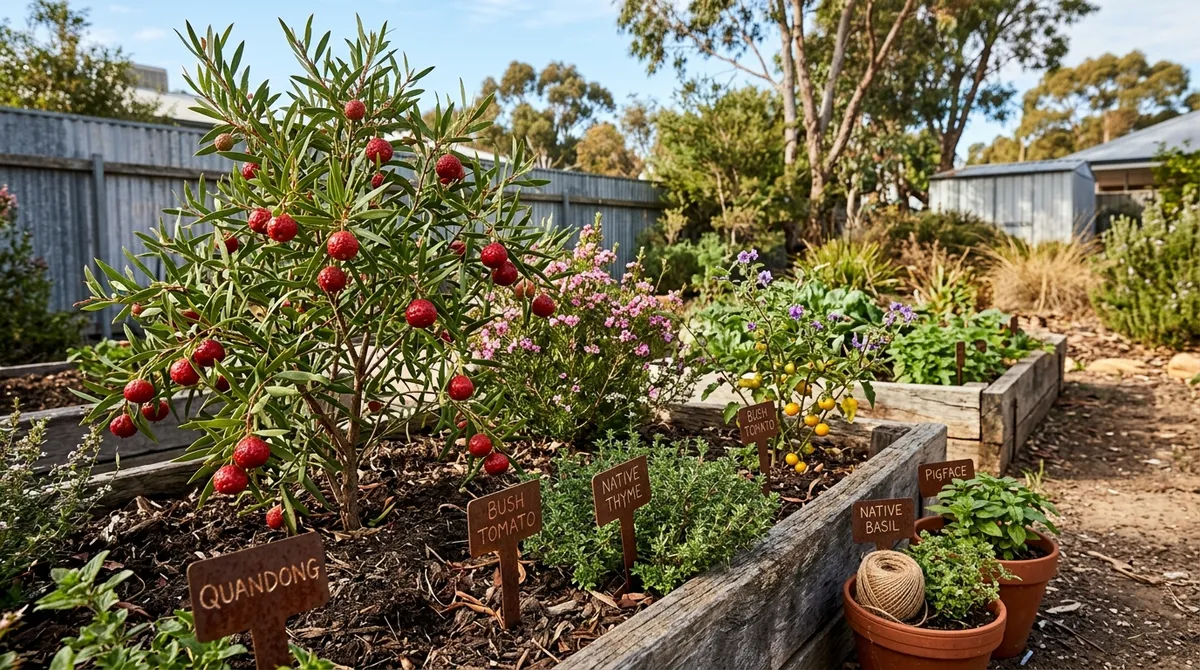
Growing Native Edibles in Perth
Quandong, finger lime, Davidson plum, and other bush food plants for WA gardens
Perth sits in one of the world's biodiversity hotspots. Western Australia has thousands of native plant species, and many of them produce edible fruit, leaves, seeds, or flowers. Growing native edibles makes practical sense in Perth: these plants are adapted to sandy soil, low rainfall, and hot summers. They need far less water, fertiliser, and pest management than introduced crops.
Interest in bush food plants has grown steadily across Perth's gardening community. Nurseries now stock species that were almost impossible to find a decade ago. Several WA natives are standouts for backyard growing.
Best Native Edibles for Perth Gardens
Quandong (Santalum acuminatum)
Quandong is WA's signature bush food. This small tree (3-5 metres) produces bright red fruit with tart, tangy flesh used in jams, sauces, pies, and dried snacks. Quandong grows naturally across WA's semi-arid regions and is well suited to Perth's sandy soil and dry climate.
Quandong is a hemi-parasitic plant. It taps into the root system of a nearby host species to access additional nutrients and water. Plant your quandong within 2-3 metres of a host plant. Suitable hosts include native grasses, acacia species, or even established lawn. Without a host, the tree will grow slowly and produce less fruit.
Trees take 4-6 years from seedling to first fruit. Grafted trees from specialist nurseries fruit in 3-4 years. Fruit ripens from October to January in Perth. Harvest when fully red and slightly soft to the touch.
Finger Lime (Citrus australasica)
Finger limes are a native citrus from the rainforests of northern NSW and Queensland. They grow well in Perth with some protection from extreme afternoon heat. The small, elongated fruit contains caviar-like vesicles that burst with intense lime flavour. Colours range from green to pink to red depending on the variety.
Plant finger limes in a sheltered spot with morning sun and afternoon shade, or under the dappled canopy of a larger tree. They prefer slightly acidic, well-drained soil. In Perth's alkaline sand, add sulphur and compost to lower the pH. Water regularly through summer. Finger limes are slow growing but productive once established, typically fruiting from May to August (autumn and winter).
Davidson Plum (Davidsonia jerseyana)
Davidson plum is a subtropical rainforest tree that produces clusters of deep purple, intensely sour fruit. The fruit is too tart to eat fresh but makes outstanding jams, sauces, and syrups. Davidson plum needs a sheltered, shaded position in Perth. Full summer sun will scorch the leaves. Plant on the south side of a building or under the canopy of larger trees. Water regularly; this species does not tolerate drought like most bush food plants. It suits Perth's hills suburbs (Kalamunda, Mundaring) better than exposed coastal areas.
Muntries (Kunzea pomifera)
Muntries are a ground-covering shrub from coastal South Australia that produces small, apple-flavoured berries. The berries ripen from April to June and can be eaten fresh, dried, or used in jams. Muntries are extremely hardy once established, tolerating salt spray, sandy soil, drought, and full sun. They make an excellent ground cover or border plant. Space plants 50 centimetres apart for a dense mat. Muntries are one of the easiest native edibles to grow in Perth.
Lemon Myrtle (Backhousia citriodora)
Lemon myrtle leaves have a strong lemon fragrance and are used in teas, biscuits, sauces, and as a seasoning. The tree grows 3-5 metres in Perth and produces clusters of white flowers in summer. Plant in a sheltered spot with well-drained soil. Lemon myrtle prefers some protection from Perth's hottest afternoon sun. Water through summer for the first few years. Harvest leaves year-round by pruning branch tips.
Native River Mint (Mentha australis)
Native river mint is a low-growing perennial with a milder, sweeter flavour than common mint. It grows along waterways in the wild and prefers moist, shaded conditions. In Perth, plant it in a pot or a shaded garden bed that receives regular watering. It spreads by runners but is less aggressive than introduced mint species. Use the leaves fresh in salads, teas, and desserts.
Where to Buy Native Edibles in Perth
Several Perth nurseries carry edible native plants. Zanthorrea Nursery in Maida Vale has one of the best selections in the metropolitan area. Lullfitz Nursery in Wanneroo stocks quandong, finger lime, and various bush tucker species. Apace WA in North Fremantle specialises in locally propagated native plants, including edible species suited to the Swan Coastal Plain.
For harder-to-find species, Daleys Fruit Tree Nursery (based in Kyogle, NSW) ships nationally and carries an extensive range of native edible plants, including grafted quandong and named finger lime varieties. Tucker Bush is another online supplier that specialises in compact bush food cultivars suited to home gardens and containers.
Planting and Care
Most native edibles prefer well-drained soil and full sun to part shade. Perth's sandy soil suits them well, but adding some compost at planting time helps establish healthy root systems. Avoid heavy mulch right against the stem; use a light layer of leaf litter or fine bark chips to mimic natural bush floor conditions.
Native plants generally dislike phosphorus-rich fertilisers. Use a native-specific fertiliser (low phosphorus) if feeding is needed. Seasol (liquid seaweed) is safe for all native edibles and supports root health without phosphorus risk.
Water new plantings regularly through their first two summers. After that, most native edibles (quandong, muntries, lemon myrtle) need little to no supplemental water in Perth. Finger lime and Davidson plum are the exceptions; they need consistent moisture year-round.
Harvesting and Using Bush Food
Each species has its own harvest season. Quandong fruits from October to January. Finger limes ripen from May to August. Muntries produce from April to June. Davidson plum fruits from December to March. Lemon myrtle leaves can be picked year-round, with the strongest flavour in summer.
Many bush foods have intense flavours that work best in small quantities. Quandong makes excellent jam and pie filling. Finger lime vesicles are a garnish for seafood, cocktails, and desserts. Davidson plum sauce pairs well with kangaroo, lamb, and pork. Lemon myrtle leaves can be dried and ground into a powder for baking and seasoning.
Explore Native Edible Plants
Browse native edible species in the Planting Season plant library, with growing info tailored to Perth.
Open the Planting Season AppFrequently Asked Questions
What native edible plants grow well in Perth?
Quandong is a standout performer in Perth's sandy soil and dry climate. Finger limes grow well in sheltered spots. Muntries, lemon myrtle, and native river mint also suit Perth gardens. Many WA natives like Geraldton wax produce edible flowers too.
Where can I buy native edible plants in Perth?
Zanthorrea Nursery in Maida Vale carries a good range. Lullfitz Nursery in Wanneroo stocks quandong, finger lime, and bush tucker plants. Apace WA in North Fremantle specialises in local native species. Online suppliers like Daleys Fruit Tree Nursery ship to Perth.
Do native edibles need watering in Perth?
Most established native edibles are drought tolerant and need far less water than introduced fruit trees or vegetables. Water new plantings regularly for the first two summers. After that, most species survive on natural rainfall alone.
Can I grow quandong in my Perth backyard?
Quandong grows naturally in WA and is well suited to Perth's sandy soil and dry summers. It is a hemi-parasitic tree that draws some nutrients from nearby host plants. Plant near a host species (acacia, native grasses, or lawn) and water through the first two summers.
Free Monthly Planting Calendar
Get a personalised email each month with what to plant, seasonal tips, and harvest reminders for your region.
We send one email per month. Unsubscribe any time.