
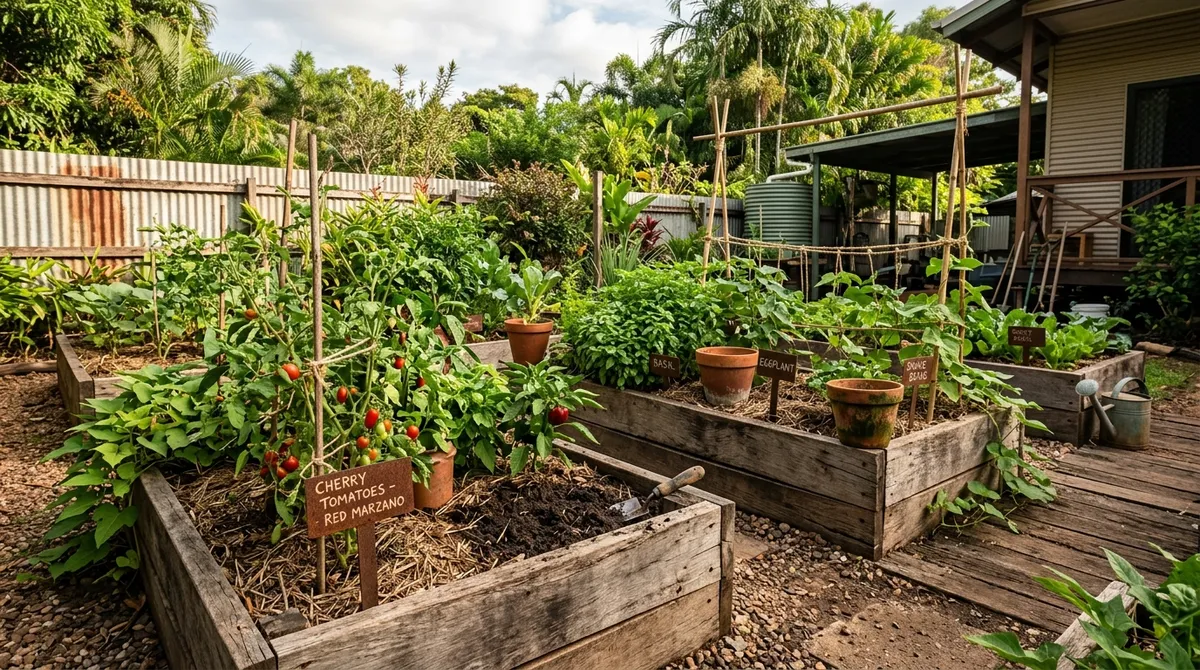
Raised Bed Gardening in Darwin
Termite-proof materials, monsoon drainage, soil mix for tropical heat, and practical designs for Darwin, Palmerston, Humpty Doo, and Berry Springs
Raised beds are the standard approach for vegetable gardening in Darwin and the Top End. Darwin's native soils are sandy, nutrient-poor, and often underlain by hard laterite (ironstone) that restricts root growth. Termites destroy untreated timber within months. The monsoon dumps 1700mm of rain that waterlogged flat garden beds. Raised beds solve all three problems: they hold better soil, resist termites when built from the right materials, and drain freely during the wet season.
Most successful vegetable gardens around Darwin, Palmerston, Humpty Doo, and Berry Springs are built entirely on raised beds. The investment in materials and soil pays for itself within a single growing season.
Termite-Proof Materials
Termites are a fact of life across the Top End. Subterranean termites and drywood termites attack any untreated timber in contact with the ground. Choosing the right material for your raised bed walls is the single most important decision.
Colorbond Steel
Colorbond is the most popular material for raised beds in Darwin. Pre-made kits are available at Bunnings and local hardware stores, or you can have custom sizes made by a local sheet metal fabricator. Colorbond resists termites completely, handles the heat and monsoon rain, and lasts 15-20 years. Choose lighter colours (surfmist, paperbark, classic cream) to reduce heat absorption. Dark colours like monument or woodland grey heat the soil more.
Standard kit sizes (1.2 metres x 2.4 metres x 40 centimetres high) are a good starting point. Corner brackets and screws make assembly straightforward. Line the inside with landscape fabric to prevent soil from leaching through seams.
Corrugated Iron
Corrugated galvanised iron (CGI) is cheaper than Colorbond and works the same way. It rusts faster in Darwin's humidity, but a quality galvanised sheet lasts 10-15 years. Many Darwin gardeners use recycled roofing iron to build beds at minimal cost. Bend the sheets to form rectangles and secure with star pickets at the corners.
Concrete Blocks
Concrete besser blocks are completely termite-proof and last indefinitely. Stack them two blocks high (40 centimetres) for a good working depth. No mortar is needed for garden beds; the weight of the blocks and the soil inside holds them in place. The downside is that concrete absorbs and radiates heat, so insulate the inside walls with a layer of cardboard or straw before filling with soil.
Hardwood Sleepers
If you prefer timber, use naturally termite-resistant hardwoods. Ironbark, turpentine, and spotted gum have good natural resistance. These timbers are expensive but last 8-12 years in Darwin conditions. Avoid treated pine (CCA or ACQ treated), which breaks down faster in the tropics than in southern Australia and raises concerns about chemical leaching near food crops.
Recycled hardwood railway sleepers are sometimes available from demolition yards. Check that they are genuine hardwood and not creosote-treated softwood. Install a physical termite barrier (stainless steel mesh or crushed granite) under and around timber beds for extra protection.
Design and Dimensions
Keep beds narrow enough to reach the centre from either side without stepping on the soil. A maximum width of 1.2 metres works for most gardeners. Length can be whatever suits your space. Paths between beds should be at least 60 centimetres wide for comfortable access with a wheelbarrow.
Height is important in Darwin. Build beds at least 30 centimetres high for adequate drainage during the monsoon. A height of 40-50 centimetres is ideal for most situations. Some gardeners in Palmerston and suburban Darwin build beds 60-80 centimetres high (waist height) for comfort, particularly useful for older gardeners or anyone with back problems. Higher beds need more fill material but offer superior drainage.
Orient beds on a north-south axis if possible. This ensures both sides of the bed receive even sunlight throughout the day. In tight spaces, orientation matters less than finding a spot with adequate morning sun and afternoon shade.
Soil Mix for Darwin Raised Beds
The soil mix is as important as the bed structure. Darwin's native sandy soil holds almost no nutrients and dries out within hours. Fill raised beds with a purpose-mixed growing medium.
A proven mix for Darwin raised beds:
- 40% quality compost (mushroom compost, garden compost, or a commercial blend)
- 30% aged cow manure (widely available from rural area suppliers around Humpty Doo and Berry Springs)
- 20% coarse river sand (for drainage)
- 10% perlite (for aeration and moisture retention)
This mix drains freely during the monsoon while retaining enough moisture to sustain plants through dry season watering cycles. It is rich in nutrients from the compost and manure, reducing the need for supplementary fertiliser in the first season.
Organic matter in this mix breaks down rapidly in Darwin's heat. The bed level drops 5-10 centimetres every 6 months as material decomposes. Top up with fresh compost and manure twice a year: once in April (before the dry season planting begins) and once in October (before wet season crops go in).
Drainage for Monsoon Rains
Drainage is the most critical design consideration for raised beds in Darwin. A bed that holds water during the monsoon will kill plant roots within days.
- Open-bottomed beds: The simplest and most effective approach. Place beds directly on the ground so water drains through the base into the native soil. This works well in most Darwin locations where the native sandy soil drains freely.
- Solid-based beds: If using a Colorbond kit with a base, drill at least 10 large drainage holes (25mm diameter) evenly spaced across the bottom. Elevate the bed on bricks or pavers so water flows freely from underneath.
- Gravel layer: For areas with heavier soil or poor natural drainage, place a 5-centimetre layer of coarse gravel or scoria at the base of the bed before adding the soil mix. This creates a drainage reservoir that prevents waterlogging.
- Site selection: Position beds on slightly elevated ground if possible. Avoid low-lying areas where water pools during the wet season. Even 10-15 centimetres of elevation makes a significant difference to drainage during heavy rainfall events.
Irrigation and Mulch
Install drip irrigation in raised beds at setup time. Running irrigation lines after the bed is planted is disruptive and less effective. Lay drip line in a zigzag pattern across the bed, spaced 30 centimetres apart. Connect to a battery-operated timer on a garden tap.
Set irrigation to run for 15-20 minutes daily during the dry season. Increase to twice daily during the build-up (October to November) when humidity is high but rain has not yet arrived. Turn the system off during the wet season and let monsoon rainfall provide all the water needed.
Mulch raised beds with 5-8 centimetres of sugar cane mulch or lucerne hay. Mulch reduces soil temperature (critical in Darwin's 35-degree dry season), retains moisture, and feeds the soil as it breaks down. Replenish mulch every 2-3 months, as it decomposes rapidly in the tropical heat. During the wet season, reduce mulch depth to 3-5 centimetres to prevent excessive moisture around plant stems.
What to Grow in Raised Beds
Raised beds in Darwin support the full range of seasonal crops.
Dry season (May to September): Tomatoes (cherry varieties), capsicum, chilli, eggplant, beans, lettuce, Asian greens, brassicas (broccoli, cauliflower in June and July only), beetroot, carrots, radish, spring onion, herbs.
Wet season (November to March): Kangkong, snake beans, sweet potato, cassava, okra, tropical greens (amaranth, Malabar spinach), turmeric, galangal.
Year-round: Lemongrass, chilli (established plants), perennial basil, spring onion.
Rotate crops between beds each season. Avoid planting the same crop family in the same bed for consecutive seasons, as this builds up soil-borne diseases (particularly bacterial wilt for tomatoes and capsicum).
Plan Your Raised Bed Garden
Get seasonal planting reminders and crop rotation tips for your Darwin raised beds.
Open the Planting Season AppFrequently Asked Questions
What materials are termite-proof for raised beds in Darwin?
Colorbond steel is the most popular termite-proof option. Corrugated iron, concrete blocks, and naturally resistant hardwoods (ironbark, turpentine) also work. Avoid treated pine, which breaks down faster in Darwin's conditions.
How high should raised beds be in Darwin?
Build beds at least 30 centimetres high for adequate monsoon drainage. For easier access and better drainage, 40-50 centimetres is ideal. Some Darwin gardeners build beds 60-80 centimetres high for comfort.
What soil mix should I use for raised beds in Darwin?
A proven mix: 40% quality compost, 30% aged cow manure, 20% coarse river sand, and 10% perlite. This drains freely during the monsoon while retaining moisture for the dry season. Refresh the top 10 centimetres every 6 months.
Do raised beds need drainage holes in Darwin?
Open-bottomed beds drain naturally and are the best option. If your bed has a solid base, drill multiple large drainage holes. During the monsoon, a bed that holds water will drown plant roots within days.
Free Monthly Planting Calendar
Get a personalised email each month with what to plant, seasonal tips, and harvest reminders for your region.
We send one email per month. Unsubscribe any time.