
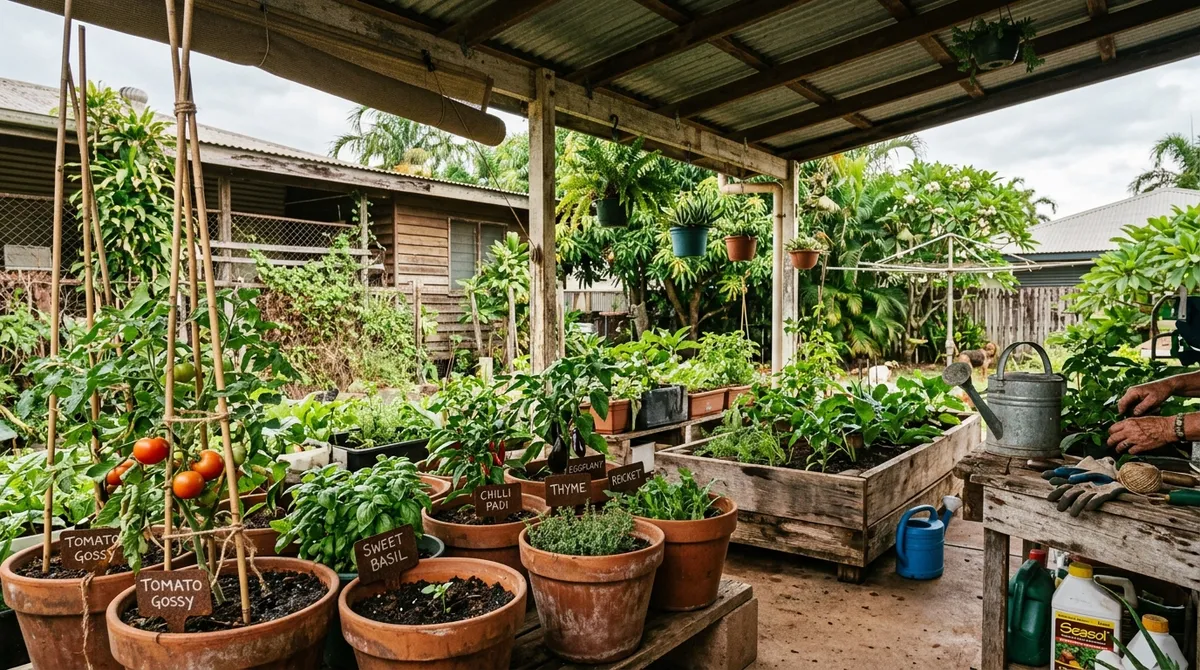
Container Gardening in Darwin
Cyclone preparation, heat-resistant pots, shade requirements, and monsoon drainage for Darwin, Palmerston, and the Top End
Container gardening suits Darwin's conditions well. Pots can be moved under cover before a cyclone, repositioned to chase or avoid the sun, and filled with better soil than Darwin's nutrient-poor sandy ground. For renters, apartment dwellers, and anyone with limited space in Darwin or Palmerston, containers are often the only way to grow fresh food.
The key challenges are heat, drainage, and cyclone preparation. Darwin's dry season sun pushes soil temperatures in exposed pots above 50 degrees. The wet season dumps 1700mm of rain that can waterlog poorly drained containers. Cyclone season (November to April) demands that every pot can be secured or moved to safety.
Choosing Containers for Darwin
Materials That Handle the Heat
- Light-coloured glazed ceramic: Thick walls insulate roots from temperature extremes. White, cream, or pale green glazes reflect heat. Heavy enough to resist tipping in strong winds, but this makes cyclone preparation harder.
- Polystyrene boxes: Outstanding insulation at virtually no cost. Broccoli boxes from Parap Markets or Rapid Creek Markets work perfectly. Drill 6-8 drainage holes in the base. They are light enough for one person to move quickly before a cyclone.
- Fabric grow bags: Good airflow to roots and excellent drainage. They dry out faster than solid pots, so increase watering frequency. Lightweight and easy to store. A 40-litre bag is the minimum for tomatoes.
- Light-coloured plastic: Affordable and easy to move. Choose thick-walled pots in white or cream. Avoid thin black plastic pots entirely; they absorb heat and cook roots on Darwin verandas.
- Concrete or reconstituted stone: Excellent insulation and very stable in wind. Too heavy to move for cyclone preparation, so place these permanently against a solid wall where they are most protected.
Size Matters
Bigger pots perform dramatically better in Darwin's heat. Small pots dry out within hours and overheat quickly. Minimum recommended sizes:
- Herbs: 25-30 centimetre diameter
- Leafy greens: 30 centimetre diameter or long troughs
- Tomatoes, capsicum, eggplant: 40-50 centimetre diameter, 40 centimetres deep minimum
- Lemongrass, turmeric: 40 centimetre diameter
- Dwarf citrus: 50-60 centimetre diameter
Shade and Positioning
Full sun in Darwin is too harsh for most container plants from September to March. The dry season sun angle is lower and less intense (May to August), but the build-up and wet season sun is punishing.
Position containers on east-facing verandas for morning sun and natural afternoon shade. This is the single best position for container gardening in Darwin and Palmerston. North-facing areas work if a veranda roof or shade sail provides overhead protection from 11am onwards.
Elevate all pots on pot feet, bricks, or slatted shelving. This allows airflow under the container (cooling the base), ensures drainage from the bottom, and keeps pots off hot concrete or tiles. In ground-level gardens, a layer of pale-coloured gravel or white sand under pots reflects heat away rather than absorbing it.
Group pots together. Clustered containers shade each other and create a humid microclimate that reduces water loss. Place taller plants (lemongrass, galangal) on the western side to shade smaller pots from afternoon sun.
Potting Mix and Drainage
Standard potting mix breaks down rapidly in Darwin's heat, compacting within 3-4 months. Use a premium mix and add 20% perlite for drainage. A proven Darwin container mix: 50% premium potting mix, 25% perlite, 15% aged compost, 10% coarse sand.
Every pot must have large drainage holes. During the wet season, remove all saucers and trays so pots never sit in standing water. Elevating pots on feet ensures water drains freely. If continuous rain waterlogged a pot, tilt it briefly to drain excess moisture.
Replace or refresh potting mix every 6-12 months. Top-dress with fresh compost every 6-8 weeks. Apply controlled-release fertiliser at the start of each season.
Cyclone Preparation
Darwin sits in the cyclone belt. The season runs from November to April. Container gardens must have a cyclone plan.
- Keep an inventory of every pot and its weight. Know which ones you can carry, which need a trolley, and which cannot be moved.
- Use wheeled trolleys under heavy pots. A 40-centimetre glazed ceramic pot filled with wet mix weighs 30-40 kilograms. Trolleys make one-person movement possible.
- Identify shelter: garage, carport, laundry, or bathroom. Practice moving your pots to this location so you know the process before a real cyclone warning is issued.
- Remove all stakes, trellises, and loose items from the garden when a cyclone watch is declared. These become dangerous projectiles.
- Water plants thoroughly before moving indoors. Plants may spend 24-48 hours without natural light during a cyclone event.
- Secure immovable pots against a solid wall. Place them on the ground (not on elevated stands) and push them tight against the wall on the side most sheltered from the forecast wind direction.
After a cyclone, check for salt damage if coastal spray reached your garden. Flush all pots with fresh water to wash out salt deposits. Remove any broken branches and damaged foliage. Most container plants recover quickly if protected during the event.
Watering and Feeding
Darwin's dry season (May to September) requires daily watering for most container plants. During the build-up (October to November), exposed pots may need watering twice daily. Drip irrigation on a battery-operated timer is the most reliable method. Run individual emitters to each pot and set the timer for early morning watering.
During the wet season, reduce or stop supplementary watering and let monsoon rain do the work. Monitor pots to ensure they are draining properly and not waterlogged.
Feed with liquid organic fertiliser every 2 weeks during active growth. Nutrients leach from containers faster than from garden beds. Seaweed-based feeds support root health. Avoid heavy nitrogen feeding, which produces soft growth susceptible to pests and disease.
Best Crops for Containers
Dry season (May to September): cherry tomatoes, capsicum, chilli, eggplant, lettuce, Asian greens, coriander, parsley, spring onion, radish.
Wet season (November to March): kangkong, Vietnamese mint, perennial basil, turmeric, galangal, snake beans (with trellis), sweet potato vine tips.
Year-round: lemongrass, chilli (established plants), perennial basil, spring onion, dwarf citrus (Tahitian lime, kaffir lime).
Plan Your Container Garden
Get seasonal planting reminders for container-friendly crops in Darwin.
Open the Planting Season AppFrequently Asked Questions
What pots work best in Darwin's heat?
Light-coloured pots insulate roots best. Glazed ceramic in white or cream, thick-walled concrete, and light-coloured plastic all perform well. Avoid dark-coloured pots and thin black plastic, which heat soil to damaging temperatures. Polystyrene broccoli boxes are a budget option with excellent insulation.
How do I prepare container plants for a cyclone?
Keep pots at a manageable weight or use wheeled trolleys. Move all containers to a protected area when a cyclone watch is issued. Remove stakes and trellises that could become projectiles. Water plants well before moving indoors.
How often should I water container plants in Darwin?
During the dry season, water daily. In the build-up, large pots on exposed surfaces may need twice-daily watering. Drip irrigation on a timer is the most reliable method. During the wet season, let monsoon rains do the work and remove saucers so pots do not sit in water.
Do I need shade for container plants in Darwin?
Yes. Full Darwin sun is too intense for most container vegetables and herbs, especially from September to March. Position pots where they receive morning sun and afternoon shade. East-facing verandas are ideal.
Free Monthly Planting Calendar
Get a personalised email each month with what to plant, seasonal tips, and harvest reminders for your region.
We send one email per month. Unsubscribe any time.